
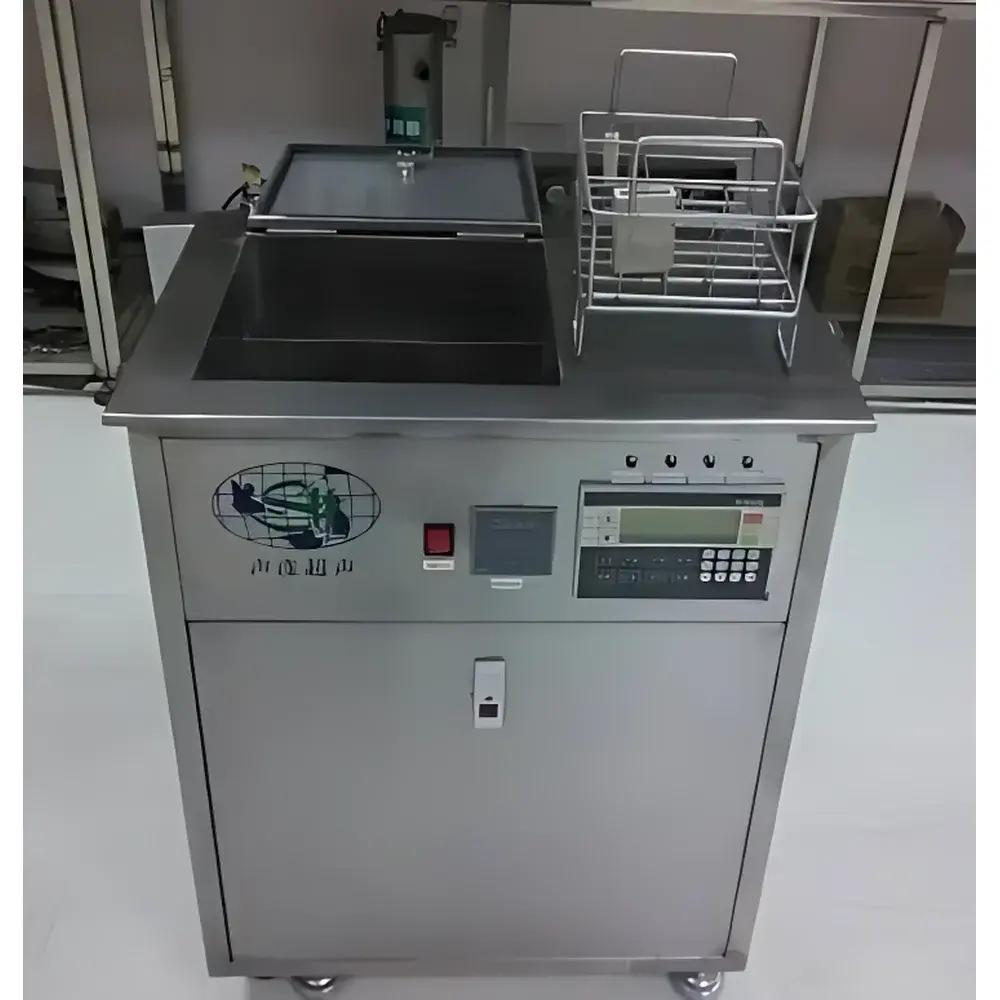
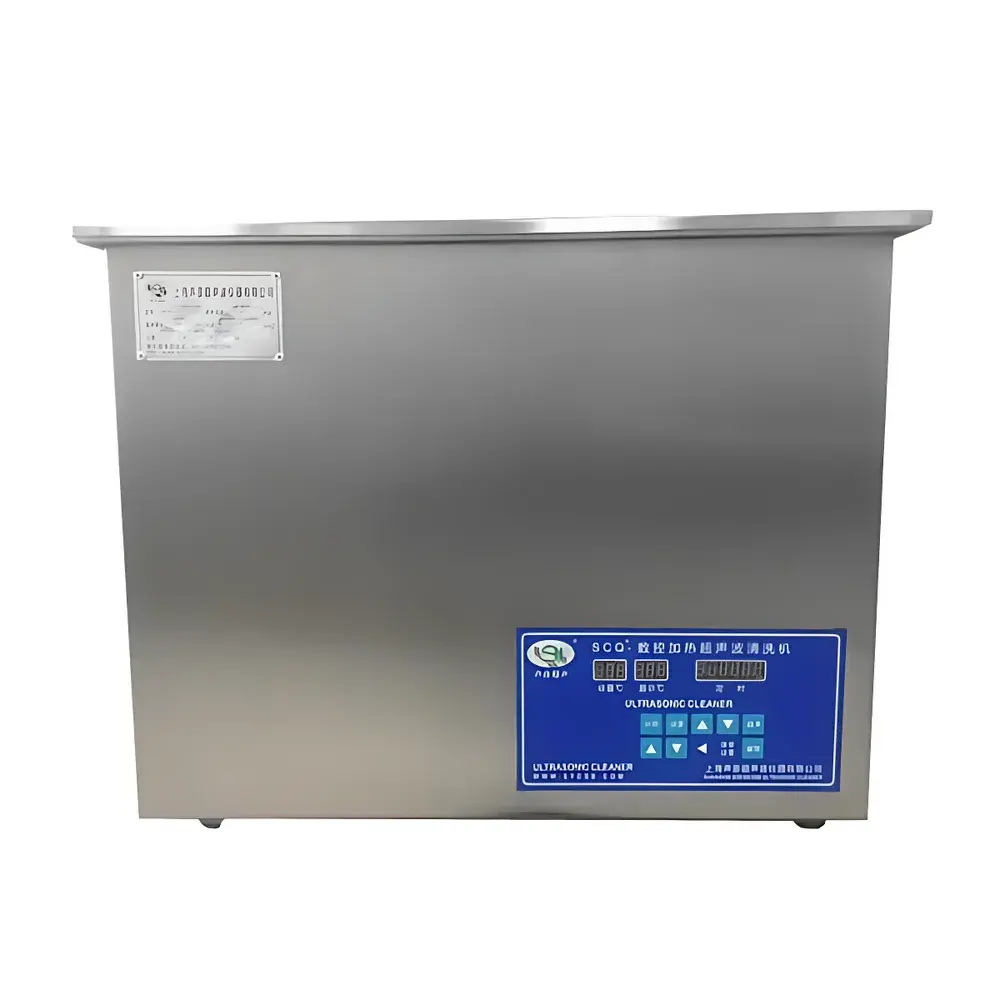
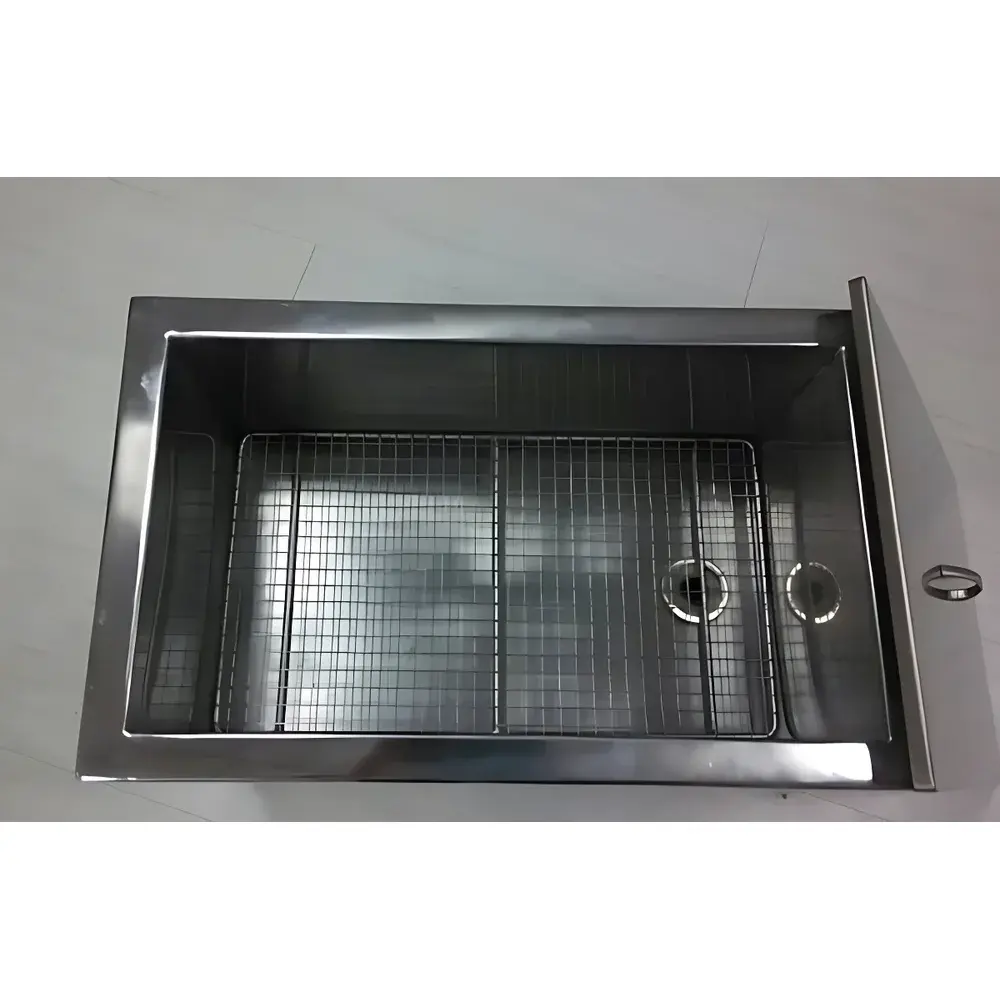
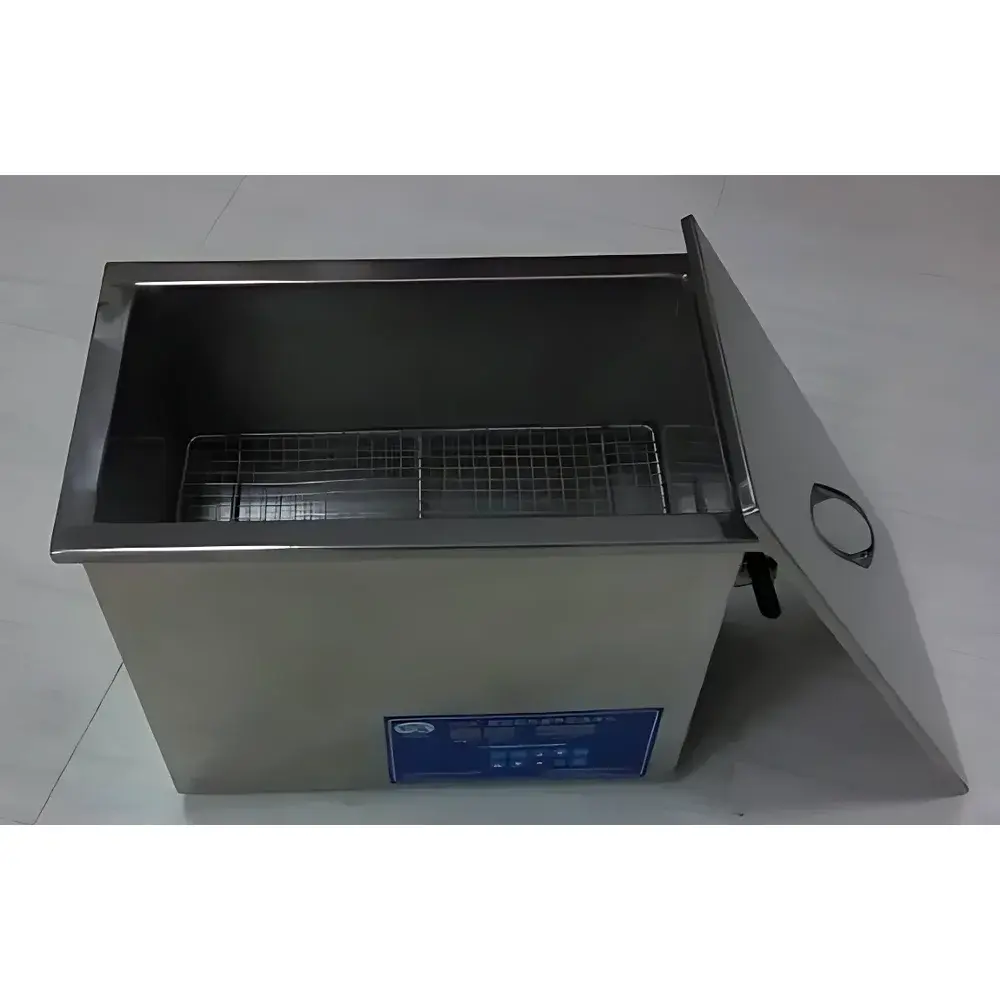
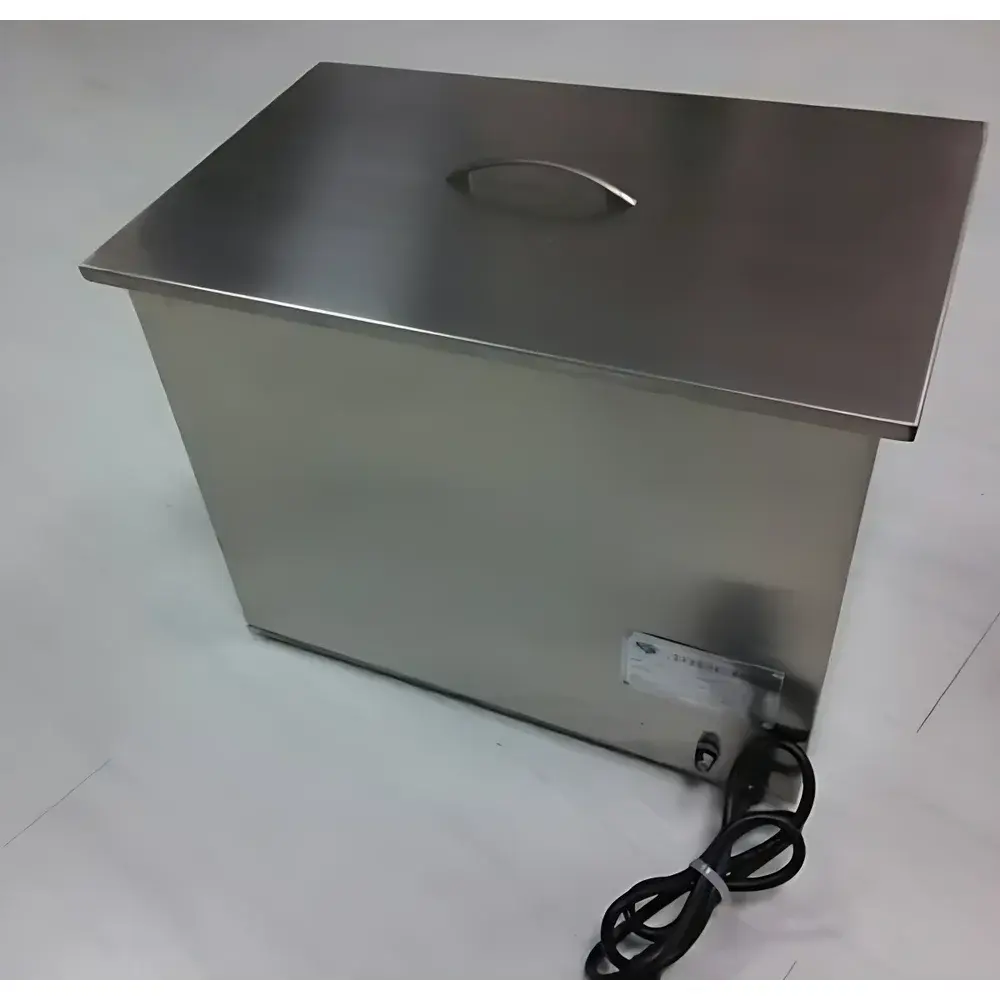
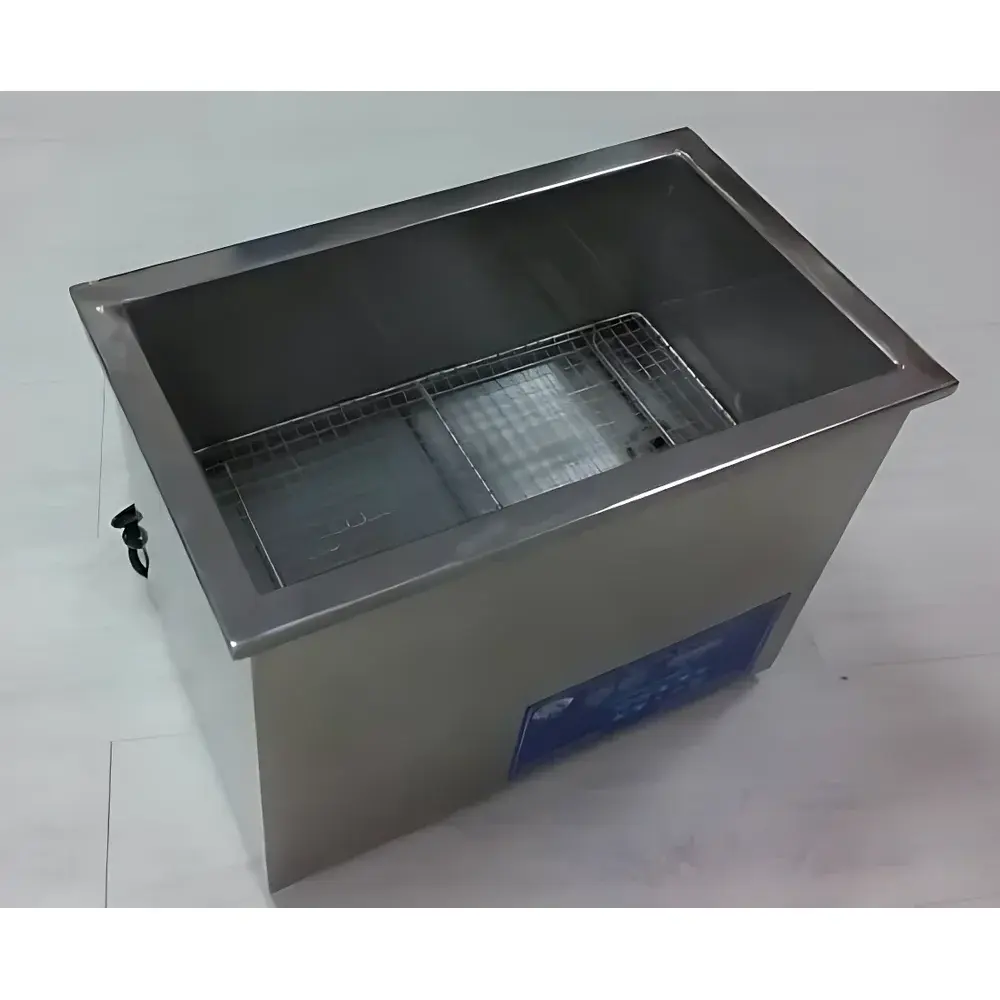
SYCS SCQ-7201E 18L Dual-Frequency Heated Ultrasonic Cleaner
| Brand | SYCS |
|---|---|
| Origin | Shanghai, China |
| Model | SCQ-7201E |
| Capacity | 18 L |
| Ultrasonic Frequency | 40 kHz (dual-frequency option: 28/63 kHz selectable) |
| Ultrasonic Power | 400 W (adjustable 10–100%) |
| Heating Power | 600 W |
| Temperature Range | Ambient to 100 °C |
| Timer Range | 1–600 min |
| Sound-Dampening Lid | Yes |
| Drain Valve | Manual |
| Tank Dimensions | 420 × 240 × 180 mm |
| Construction Material | SUS304 Stainless Steel |
| Safety Features | Overload protection, overheat protection, auto dry-run alarm (for tanks ≥10 L) |
Overview
The SYCS SCQ-7201E is a benchtop dual-frequency heated ultrasonic cleaner engineered for precision cleaning, degassing, and surface decontamination in regulated laboratory and industrial environments. It operates on the principle of acoustic cavitation—where high-frequency sound waves generate microscopic vacuum bubbles in liquid media that collapse violently upon contact with submerged surfaces, delivering localized energy sufficient to dislodge particulate matter, organic residues, oils, oxides, and biofilms without mechanical abrasion. Unlike single-frequency units, the SCQ-7201E supports dual-frequency operation (standard 40 kHz plus optional 28/63 kHz modes), enabling optimized cleaning across diverse sample geometries and contaminant types: lower frequencies (28 kHz) deliver higher cavitation intensity for robust removal of heavy particulates and tenacious oils, while higher frequencies (63 kHz) provide finer, gentler cleaning suited for delicate optics, microfluidic components, and semiconductor wafers. Integrated heating (up to 100 °C) enhances solvent activity and accelerates dissolution of waxy or thermoplastic contaminants, while precise digital control ensures reproducible thermal profiles critical for validation-driven workflows.
Key Features
- Dual-frequency capability (40 kHz standard; optional 28/63 kHz selection via front-panel interface) for application-specific optimization
- 400 W ultrasonic power output, continuously adjustable from 10% to 100% to match load volume and substrate sensitivity
- 600 W stainless steel-sheathed heating element with ±1 °C temperature stability across ambient to 100 °C range
- Digital timer with 1–600 minute programmability and auto-shutdown function
- Full SUS304 stainless steel tank (420 × 240 × 180 mm internal dimensions) and mesh basket—corrosion-resistant and compliant with ISO 15190:2020 laboratory safety standards
- Integrated sound-dampening lid with safety interlock to reduce ambient noise to ≤65 dB(A) at 1 m distance
- Comprehensive safety architecture: electronic overload protection, thermal cut-off switch, and dry-run detection with audible/visual alarm (activated when liquid level falls below transducer plane)
- Front-panel membrane keypad with LED display for intuitive parameter entry and real-time status monitoring
Sample Compatibility & Compliance
The SCQ-7201E accommodates a broad spectrum of laboratory and production samples—including glassware (vials, cuvettes, pipettes), metal components (surgical instruments, calibration standards, engine parts), optical elements (lenses, prisms, fiber connectors), printed circuit boards, and ceramic substrates. Its SUS304 construction resists degradation from common cleaning solvents (e.g., aqueous alkaline detergents, ethanol, isopropanol, and mild chlorinated hydrocarbons), supporting compatibility with ASTM D4169, ISO 13485, and USP cleaning validation protocols. The unit meets IEC 61000-6-3 (EMC emissions) and IEC 61010-1 (safety for laboratory equipment) requirements. While not certified for sterile processing per ISO 17664, it serves as a validated pre-sterilization cleaning step in GMP-compliant pharmaceutical and medical device manufacturing environments when operated under documented SOPs with audit-trail-capable software (see Software & Data Management).
Software & Data Management
The SCQ-7201E operates via embedded firmware with non-volatile memory retaining user-defined programs across power cycles. For traceability in GLP/GMP settings, optional RS-232 or USB-to-serial interface enables connection to SYCS CleanLog™ PC software (v3.2+), which records timestamped logs of all operational parameters—including frequency mode, power %, temperature setpoint, actual bath temperature, elapsed time, and alarm events. Data export is supported in CSV format for integration into LIMS or electronic batch record systems. The software complies with FDA 21 CFR Part 11 requirements when deployed with user authentication, electronic signatures, and audit trail configuration—ensuring data integrity during cleaning process validation and routine quality assurance reviews.
Applications
This ultrasonic cleaner is routinely deployed across analytical, quality control, and R&D laboratories for: precision cleaning of HPLC autosampler vials and GC inlet liners; removal of polishing compounds from optical assemblies prior to interferometric inspection; degassing of solvents prior to spectroscopic analysis; preparation of cell culture flasks and bioreactor components; decontamination of reusable surgical tools in hospital central supply departments; pre-plating cleaning of electroplating substrates; and extraction support in environmental testing (e.g., EPA Method 3550C for pesticide residue recovery). Its dual-frequency flexibility makes it especially suitable for multi-step cleaning protocols—e.g., initial 28 kHz cycle for gross soil removal followed by 63 kHz rinse for micron-level particle clearance—common in semiconductor packaging and MEMS fabrication facilities.
FAQ
Is the SCQ-7201E suitable for cleaning delicate microelectronics?
Yes—when operated at 63 kHz with reduced power (20–40%) and low-temperature aqueous solutions, it effectively removes flux residues and particulates from PCBs and IC packages without damaging fine-pitch solder joints.
Can this unit be used for sterilization?
No—it performs cleaning and disinfection (microbial load reduction), but does not achieve sterility assurance levels (SAL) required for terminal sterilization. It is intended as a critical pre-sterilization step.
What solvent compatibility should be observed?
Avoid halogenated solvents (e.g., chloroform, carbon tetrachloride) and strong oxidizers (e.g., concentrated nitric acid), which may degrade seals or accelerate transducer fatigue. Aqueous detergents, alcohols, and terpenes are fully compatible.
How often should the tank solution be changed?
Solution replacement frequency depends on contamination load and cleaning cycle count; best practice is daily change for high-throughput labs or after every 8–10 cleaning cycles in low-use settings, verified by conductivity or TOC monitoring.
Does the unit support IQ/OQ/PQ documentation?
Yes—SYCS provides a qualification support package including test protocols, calibration templates, and traceable certificate of conformance (CoC) for transducer output and thermal accuracy, aligned with ISO/IEC 17025 requirements.



