
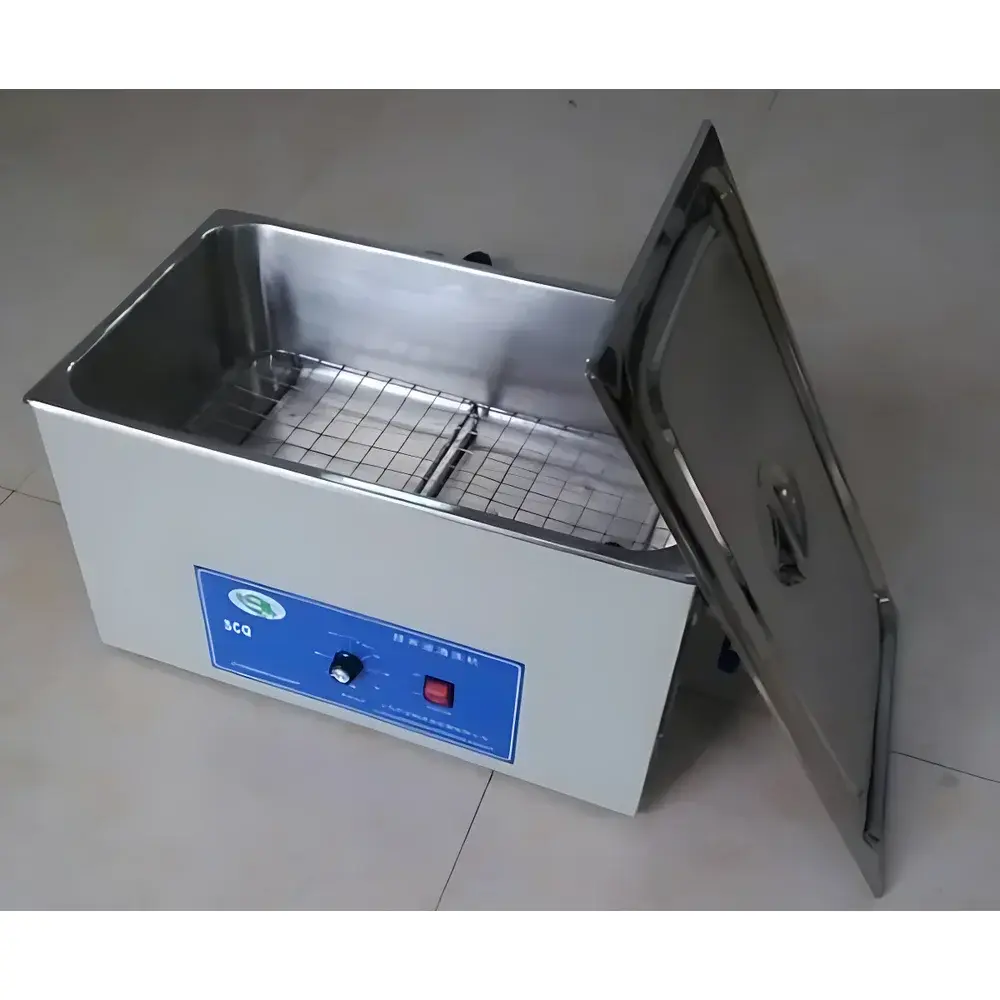
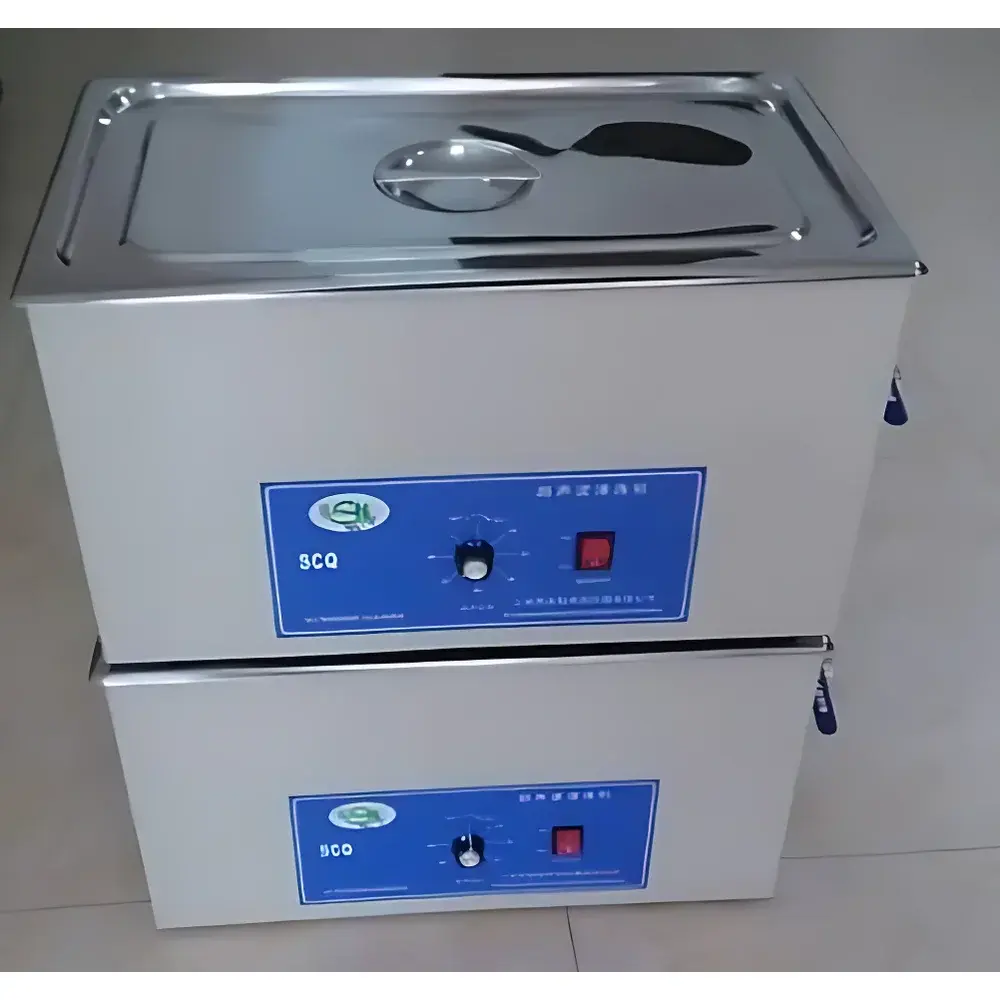
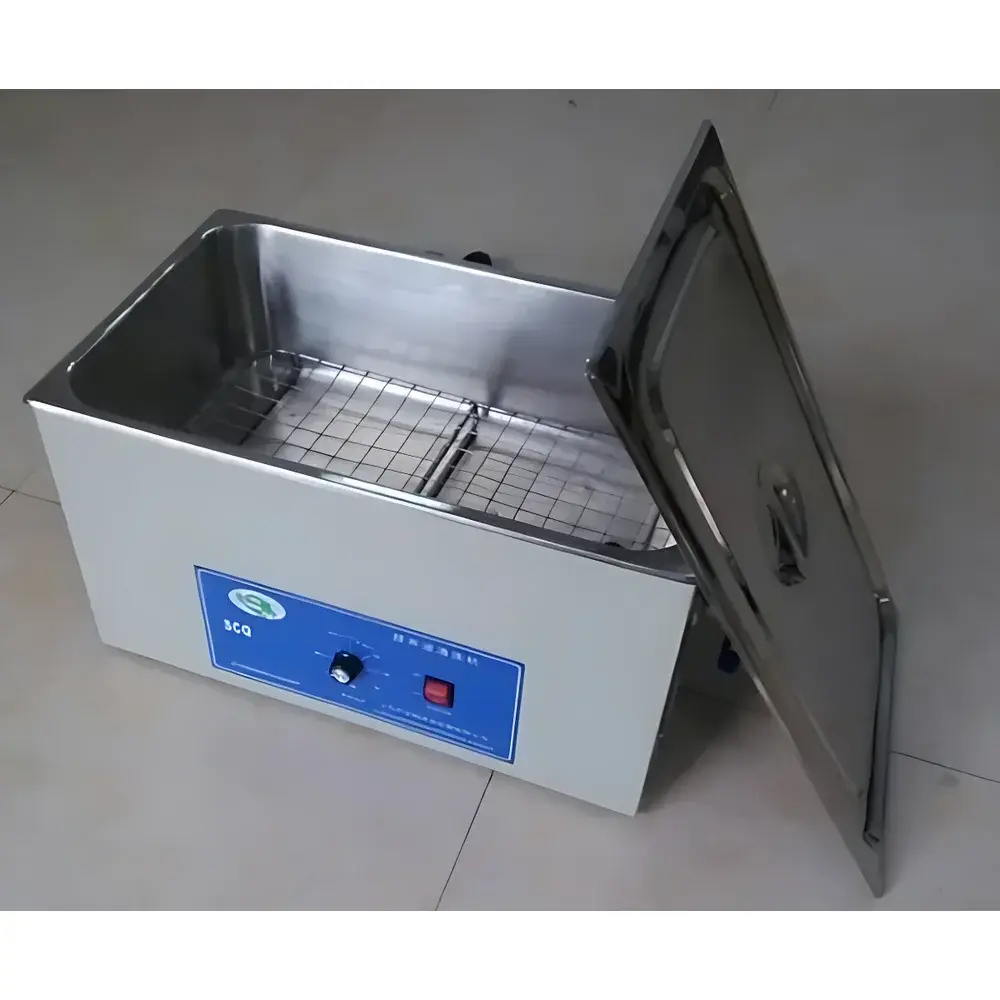
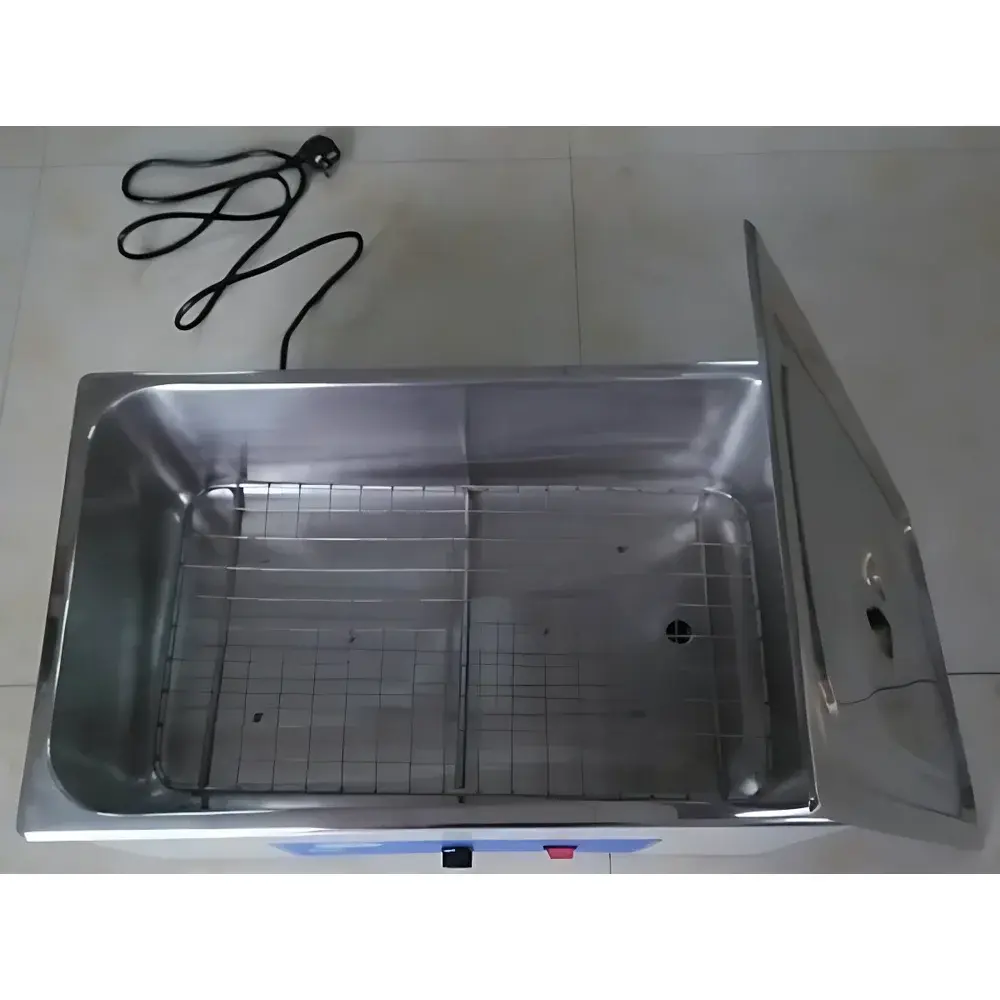
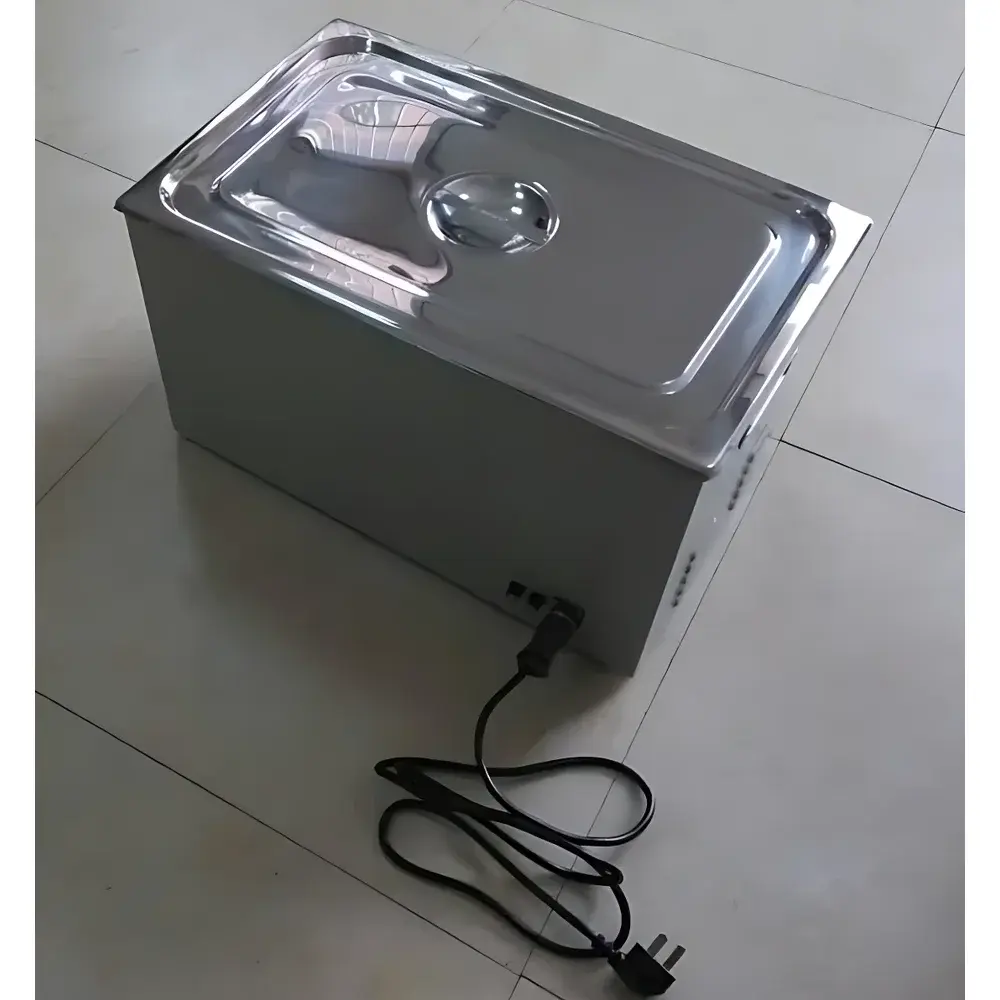
SYCS SCQ-8201 22.5L Benchtop Ultrasonic Cleaner
| Brand | SYCS |
|---|---|
| Origin | Shanghai, China |
| Manufacturer Type | Authorized Distributor |
| Product Category | Domestic (China-made) |
| Model | SCQ-8201 |
| Instrument Type | General-Purpose Ultrasonic Cleaner |
| Capacity | 22.5 L |
| Ultrasonic Frequency | 40 kHz |
| Ultrasonic Power | 500 W |
| Power Adjustment | Not Adjustable |
| Temperature Control | Not Available |
| Timer Range | 1–60 min (mechanical) |
| Sound-Dampening Lid | Included |
| Drainage | Manual valve |
| Tank Material | SUS304 stainless steel |
| Exterior Finish | Nano-powder-coated steel |
| Internal Dimensions (L×W×H) | 500 × 300 × 150 mm |
| External Dimensions (L×W×H) | 557 × 330 × 285 mm |
| Power Supply | 220 V / 50 Hz |
| Accessories | Stainless steel mesh basket, lid |
Overview
The SYCS SCQ-8201 is a general-purpose benchtop ultrasonic cleaner engineered for reliable, repeatable cleaning of precision components and laboratoryware in non-GMP environments. It operates on the principle of cavitation—generated by high-frequency (40 kHz) acoustic energy transmitted through liquid media—which produces microscopic implosions that dislodge particulate contaminants, organic residues, and loosely adhered biofilms from submerged surfaces. Designed for consistent performance across diverse solvents—including deionized water, ethanol, isopropanol, and aqueous alkaline or neutral detergents—the unit delivers uniform energy distribution across its 22.5 L working volume. Its robust SUS304 stainless steel tank ensures corrosion resistance against common cleaning agents, while the nano-powder-coated exterior enhances durability and chemical resistance in multi-user lab settings.
Key Features
- 500 W ultrasonic transducer array operating at a fixed 40 kHz frequency—optimized for balance between cleaning efficacy and minimal surface erosion on delicate substrates such as optical lenses, semiconductor wafers, and thin-walled glassware.
- 22.5 L capacity with internal dimensions of 500 × 300 × 150 mm—accommodates standard laboratory glassware (e.g., beakers up to 1000 mL, Erlenmeyer flasks, Petri dishes), PCBs, surgical instruments, and small mechanical assemblies.
- Mechanical timer with 1–60 minute range—provides deterministic process control without software dependency; ideal for SOP-driven workflows where digital interfaces are not required or permitted.
- Integrated sound-dampening lid—reduces airborne noise to <55 dB(A) at 1 m distance, meeting occupational safety thresholds for continuous operation in shared laboratory spaces.
- Manual drain valve and removable stainless steel mesh basket—enables rapid solvent exchange and prevents direct contact between parts and tank bottom, minimizing redeposition of debris.
- No built-in heating or power modulation—ensures thermal stability during solvent-sensitive applications (e.g., acetone-based degreasing) and eliminates risk of uncontrolled temperature excursions affecting volatile formulations.
Sample Compatibility & Compliance
The SCQ-8201 supports cleaning of a broad spectrum of materials including stainless steel, titanium, aluminum, borosilicate glass, fused silica, silicon wafers, ceramic substrates, and medical-grade polymers (e.g., PEEK, polypropylene). It is routinely deployed for pre-analytical sample preparation in accordance with ASTM D2602 (Standard Test Method for Ultrasonic Cleaning Performance), ISO 13485 (for non-sterile device cleaning validation), and CLSI EP22-A (evaluation of cleaning efficacy in clinical laboratories). While not certified for sterile processing per ISO 17664 or FDA 21 CFR Part 820, it serves as a validated auxiliary step in multi-stage cleaning protocols prior to autoclaving or ethylene oxide sterilization. The absence of programmable logic controllers or data logging means it does not comply with 21 CFR Part 11 requirements; however, its mechanical simplicity facilitates audit-ready documentation under GLP-aligned quality systems.
Software & Data Management
This model features no embedded firmware, touchscreen interface, or connectivity options (USB/Ethernet/Wi-Fi). All operational parameters are set manually via physical controls—eliminating cybersecurity risks, firmware update dependencies, and calibration drift associated with digital timers. Process records must be maintained externally (e.g., paper logbooks or LIMS entries) noting batch ID, solvent type, duration, and operator initials. For labs requiring traceability, integration with external environmental monitoring systems (e.g., temperature/humidity loggers placed adjacent to the unit) is recommended to contextualize cleaning conditions. No proprietary drivers or software installation is required.
Applications
The SCQ-8201 is widely applied across analytical, industrial, and clinical support functions: removal of flux residues from printed circuit boards (PCBs); descaling of HPLC columns and autosampler vials; decontamination of reusable pipette tips and centrifuge rotors; degassing of solvents prior to HPLC mobile phase preparation; dispersion of nanoparticle suspensions; extraction of plant metabolites from ground botanical tissue; and cleaning of dental prostheses, ophthalmic lenses, and watch movement components. Its non-heated design makes it suitable for low-boiling-point solvents (e.g., hexane, chloroform), while the rigid tank geometry minimizes standing wave interference—improving cleaning uniformity compared to resonant-mode units.
FAQ
Is the SCQ-8201 suitable for cleaning delicate MEMS devices or microfluidic chips?
Yes—its 40 kHz frequency provides sufficient cavitation intensity for particulate removal without damaging fragile microstructures when used with low-surface-tension solvents and appropriate immersion time (typically 3–10 min).
Can I use acetone or other flammable solvents in this unit?
Only in well-ventilated fume hoods with explosion-proof auxiliary ventilation; the unit lacks intrinsic safety certification (ATEX/IECEx) and has no vapor detection or interlock systems.
Does the mesh basket affect ultrasonic energy transmission?
Minimal attenuation occurs; SUS304 mesh (1.2 mm aperture) maintains >92% energy coupling into the bath while preventing part contact with tank walls.
What maintenance is required for long-term reliability?
Monthly inspection of transducer mounting bolts, quarterly descaling of tank interior using 5% citric acid solution, and biannual verification of timer accuracy using a calibrated stopwatch.
Is there a warranty or service support available outside China?
SYCS provides a 12-month limited warranty covering material and workmanship defects; technical documentation and spare parts (e.g., lids, baskets, drain valves) are available globally through authorized distributors.



