
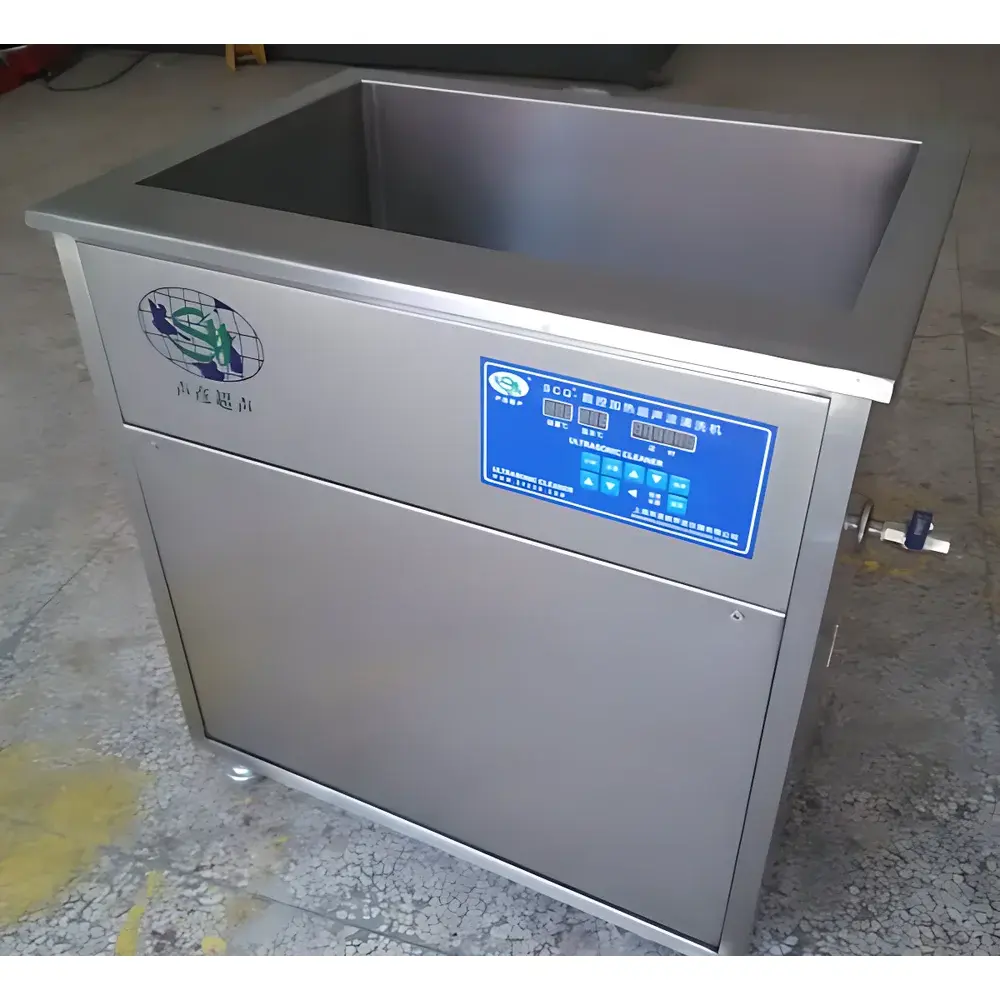
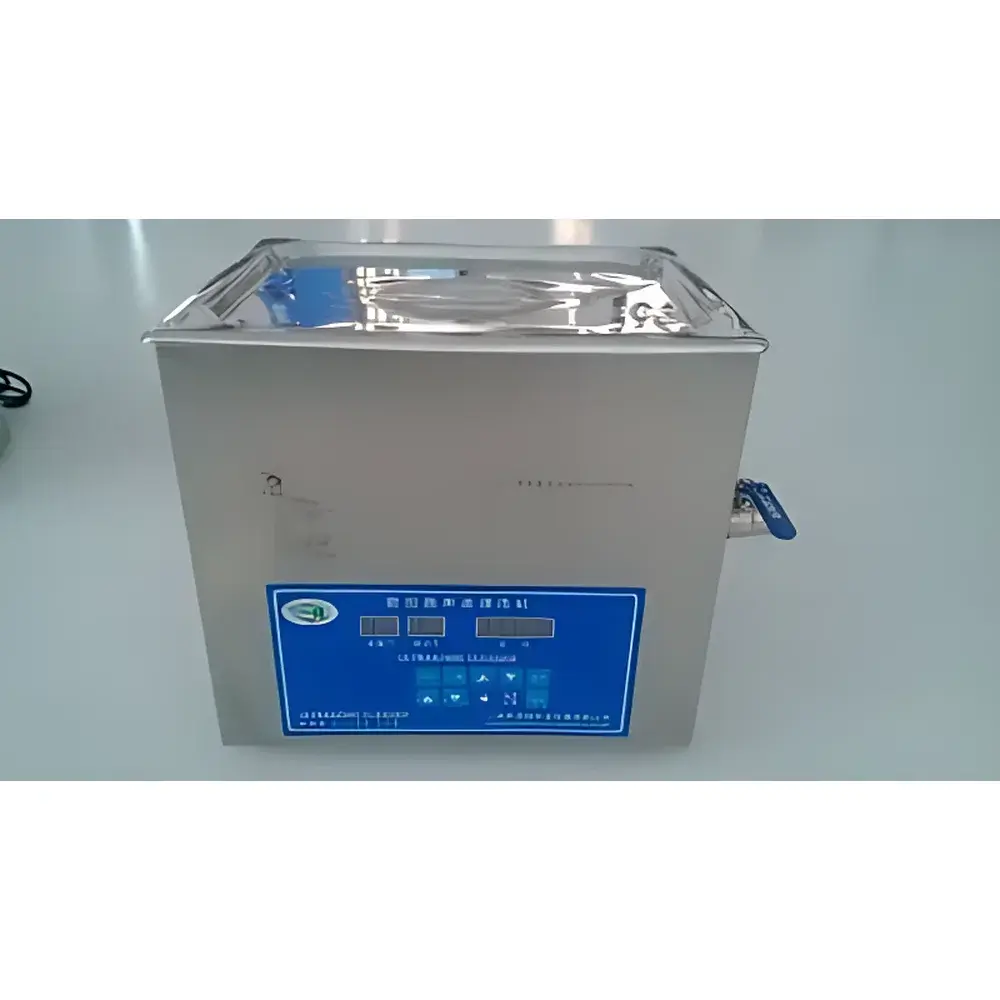
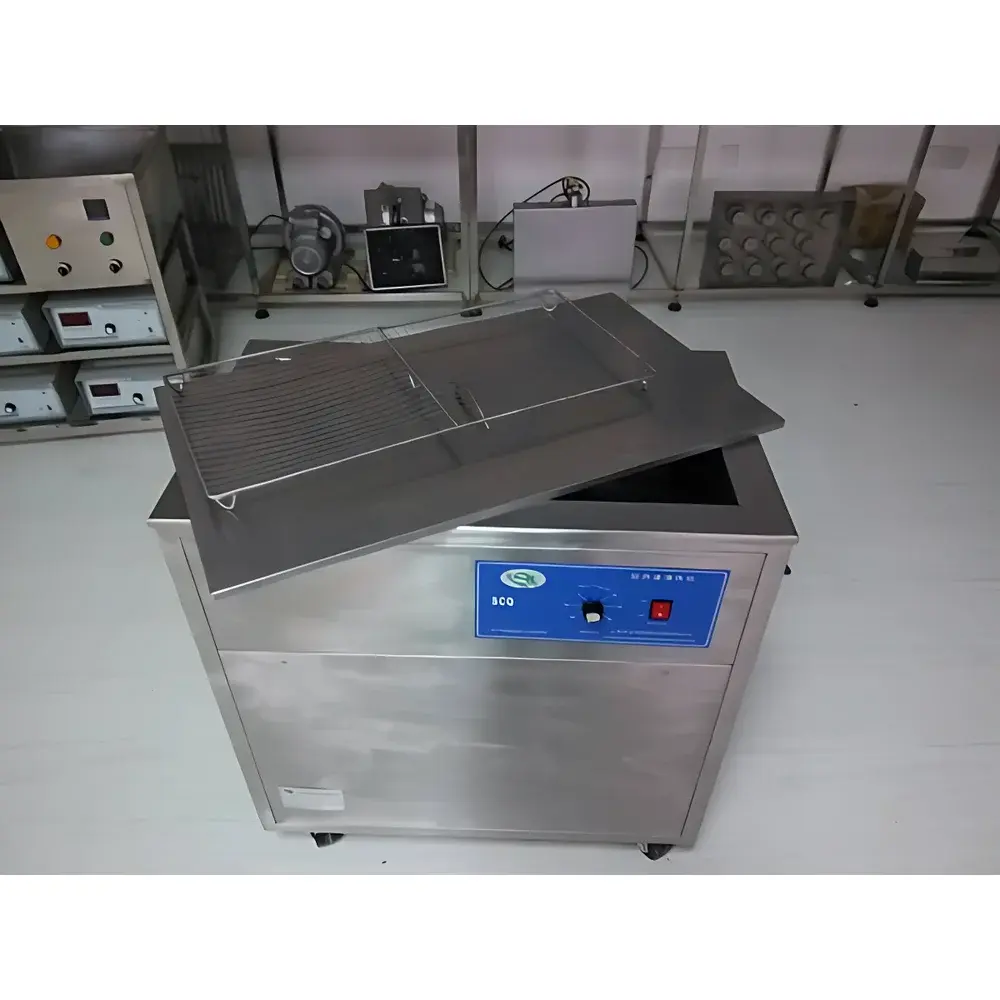
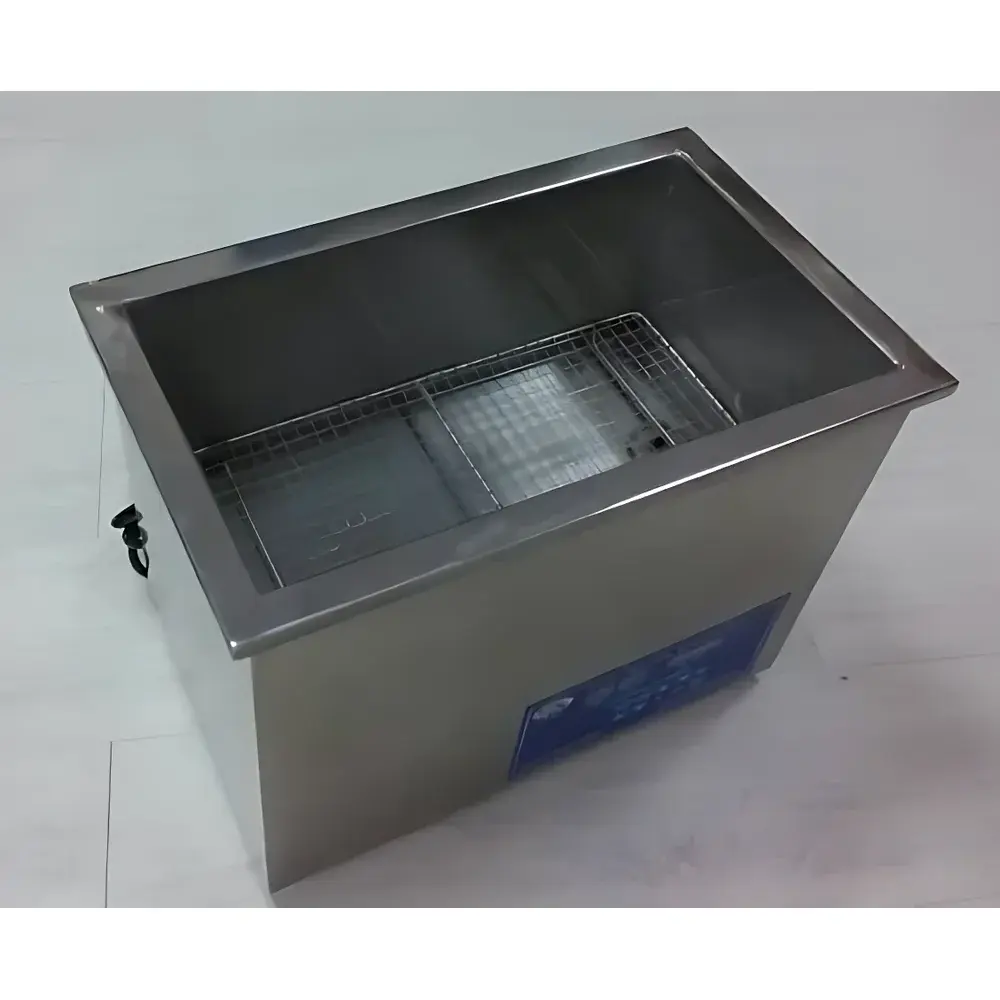
SYCS SCQ-9201E Dual-Frequency Digital Ultrasonic Cleaner
| Brand | SYCS |
|---|---|
| Origin | Shanghai, China |
| Model | SCQ-9201E |
| Capacity | 30 L |
| Ultrasonic Frequencies | 40 kHz / 60 kHz / 80 kHz (selectable dual-frequency operation) |
| Ultrasonic Power Output | 600 W (adjustable 10–100%) |
| Heating Power | 1200 W |
| Temperature Range | Ambient to 80 °C (adjustable) |
| Timer Range | 1–600 min |
| Insulated Lid | Yes |
| Manual Drain Valve | Yes |
| Internal Tank Dimensions | 500 × 300 × 200 mm |
| Construction Material | SUS304 Stainless Steel |
| Safety Features | Overload protection, overheat protection, auto dry-run alarm (for tanks ≥10 L) |
| Power Supply | 220 VAC, 50 Hz |
Overview
The SYCS SCQ-9201E is a laboratory-grade dual-frequency digital ultrasonic cleaner engineered for high-reproducibility cleaning, degassing, and surface decontamination across demanding scientific and industrial applications. Unlike single-frequency units, the SCQ-9201E delivers selectable simultaneous or alternating operation at 40 kHz, 60 kHz, and 80 kHz—enabling optimized cavitation energy distribution for diverse sample geometries and contaminant types. At 40 kHz, the system generates robust macro-cavitation ideal for removing heavy particulates, oils, and rust from mechanical and electroplated components. At 60–80 kHz, finer micro-cavitation dominates, supporting gentle yet effective cleaning of delicate optics, semiconductor wafers, microfluidic devices, and biological substrates without surface erosion. The unit operates on the principle of piezoelectric transduction: high-frequency electrical signals drive ceramic transducers bonded to the stainless steel tank base, inducing controlled acoustic pressure waves in the cleaning medium (typically aqueous or solvent-based solutions). These waves generate transient microbubbles that collapse asymmetrically near surfaces—a process known as inertial cavitation—producing localized shockwaves, microstreaming, and intense shear forces sufficient to dislodge submicron contaminants, biofilms, and adsorbed organic residues.
Key Features
- Dual-frequency digital control panel with independent adjustment of frequency mode, power output (10–100% in 1% increments), temperature (ambient to 80 °C ±1 °C), and timer (1–600 min)
- 30 L capacity tank constructed entirely from electropolished SUS304 stainless steel—resistant to corrosion from alkaline, acidic, and halogenated cleaning agents per ASTM A240 and ISO 9001 material specifications
- Integrated 1200 W heating system with PID temperature regulation and thermal cut-off protection
- Acoustically insulated hinged lid with silicone gasket seal, reducing operational noise to ≤65 dB(A) at 1 m distance
- Dry-run safety circuit with automatic shutdown and audible/visual alert when liquid level falls below minimum threshold
- Industrial-grade piezoelectric transducers with U.S.-sourced PZT-5H ceramic elements and proprietary epoxy bonding for >10,000 hr service life under continuous duty
- Overload and overtemperature protection compliant with IEC 61000-4-5 surge immunity and EN 60335-1 safety standards
Sample Compatibility & Compliance
The SCQ-9201E accommodates a broad spectrum of sample formats—including glassware (vials, cuvettes, pipettes, culture flasks), metal parts (gears, filters, nozzles), optical lenses, printed circuit boards, surgical instruments, and porous ceramics—without requiring custom fixtures. Its uniform energy distribution (validated per ASTM E1727 Annex A1 ultrasonic field mapping protocol) ensures consistent cleaning efficacy across the full tank volume. The system meets functional requirements for GLP-compliant laboratories performing preparatory cleaning prior to elemental analysis (ICP-MS, AAS), chromatography (HPLC vial preparation), or microbiological assay (sterile glassware reconditioning). While not certified to FDA 21 CFR Part 11 out-of-the-box, audit-ready operation is supported via manual logbook documentation of batch parameters (frequency, power %, temp, time) and routine verification using aluminum foil erosion test (ASTM D2603) or thermoluminescent dosimetry for cavitation intensity profiling.
Software & Data Management
The SCQ-9201E operates via embedded firmware with non-volatile memory storing up to 10 user-defined cleaning protocols. All parameter settings—including active frequency, power setpoint, target temperature, and elapsed time—are retained after power cycling. Though no external PC interface is provided, the front-panel LCD displays real-time operational status (actual temperature, remaining time, fault codes) with backlighting for low-light environments. For regulated environments, users may integrate the unit into facility-wide validation workflows using third-party data loggers connected to the analog temperature output (0–5 VDC proportional to 0–100 °C). Calibration certificates for temperature sensor (PT100 Class B) and timer accuracy (±0.5% of set value) are available upon request to support IQ/OQ documentation.
Applications
This ultrasonic cleaner is routinely deployed in pre-analytical sample preparation workflows where residue-free surfaces are critical. In pharmaceutical QC labs, it removes residual active pharmaceutical ingredients (APIs) and excipients from HPLC autosampler vials and dissolution apparatus components, supporting USP cleaning validation. In semiconductor fabrication facilities, it performs particle removal from photomasks and wafer carriers prior to lithography, meeting SEMI F21 cleanliness thresholds. Research laboratories utilize its dual-frequency capability for controlled cell detachment from culture plates (40 kHz) and gentle organelle isolation from tissue homogenates (80 kHz). Additional validated use cases include: debubbling epoxy resins prior to casting (degassing), accelerating solvent extraction of plant metabolites (enhanced mass transfer), and preparing electron microscopy grids by removing carbon film debris (low-power 80 kHz mode).
FAQ
What cleaning solutions are compatible with the SCQ-9201E?
Aqueous alkaline detergents (e.g., Alconox® Liquinox®), mild acidic solutions (e.g., 5% citric acid), and low-surface-tension solvents (e.g., isopropanol, ethanol) are suitable. Avoid halogenated hydrocarbons (e.g., chloroform) and strong oxidizers (e.g., concentrated nitric acid) unless tank compatibility is verified per SYCS Chemical Resistance Guide.
Can the unit operate continuously for extended periods?
Yes—the SCQ-9201E is rated for continuous operation up to 8 hours per cycle. Thermal management is ensured by forced-air cooling of the power supply and transducer housing; ambient operating temperature must remain between 10–35 °C.
Is the stainless steel tank passivated per ASTM A967?
All SUS304 tanks undergo citric acid passivation post-fabrication and are supplied with a certificate of conformance detailing surface iron content (<0.1 µg/cm²) and chromium oxide layer thickness (measured by XPS).
How often should transducer performance be verified?
We recommend quarterly verification using the ASTM D2603 aluminum foil test. A uniform pattern of pits ≥0.5 mm diameter across 90% of submerged foil area indicates nominal transducer output. Reduced pitting density suggests aging or delamination.
Does the unit support GMP documentation requirements?
While the device lacks built-in electronic audit trails, its deterministic parameter controls, repeatable performance, and traceable calibration options enable full compliance with EU Annex 15 and FDA Guidance for Cleaning Validation when incorporated into a documented SOP framework.



