
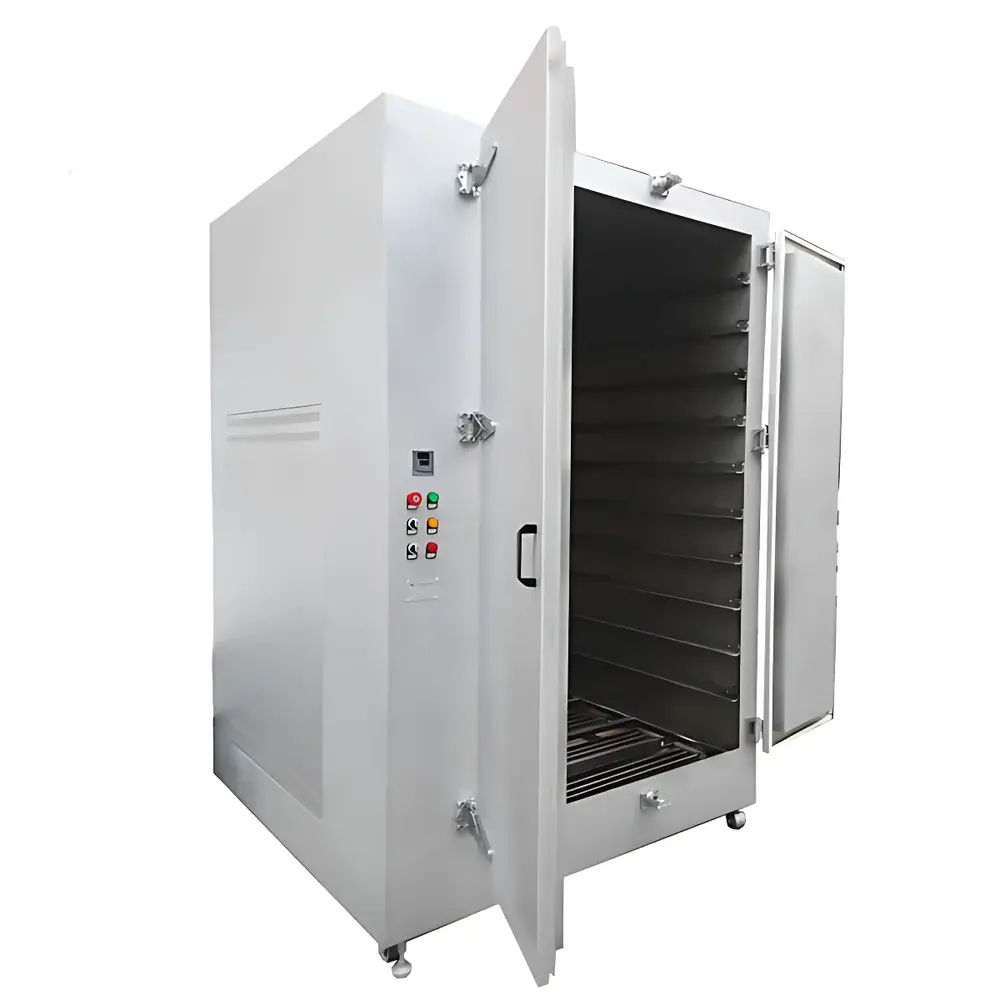
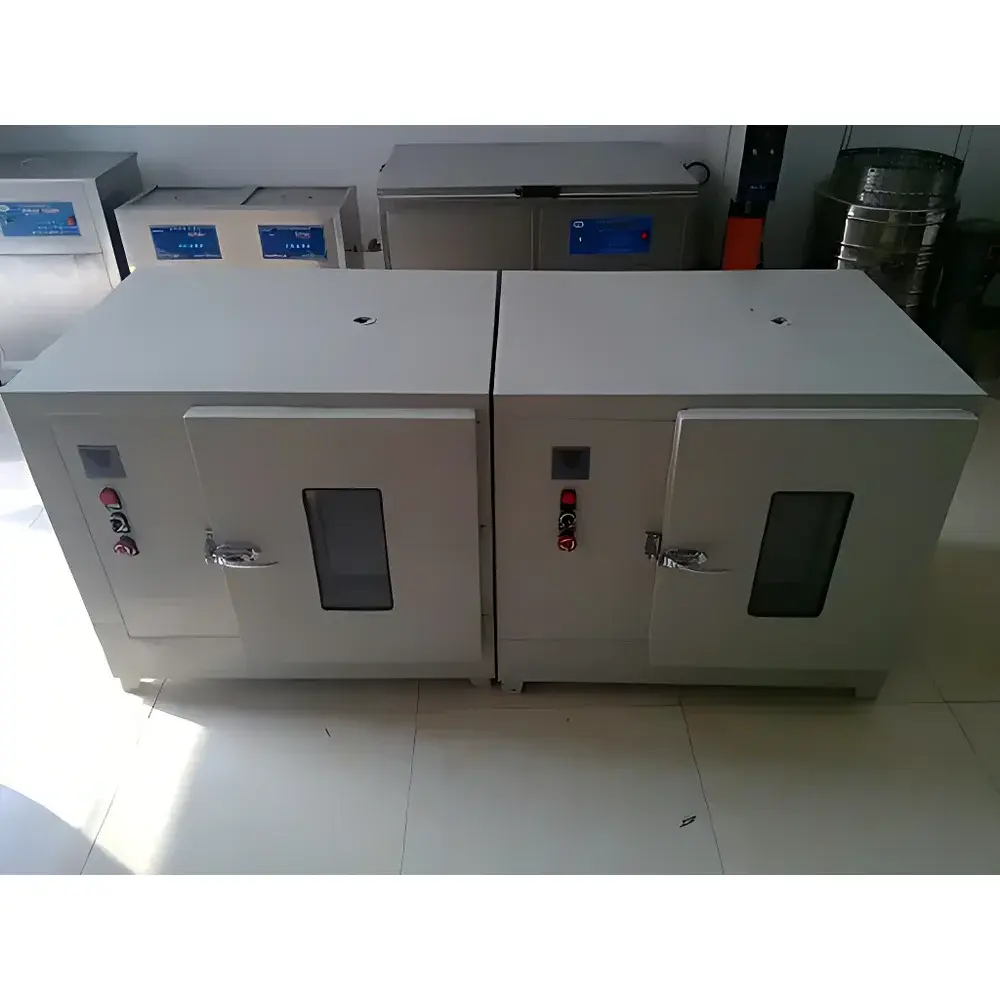
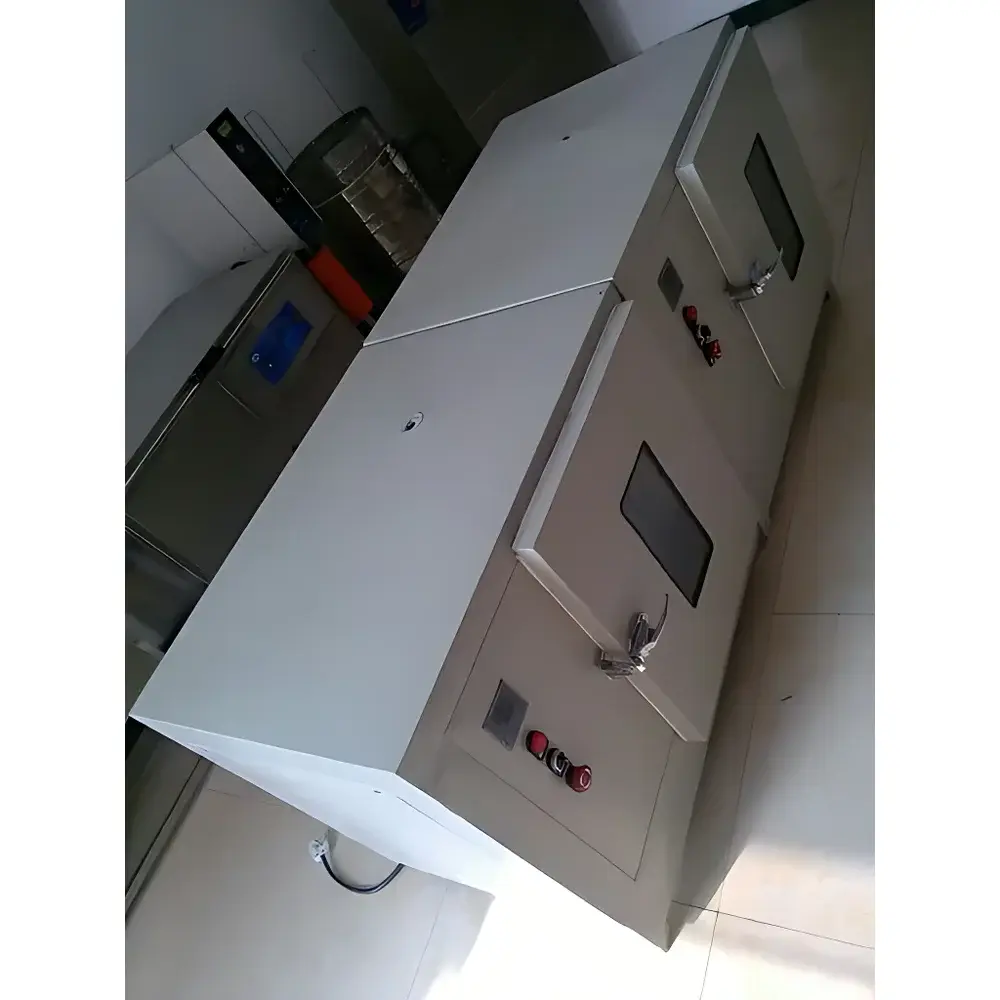
SYCS SCQ-GC60 Electrically Heated Constant-Temperature Drying Oven
| Brand | SYCS |
|---|---|
| Origin | Shanghai, China |
| Model | SCQ-GC60 |
| Instrument Type | General-Purpose Drying Oven |
| Temperature Range | Ambient to 300 °C |
| Temperature Uniformity | ±1.0 °C |
| Temperature Fluctuation | ±1.0 °C |
| Interior Dimensions (L×W×H) | 800 × 800 × 1000 mm |
| Exterior Dimensions (L×W×H) | 1150 × 1060 × 1350 mm |
| Chamber Material | SUS 304 Stainless Steel |
| Heating Method | Stainless Steel Tubular Heaters |
| Rated Power | 7000 W |
| Supply Voltage | 380 V / 50 Hz |
| Shelf Load Capacity | 15 kg/m² |
| Net Weight | 140 kg |
Overview
The SYCS SCQ-GC60 Electrically Heated Constant-Temperature Drying Oven is a robust, laboratory-grade thermal processing instrument engineered for precise and repeatable drying, baking, sterilization, and solvent evaporation applications. Designed in accordance with ISO 17025–compatible operational principles and aligned with general requirements for thermal equipment per ASTM E145–22 (“Standard Specification for Gravity-Convection and Forced-Convection Ovens”), the SCQ-GC60 delivers stable thermal environments across its full operating range of ambient temperature to 300 °C. Its forced-air convection architecture—enabled by rear-mounted circulation fans and optimized baffle-guided airflow—ensures uniform heat distribution throughout the 0.64 m³ chamber volume, minimizing axial and radial thermal gradients. The oven’s structural integrity derives from a double-wall insulated enclosure with high-density mineral wool insulation (≥80 mm thickness), contributing to energy efficiency and surface temperature safety compliance (<45 °C at ambient conditions per IEC 61010-1).
Key Features
- High-capacity stainless steel working chamber constructed from fully welded AISI 304 (SUS 304) sheet, offering superior corrosion resistance, cleanability, and long-term dimensional stability under repeated thermal cycling;
- Triple-layer observation window with tempered glass and low-emissivity coating enables real-time visual monitoring without compromising thermal integrity or operator safety;
- Adjustable stainless steel shelving system (up to 3 tiers standard, configurable up to 5), each rated for 15 kg/m² load capacity and vertically repositionable via precision-machined support slots;
- Microprocessor-based PID temperature controller with digital display, manual/auto tuning capability, and programmable ramp-soak profiles (optional firmware upgrade available);
- Over-temperature protection circuitry compliant with EN 60519-1, including independent mechanical limit switch (cut-off at 320 °C) and electronic sensor redundancy;
- Front-accessible air inlet/outlet dampers allow fine-tuning of chamber ventilation rate to accommodate moisture-sensitive or volatile-solvent applications.
Sample Compatibility & Compliance
The SCQ-GC60 accommodates a broad spectrum of sample formats—including Petri dishes, weighing boats, glassware, metal trays, polymer substrates, and pharmaceutical blister packs—without risk of material degradation below 300 °C. Chamber geometry supports batch processing of up to 24 standard 100 mL beakers or 12 × 250 mL Erlenmeyer flasks simultaneously. All internal surfaces are electropolished and passivated per ASTM A967, ensuring compatibility with GLP/GMP environments where residue-free operation is mandatory. The unit conforms to electromagnetic compatibility standards IEC 61326-1 and safety standard IEC 61010-1. While not intrinsically rated for hazardous area use, optional purge connections (N₂ or dry air) can be integrated for oxygen-sensitive drying protocols.
Software & Data Management
Standard configuration includes RS-485 serial interface supporting Modbus RTU protocol for integration into centralized lab management systems (e.g., LabWare LIMS, Siemens Desigo CC). Optional USB data logger module provides time-stamped temperature logging at user-defined intervals (1–600 seconds), generating CSV-formatted audit trails compliant with FDA 21 CFR Part 11 when paired with validated electronic signature workflows. Calibration records—including as-found/as-left data, uncertainty budgets, and traceable NIST-traceable reference sensor certificates—are retained within the onboard memory and exportable via secure FTP. Firmware updates maintain alignment with evolving ISO/IEC 17025 documentation requirements for equipment qualification (IQ/OQ/PQ).
Applications
- Moisture content determination per AOAC 950.46 and USP <1251> for raw materials and finished pharmaceutical products;
- Pre- and post-weighing desiccation of filter papers, crucibles, and gravimetric sampling media in environmental testing labs;
- Thermal aging studies of polymeric packaging components under accelerated conditions (e.g., ISO 11607-1 Annex B);
- Drying of HPLC vials, GC autosampler trays, and ceramic substrates prior to thin-film deposition;
- Baking of electrode coatings in battery R&D facilities (LiCoO₂, NMC cathodes) with controlled ramp rates to prevent binder decomposition;
- Residual solvent removal from coated medical device components in Class 7 cleanroom-adjacent settings.
FAQ
What is the maximum recommended continuous operating temperature for the SCQ-GC60?
The chamber is rated for continuous operation up to 300 °C. Prolonged exposure above this threshold may compromise heater lifespan and insulation performance.
Is the temperature controller compliant with 21 CFR Part 11 for electronic records?
Out-of-the-box functionality meets ALCOA+ data integrity principles; full Part 11 compliance requires deployment of the optional USB data logger with validated software and administrative controls.
Can the SCQ-GC60 be used for sterilization of surgical instruments?
No. This model is not validated for microbial lethality endpoints (e.g., F0 ≥ 12) and lacks the chamber pressure rating, steam delivery, and biological indicator monitoring required for autoclave-class sterilization.
Does the unit include factory calibration documentation?
Yes. Each unit ships with a Certificate of Conformance and a metrology report referencing calibration against a Fluke 1524 thermometer with uncertainty ≤ ±0.15 °C (k=2) across five points in the 50–300 °C range.
What maintenance intervals are recommended for optimal thermal uniformity?
Air filter cleaning every 3 months; fan bearing lubrication annually; full thermocouple verification and door gasket inspection biannually per preventive maintenance checklist (included in user manual).



