
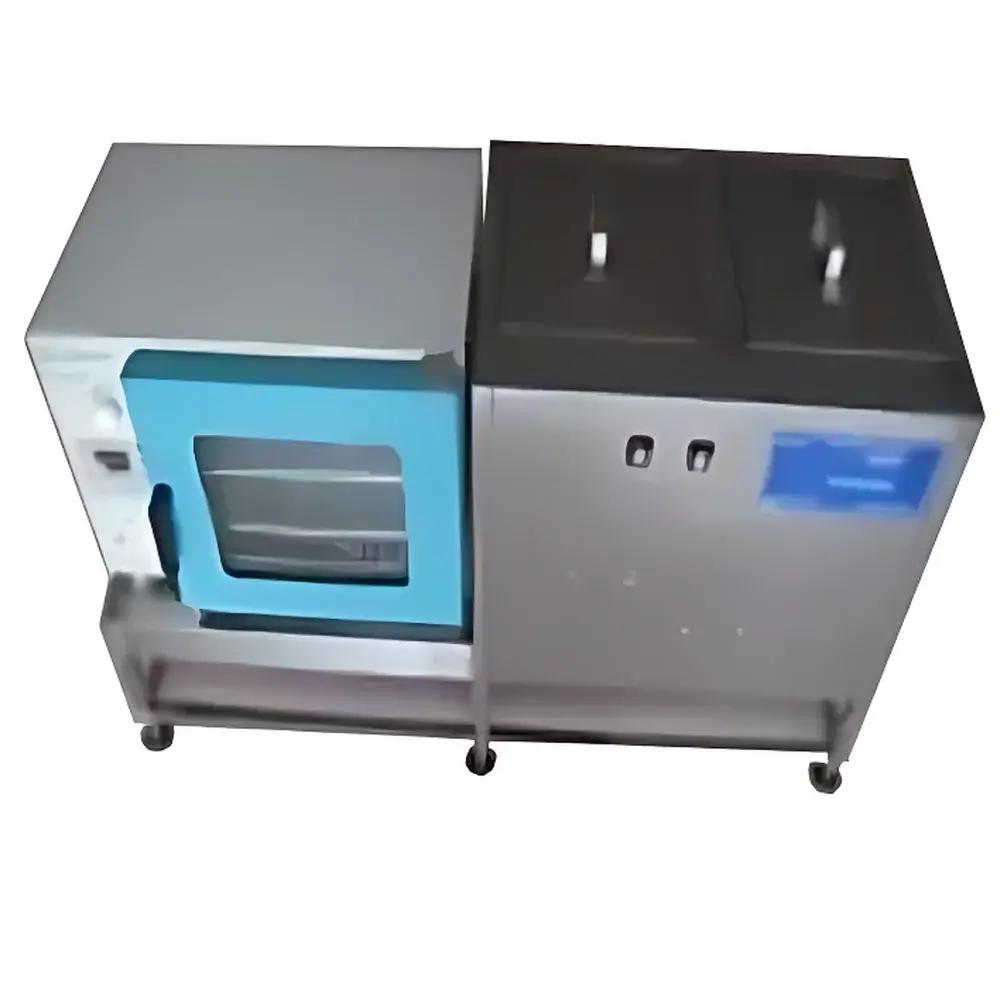
Sycs SCQ-J1020 High-Power Ultrasonic Homogenizer
| Brand | Sycs |
|---|---|
| Model | SCQ-J1020 |
| Power Output | 5000 W |
| Operating Frequency | 80 kHz |
| Maximum Sample Volume | 100 L |
| Origin | Shanghai, China |
| Supplier Type | Authorized Distributor |
Overview
The Sycs SCQ-J1020 High-Power Ultrasonic Homogenizer is an industrial-grade benchtop or floor-standing ultrasonic processing system engineered for scalable, reproducible cell disruption, nanoparticle dispersion, emulsification, and solvent-free extraction in life science, pharmaceutical, and materials research laboratories. It operates on the principle of high-intensity ultrasonic cavitation—where controlled acoustic energy (80 kHz) induces transient microbubble formation, growth, and violent collapse within liquids, generating localized shear forces exceeding 10⁴ m/s², pressures up to 1000 atm, and temperatures near 5000 K at collapse sites. This physical mechanism enables efficient mechanical lysis of microbial cells, plant tissues, and mammalian cells without thermal degradation or chemical additives—making it especially suitable for heat-sensitive biomolecules such as enzymes, plasmids, and exosomes. Unlike probe-based systems limited to small volumes, the SCQ-J1020 integrates a large-capacity transducer array optimized for uniform energy distribution across 100 L reaction vessels, supporting both batch and semi-continuous operation under ambient or chilled conditions.
Key Features
- 5000 W continuous power output with real-time digital feedback control ensures stable amplitude delivery across variable load conditions and viscosity ranges.
- Fixed-frequency 80 kHz piezoelectric transducer stack designed for long-term duty cycles (>10,000 hours MTBF) and minimal harmonic distortion.
- Modular stainless-steel tank assembly (316L grade) with integrated cooling jacket ports compatible with external chillers (−10 °C to +25 °C operational range).
- Digital controller with programmable time, amplitude (10–100%), and pulse mode (on/off ratio adjustable from 1:1 to 10:1) to minimize sample heating and optimize process repeatability.
- IP54-rated enclosure with emergency stop, overtemperature cutoff, and current-limiting protection aligned with IEC 61000-6-2/6-4 electromagnetic compatibility standards.
Sample Compatibility & Compliance
The SCQ-J1020 accommodates aqueous, organic, and biphasic media—including viscous suspensions (up to 15,000 cP), cryopreserved tissue homogenates, and polymer nanocomposite slurries. Its non-invasive bath-type configuration eliminates cross-contamination risks associated with sonotrodes, supporting GMP-aligned workflows for preclinical formulation development. While not certified as Class I medical device per FDA 21 CFR Part 820, the system’s design adheres to ISO 13485-aligned manufacturing controls for instrumentation used in regulated R&D environments. Data integrity features—including timestamped operation logs and user-access levels—support GLP-compliant documentation per OECD Principles of Good Laboratory Practice. It is routinely deployed in laboratories conducting ASTM E2994-22 (Standard Guide for Ultrasonic Processing of Nanomaterials) and USP particulate matter testing preparation protocols.
Software & Data Management
The embedded controller stores up to 99 user-defined methods with full parameter recall (amplitude, duration, pulsing, temperature setpoint). Optional RS-485/Modbus RTU interface enables integration into LabVantage, Thermo Fisher SampleManager, or custom LIMS platforms for audit-trail generation. All operational events—including power fluctuations, thermal alerts, and cycle completion—are logged with ISO 8601 timestamps and stored internally for ≥12 months. For advanced analytics, optional PC software provides real-time amplitude waveform visualization, cumulative energy dose tracking (J/mL), and CSV export compliant with ALCOA+ data governance principles (Attributable, Legible, Contemporaneous, Original, Accurate).
Applications
- Cell lysis and subcellular fractionation for proteomics and metabolomics sample prep.
- Preparation of nanoemulsions and liposomal drug carriers in early-phase formulation studies.
- Extraction of polyphenols, alkaloids, and terpenoids from botanical matrices without solvent residue.
- Dispersion stabilization of carbon nanotubes, graphene oxide, and metal-organic frameworks (MOFs) for composite material synthesis.
- Deagglomeration of ceramic and metallic nanopowders prior to sintering or colloidal processing.
FAQ
What is the recommended maintenance interval for the transducer stack?
Annual inspection and impedance verification are advised; transducer replacement is typically required after 15,000 operating hours or upon measured efficiency drop >15% relative to baseline.
Can the system be operated inside a cold room or glovebox?
Yes—provided ambient humidity remains below 80% RH and ambient temperature stays within 5–35 °C. External chiller integration is mandatory for sub-10 °C bath operation.
Is validation documentation available for IQ/OQ/PQ protocols?
Factory-issued calibration certificates (traceable to NIST standards) and generic OQ test templates are provided; site-specific PQ must be performed by end-user personnel per internal SOPs.
Does the system comply with CE marking requirements?
It meets EMC Directive 2014/30/EU and Low Voltage Directive 2014/35/EU; however, CE marking is not affixed as the unit is supplied for laboratory use only and excluded from RoHS 2011/65/EU scope per Annex III exemption 10(a).





