
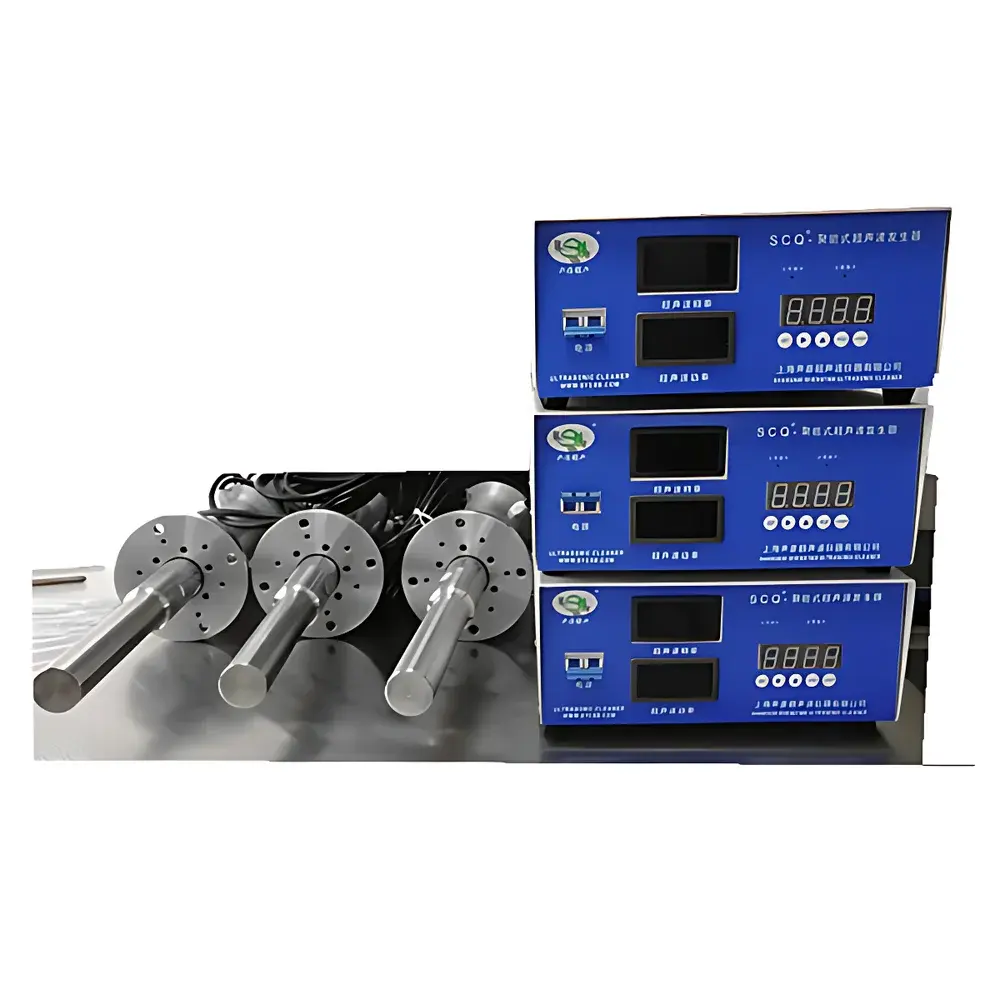
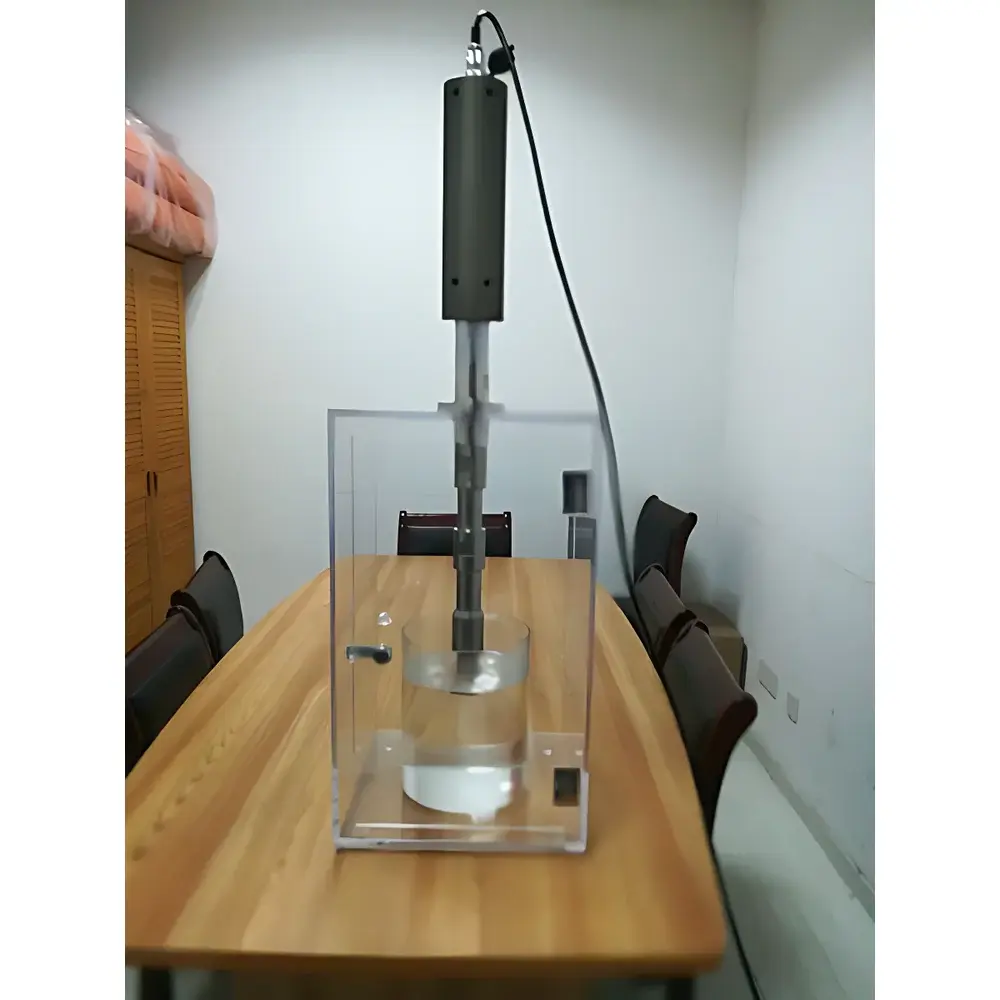
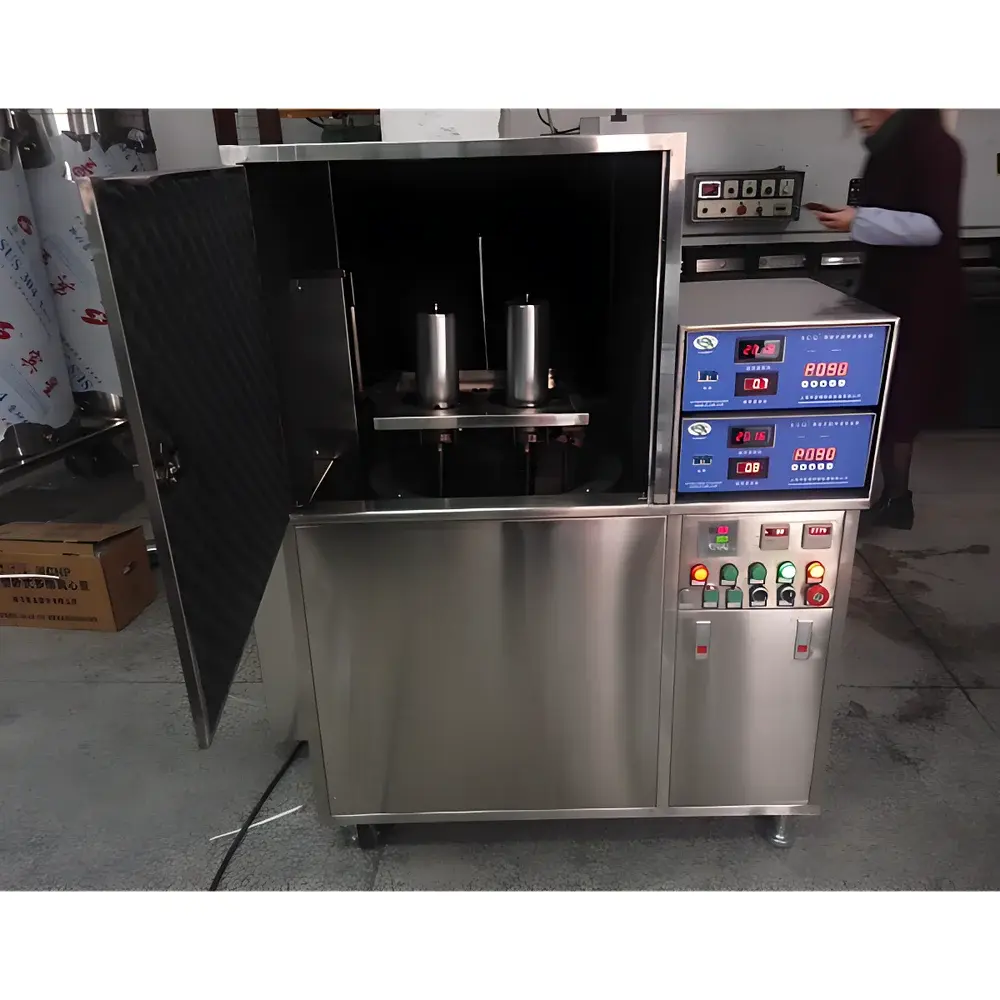
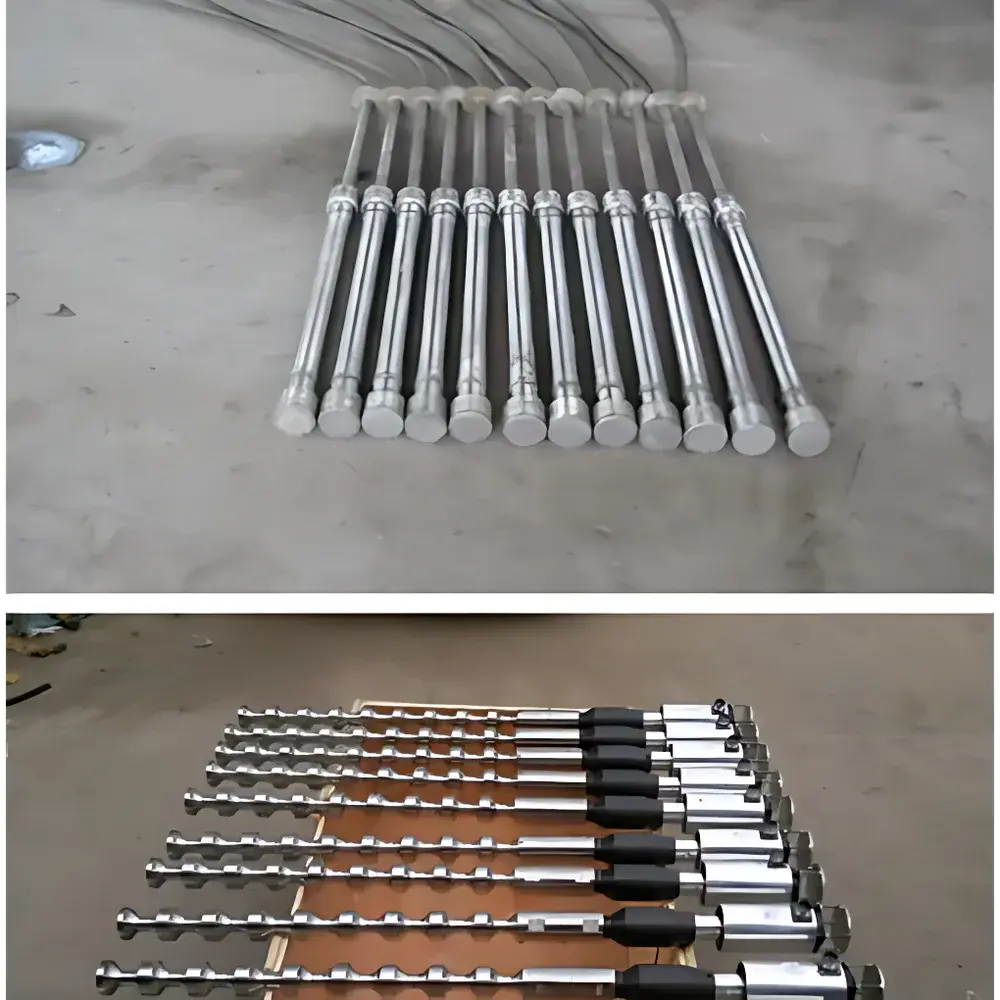
Syneyan SCQ-900F1 High-Intensity Ultrasonic Cell Disruptor, Extractor & Homogenizer
| Brand | Syneyan (sycs) |
|---|---|
| Origin | Shanghai, China |
| Manufacturer Type | Authorized Distributor |
| Country of Origin | PRC |
| Model | SCQ-900F1 |
| Ultrasonic Frequency | 20 kHz |
| Nominal Ultrasonic Output Power | 900 W (adjustable 10–100%) |
| Amplitude Precision | ±50 µm |
| Probe Length | 300 mm (effective titanium alloy tip length: 200 mm) |
| Probe Diameter | 40 mm |
| Generator Included | Yes |
| Flange Mount | Yes |
| Forced-Air Cooling Fan | Yes |
| Input Power | 300 W (electrical), 220 V / 50 Hz |
| Temperature Control Range | 0–100 °C |
| Heating Power (optional) | Up to 20 kW |
| Process Volume Capacity | 10–3000 L |
| Frequency Range (multi-frequency variant) | 20–200 kHz (model-dependent configuration) |
Overview
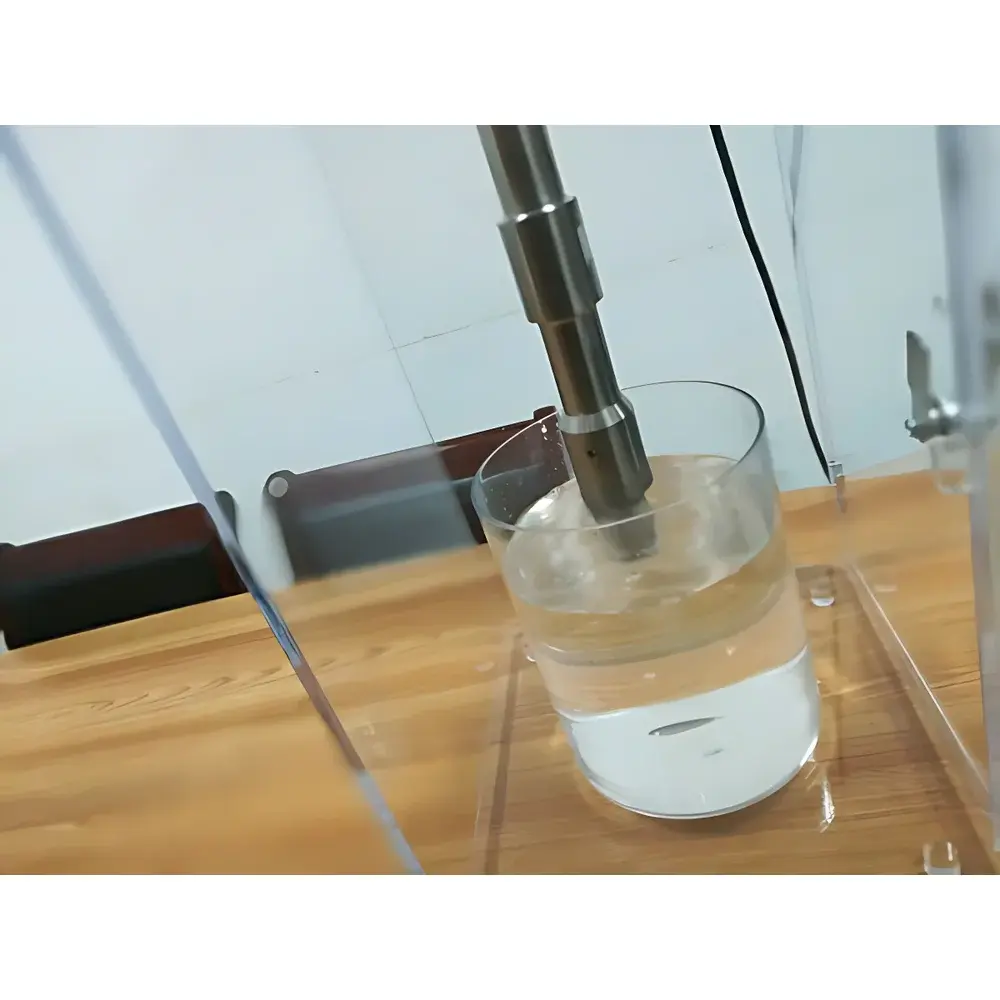
The Syneyan SCQ-900F1 is a high-intensity, bench-to-pilot-scale ultrasonic cell disruptor, extractor, and homogenizer engineered for reproducible mechanical lysis, solvent-free extraction, and nano-emulsification in life science, biopharmaceutical, and industrial R&D environments. It operates on the principle of high-amplitude acoustic cavitation: piezoelectric transduction converts electrical energy into longitudinal mechanical vibrations at a fundamental frequency of 20 kHz, transmitted via a titanium alloy probe (horn) into liquid media. This generates transient microbubbles that collapse asymmetrically near cell membranes or particle surfaces—producing localized shear forces exceeding 108 Pa, microjetting velocities >100 m/s, and transient hotspots >5000 K—enabling efficient disruption of Gram-negative and Gram-positive bacteria, yeast, plant tissues, and mammalian cells without enzymatic or chemical additives. Unlike bath-type ultrasonicators, the SCQ-900F1 delivers focused, scalable energy density (W/mL) directly into the sample, minimizing thermal dispersion and maximizing process efficiency across volumes from 10 L to 3000 L.
Key Features
- Titanium alloy (Grade 5, Ti-6Al-4V) probe with 40 mm diameter and 300 mm total length (200 mm active radiating surface), optimized for fatigue resistance and acoustic impedance matching;
- Precision amplitude control (±50 µm) across 10–100% output range, enabling method transfer from lab-scale lysis (e.g., E. coli periplasmic extraction) to continuous-flow pilot processing;
- Integrated digital generator with real-time power monitoring, automatic impedance compensation, and duty-cycle modulation to maintain stable cavitation under variable load conditions;
- Active forced-air cooling system prevents thermal drift during extended operation (>4 h continuous duty); optional water-cooled transducer available for >8 h cycles;
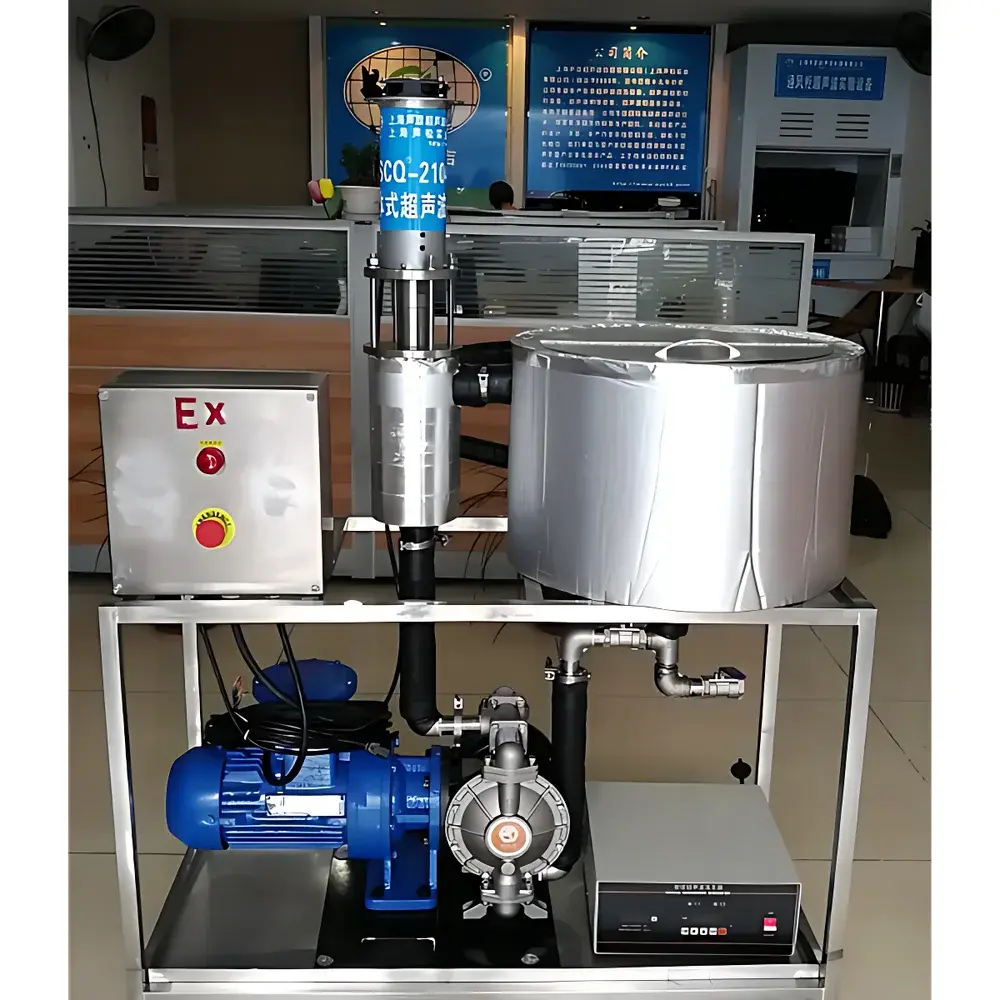
- Modular flange-mount design compatible with standard ISO-KF, DIN 28178, or ANSI B16.5 sanitary fittings for integration into jacketed reactors, inline flow cells, or closed-loop extraction systems;
- Temperature-controlled vessel interface supporting PTFE-lined or stainless-steel jackets with PID-regulated heating (0–100 °C) and PT100 feedback—critical for thermolabile compound recovery (e.g., polyphenols, terpenes, mRNA).
Sample Compatibility & Compliance
The SCQ-900F1 accommodates viscous, particulate-laden, and temperature-sensitive matrices including microbial cultures (OD600 up to 15), plant slurries (e.g., Artemisia annua, Ginseng root), tissue homogenates, and polymer emulsions. Its sealed probe assembly meets IP54 ingress protection for humid laboratory and GMP-prep environments. While not certified as Class I/II medical device, the system supports GLP-compliant documentation when paired with validated SOPs and audit-trail-enabled software (see below). It complies with IEC 61000-6-3 (EMC emissions) and IEC 61000-6-2 (immunity), and its electrical architecture conforms to GB/T 19001–2016 (equivalent to ISO 9001:2015). For regulated bioprocessing, users may configure the system to meet USP dissolution testing requirements or ASTM E2810–18 guidelines for ultrasonic energy mapping.
Software & Data Management
The SCQ-900F1 integrates with Syneyan’s optional U-Control Suite v3.2—a Windows-based application supporting protocol-driven operation, time-stamped parameter logging (power, amplitude, temperature, duration), and CSV export for LIMS ingestion. The software implements electronic signatures per FDA 21 CFR Part 11 (when deployed on domain-joined, AD-authenticated workstations), including role-based access control, audit trails for all parameter changes, and immutable session records. Raw waveform data (voltage/current FFT spectra) can be exported for third-party cavitation intensity modeling (e.g., using MATLAB or COMSOL Multiphysics®). Remote monitoring via Modbus TCP or OPC UA enables integration into MES platforms for Industry 4.0 traceability.
Applications
- Cell disruption: High-yield release of intracellular proteins, plasmids, and organelles from E. coli, S. cerevisiae, CHO, and HEK293 cells—validated against French press and high-pressure homogenization benchmarks;
- Natural product extraction: Solvent reduction in phytochemical isolation (e.g., curcuminoids, anthocyanins) with 20–40% higher yield and 50% shorter cycle times vs. Soxhlet;
- Nano-emulsification: Production of sub-200 nm oil-in-water emulsions (e.g., vitamin D3, CBD) without surfactant overuse, meeting ISO 13320 laser diffraction sizing standards;
- Waste biomass valorization: Pretreatment of lignocellulosic feedstocks (e.g., rice straw, microalgae) prior to enzymatic hydrolysis—enhancing glucose release by ≥35% (measured per NREL LAP-002);
- Vaccine adjuvant preparation: In situ formation of aluminum hydroxide nanoparticles with narrow PDI (<0.15) under controlled pH/temperature trajectories.
FAQ
Is the SCQ-900F1 suitable for cGMP manufacturing environments?
Yes—when configured with validated accessories (e.g., calibrated PT100 sensors, NIST-traceable power meters) and operated under documented SOPs, it supports Stage 1–3 process validation per ICH Q5A(R2) and Annex 15. Full qualification packages (IQ/OQ/PQ) are available upon request.
Can multiple probes be synchronized for parallel processing?
The standard configuration supports single-probe operation; however, multi-horn manifolds (2× or 4×) with phase-synchronized generators are offered as OEM options for uniform energy distribution in large-volume tanks.
What maintenance intervals are recommended for the titanium probe?
Visual inspection after every 200 h of operation; ultrasonic fatigue testing recommended annually. Replacement is advised if surface pitting exceeds 50 µm depth or if amplitude deviation exceeds ±10% at nominal setting.
Does the system support ATEX-certified hazardous area deployment?
Not natively—but explosion-proof enclosures (Zone 2/22) and intrinsically safe signal interfaces can be integrated via third-party certified partners upon engineering review.
How is cavitation intensity quantified and verified?
Users may perform calorimetric calibration (per ASTM E2810–18) using potassium iodide dosimetry or employ calibrated hydrophones for acoustic pressure mapping. Syneyan provides reference calibration reports with each unit shipment.
Related Products



