
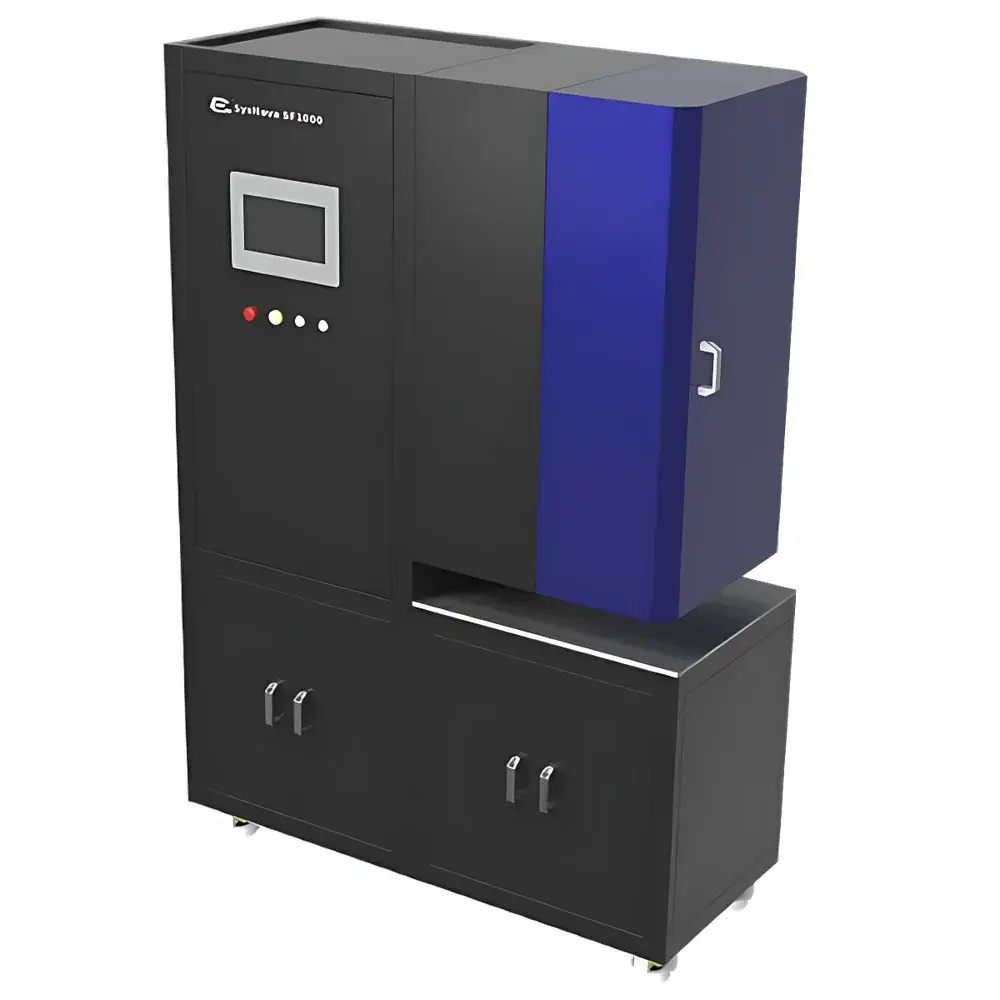
SysNova SF1000 SOFC Battery & Stack Integrated Test Station by EWIN-TECH
| Brand | EWIN-TECH |
|---|---|
| Origin | Shanghai, China |
| Manufacturer Type | Direct Manufacturer |
| Country of Origin | China |
| Model | SysNova SF1000 |
| Pricing | Available Upon Request |
| Temperature Range | Up to 1000 °C |
| Current Accuracy | ±0.03% F.S. |
| Voltage Accuracy | ±0.02% F.S. |
| Fuel Compatibility | H₂, CO, CO₂, NH₃, reformate gas mixtures |
| Cell/Stack Compatibility | Button, planar, and tubular SOFC configurations |
| Safety Features | Integrated H₂ leak detection, dual-stage thermal monitoring, emergency shutdown logic |
Overview
The SysNova SF1000 SOFC Battery & Stack Integrated Test Station is an engineered platform designed for rigorous electrochemical characterization, durability assessment, and operational validation of solid oxide fuel cells (SOFCs) under realistic high-temperature operating conditions. Built upon fundamental principles of galvanostatic/potentiostatic electrochemical impedance spectroscopy (EIS), current–voltage (I–V) polarization, and long-term degradation monitoring, the system enables controlled evaluation of single cells, short stacks, and segmented planar or tubular configurations across the full operational temperature range of 600–1000 °C. Its architecture integrates precision thermal management, multi-channel gas delivery with mass flow control, and low-noise potentiostatic/galvanostatic instrumentation—ensuring traceable, repeatable, and thermodynamically consistent test data required for materials development, stack design iteration, and pre-certification validation in hydrogen and syngas energy systems.
Key Features
- High-fidelity thermal control: Dual-zone resistive heating furnace with PID-driven regulation, achieving ±1 °C stability over 100-hour continuous operation at 950 °C—critical for simulating real-world SOFC thermal cycling and steady-state aging.
- Modular cell interface: Standardized ceramic feedthroughs and low-thermal-resistance current collectors accommodate button-cell (10–25 mm), planar (up to 10 cm × 10 cm active area), and tubular (up to Ø25 mm × 150 mm) geometries without hardware reconfiguration.
- Multi-fuel gas handling subsystem: Six independent MFC-controlled channels (H₂, CO, CO₂, N₂, CH₄, NH₃) with back-pressure regulation (0–5 bar), moisture saturation modules, and inline dew point monitoring—enabling precise simulation of steam-reformed biogas, coal-derived syngas, and ammonia-cracking off-gas.
- Electrochemical measurement core: Bi-polar potentiostat/galvanostat with 16-bit resolution, 0 V startup capability, and programmable slew rate limiting; supports DC polarization, cyclic voltammetry, EIS (10 mHz–100 kHz), and load-following transient protocols compliant with ASTM D7566 Annex A5 and ISO 14687-2 guidelines.
- Redundant safety architecture: Triple-redundant H₂ sensors (catalytic bead + electrochemical + laser-based TDLAS), real-time surface thermocouple mapping, overtemperature cutoff (<100 ms response), and fail-safe purge sequence activated on fault detection.
Sample Compatibility & Compliance
The SysNova SF1000 accommodates all major SOFC structural formats—including anode-supported, electrolyte-supported, and metal-supported cells—as well as short stacks (up to 10 cells) with integrated interconnectors and sealing frames. It supports both air and oxygen cathode feeds, and operates under ambient pressure or controlled backpressure configurations. The system complies with IEC 62282-2 Ed. 3 (2021) for fuel cell module safety, meets electromagnetic compatibility requirements per EN 61326-1:2013, and incorporates audit-ready event logging aligned with GLP and GMP documentation practices. All gas pathways are constructed from electropolished 316L stainless steel with VCR fittings and helium-leak-tested to <1×10⁻⁹ mbar·L/s.
Software & Data Management
Control and analysis are executed via EWIN-TECH’s proprietary NovaTest Suite v4.2—a Windows-based application supporting script-driven test sequencing, real-time multi-parameter visualization (T, P, V, I, gas composition), and automated report generation in PDF/XLSX formats. Raw data streams (including timestamped EIS spectra and transient voltage decay curves) are stored in HDF5 format with embedded metadata (user ID, calibration stamps, environmental conditions). The software includes built-in compliance tools for 21 CFR Part 11 audit trails—featuring electronic signatures, role-based access control, and immutable change logs—enabling direct integration into regulated R&D environments and third-party QA/QC workflows.
Applications
- Accelerated stress testing (AST) of novel anode/cathode materials (e.g., LSCF, BSCF, Ni-YSZ composites) under redox-cycling and fuel starvation conditions.
- Long-duration performance mapping of commercial SOFC stacks under dynamic load profiles mimicking micro-CHP or industrial waste-heat recovery duty cycles.
- Fuel flexibility benchmarking: comparative efficiency and carbon deposition resistance studies using H₂, CO-rich syngas, and ammonia-derived hydrogen.
- Sealing and interconnect degradation analysis via in-situ impedance tracking and post-test cross-sectional SEM/EDS correlation.
- System-level co-simulation interface: OPC UA-enabled data export for coupling with Aspen Plus, MATLAB/Simulink, or ANSYS Fluent models of balance-of-plant components.
FAQ
What cell geometries does the SysNova SF1000 support?
It natively supports button cells (10–25 mm diameter), planar cells (up to 10 cm × 10 cm active area), and tubular cells (Ø25 mm × 150 mm), with configurable current collector assemblies and thermal insulation kits.
Can the system perform electrochemical impedance spectroscopy (EIS) at elevated temperatures?
Yes—integrated broadband EIS capability (10 mHz–100 kHz) is fully operational up to 950 °C, with automatic cable compensation and reference electrode support for three-electrode measurements.
Is remote monitoring and control supported?
The system includes Ethernet-connected PLC and server-grade PC with secure HTTPS web interface, enabling real-time status viewing, alarm notification via SMTP/SNMP, and supervised remote test initiation.
Does the software meet regulatory data integrity requirements?
Yes—NovaTest Suite v4.2 implements full 21 CFR Part 11 functionality, including electronic signatures, audit trail review, and user permission tiers validated per ALCOA+ principles.
What maintenance intervals are recommended for long-term reliability?
Annual calibration of gas mass flow controllers and thermocouple reference checks are advised; furnace heating elements and ceramic insulation are rated for >5,000 hours at 900 °C with scheduled visual inspection every 1,000 hours.
Related Products






