
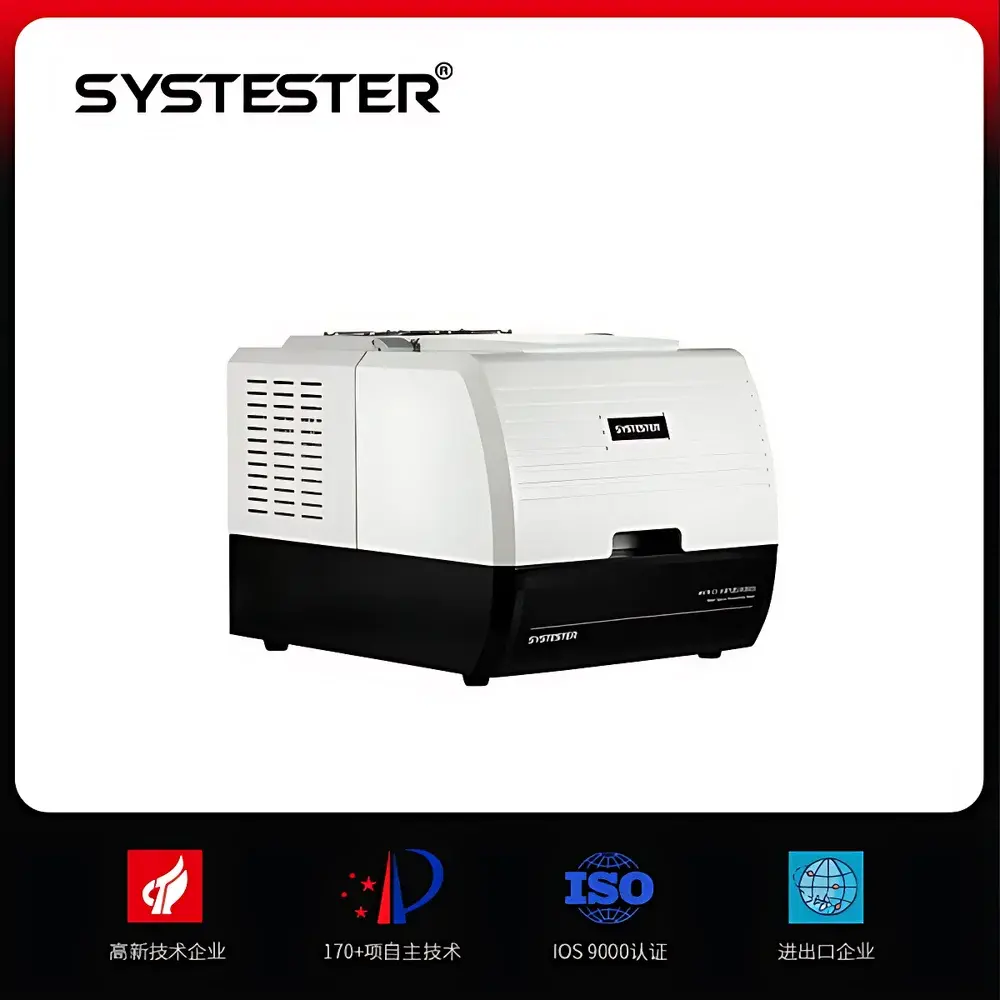
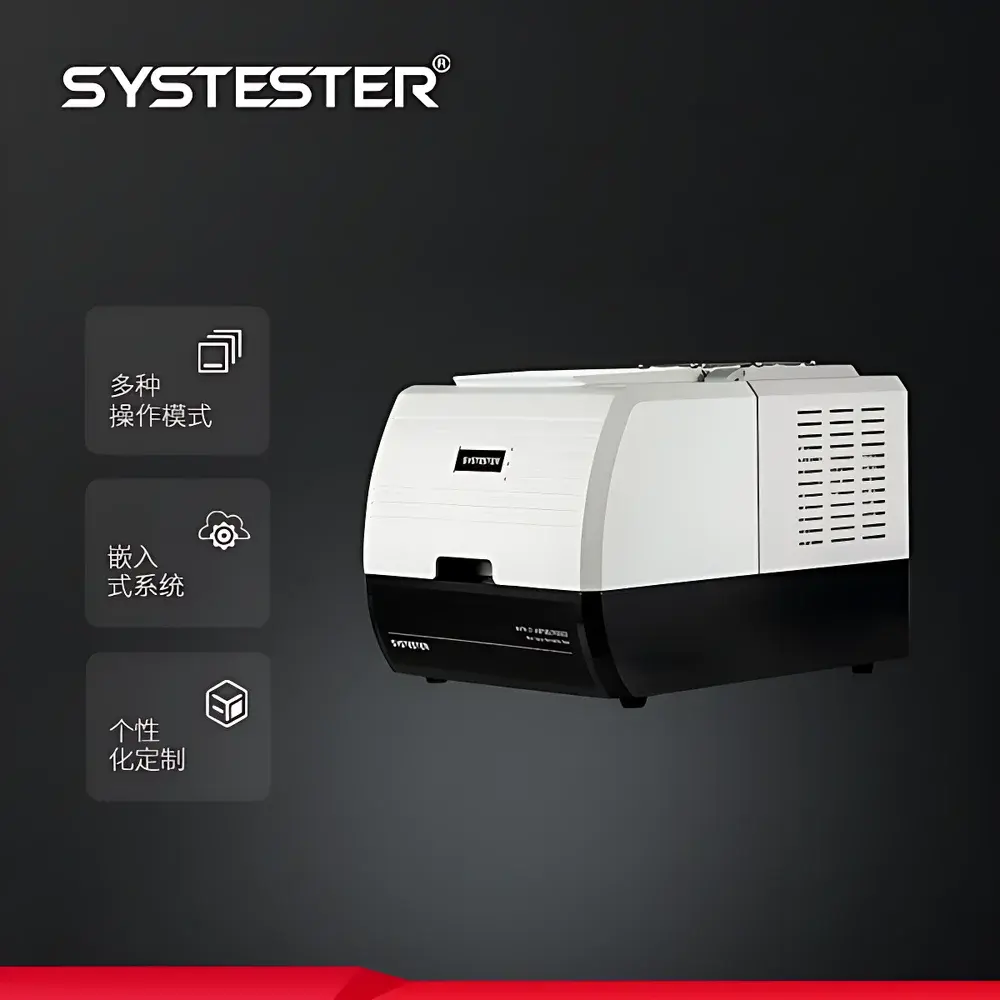
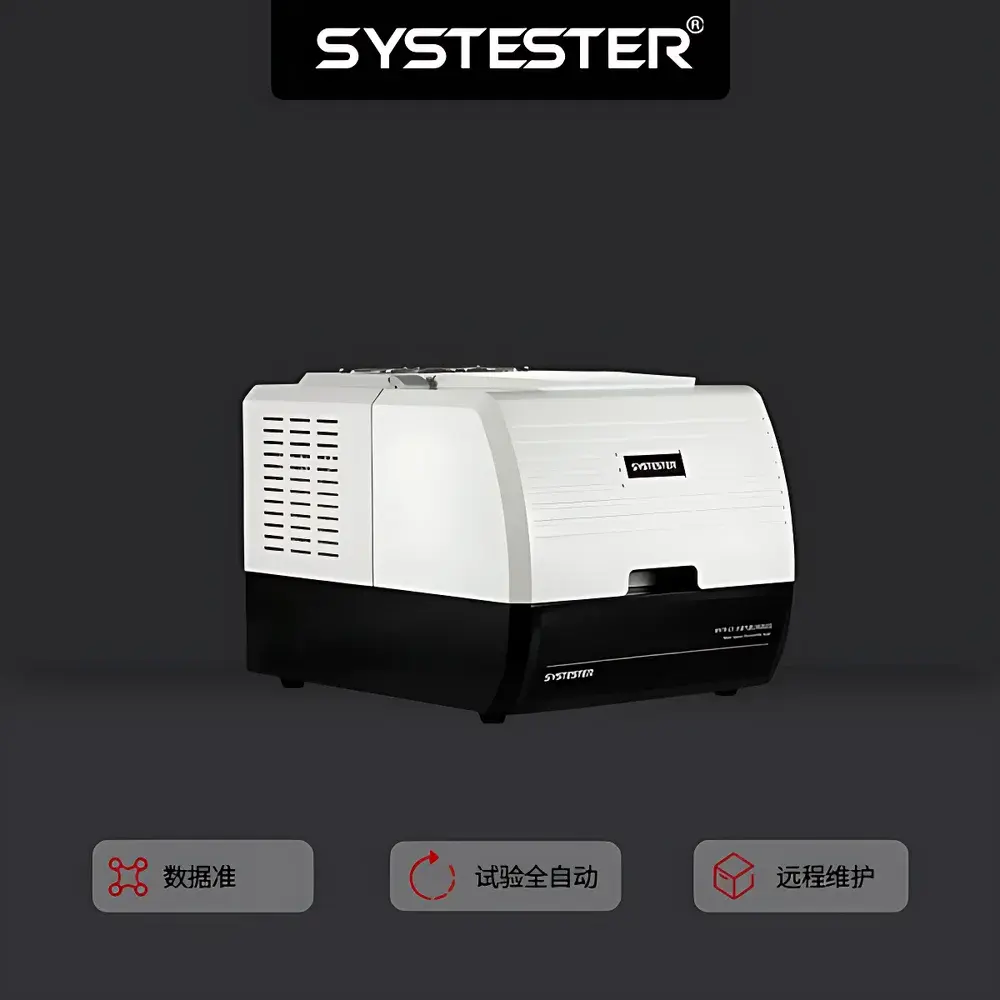
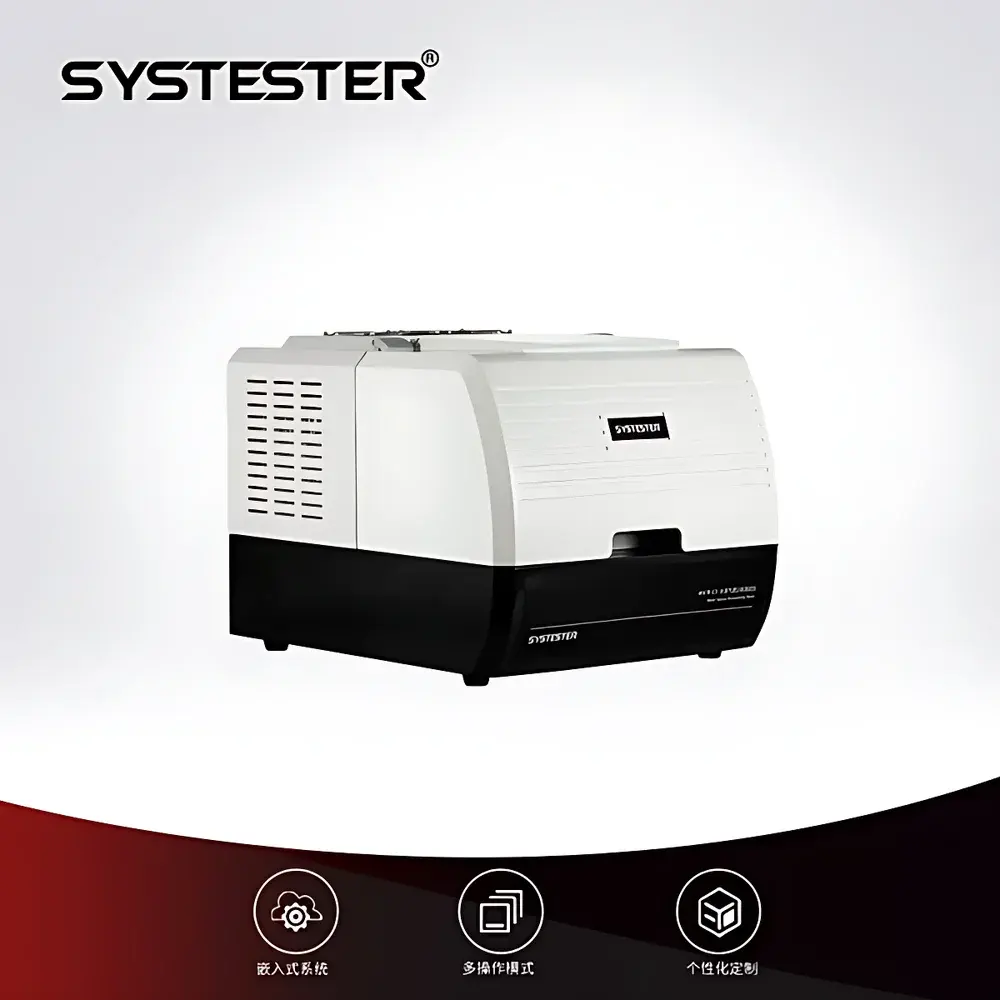
SYSTESTER QBT 2411 Building Materials Rigid Foam Plastic Water Vapor Transmission Rate (WVTR) Tester
| Brand | SYSTESTER |
|---|---|
| Origin | Shandong, China |
| Manufacturer Type | Authorized Distributor |
| Country of Origin | China |
| Model | QBT 2411 |
| Price Range | USD 18,000 – 24,500 |
| Test Principle | Gravimetric Cup Method |
| Test Range | 0.001–220 µg/(m²·s) |
| Permeability Range | 1×10⁻³–40,000 ng/(m²·s·Pa) |
| Sample Capacity | 6 independent stations |
| Weight Resolution | 0.0001 g |
| WVTR Resolution | 0.00001 µg/(m²·s) |
| Temperature Range | 15–55 °C (±0.1 °C control accuracy) |
| Humidity Range | 10–95 %RH (±1 %RH control accuracy |
| Air Sweep Velocity | 0.5–2.5 m/s |
| Specimen Thickness Limit | ≤25 mm |
| Test Area | 33.17 cm² |
| Specimen Diameter | Φ81 mm |
| Chamber Volume | 36 L |
| Air Supply | Compressed air, 0.2–1.0 MPa, Φ8 quick-connect fitting |
| Power | AC 220 V, 50 Hz |
| Dimensions (L×W×H) | 650 × 550 × 475 mm |
| Net Weight | 67 kg |
| Compliance | GB/T 1037, QB/T 2411–1998 |
Overview
The SYSTESTER QBT 2411 is a precision-engineered gravimetric water vapor transmission rate (WVTR) tester designed specifically for rigid foam plastics and other construction-grade building materials. It operates on the standardized cup-based gravimetric principle defined in ISO 2528, ASTM E96, and GB/T 1037 — where a conditioned test specimen separates a dry chamber from a humidified reservoir, and mass gain (or loss) over time is measured under tightly controlled temperature and relative humidity gradients. The instrument quantifies three fundamental permeation parameters: water vapor transmission rate (WVTR, in µg/(m²·s)), water vapor permeance (in ng/(m²·s·Pa)), and water vapor permeability coefficient (when material thickness is known). Its architecture supports regulatory-compliant testing workflows required in quality assurance labs serving insulation manufacturers, green building certification bodies (e.g., LEED, BREEAM), and third-party material verification agencies.
Key Features
- Automated six-station gravimetric testing with fully independent data acquisition per cup — enabling parallel evaluation of replicate or multi-formulation samples without cross-interference.
- Integrated dual-climate control system: high-stability PID-regulated temperature (15–55 °C, ±0.1 °C) and humidity (10–95 %RH, ±1 %RH) chambers, with factory-calibrated 90 %RH standard condition as default.
- Micro-precision weighing module with 0.0001 g resolution and real-time drift compensation — optimized to resolve sub-microgram mass changes over extended test durations (up to 168 h).
- Configurable operational modes: Standard Mode (fixed T/RH), Gradient Mode (dual-zone differential conditions), and Smart Mode (adaptive sampling interval based on mass change kinetics).
- Comprehensive audit trail functionality: timestamped event logging, user-action traceability, and full DSM-compatible data export — meeting GLP and internal QA documentation requirements.
- Five-tier hierarchical user permission framework (Admin, Supervisor, Technician, Analyst, Viewer) aligned with ISO/IEC 17025 laboratory management standards.
- Modular pneumatic interface (Φ8 quick-connect) supporting external compressed air supply at 0.2–1.0 MPa for consistent laminar sweep flow (0.5–2.5 m/s) across specimen surfaces.
Sample Compatibility & Compliance
The QBT 2411 accommodates rigid foam specimens up to 25 mm thick and 81 mm in diameter, with a defined test area of 33.17 cm² — ensuring direct comparability with results reported in GB/T 1037 and QB/T 2411–1998. It supports polyisocyanurate (PIR), polyurethane (PUR), extruded polystyrene (XPS), and expanded polystyrene (EPS) foams commonly used in roofing, wall insulation, and structural insulated panels (SIPs). All firmware and software modules comply with data integrity principles outlined in FDA 21 CFR Part 11 (electronic records/signatures) when paired with optional DSM Laboratory Data Management System. Calibration traceability is maintained via NIST-traceable reference weights and certified humidity generators.
Software & Data Management
The embedded Windows-based control software provides real-time visualization of mass vs. time curves, dynamic calculation of slope-derived WVTR values, and automated regression analysis using ASTM E96 Annex A3 methodology. Raw data files are stored in encrypted .wvtr binary format with embedded metadata (operator ID, environmental setpoints, cup ID, calibration timestamps). Export options include CSV, PDF test reports (with digital signature fields), and XML for integration into LIMS environments. Optional DSM module enables centralized validation, version-controlled method storage, electronic batch records, and role-based data review/approval workflows — fulfilling ISO 17025 clause 7.7 and GMP Annex 11 expectations.
Applications
- Quality control of thermal insulation foams during production and incoming raw material inspection.
- Comparative permeability benchmarking across foam densities, blowing agents (e.g., HFCs vs. hydrocarbons vs. CO₂), and surface treatments (e.g., foil lamination, polymer coatings).
- Accelerated aging studies correlating WVTR drift with long-term hygrothermal exposure (per ISO 11571).
- Supporting EPD (Environmental Product Declaration) documentation and compliance with EN 13165 for factory-made rigid polyurethane foam products.
- Research on moisture-driven degradation mechanisms in sandwich panel cores and cold bridge mitigation strategies.
FAQ
What standards does the QBT 2411 directly support?
It is fully configured to execute tests per GB/T 1037 (Chinese national standard), QB/T 2411–1998 (light industry standard for rigid foams), and is methodologically compatible with ISO 2528, ASTM E96 (desiccant and water methods), and JIS Z 0208.
Is distilled water included with the system?
No — users must supply reagent-grade distilled water for humidity reservoirs; this ensures reproducibility and avoids mineral deposition in saturated salt trays.
Can the instrument operate without a compressed air source?
Yes — the built-in fan-driven air sweep mode (0.5–2.5 m/s) is functional without external air; however, compressed air is recommended for highest flow stability in high-humidity or low-diffusivity applications.
How is calibration verified between scheduled maintenance intervals?
The system includes onboard reference weight verification (0.0001 g resolution) and humidity sensor self-diagnostic routines; daily blank-cup drift checks are advised as part of lab SOPs.
Does the software support 21 CFR Part 11 compliance out-of-the-box?
Basic electronic signature and audit trail functions are enabled by default; full Part 11 compliance requires DSM module deployment with validated installation, access controls, and periodic review protocols.






