
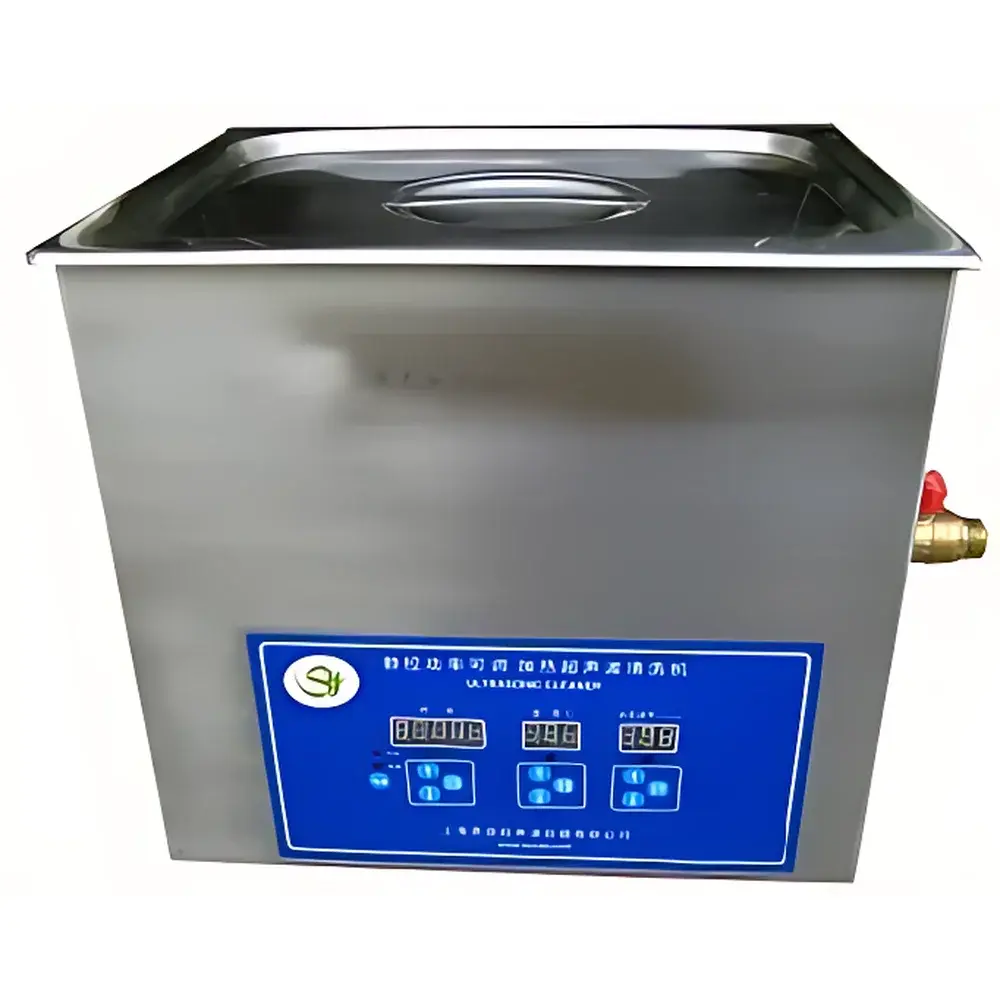
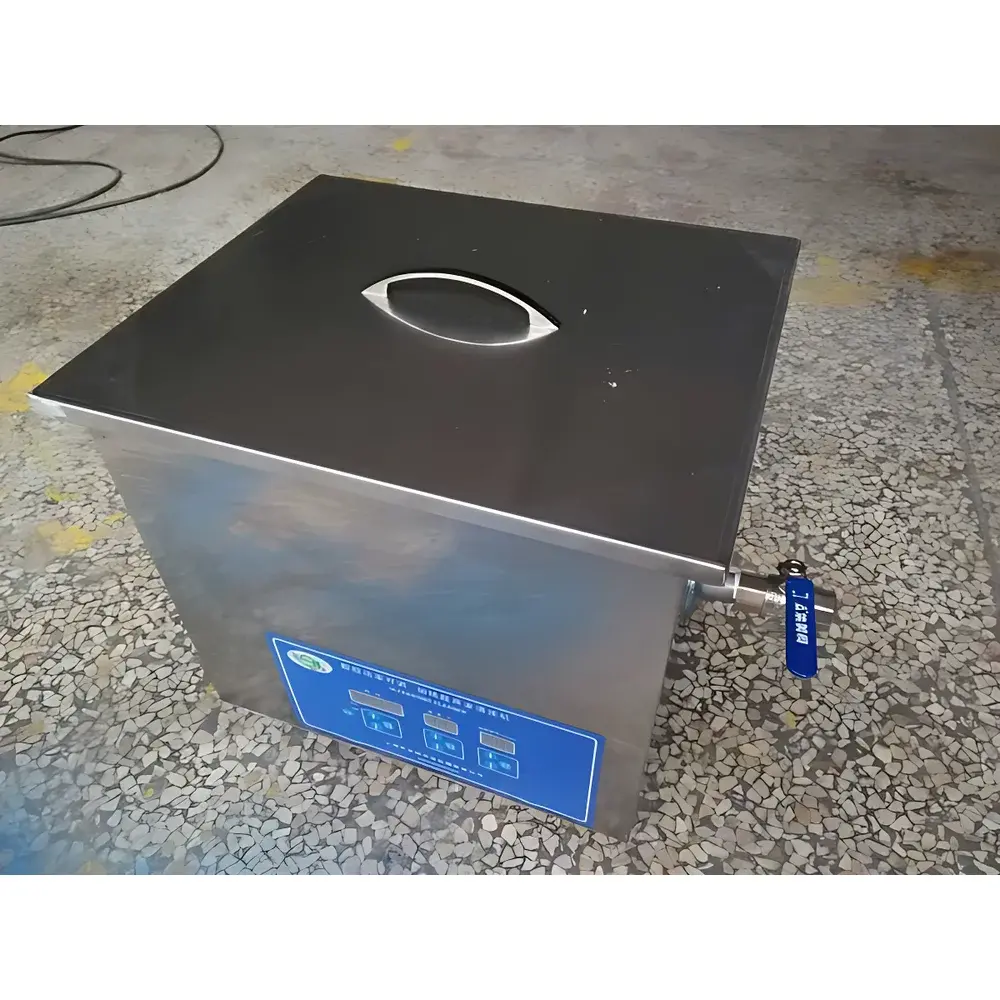
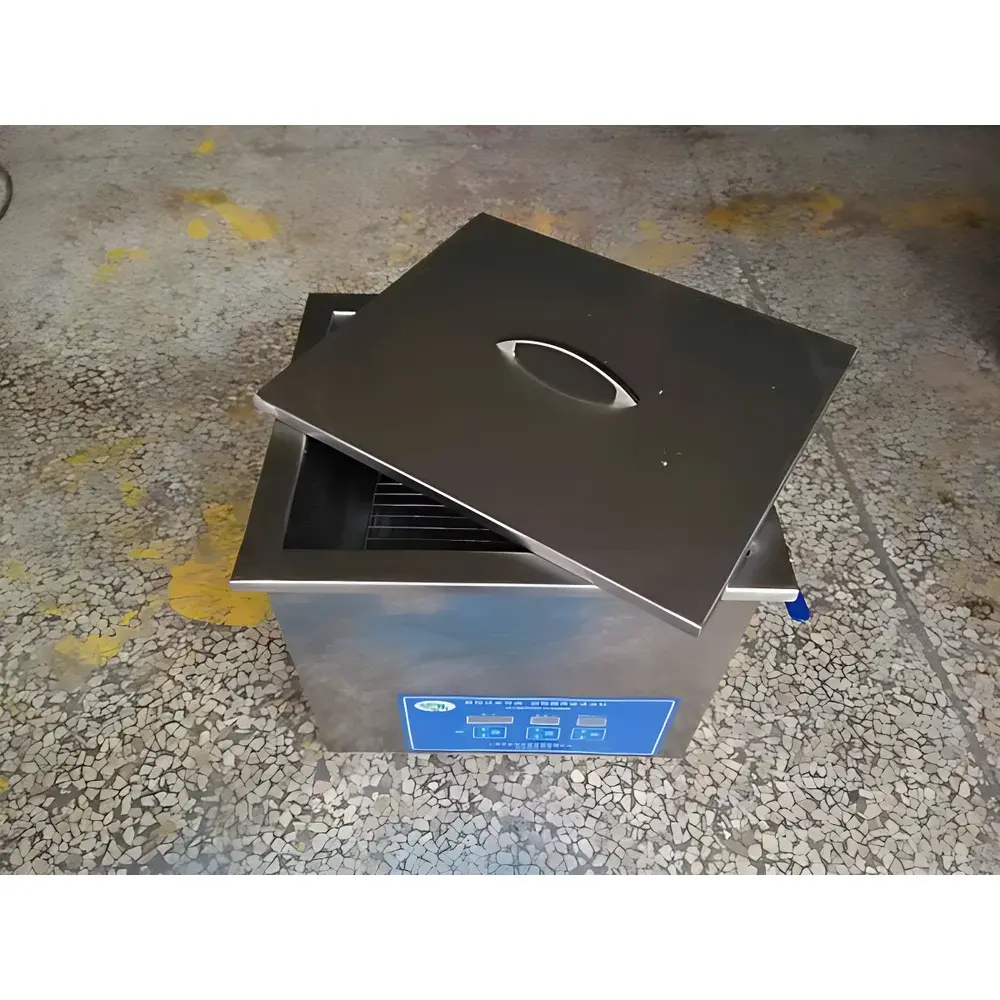
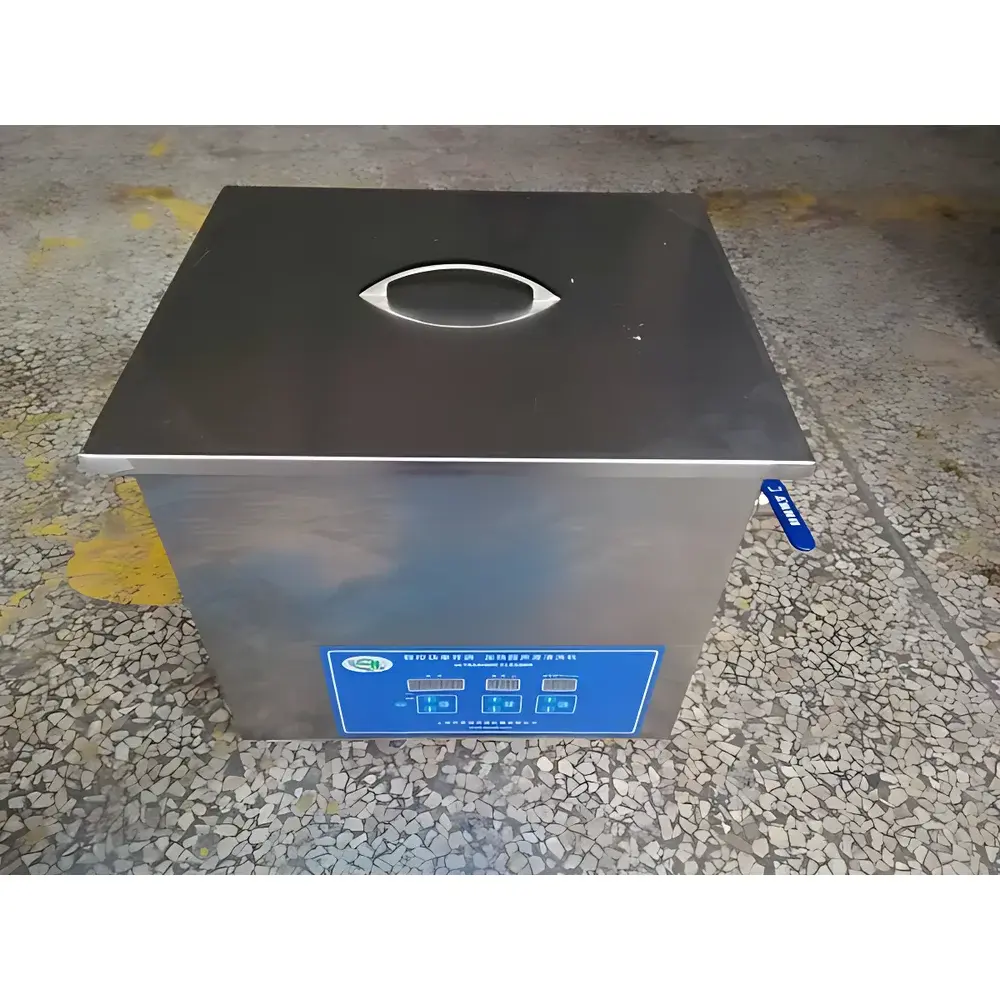
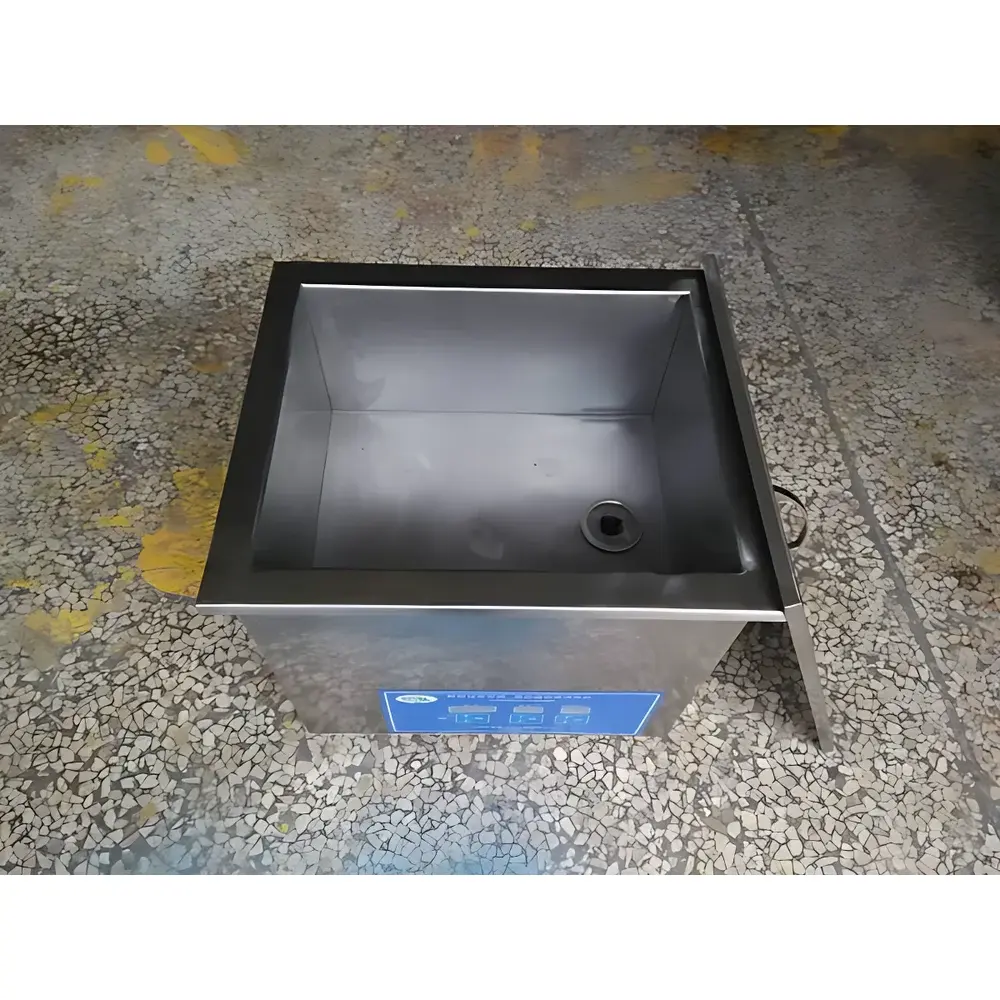
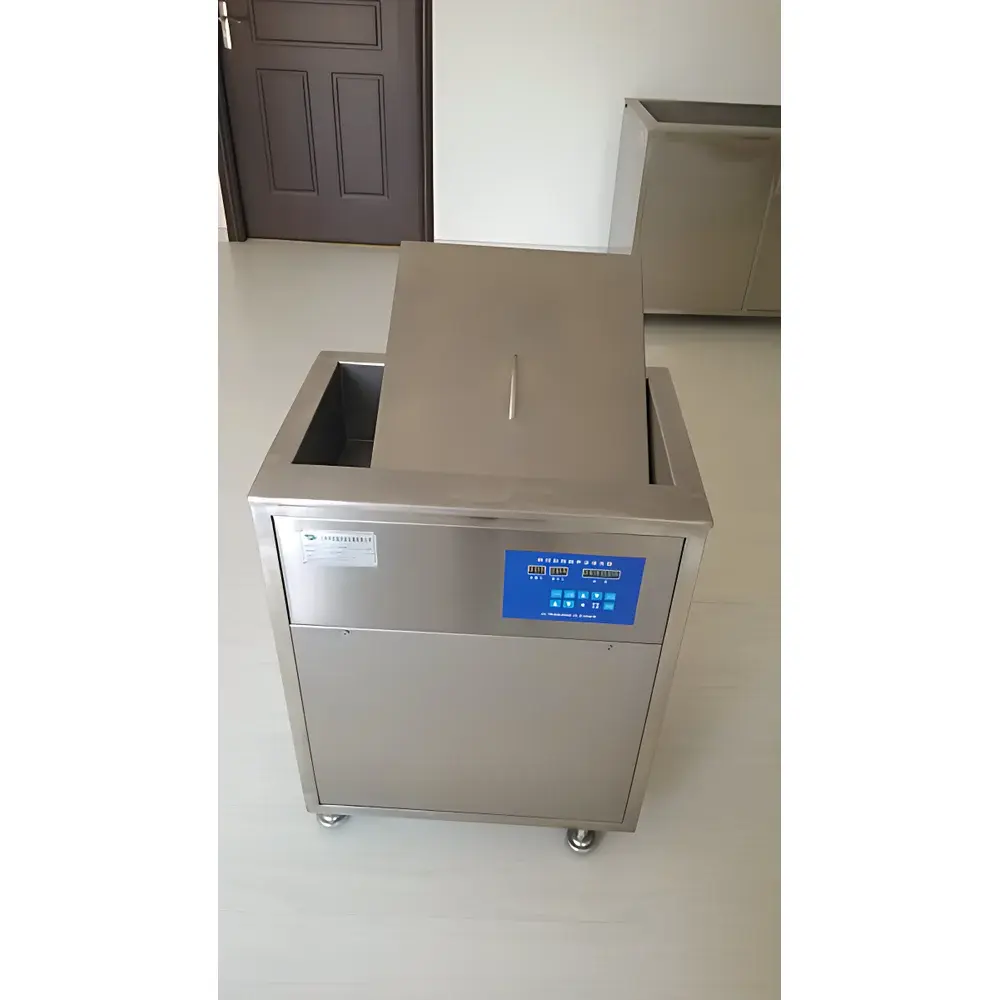
SyYan SCQ-5201 Benchtop Ultrasonic Cleaner with Multi-Frequency Selection
| Brand | SyYan Ultrasonics (sycs) |
|---|---|
| Origin | Shanghai, China |
| Model | SCQ-5201 |
| Capacity | 10 L |
| Ultrasonic Frequency Options | 25 / 40 / 60 / 80 / 100 kHz |
| Ultrasonic Power Output | 300 W |
| Power Adjustment | Fixed |
| Temperature Control | Not equipped |
| Timer Range | 1–60 min (adjustable) |
| Sound-Dampening Lid | Included |
| Manual Fill/Drain | Yes |
| Instrument Type | General-purpose ultrasonic cleaning system |
Overview
The SyYan SCQ-5201 is a benchtop ultrasonic cleaner engineered for precision cleaning, dispersion, emulsification, extraction, and degassing applications in research laboratories, quality control facilities, and pilot-scale production environments. It operates on the principle of acoustic cavitation—where high-frequency sound waves generate microscopic vacuum bubbles in a liquid medium that rapidly collapse, producing localized shockwaves and intense shear forces. This physical mechanism enables thorough cleaning of complex geometries—including blind holes, capillary channels, microstructures, and porous surfaces—without mechanical abrasion or chemical aggression. Unlike thermal or enzymatic methods, ultrasonic cleaning delivers consistent, non-contact decontamination across diverse substrates including metals, glass, ceramics, polymers, and medical-grade alloys. The SCQ-5201 supports five discrete frequency bands (25–100 kHz), allowing users to optimize energy transfer based on sample composition, contaminant type (e.g., particulate vs. organic film), and part geometry—critical for reproducible results in regulated workflows.
Key Features
- Benchtop design with stainless steel tank (300 × 240 × 150 mm internal dimensions) and corrosion-resistant 304-grade construction for long-term stability in aqueous and mild solvent environments.
- Multi-frequency generator supporting 25 kHz (high-energy macro-cavitation), 40 kHz (standard cleaning balance), 60 kHz (fine-part resolution), 80 kHz (delicate surface preservation), and 100 kHz (ultra-fine particle removal).
- Fixed 300 W transducer output delivering uniform energy distribution across the entire tank volume; no power modulation required for routine cleaning protocols.
- Digital timer (1–60 minutes) with audible end-of-cycle alert and automatic shutdown for process repeatability and operator safety.
- Integrated sound-dampening lid reduces ambient noise to ≤55 dB(A) at 1 m distance, complying with ISO 11201 occupational exposure guidelines.
- Manual fill-and-drain configuration ensures compatibility with flammable solvents and low-conductivity media where automated plumbing poses ignition or electrical hazard risks.
- No built-in heater or temperature sensor—designed for ambient-temperature operation only, eliminating thermal drift in time-sensitive dissolution or enzymatic assays.
Sample Compatibility & Compliance
The SCQ-5201 accommodates a broad range of laboratory samples, including but not limited to: surgical instruments (e.g., endoscopes, biopsy forceps), SMT nozzles, optical lenses, semiconductor wafers, printed circuit boards (PCBs), watch components, dental prostheses, and pharmaceutical vials. Its cavitation-based action removes particulates, biofilms, residual flux, cutting oils, polishing compounds, oxides, and fingerprint contaminants without altering dimensional tolerances or surface metallurgy. While not certified to IEC 61000-6-3 (EMC) or ISO 13485 out-of-the-box, the unit meets basic CE-marking requirements for electromagnetic compatibility and low-voltage directive compliance when operated within specified environmental conditions (10–35°C ambient, <80% RH). For GLP/GMP-aligned labs, the fixed-power/timer architecture supports audit-ready documentation of cleaning parameters per batch—particularly when paired with validated cleaning agents conforming to USP , ASTM D2603, or ISO 15797.
Software & Data Management
The SCQ-5201 operates via a standalone front-panel interface with LED display and tactile push-button controls—intentionally omitting embedded firmware or network connectivity to ensure deterministic behavior and eliminate cybersecurity vulnerabilities common in IoT-enabled lab equipment. All operational parameters (frequency selection, timer setting, cycle initiation) are manually entered and retained only during active use; no data logging, USB export, or remote monitoring capability is provided. This architecture aligns with FDA 21 CFR Part 11 Annex 11 expectations for “simple devices” where electronic records are not generated, thereby reducing validation burden for IQ/OQ/PQ execution. Users may integrate the unit into broader LIMS or MES systems via external PLC-triggered start/stop signals using dry-contact relay outputs (optional accessory).
Applications
- Pre-analytical sample preparation: Degassing solvents prior to HPLC mobile phase formulation; dispersing nanoparticle suspensions for DLS or TEM analysis; extracting metabolites from tissue homogenates under controlled sonication.
- Medical device reprocessing: Removal of blood residues, proteinaceous biofilm, and bioburden from reusable laparoscopic tools and orthopedic implants—validated per AAMI ST91 and ISO 15883-1 protocols.
- Electronics manufacturing: Cleaning solder paste residue, flux activators, and particulate contamination from PCB assemblies prior to AOI inspection or conformal coating.
- Materials science: Deagglomerating ceramic powders in ethanol or isopropanol; assisting in the exfoliation of 2D materials (e.g., graphene oxide); enhancing interfacial adhesion in composite prepreg layup.
- Pharmaceutical R&D: Emulsifying oil-in-water formulations for topical delivery systems; accelerating dissolution testing of poorly soluble APIs; sterilizing glassware used in aseptic filling simulations.
FAQ
Is the SCQ-5201 suitable for cleaning delicate optics or MEMS devices?
Yes—when operated at 60–100 kHz with low-surface-tension solvents (e.g., acetone or IPA), it effectively removes sub-micron particles without damaging anti-reflective coatings or microfabricated features.
Can I use flammable solvents such as hexane or ether in this unit?
Only in well-ventilated fume hoods with explosion-proof ventilation; the SCQ-5201 lacks intrinsically safe certification and must never be operated in confined or unventilated spaces with Class I flammable liquids.
Does the unit include a basket or mesh tray?
Yes—a removable 304 stainless steel wire mesh basket is supplied as standard equipment to elevate parts above tank sediment and ensure uniform exposure to cavitation fields.
What maintenance is required for long-term reliability?
Quarterly inspection of transducer bonding integrity, annual replacement of the ultrasonic generator cooling fan filter, and periodic descaling of the tank interior using 5% citric acid solution if used with hard water.
Is calibration traceable to NIST or other national standards?
No—cavitation intensity is not directly calibrated; however, users may verify performance using standardized aluminum foil erosion tests (ASTM E1759) or hydrophone-based acoustic field mapping per IEC 61845.



