
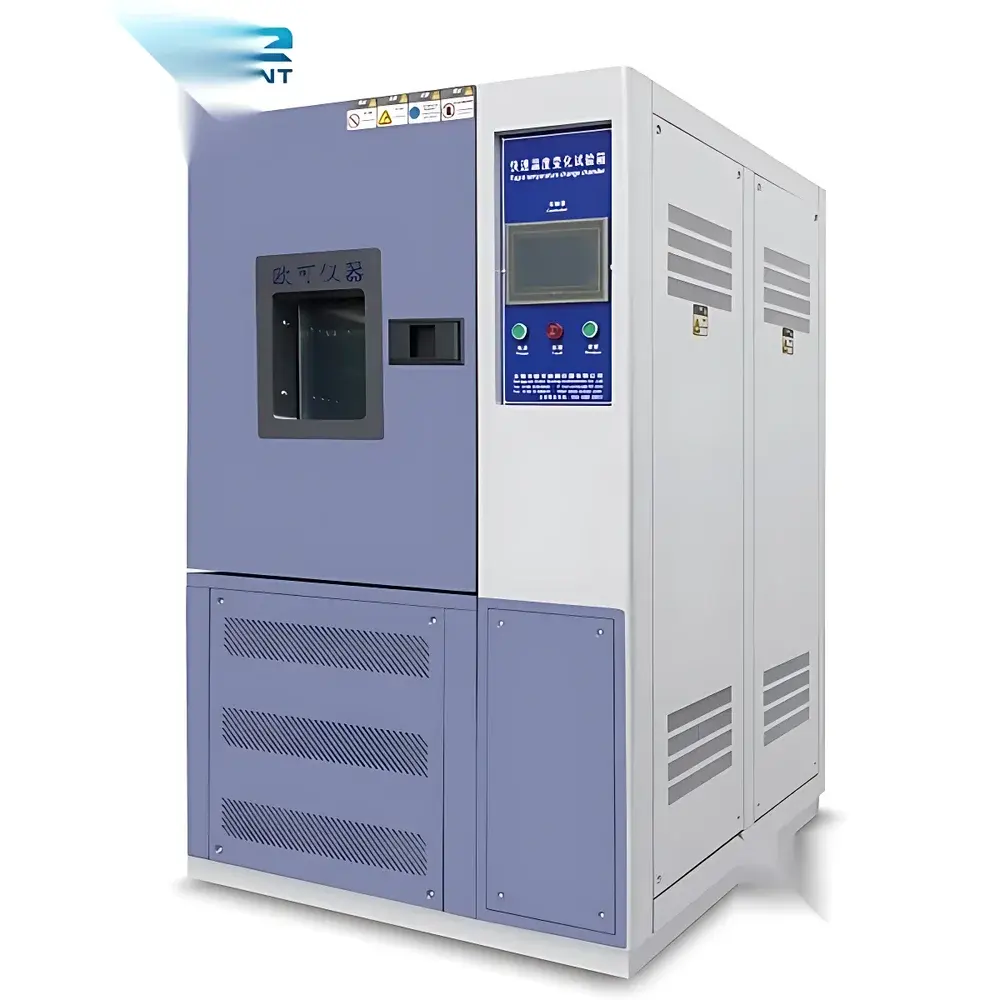
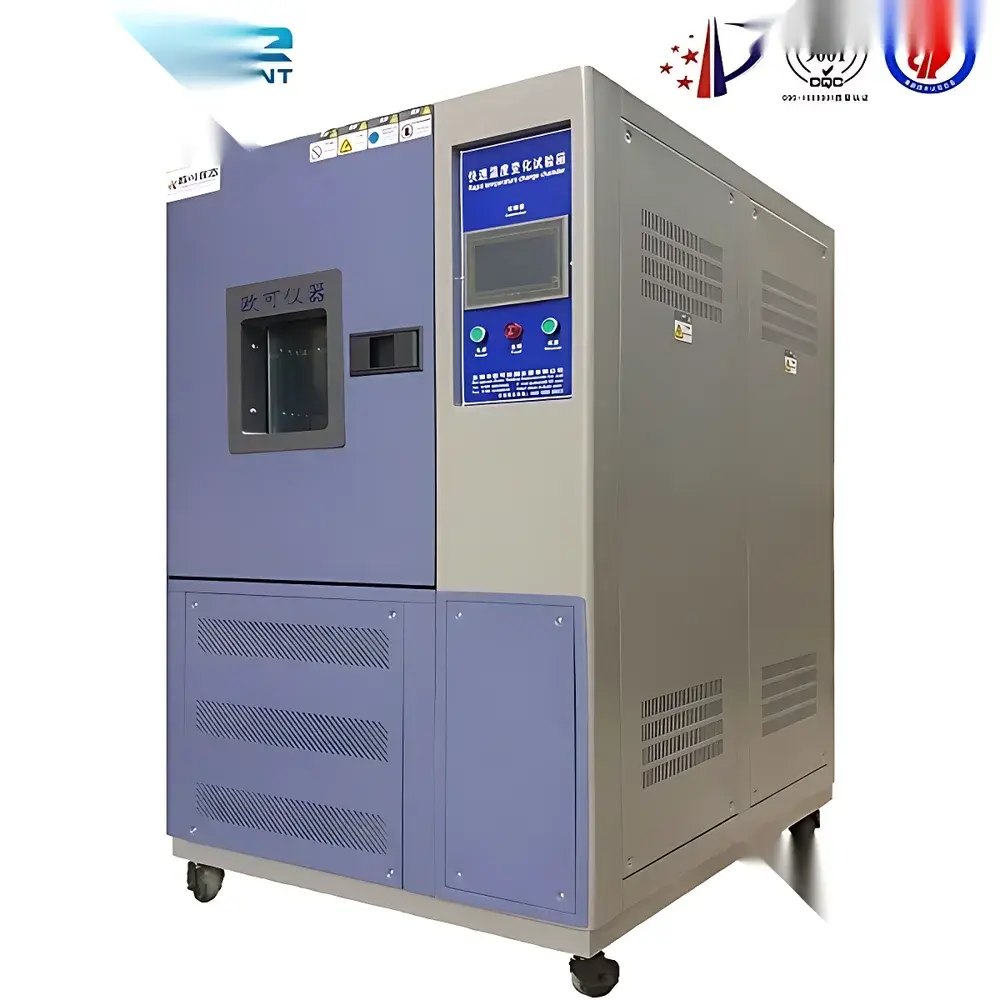
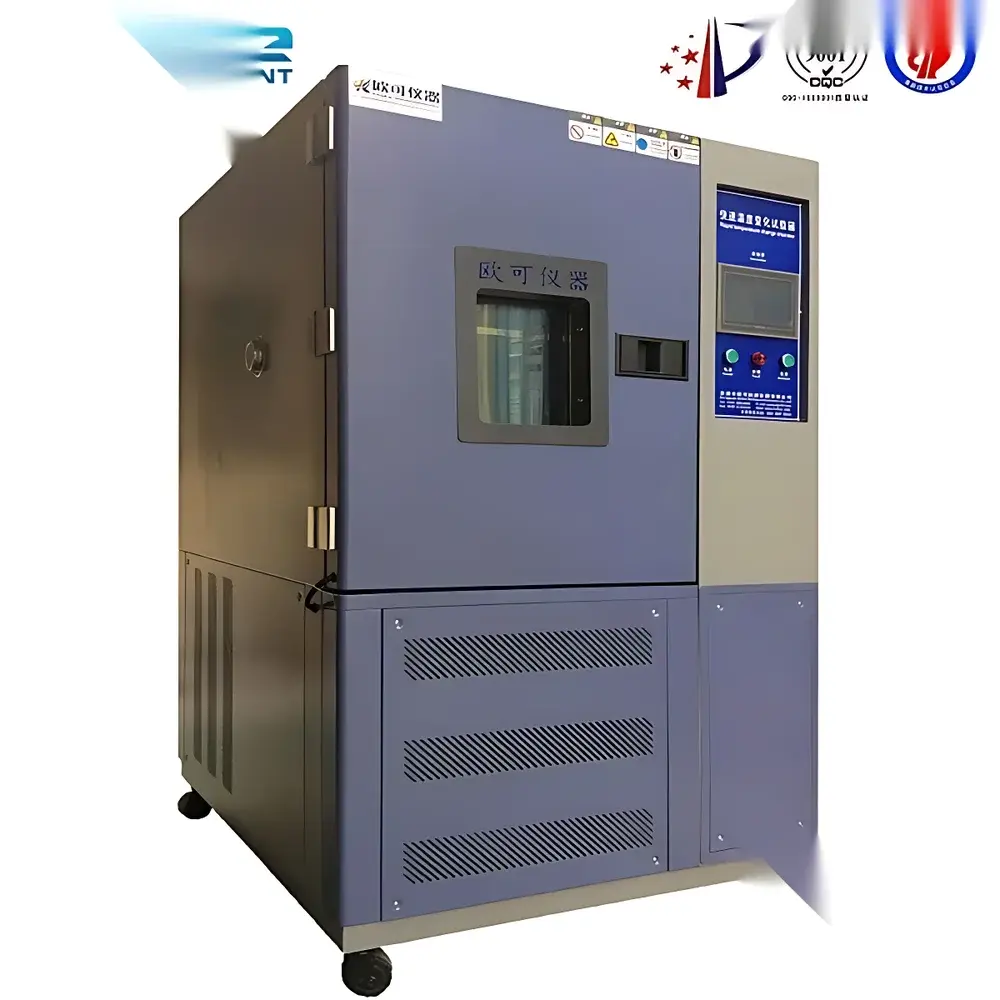
TAIZHOU Rapid Temperature Change Environmental Test Chamber Manufacturer
No specifications available.
Overview
The TAIZHOU Rapid Temperature Change Environmental Test Chamber is an engineered thermal stress screening system designed for accelerated reliability validation of electronic components, automotive modules, aerospace subsystems, and industrial materials under controlled, high-fidelity thermal cycling conditions. Based on the principle of rapid thermal transient induction—where specimens undergo repeated expansion and contraction due to precisely timed transitions between extreme temperature limits—the chamber applies quantifiable thermal strain to expose latent defects including interfacial delamination, solder joint fatigue, polymer microcracking, and coefficient-of-thermal-expansion (CTE) mismatch failures. Unlike standard thermal cycling chambers, this system delivers programmable ramp rates up to 25 °C/min across a full operational range of −70 °C to +150 °C, enabling compliance with rigorous military, automotive, and IEC qualification protocols where thermal shock severity directly correlates with field failure probability.
Key Features
- Programmable rapid temperature transition: selectable ramp rates of 5, 10, 15, 20, or 25 °C/min across −45 °C to +85 °C (standard) or −20 °C to +85 °C (high-stability mode)
- Wide operational envelope: temperature range −70 °C to +150 °C; humidity range 20–98% RH (optional extended range: 5–98% RH)
- High-precision environmental control: temperature uniformity ±2 °C, fluctuation ±0.5 °C; humidity uniformity ±3.0% RH (at ≥75% RH), fluctuation ±2.5% RH
- Robust chamber construction: interior and exterior walls fabricated from SUS#304 stainless steel with non-outgassing surface finish suitable for cleanroom-adjacent operation
- Multi-refrigerant cooling architecture: hermetically sealed dual-stage compressor system utilizing environmentally compliant R404A/R23 mixed refrigerant for stable sub-zero performance and low acoustic emission (<65 dB(A))
- Intuitive human-machine interface: 7-inch color LCD touch controller with real-time graphing, bilingual (English/Chinese) language toggle, and USB data export capability
- Electrical configuration: three-phase five-wire AC380 V ±5%, 50 Hz ±0.5 Hz; rear-mounted power inlet with 2.5 m cable length
Sample Compatibility & Compliance
The chamber accommodates test specimens up to 100 cm × 100 cm × 100 cm (model OK-TH-1000), with customizable internal dimensions available upon request. It supports both powered and unpowered device-under-test (DUT) configurations, including PCB assemblies, battery packs, sensor housings, and sealed enclosures. The system is fully aligned with internationally recognized environmental stress testing standards, including but not limited to: IEC 60068-2-1 (cold), IEC 60068-2-2 (dry heat), IEC 60068-2-14 (change of temperature), MIL-STD-810H Method 503.6 (temperature shock), and GJB 150.3–150.5 (Chinese military environmental test standards). All thermal profiles are traceable to NIST-calibrated reference sensors, and chamber validation reports include temperature mapping per ISO/IEC 17025 requirements.
Software & Data Management
The embedded controller firmware supports full-cycle logging at user-defined intervals (minimum 1 s resolution), storing time-stamped temperature, humidity, setpoint, and alarm status data in CSV format. Optional PC-based software enables remote monitoring, multi-chamber synchronization, automated report generation (PDF/Excel), and audit trail functionality compliant with GLP and FDA 21 CFR Part 11 requirements—including electronic signatures, user access levels, and immutable data history. Calibration records, maintenance logs, and deviation reports are retained within the system database with configurable retention policies.
Applications
This chamber serves as a core tool in reliability engineering laboratories for HALT (Highly Accelerated Life Testing), HASS (Highly Accelerated Stress Screening), and qualification-level environmental stress screening. Typical use cases include: pre-production validation of EV battery thermal management systems; qualification of avionics hardware per DO-160 Section 4; solder joint reliability assessment per IPC-9701; moisture sensitivity level (MSL) testing per J-STD-020; and thermal aging studies of elastomeric seals and adhesives. Its rapid ramp capability also supports research into thermo-mechanical fatigue mechanisms in advanced packaging technologies such as fan-out wafer-level chip-scale packages (FO-WLCSP).
FAQ
What is the maximum achievable ramp rate for thermal transitions?
The system supports programmable ramp rates up to 25 °C/min across the −45 °C to +85 °C range; higher rates may be realized within narrower spans upon custom engineering review.
Does the chamber support humidity-controlled thermal cycling?
Yes—humidity is independently controllable from 20% to 98% RH during temperature transitions, with optional extension to 5% RH for low-humidity stress profiling.
Is third-party calibration and IQ/OQ documentation available?
Yes—factory-installed NIST-traceable sensors and full installation qualification (IQ) and operational qualification (OQ) documentation packages are available as optional add-ons.
Can the controller interface be configured for English-only operation in overseas facilities?
Yes—the touch controller defaults to English and retains language selection across power cycles; Chinese interface is disabled by firmware configuration upon request.
What refrigerant is used, and does it comply with EU F-Gas Regulation (EU) No 517/2014?
The system uses R404A (GWP = 3922) and R23 (GWP = 14800) in a dual-stage cascade configuration; alternative low-GWP refrigerants (e.g., R449A, R513A) are available under custom specification.



