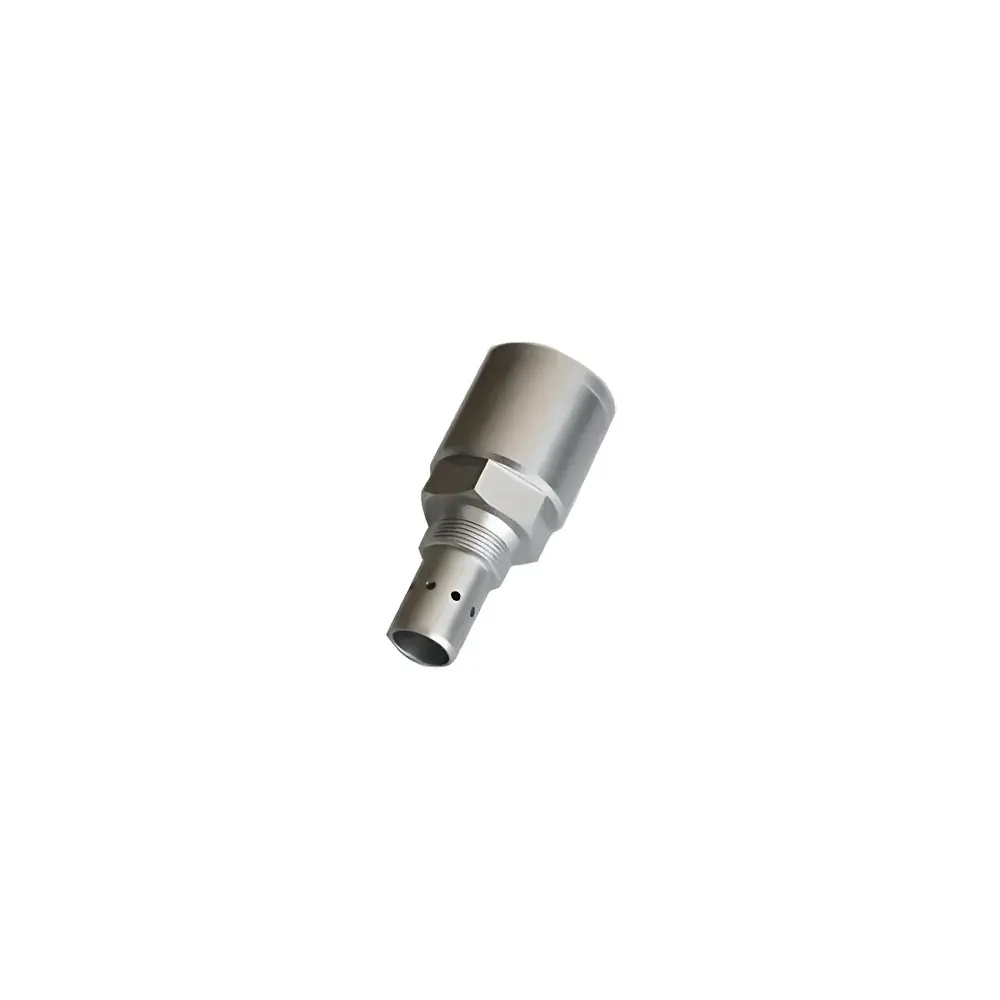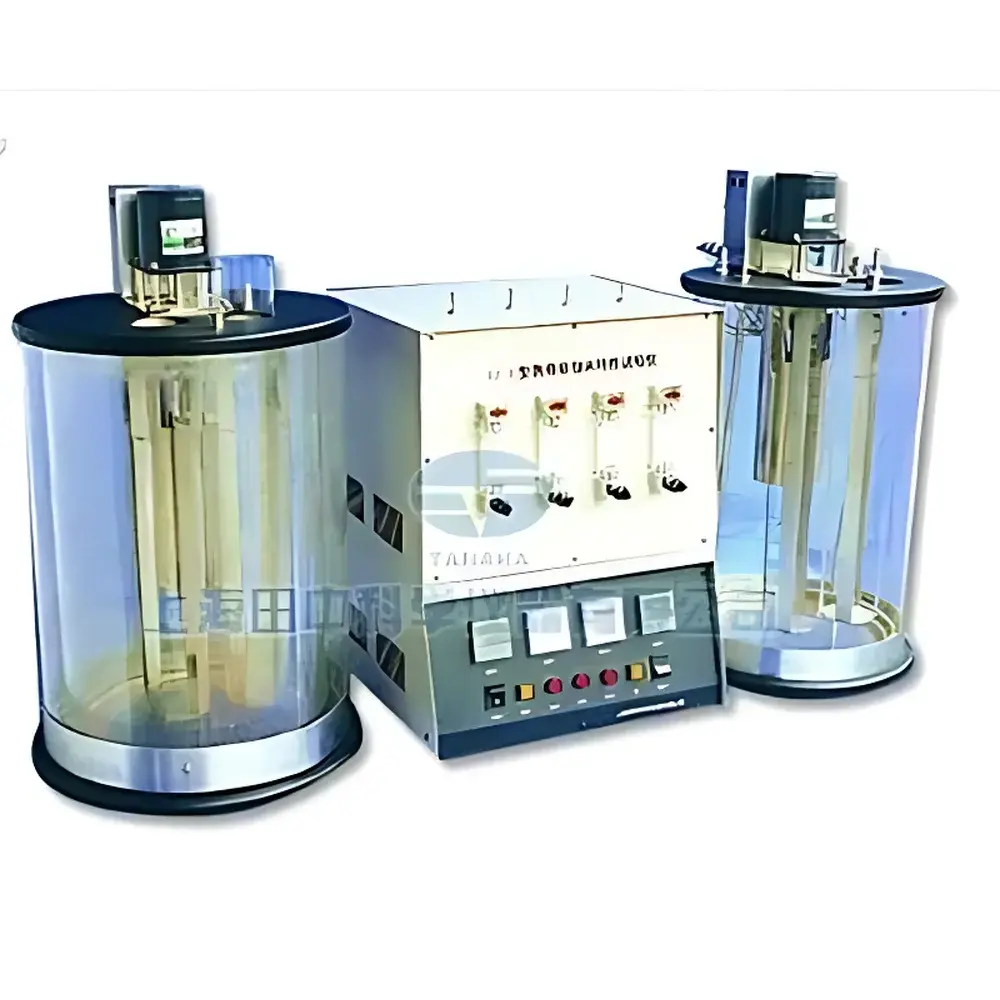
Tanaka LF-1 Lubricating Oil Foam Characteristics Tester
| Brand | Tanaka |
|---|---|
| Origin | Japan |
| Model | LF-1 |
| Standards Compliance | GB/T 12579–1990, ASTM D892–84, JIS K2518–1991 |
| Temperature Control | Dual-bath PID system (24 °C and 93.5 °C) |
| Bath Volume | Ø300 × 460 mm each |
| Temperature Stability | ±0.2 °C |
| Heating Power | 600 W (24 °C bath), 2 × 1000 W (93.5 °C bath) |
| Cooling Input Power | 600 W |
| Working Medium | Distilled water |
| Stirring Motor Power | 25 W |
| Air Pump Power | 6 W |
| Gas Diffuser | Ø25.4 mm, pore size <80 µm, air permeability 3000–6000 mL/min |
| Graduated Cylinder | 1000 mL |
| Air Flow Rate | 94 ± 5 mL/min |
| Timer Resolution | 1 s |
| Power Supply | AC 220 V, 50 Hz |
| Total Rated Power | 3.3 kW |
Overview
The Tanaka LF-1 Lubricating Oil Foam Characteristics Tester is a precision-engineered instrument designed for the standardized evaluation of foam behavior in lubricating oils under controlled thermal and aerodynamic conditions. It operates on the principle of gas dispersion through a calibrated sintered diffuser into a defined volume of oil sample, followed by quantitative measurement of foam volume and collapse kinetics—directly aligned with the physical mechanisms described in ASTM D892, GB/T 12579, and JIS K2518. The device features two independent, thermostatically regulated baths (24 °C and 93.5 °C), enabling comparative assessment of foam tendency (FT) and foam stability (FS) across industry-relevant temperature regimes. Its architecture integrates PID-controlled thermal regulation, gravimetrically verified airflow delivery, and high-reproducibility mechanical agitation—all engineered to minimize inter-laboratory variability and support method validation per ISO/IEC 17025 requirements.
Key Features
- Dual independent恒温 baths (24 °C and 93.5 °C), each with Ø300 × 460 mm stainless steel reservoirs filled with distilled water as heat-transfer medium
- PID temperature controllers delivering ±0.2 °C thermal stability at both setpoints, validated via traceable NIST-calibrated reference thermometers
- High-precision gas delivery system: 94 ± 5 mL/min airflow maintained by low-pulsation diaphragm pump and regulated via calibrated rotameter
- Sintered stainless steel gas diffuser (Ø25.4 mm) with certified pore size <80 µm and permeability range 3000–6000 mL/min, ensuring consistent bubble nucleation characteristics
- 1000 mL graduated cylinders manufactured to Class A volumetric tolerance (ISO 4787), supplied in sets of four for parallel testing and statistical replication
- Digital timer with 1-second resolution and audible end-of-test signal, supporting automated start/stop synchronization with air injection cycles
- Modular accessory kit including fluoropolymer tubing (Φ8 mm), silicone capillary lines (Φ6 × Φ4 mm), O-rings (Φ5 × 1.8 mm), and calibrated glass thermometers (0–50 °C and 50–100 °C)
Sample Compatibility & Compliance
The LF-1 accommodates all mineral-, synthetic-, and semi-synthetic-based lubricating oils meeting API, ACEA, or OEM specifications—including engine oils, gear oils, hydraulic fluids, and turbine oils. Sample volume is standardized at 200 mL per test per bath, with compatibility confirmed for viscosities ranging from ISO VG 10 to VG 680 (ASTM D445). All operational protocols conform to the sequence and timing criteria specified in ASTM D892 Method A (foam tendency) and Method B (foam stability), with documented alignment to GB/T 12579–1990 Annex A and JIS K2518–1991 Clause 6. The instrument’s mechanical design supports GLP-compliant use: all critical parameters (temperature, airflow, agitation speed, and timing) are manually set and recorded; no embedded software logs data, thereby avoiding 21 CFR Part 11 compliance burdens while maintaining full auditability of test execution.
Software & Data Management
The Tanaka LF-1 is a hardware-only, analog-digital hybrid instrument with no onboard firmware or proprietary software. All measurements—initial foam volume (FT), 5-minute foam volume (FS), and collapse time—are manually observed and recorded using external laboratory notebooks or LIMS-integrated spreadsheets. This architecture eliminates software validation requirements and ensures full transparency in data lineage. Users may integrate the LF-1 into digital workflows via optional USB timer interfaces or third-party data acquisition systems (e.g., National Instruments DAQmx) for timestamped event logging. Calibration records—including temperature sensor verification, airflow meter certification, and cylinder volumetric calibration—must be retained per ISO/IEC 17025 Clause 7.7 and are compatible with internal QA audits or regulatory inspections.
Applications
- Quality control release testing of finished lubricants against OEM foam specifications (e.g., GM 6038-M, Ford WSS-M2C913-A)
- Formulation development of anti-foam additive packages (e.g., silicone polymers, alkyl acrylates) via comparative FT/FS profiling
- Stability assessment of used oils during oxidative aging studies (ASTM D2272 RPVOT correlation)
- Interlaboratory round-robin trials supporting method transfer between R&D, QC, and contract testing labs
- Evaluation of base stock–additive interactions influencing surface tension and lamella drainage kinetics
- Supporting root-cause analysis of field-reported foaming issues in hydraulic and circulating systems
FAQ
What standards does the LF-1 directly support?
ASTM D892–84 (Methods A and B), GB/T 12579–1990, and JIS K2518–1991 — all referenced in the instrument’s mechanical and thermal design.
Is the LF-1 suitable for testing greases or solid lubricants?
No — it is strictly configured for liquid-phase lubricants with kinematic viscosity ≤1000 mm²/s at 40 °C per ASTM D445.
Does the instrument include automated data export or network connectivity?
No — it is a benchtop manual tester with no embedded electronics beyond the timer and PID controllers; data recording is operator-managed.
Can the 93.5 °C bath be operated without the 24 °C bath active?
Yes — baths operate independently; power and control circuits are fully isolated.
What maintenance intervals are recommended for the gas diffuser?
Diffusers should be ultrasonically cleaned in acetone every 20 tests and replaced after 100 cycles or if airflow deviation exceeds ±5 mL/min.