
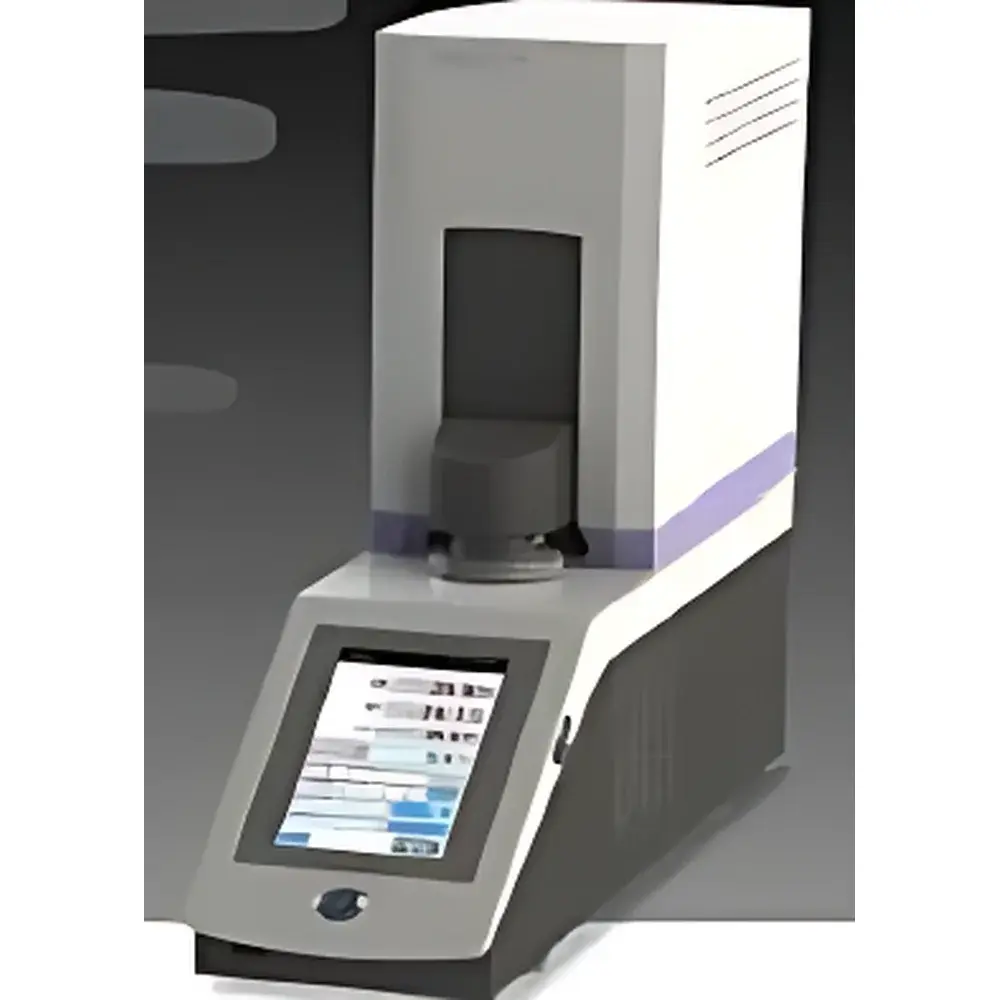
TANAKA MPC-6 Automated Micro Cloud and Pour Point Tester
| Brand | TANAKA |
|---|---|
| Origin | Japan |
| Model | MPC-6 |
| Test Method | ASTM D6749 (Air-Pressure Method), ASTM D97, ISO 3016 |
| Sample Volume | 4.5 mL |
| Temperature Interval | 1 °C or 2 °C |
| Repeatability | Pour Point ±1 °C (1 °C interval) / ±3 °C (3 °C interval) |
| Cooling Source | Integrated Peltier Module |
| Compliance | ASTM, ISO, GLP-ready architecture |
| Data Output | Auto-generated report with timestamped test logs |
Overview
The TANAKA MPC-6 Automated Micro Cloud and Pour Point Tester is a benchtop analytical instrument engineered for precise, high-throughput determination of cloud point (CP) and pour point (PP) in petroleum distillates—including diesel fuels, heating oils, jet fuels, and lubricant base stocks—according to internationally recognized standards. Unlike conventional tilt-based methods (e.g., ASTM D97 and ISO 3016), the MPC-6 implements the air-pressure detection principle defined in ASTM D6749. This method applies regulated compressed air to the sample column during controlled cooling, detecting the onset of flow cessation (pour point) and light-scattering discontinuity (cloud point) via optical sensors. The air-pressure technique eliminates mechanical ambiguity associated with manual tube tilting, mitigates interference from wax microcrystal agglomeration or ice nucleation artifacts, and delivers thermodynamically consistent phase transition endpoints under reproducible thermal ramping conditions.
Key Features
- Micro-volume operation: Requires only 4.5 mL of sample per test—reducing material consumption, waste generation, and exposure risk in routine QC laboratories.
- Integrated Peltier-based thermal control: Dual-mode (cooling/heating) semiconductor module enables rapid, stable temperature regulation without external chillers, liquid nitrogen, or refrigerant compressors—minimizing footprint, acoustic noise, and maintenance overhead.
- Programmable temperature decrement: Selectable 1 °C or 2 °C intervals (with optional 3 °C mode for legacy correlation), supporting both high-resolution characterization and accelerated screening protocols.
- Simultaneous dual-parameter acquisition: Each run automatically determines both cloud point and pour point in a single thermal cycle, eliminating sequential testing and inter-run calibration drift.
- Automated endpoint recognition: Optical detection system monitors turbidity and flow resistance in real time; algorithmic threshold analysis ensures objective, operator-independent pass/fail decisions per ASTM D6749 Annex A1.
- GLP-compliant operational architecture: Built-in audit trail logging, user access levels, electronic signature support, and time-stamped raw data export meet requirements for regulated environments operating under FDA 21 CFR Part 11 or ISO/IEC 17025 frameworks.
Sample Compatibility & Compliance
The MPC-6 is validated for transparent to slightly hazy hydrocarbon liquids within kinematic viscosity ranges typical of middle distillates (1.5–8.0 mm²/s at 40 °C). It accommodates standard 12-mm OD borosilicate glass sample tubes with snap-fit caps, ensuring compatibility with existing labware inventories. All measurement protocols adhere strictly to ASTM D6749 (air-pressure pour point), ASTM D2500/D5773 (cloud point), ASTM D97 and ISO 3016 (for method equivalence verification), and IP 15/ISO 3016 Annex B (interlaboratory precision data). Instrument firmware includes selectable reference curves for diesel fuel classes (EN 590, ASTM D975), aviation turbine fuels (ASTM D1655), and marine distillates (ISO 8217), enabling direct specification compliance reporting.
Software & Data Management
The MPC-6 operates via Windows-compatible PC software featuring intuitive workflow navigation, customizable test templates, and automated report generation in PDF and CSV formats. All raw sensor data—including temperature vs. time profiles, optical transmittance traces, pressure differential curves, and endpoint flags—are stored with metadata (operator ID, sample ID, calibration date, ambient conditions). Audit logs record every parameter change, test initiation, result override, and firmware update. Exported datasets conform to ASTM E1447 and ISO/IEC 17025 data integrity guidelines. Optional integration with LIMS platforms is supported via ODBC-compliant database drivers and HL7-compatible structured output.
Applications
- Refinery quality assurance: Real-time monitoring of cold flow properties during hydrotreating, fractionation, and additive blending operations.
- Fuel formulation R&D: Evaluation of cold flow improver (CFI) efficacy across diverse paraffinic/naphthenic feedstocks.
- Contract laboratory testing: High-volume compliance verification for EN 590, ASTM D975, and GB/T 510 deliverables.
- Storage stability assessment: Accelerated aging studies correlating CP/PP shifts with oxidation induction time (OIT) and sediment formation.
- Regulatory submission support: Generation of method-validated data packages for EPA, CE, or NATA accreditation submissions.
FAQ
Does the MPC-6 require external refrigeration or cryogenic fluids?
No. Its integrated Peltier cooling system achieves temperatures down to –60 °C without auxiliary chillers, dry ice, or liquid nitrogen.
Can the instrument validate results against traditional ASTM D97 procedures?
Yes. When operated in 3 °C decrement mode with tilt-equivalent endpoint logic, MPC-6 data demonstrate statistical equivalence (per ASTM D6300 precision statements) to manual D97 testing across multiple interlaboratory studies.
Is method validation documentation provided with the system?
Yes. Each unit ships with IQ/OQ documentation, a traceable calibration certificate (NIST-traceable Pt100 sensor), and a performance verification protocol aligned with ASTM D6749 Annex A2.
What sample preparation steps are required prior to testing?
Samples must be homogenized and filtered through a 75-µm mesh to remove particulates; no degassing or pre-conditioning is necessary unless specified by product-grade standards.
How is data security maintained during networked operation?
All communications use TLS 1.2 encryption; local database storage employs AES-256 encryption; and role-based access control prevents unauthorized configuration changes or result modifications.




