
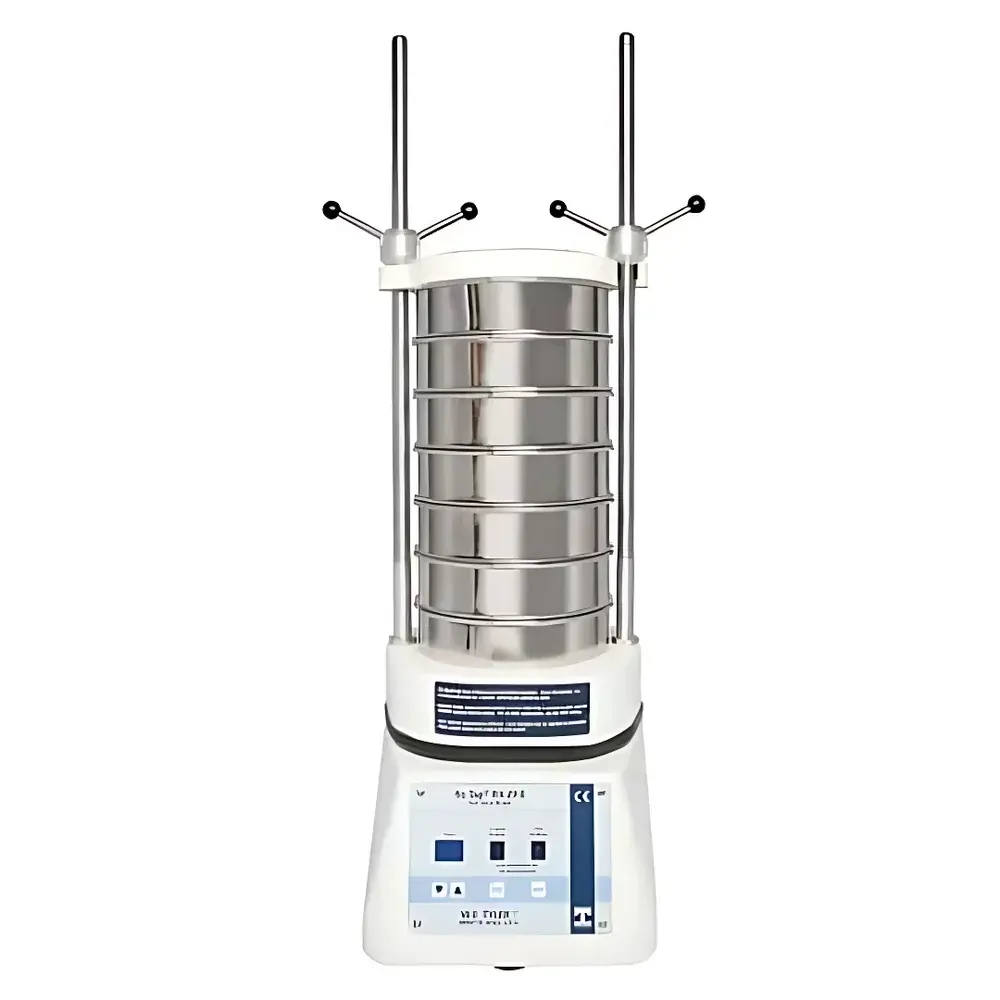
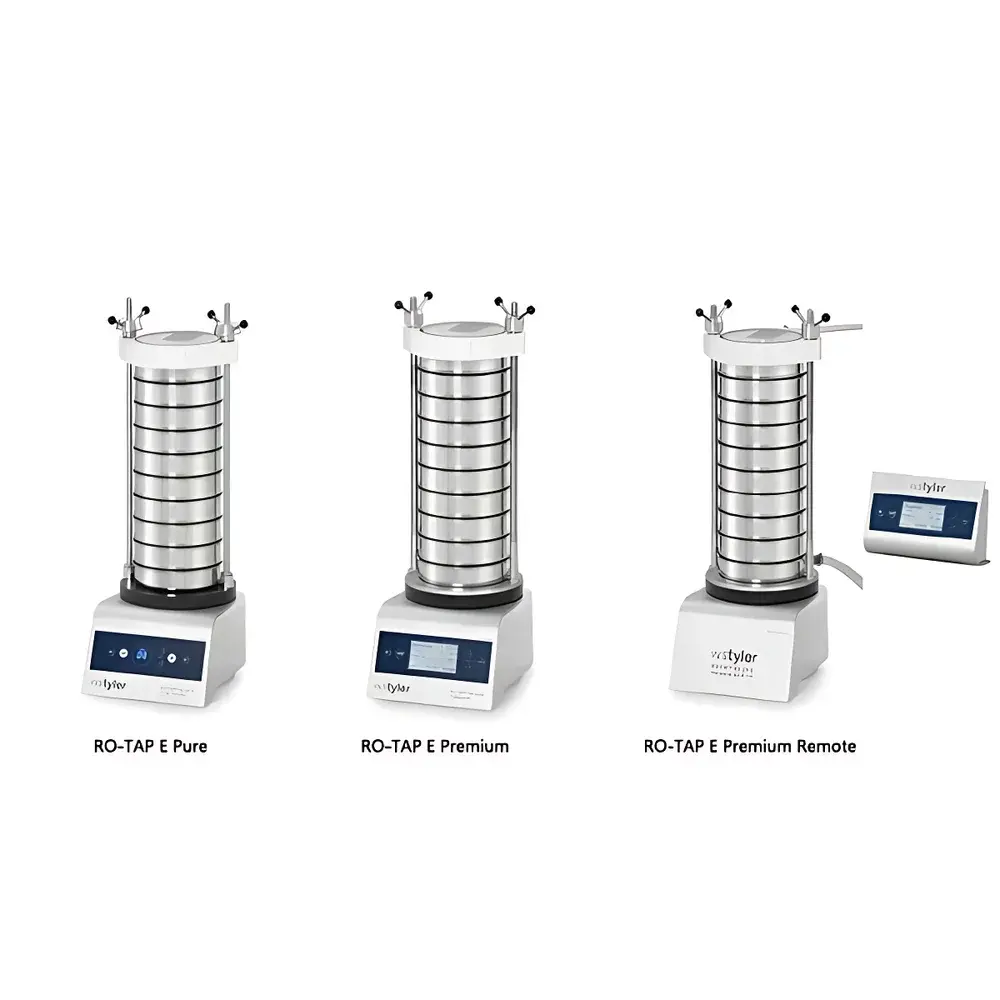
Taylor RX-29-E and RX-30-E Electromagnetic Sieve Shakers
| Brand | Taylor |
|---|---|
| Origin | USA |
| Model | RX-29-E, RX-30-E |
| Principle | Electromagnetic Vibration Sieving |
| Type | Laboratory Benchtop Sieve Shaker |
| Compliance | ASTM E11, ISO 3310-1, USP <786> |
Overview
The Taylor RX-29-E and RX-30-E Electromagnetic Sieve Shakers are precision-engineered laboratory instruments designed for standardized dry and wet particle size distribution analysis via mechanical sieving. Based on electromagnetic drive technology, these shakers generate controlled, repeatable vertical oscillatory motion—eliminating mechanical wear associated with cam-driven or rotary systems. The core principle relies on sinusoidal vibration at fixed amplitude and frequency (typically 50/60 Hz), enabling consistent energy transfer to stacked sieve nests for efficient particle stratification and separation. Unlike motor-driven units, the electromagnetic actuator delivers high reproducibility across extended operation cycles, making the RX-29-E and RX-30-E suitable for QC laboratories operating under GLP, GMP, or ISO/IEC 17025 frameworks. Both models comply with internationally recognized sieve analysis standards, including ASTM E11 (Specification for Woven Wire Test Sieve Cloth and Test Sieves), ISO 3310-1 (Test Sieves — Technical Requirements and Testing — Part 1: Test Sieves of Metal Wire Cloth), and USP (Particle Size Distribution of Pharmaceutical Powders).
Key Features
- Electromagnetic drive system ensuring zero mechanical backlash, minimal maintenance, and long-term amplitude stability
- Dual-model configuration: RX-29-E accommodates standard 8-inch (203 mm) diameter test sieves; RX-30-E supports larger 12-inch (305 mm) sieves for higher sample throughput and coarse material applications
- Adjustable vibration time (1–99 minutes) and programmable pause intervals for multi-stage sieving protocols
- Integrated safety interlock preventing operation when sieve stack is improperly seated or lid is open
- Stainless steel housing with powder-coated finish for chemical resistance and cleanroom compatibility
- Low-noise operation (<65 dB(A)) optimized for shared laboratory environments
- Calibration traceable to NIST-certified reference weights and amplitude verification tools
Sample Compatibility & Compliance
The RX-29-E and RX-30-E accommodate a wide range of dry and pre-dried granular materials—including metal powders, pharmaceutical excipients, catalysts, ceramics, aggregates, and mineral ores—with particle size ranges from 20 µm to 125 mm, depending on sieve mesh selection (standard wire cloth meshes from 20 µm to 4.75 mm, plus perforated plate options up to 125 mm). Wet sieving is supported using optional splash guards and corrosion-resistant sieve frames. All operational parameters adhere to regulatory requirements for documented testing procedures: audit trails for run logs (via optional RS-232/USB data export), user access levels, and electronic signature support align with FDA 21 CFR Part 11 readiness when integrated with compliant LIMS or ELN platforms. Routine performance qualification (PQ) is facilitated by included calibration check kits and manufacturer-recommended SOP templates aligned with ISO/IEC 17025 Clause 6.5.
Software & Data Management
While the RX-29-E and RX-30-E operate as standalone instruments with intuitive front-panel controls, they feature bidirectional serial (RS-232) and USB-B connectivity for integration into centralized laboratory data ecosystems. Optional Taylor SieveLog™ software (v3.2+) enables automated method storage, real-time amplitude monitoring, digital run logging with timestamped operator ID, and export of mass-on-sieve data in CSV, PDF, or XML formats compatible with statistical process control (SPC) tools. All data files include embedded metadata: sieve stack configuration, vibration duration, amplitude setting, ambient temperature/humidity (when interfaced with external sensors), and instrument serial number—ensuring full traceability per ALCOA+ principles (Attributable, Legible, Contemporaneous, Original, Accurate, Complete, Consistent, Enduring, Available).
Applications
These electromagnetic sieve shakers serve critical roles across multiple regulated and industrial sectors. In pharmaceutical manufacturing, they support raw material release testing (e.g., lactose, microcrystalline cellulose), blend uniformity assessment, and final dosage form characterization per ICH Q5A and Q6A guidelines. In metallurgy and additive manufacturing, they verify powder feedstock specifications for laser powder bed fusion (LPBF) processes. Cement and construction materials labs use them for fineness testing per ASTM C204 and EN 196-6. Geological surveys apply them to soil gradation analysis (ASTM D422, AASHTO T88), while food ingredient producers rely on them for flour, sugar, and spice particle grading under FDA Food Safety Modernization Act (FSMA) verification protocols.
FAQ
What is the maximum recommended sample mass for the RX-29-E and RX-30-E?
For optimal separation efficiency and adherence to ASTM E11, the RX-29-E accepts up to 200 g per sieve layer (8-inch format); the RX-30-E supports up to 500 g per layer (12-inch format). Exceeding these limits may cause blinding or incomplete stratification.
Can the shakers be validated for GMP compliance?
Yes—both models support IQ/OQ/PQ documentation packages, including factory-issued calibration certificates, amplitude verification reports, and SOP templates compliant with Annex 15 and USP .
Is wet sieving possible without modification?
Wet sieving requires optional splash guard kits and stainless steel sieve frames with sealed joints. Standard configurations are rated for dry use only.
Do the units meet electrical safety standards for international use?
Yes—certified to UL 61010-1, CSA C22.2 No. 61010-1, and CE (EMC Directive 2014/30/EU and LVD Directive 2014/35/EU) with voltage variants available for 100–240 VAC, 50/60 Hz operation.
How often does amplitude calibration require verification?
Per ASTM E11 Section 7.3.2 and internal quality policy, amplitude should be verified daily before first use using the supplied amplitude gauge or certified laser vibrometer, with formal recalibration recommended annually or after 1,000 operating hours.



