
TCT Ferment500 Quad-Channel Fermentation Off-Gas Analyzer
| Brand | TCT |
|---|---|
| Model | Ferment500 |
| Origin | Fujian, China |
| Instrument Type | Fully Automatic |
| Detection Method | Gas Sensing (Thermal Conductivity for CO₂ |
| Measured Parameters | CO₂, O₂, CER, OUR, RQ |
| Accuracy | ≤ ±1.5% FS |
| Sampling Frequency | ≥1 Hz |
| Dimensions | 355 mm × 195 mm × 436 mm |
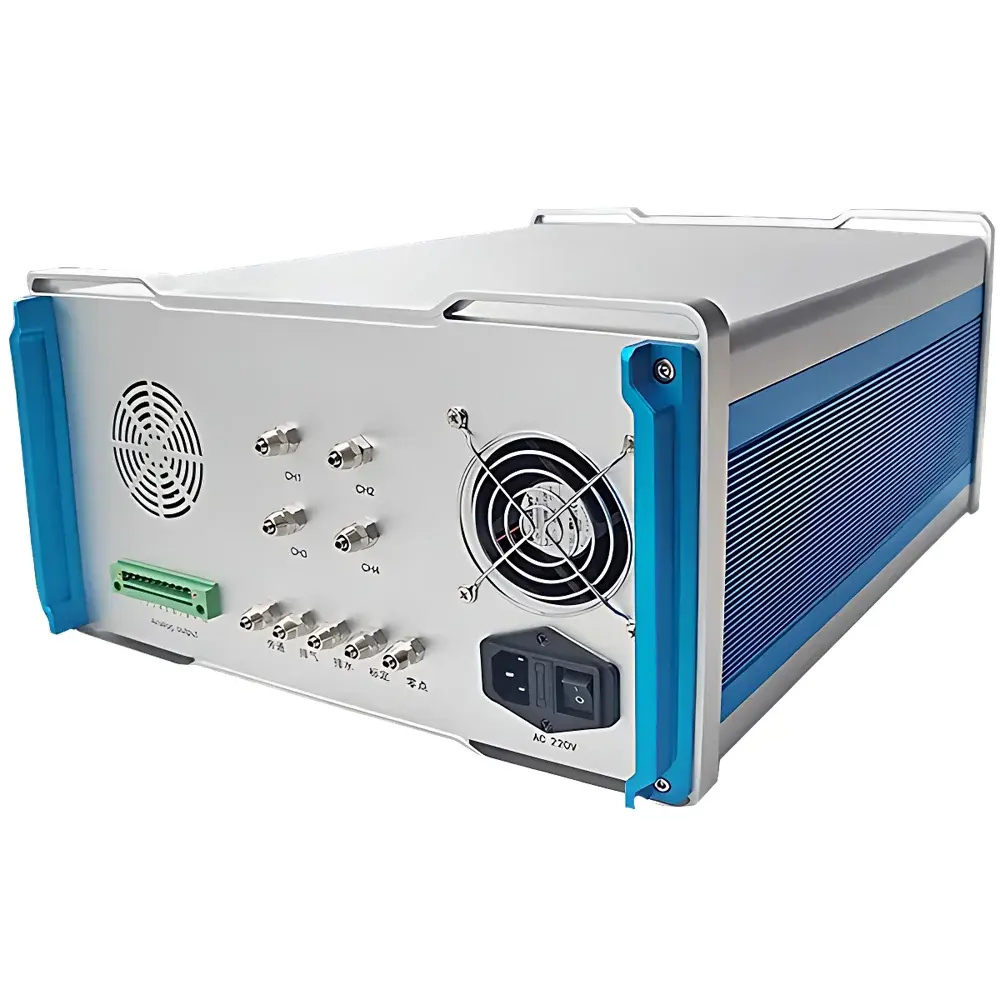
| Channel Architecture | Four Independent Physical Channels with Dedicated Sensors |
| Environmental Compensation | Integrated Temperature, Humidity & Pressure Compensation |
| Gas Pre-treatment | Built-in Condensation-Based Moisture and Foam Removal System |
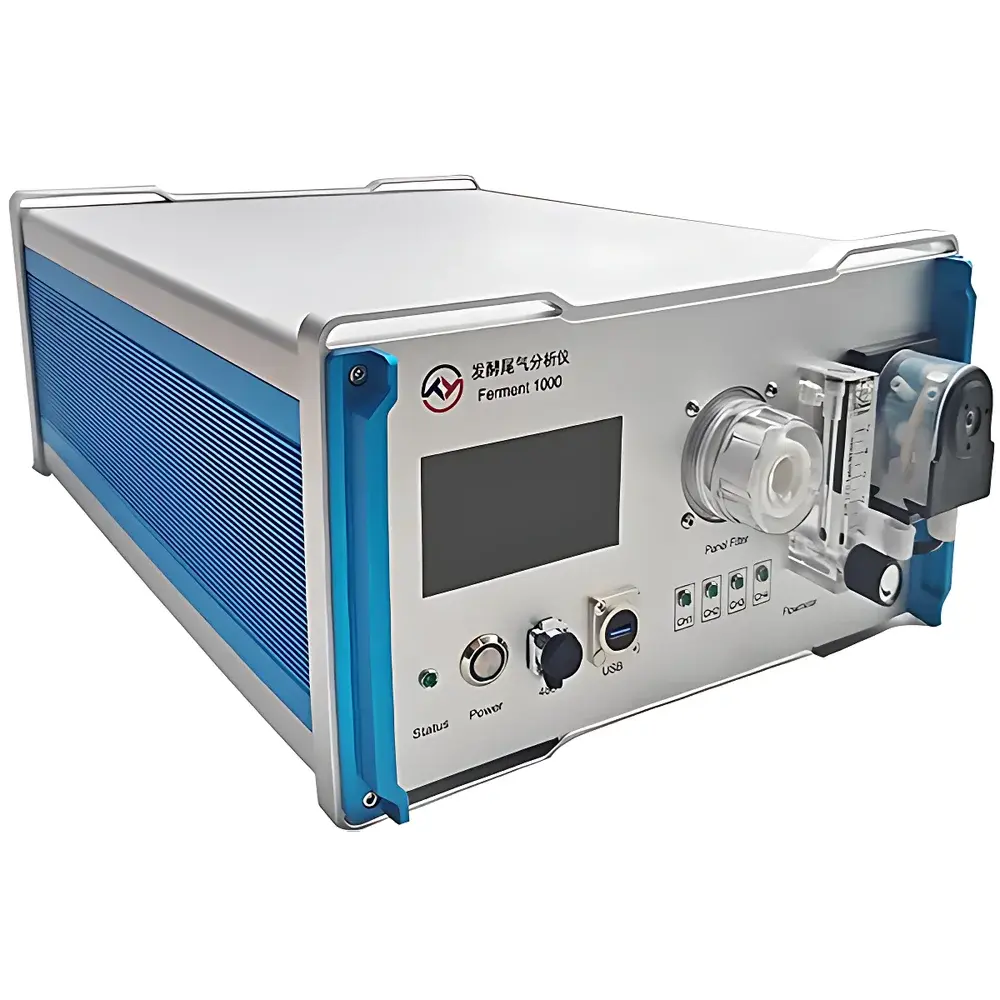
| Display | High-Resolution Touchscreen LCD |
| Calibration | Per-Channel Single-Point Calibration |
| Connectivity | Optional Ethernet/Wi-Fi with OTA Firmware Updates, Remote Diagnostics, Alarm Notification, Predictive Maintenance Logging |
Overview
The TCT Ferment500 Quad-Channel Fermentation Off-Gas Analyzer is an engineered solution for real-time, non-invasive monitoring of respiratory gas exchange dynamics in microbial and mammalian cell culture bioreactors. It operates on well-established physicochemical principles: CO₂ concentration is quantified via thermal conductivity detection—optimized with proprietary temperature and humidity compensation algorithms—while O₂ is measured using stable, low-drift electrochemical sensors. By continuously acquiring off-gas composition at ≥1 Hz, the system computes key physiological parameters—including Carbon Dioxide Evolution Rate (CER), Oxygen Uptake Rate (OUR), and Respiratory Quotient (RQ)—using stoichiometric mass balance models compliant with standard bioprocess engineering conventions (e.g., Metabolic Flux Analysis frameworks). Unlike multiplexed single-channel analyzers, the Ferment500 implements four physically isolated gas pathways, each equipped with its own sensor stack, flow control valve, and signal conditioning circuitry. This architecture eliminates cross-channel contamination risk, ensures true parallel acquisition, and supports concurrent operation across multiple fermenters—critical for scale-up studies, strain comparison, or multi-batch process validation.
Key Features
- Four fully independent measurement channels with dedicated CO₂ (thermal conductivity) and O₂ (electrochemical) sensors—no shared hardware or sequential switching
- Integrated condensation-based gas pre-treatment module removes water vapor and foam entrainment without chemical scrubbers or membrane dryers
- Real-time environmental compensation for temperature, relative humidity, and barometric pressure—applied per channel prior to calculation of CER/OUR/RQ
- Manual needle-valve flow control (0–2 L/min range) per channel, enabling precise adaptation to varying bioreactor exhaust flow rates
- Embedded touchscreen interface (7-inch capacitive LCD) supporting local data visualization, parameter configuration, and on-device storage (≥30 days at 1 Hz)
- Per-channel power gating and single-point calibration capability—minimizing downtime during routine maintenance or sensor replacement
- Optional industrial-grade Ethernet/Wi-Fi connectivity supporting TLS-secured data streaming, remote firmware updates (OTA), and audit-trail-enabled alarm logging
Sample Compatibility & Compliance
The Ferment500 interfaces directly with standard bioreactor exhaust lines (6–8 mm ID tubing) and accommodates gas streams containing up to 95% relative humidity and transient foam carryover—common in high-density E. coli, S. cerevisiae, and CHO cell cultivations. Its sensor design meets IEC 61000-6-2/6-3 immunity and emission requirements for laboratory environments. While not certified as a medical device, the system’s data output structure aligns with GLP-compliant documentation practices: timestamped raw sensor values, compensated concentrations, derived kinetic parameters, and operator-initiated event markers are all stored with immutable metadata (channel ID, calibration date, environmental conditions). The optional networked version supports configurable audit trails and user-access controls consistent with FDA 21 CFR Part 11 Annex 11 expectations for electronic records in biopharmaceutical development.
Software & Data Management
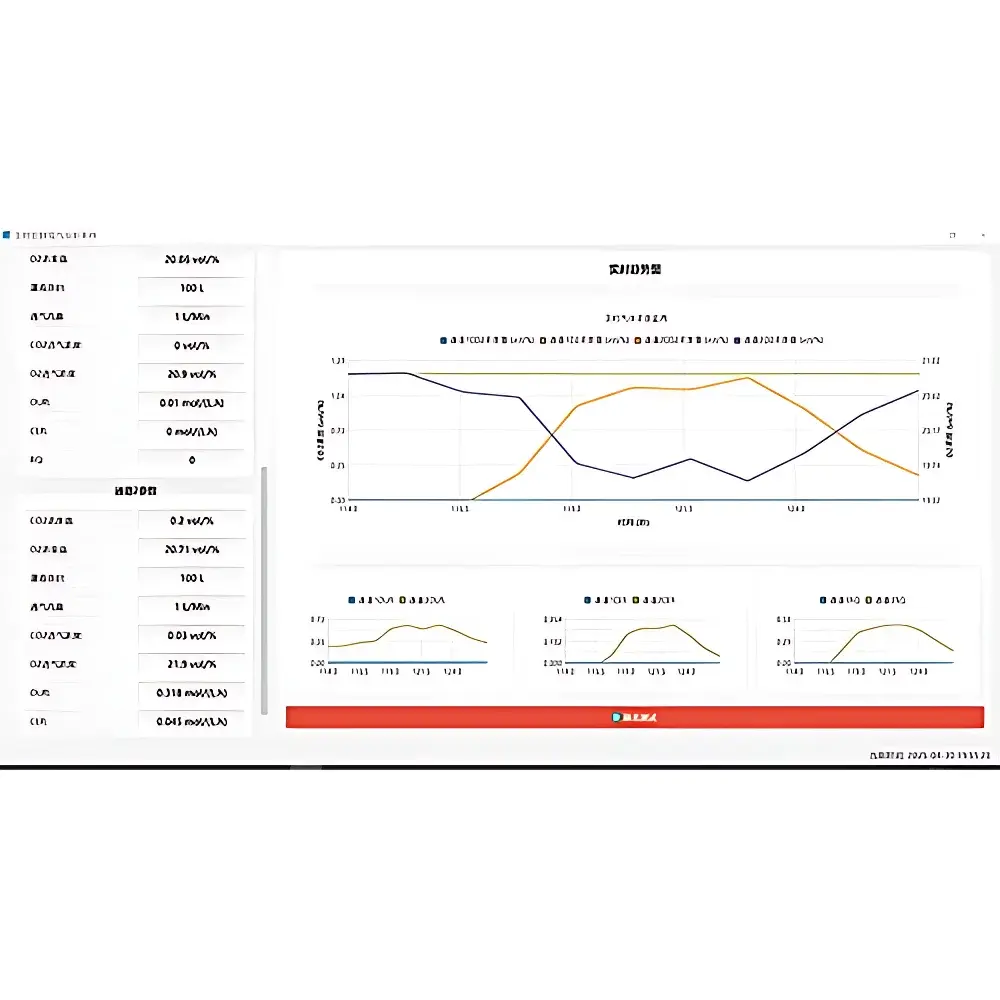
The accompanying BioFlux Control Suite (v3.2+) runs on Windows OS and provides synchronized acquisition, visualization, and export of time-series data from all four channels. It implements ISO/IEC 17025-aligned uncertainty propagation for CER and OUR calculations, incorporating sensor accuracy specifications, flowmeter tolerance, and gas density corrections. Data files are saved in HDF5 format—enabling direct import into MATLAB, Python (via h5py), or industry-standard process analytics platforms (e.g., SIMCA, DeltaV Historian). The software supports batch metadata tagging (strain ID, medium composition, inoculum density), automated RQ trend alerts (e.g., deviation >±0.1 over 15 min), and export of CSV/Excel reports compliant with internal SOP templates. Remote access mode enables secure web-based dashboards with role-based permissions and configurable email/SMS notifications for critical events (e.g., O₂ drop >5% v/v, CER plateau exceeding 2 hr).
Applications
- Process characterization during early-stage bioprocess development—especially for recombinant protein, monoclonal antibody, and plasmid DNA production
- Metabolic phenotyping of engineered strains under varying feed strategies or dissolved oxygen setpoints
- Scale-down model validation by correlating off-gas kinetics between benchtop (2 L) and pilot-scale (100 L) bioreactors
- Real-time detection of metabolic shifts indicative of nutrient limitation, pH drift, or microbial contamination
- Supporting Quality-by-Design (QbD) initiatives through multivariate analysis of CER/OUR/RQ trajectories against critical quality attributes (CQAs)
- Integration with fed-batch control logic—triggering feed pumps or agitation adjustments based on RQ thresholds or CER inflection points
FAQ
What gas sampling method does the Ferment500 use?
It employs continuous sidestream sampling via stainless-steel or PTFE-lined tubing, with flow regulated independently per channel using precision needle valves.
Is calibration required before each run?
No—per-channel single-point calibration is recommended weekly or after sensor replacement; zero/span checks can be performed using certified N₂ and synthetic air mixtures.
Can the system interface with third-party SCADA or DCS platforms?
Yes—Modbus TCP and OPC UA drivers are available as optional software modules for integration into existing automation infrastructures.
How is moisture handled in high-humidity fermentation exhaust?
An integrated thermoelectric condenser reduces dew point to <5°C prior to sensor inlet, eliminating condensate formation and ensuring stable thermal conductivity measurements.
Does the analyzer support GMP-compliant data integrity requirements?
With the networked option enabled, it provides electronic signatures, change history logs, and 21 CFR Part 11–compliant audit trails when deployed under validated configurations.





