
TCT VRMS1000 Mobile Emission Inspection & Enforcement Management System
| Brand | TCT (Xiamen Tongchuang) |
|---|---|
| Origin | Fujian, China |
| Model | VRMS1000 |
| Instrument Type | Portable System |
| Max. Permissible Error | ±1% |
| Zero Drift | ±1% |
| Span Drift | ±1% |
| Repeatability | ±1% |
Overview
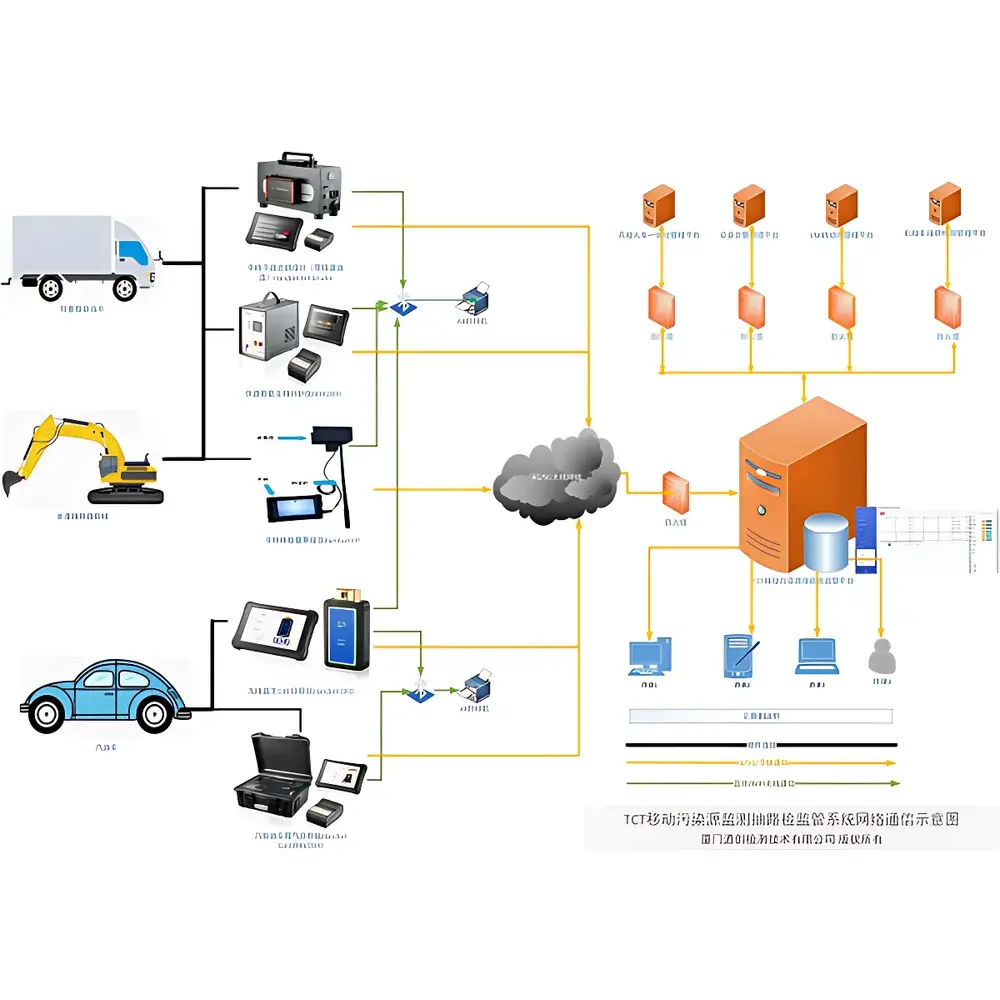
The TCT VRMS1000 Mobile Emission Inspection & Enforcement Management System is a field-deployable, regulatory-compliant platform engineered for real-time monitoring, data acquisition, and enforcement oversight of mobile pollution sources—including light-duty gasoline vehicles, heavy-duty diesel trucks, non-road mobile machinery (NRMM), and auxiliary combustion equipment. Unlike standalone gas analyzers, the VRMS1000 functions as an integrated hardware-software ecosystem that unifies heterogeneous portable emission measurement devices—including automotive exhaust gas analyzers (CO/HC/NOx/O₂), diesel smoke meters (opacity), rapid NOₓ analyzers, Linemann smoke graders, OBD-II scanners, portable urea concentration testers, and fuel quality analyzers—into a single, auditable workflow. The system operates on a dual-mode architecture: fully functional offline via embedded control software with local report generation, and fully synchronized online via 4G/5G or Wi-Fi to a centralized cloud management platform. Its core design aligns with China’s Ministry of Ecology and Environment (MEE) Technical Guidelines for On-Road Vehicle Emission Supervision (HJ 845–2017, HJ 1237–2021) and supports traceability requirements under national environmental law enforcement protocols.
Key Features
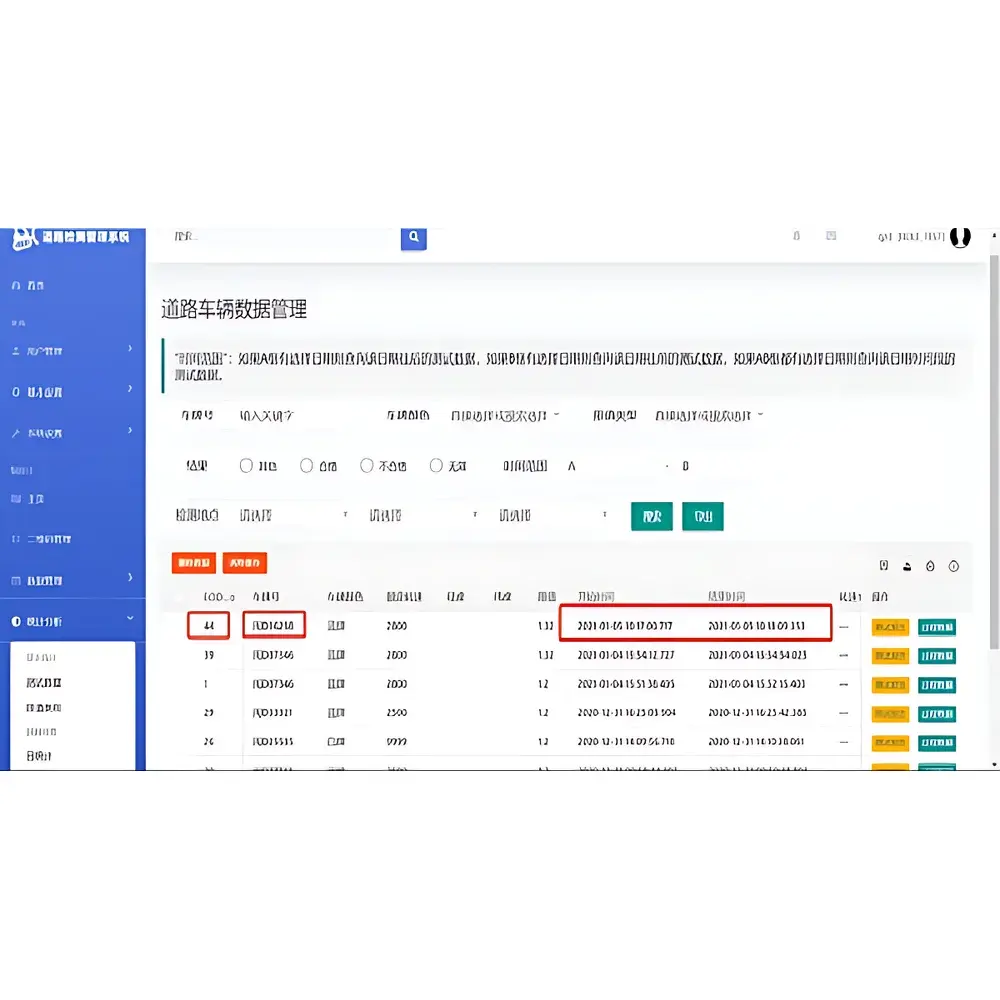
- Regulatory-compliant reporting engine: Automatically generates MEE-standard inspection reports using vehicle identification (license plate, VIN), test timestamp, instrument calibration status, and measured emission values—printable on-site via wired or wireless A4 printers, with or without internet connectivity.
- Multi-device interoperability: Supports concurrent integration of up to 8 heterogeneous portable instruments via Wi-Fi, Ethernet, or Bluetooth—exhaust analyzers, opacity meters, OBD tools, Linemann graders, urea testers, and fuel analyzers—all time-synchronized and geotagged.
- Dual-network operational resilience: Functions autonomously in offline mode with local database caching and encrypted report generation; seamlessly resumes synchronization upon network restoration, ensuring zero data loss and full audit continuity.
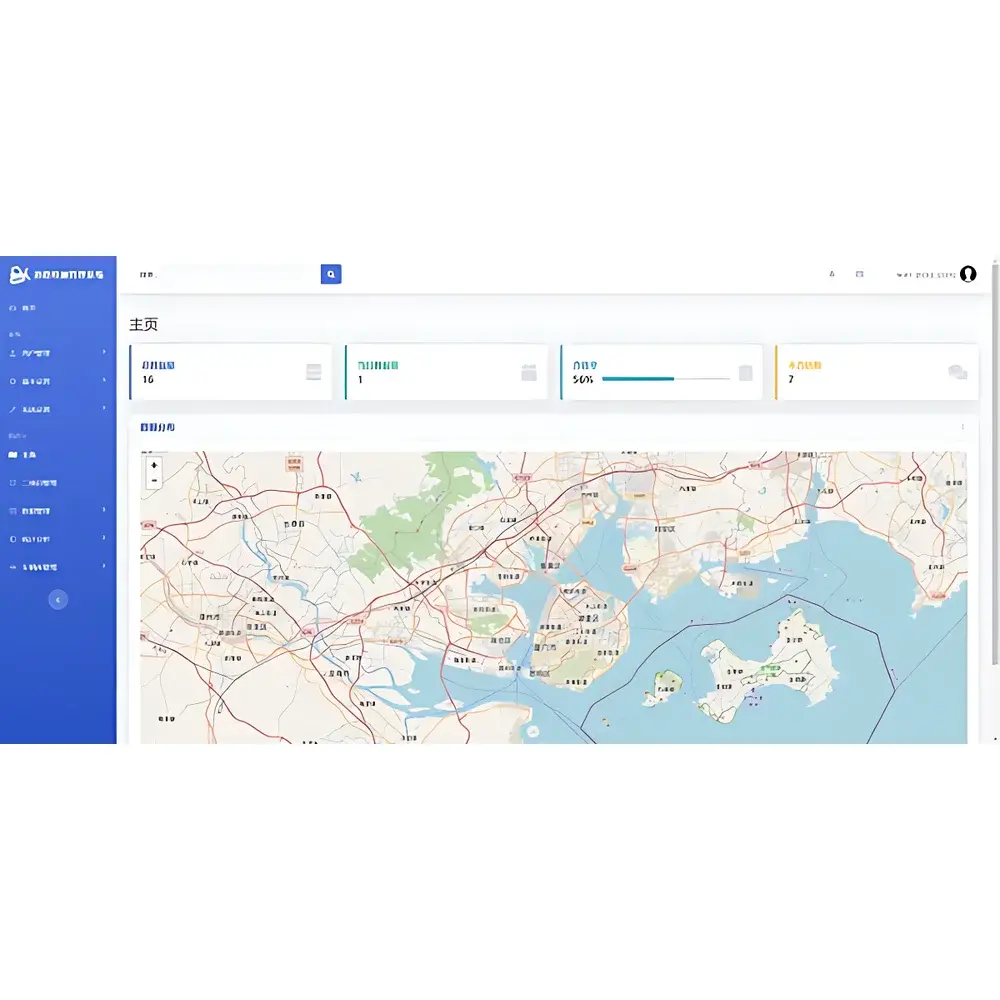
- GIS-enabled spatial supervision: Integrated electronic map interface visualizes inspection locations, vehicle movement paths, high-emission hotspots, low-emission zone (LEZ) boundaries, and NRMM deployment density—supporting dynamic patrol route optimization and targeted enforcement.
- Role-based access control: Implements granular user permissions (e.g., field inspector, county supervisor, municipal auditor, system administrator) with session logging, password policies, and two-factor authentication options compliant with GB/T 22239–2019 (China’s Cybersecurity Level Protection Standard).
- Remote device health monitoring: Provides real-time status telemetry (battery level, sensor readiness, firmware version, GPS lock, signal strength) for all connected portable units—enabling proactive maintenance scheduling and tamper detection alerts.
Sample Compatibility & Compliance
The VRMS1000 accommodates diverse mobile source categories across multiple regulatory tiers: light-duty passenger cars (GB 18352.6–2016), heavy-duty diesel vehicles (GB 3847–2018), non-road mobile machinery (GB 20891–2014, Stage III/IV), and construction equipment operating within designated low-emission zones. All generated reports conform to MEE-mandated data structures, digital signatures, and metadata fields required for legal admissibility. The system supports audit-ready data retention for ≥36 months and maintains immutable logs for all report edits, deletions, or re-exports—meeting evidentiary standards under China’s Administrative Penalty Law and Environmental Protection Law. It also provides configurable export formats (CSV, PDF/A-2, XML) compatible with provincial ecological monitoring platforms and national-level MEE data ingestion gateways.
Software & Data Management
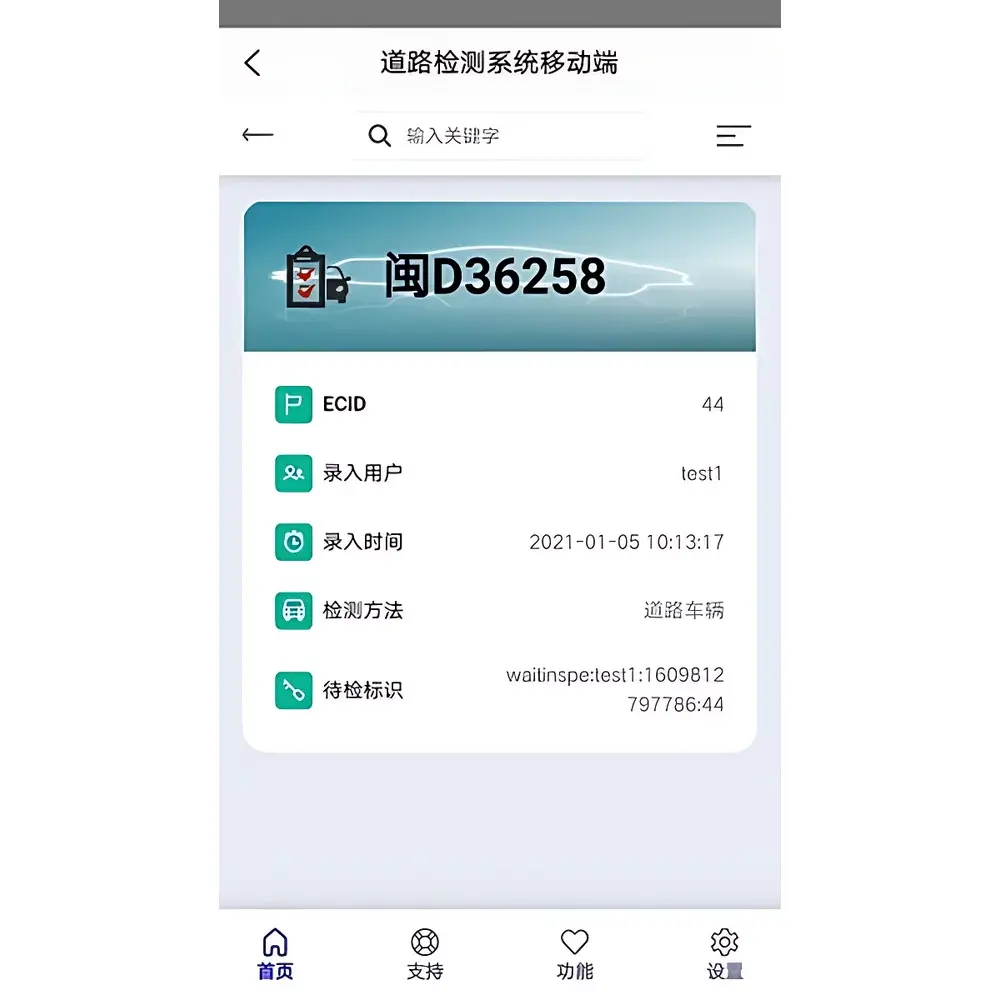
The VRMS1000 software suite comprises a field-facing Android/iOS mobile app (for inspectors), a Windows-based desktop control station (for mobile enforcement vehicles), and a browser-accessible web portal (for municipal/regional supervisors). All layers share a unified PostgreSQL database with ACID compliance, row-level security, and automated daily backups. Data encryption follows AES-256 at rest and TLS 1.3 in transit. Audit trails record every action—including user login/logout, report generation, parameter modification, and device pairing—with ISO/IEC 27001-aligned logging granularity. The system supports API-based interoperability with third-party platforms including traffic police vehicle registration databases (GA/T 1219–2015), I/M maintenance networks, remote sensing monitoring systems (RSMS), and “Sky-Earth-Vehicle-Person” integrated supervision platforms—using RESTful endpoints and JSON payloads compliant with GB/T 35273–2020 (Personal Information Security Specification).
Applications
- On-road random inspection campaigns conducted by municipal ecological environment bureaus during peak traffic hours or near industrial clusters.
- Enforcement at border checkpoints and inter-provincial transport hubs targeting out-of-province diesel fleets exceeding NOₓ or PM limits.
- Supervisory spot-checks of non-road mobile machinery (excavators, loaders, generators) operating in urban construction sites or port terminals.
- Low-emission zone (LEZ) compliance verification through geofenced automatic alerting and real-time vehicle screening.
- Post-repair verification workflows integrating I/M station data to assess repair effectiveness and detect recurring failures.
- Longitudinal fleet emissions trend analysis across administrative regions, vehicle age cohorts, fuel types, and aftertreatment configurations.
FAQ
Does the VRMS1000 meet China’s official metrological verification requirements for enforcement-grade emission testing?
Yes. All connected portable analyzers must be certified per JJG 976–2010 (exhaust gas analyzers) or JJG 847–2017 (smoke meters), and the VRMS1000 enforces pre-test calibration checks, auto-zero validation, and drift compensation routines prior to each measurement sequence.
Can the system operate without cellular coverage in remote rural inspection areas?
Yes. Offline mode retains full functionality: vehicle registration, multi-instrument data capture, GIS tagging, report generation, and local storage. Synchronization occurs automatically when connectivity resumes, preserving chronological integrity and chain-of-custody metadata.
How does the system prevent data falsification or unauthorized report modification?
All reports are digitally signed using hardware-bound cryptographic keys. Any post-generation edit triggers a new version ID, invalidates the prior signature, and logs the change with user ID, timestamp, and IP address—fully traceable in the audit module.
Is integration with provincial ecological monitoring platforms supported out-of-the-box?
Yes. Pre-certified connectors exist for 12 provincial platforms, including Fujian, Jiangsu, and Guangdong. Custom API mapping services are available for other jurisdictions under NIST SP 800-53-aligned configuration management.
What is the maximum number of concurrent devices the VRMS1000 can manage per field unit?
A single VRMS1000 field terminal supports up to eight simultaneous instrument connections via mixed Wi-Fi/Ethernet/Bluetooth, with scalable cloud architecture enabling centralized oversight of thousands of distributed field units across prefecture-level cities.







