
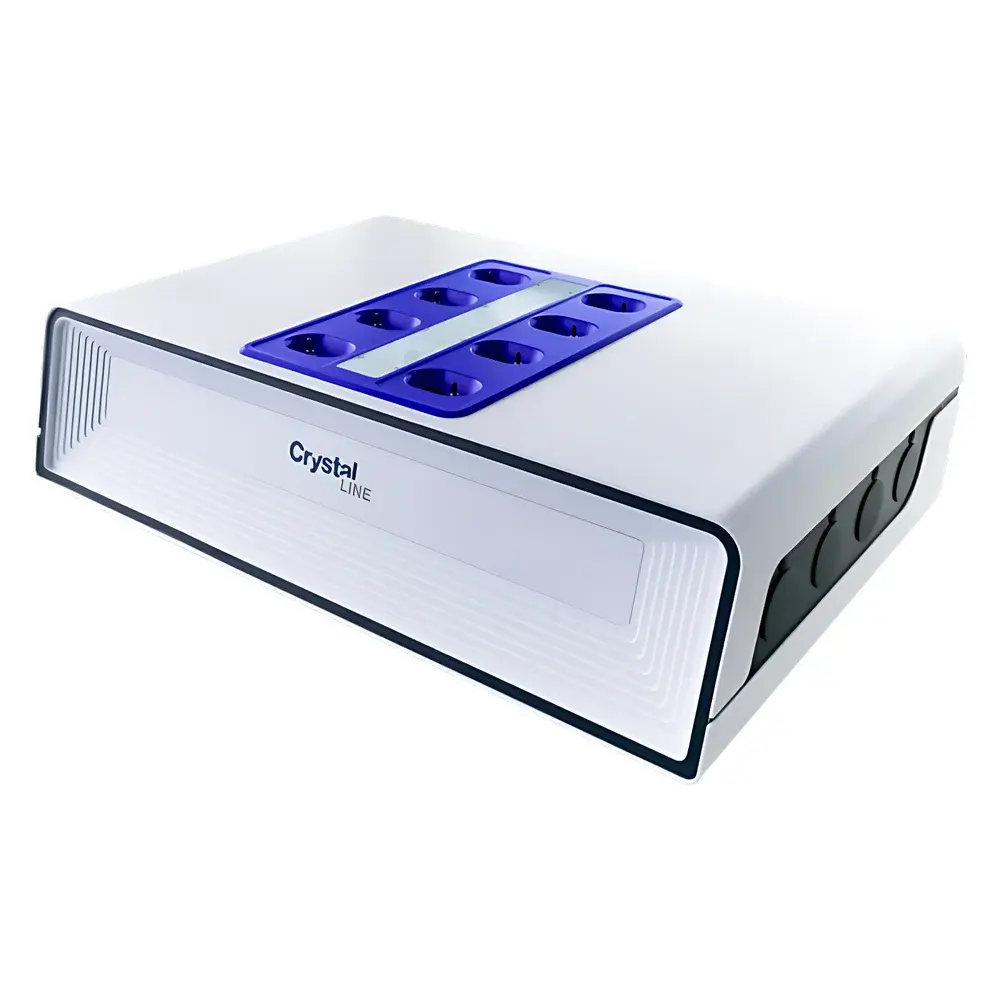
Technobis Crystalline High-Throughput Parallel Crystallization Workstation
| Brand | Technobis |
|---|---|
| Origin | Netherlands |
| Model | Crystalline |
| Configuration Options | Crystalline SE (turbidity), Crystalline PV (in-situ particle size), Crystalline RR (in-situ Raman) |
| Reactor Count | 8 independent channels |
| Reaction Volume per Channel | 2.5–5 mL |
| Stirring | Top-mounted magnetic or mechanical stirring |
| Integration | Modular benchtop platform for process analytical technology (PAT)-enabled crystallization development |
Overview
The Technobis Crystalline High-Throughput Parallel Crystallization Workstation is an engineered PAT-integrated platform designed for systematic, reproducible, and data-rich crystallization process development in pharmaceutical and fine chemical research. Based on the principle of controlled parallel reaction screening under identical thermal, agitation, and environmental conditions, the Crystalline system enables simultaneous execution of eight independent crystallization experiments—each with precise control over temperature ramping, cooling rate, antisolvent addition (via optional syringe pump integration), and real-time monitoring. Its modular architecture supports seamless hardware expansion and method transfer across development stages—from early-stage polymorph screening to late-phase robustness testing and QbD-aligned process validation.
Key Features
- Eight fully independent reaction channels housed in a compact benchtop footprint, each equipped with individual temperature control (±0.1 °C accuracy) and programmable cooling/heating profiles.
- Top-mounted stirring mechanism (magnetic or mechanical) ensuring consistent mixing intensity across all vessels without cross-contamination risk.
- Standard Crystalline SE configuration includes integrated turbidity sensors (650 nm LED source, photodiode detection) delivering real-time nucleation onset and crystal growth kinetics data.
- Optional Crystalline PV variant adds in-situ laser diffraction-based particle size analysis (dynamic range: 0.1–1000 µm) via fiber-optic probes immersed directly in each reactor.
- Crystalline RR configuration integrates transmission-mode Raman spectroscopy with multiplexed fiber-optic probes for molecular-level monitoring of solid-phase transformations—including polymorphic transitions, solvate desolvation, and hydrate formation.
- All sensor modules are synchronized with the central control software, enabling time-aligned multi-parameter correlation (e.g., turbidity onset vs. Raman spectral shift vs. particle size bimodality).
- Chemically resistant reactor vessels (borosilicate glass or sapphire windows) rated for organic solvents, acids, and bases; compatible with sealed or reflux-capable lids.
Sample Compatibility & Compliance
The Crystalline platform accommodates a broad spectrum of compound classes: small-molecule APIs, peptides, co-crystal formers, and amorphous precursors. It supports solvent systems ranging from water and alcohols to chlorinated hydrocarbons and high-boiling-point aprotic media. Each configuration meets ICH Q5A and Q5C guidance for structural characterization of crystalline forms and complies with design requirements for GLP-compliant laboratories. Data acquisition adheres to ALCOA+ principles (Attributable, Legible, Contemporaneous, Original, Accurate, Complete, Consistent, Enduring, Available); audit trails, electronic signatures, and user access levels are configurable to meet FDA 21 CFR Part 11 and EU Annex 11 expectations. System qualification documentation (IQ/OQ/PQ protocols) is provided per GMP-aligned deployment.
Software & Data Management
Control and analysis are managed through Crystalline Control Suite—a Windows-based application supporting method creation, real-time visualization, automated event triggering (e.g., initiate Raman scan upon turbidity threshold crossing), and export of timestamped datasets in CSV, HDF5, and vendor-neutral .jdx (Raman) formats. Integrated chemometrics tools enable principal component analysis (PCA) of spectral datasets and kinetic modeling (e.g., Avrami, Garside) of nucleation/growth profiles. Raw data archives are stored with SHA-256 checksums; version-controlled method files support full traceability from experiment initiation to final report generation.
Applications
- Polymorph, solvate, and hydrate screening under thermodynamic and kinetic control conditions.
- Co-crystal screening using multi-component slurry conversion or cooling/antisolvent methods.
- Metastable zone width (MSZW) determination via controlled cooling rate experiments with turbidity endpoint detection.
- Investigation of oiling-out phenomena and amorphous-to-crystalline transition pathways using combined Raman and turbidity signatures.
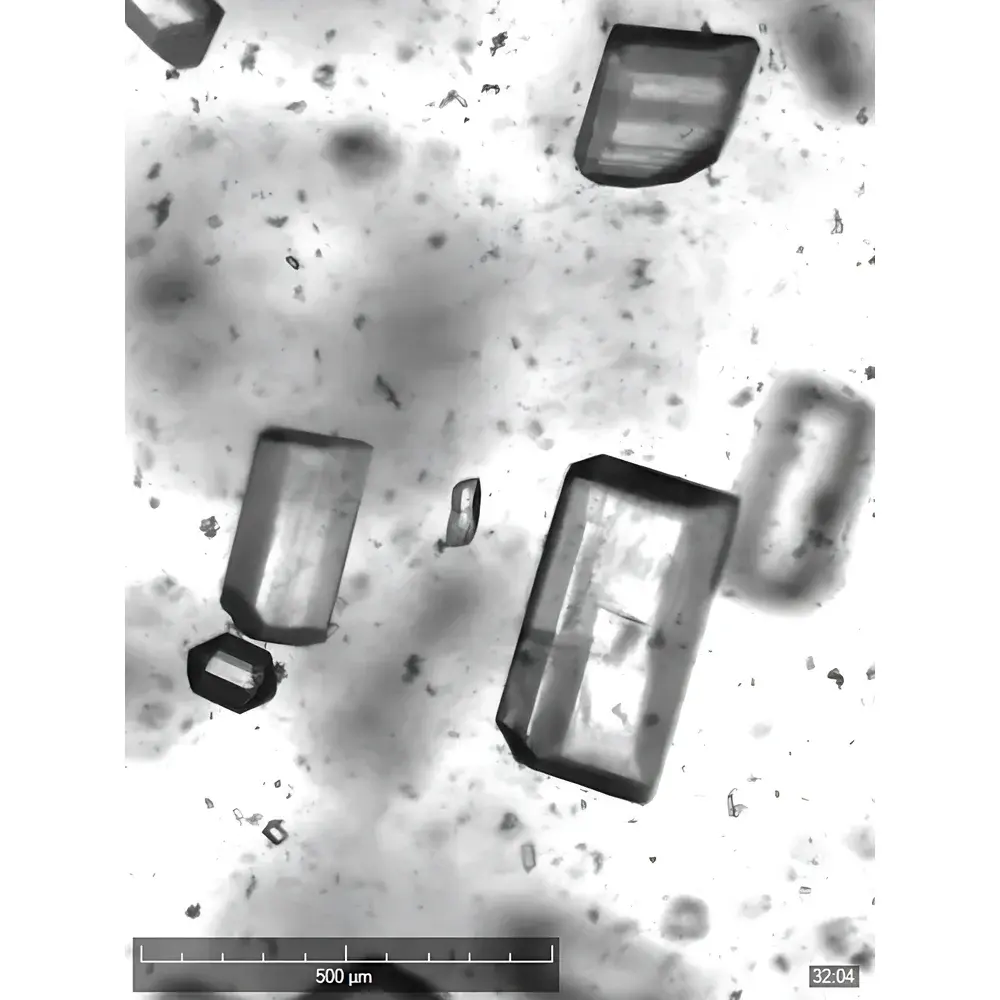
- Crystal habit evolution monitoring via time-resolved particle imaging (with optional PV module).
- Solvent residue profiling during drying stages through Raman quantification of residual solvent bands.
- Rapid solubility mapping across temperature–composition space using automated saturation point detection.
- Single crystal growth optimization via slow-cooling and evaporation-based protocols with continuous nucleation suppression feedback.
- Root cause analysis of batch-to-batch variability in filtration performance or tablet compaction behavior linked to crystal morphology or phase purity.
FAQ
Can the Crystalline system be integrated with external pumps or pH controllers?
Yes—standard analog/digital I/O ports and Modbus TCP support allow bidirectional communication with third-party syringe pumps, peristaltic dosing units, and inline pH or conductivity sensors.
Is method transfer possible between Crystalline and larger-scale crystallizers?
Method scalability is supported through dimensionless parameter alignment (e.g., Péclet number, Damköhler number) and direct correlation of critical quality attributes (CQAs) such as median particle size (D50), polymorphic purity, and residual solvent content.
What maintenance is required for the in-situ Raman probes?
Probes require periodic verification using NIST-traceable polystyrene calibration standards; no routine optical alignment or lamp replacement is needed due to solid-state laser and thermoelectrically cooled CCD detector design.
Does the system support unattended overnight operation?
Yes—full experiment scheduling, automatic shutdown on completion, and hardware-level thermal runaway protection ensure safe extended-run capability.
Are raw spectral and particle size datasets exportable for external modeling?
All primary data streams—including full-resolution Raman spectra (1 cm⁻¹ resolution), turbidity time-series (1 Hz sampling), and chord-length distributions—are exportable without proprietary codec restrictions.
Related Products



