
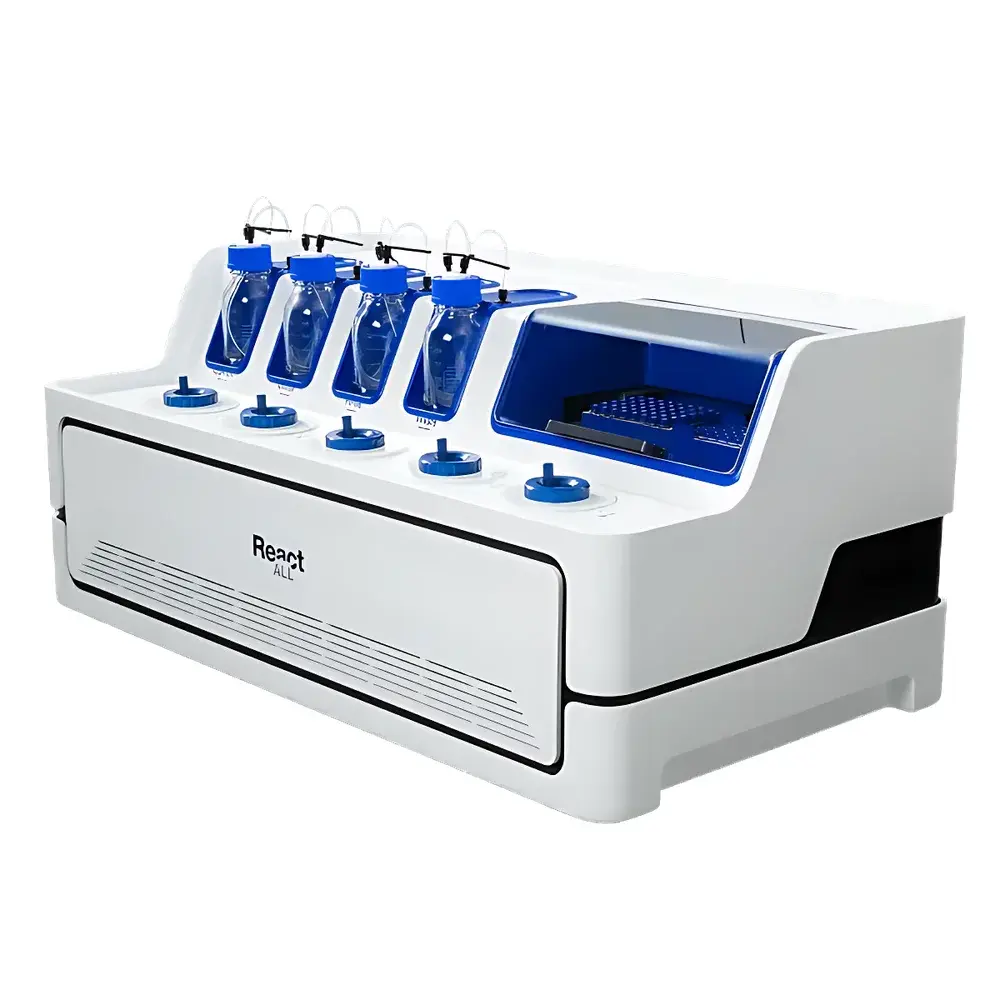
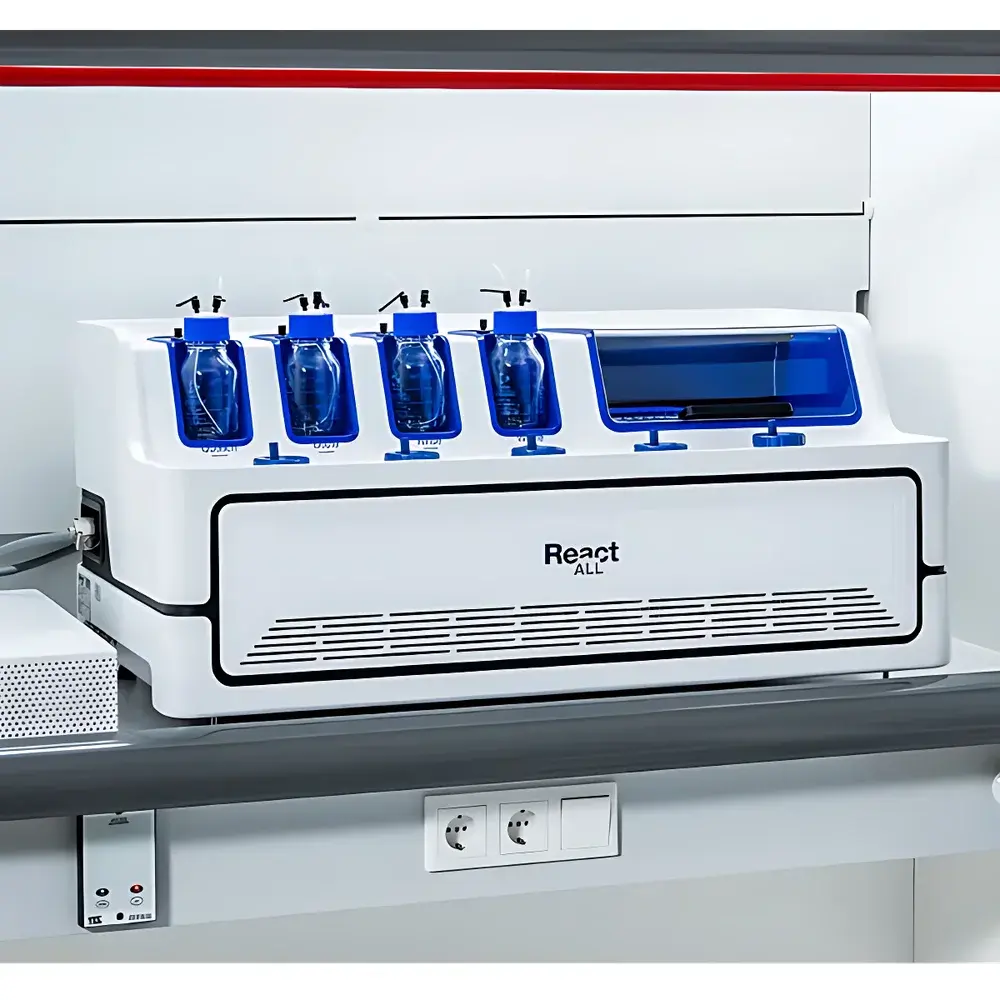
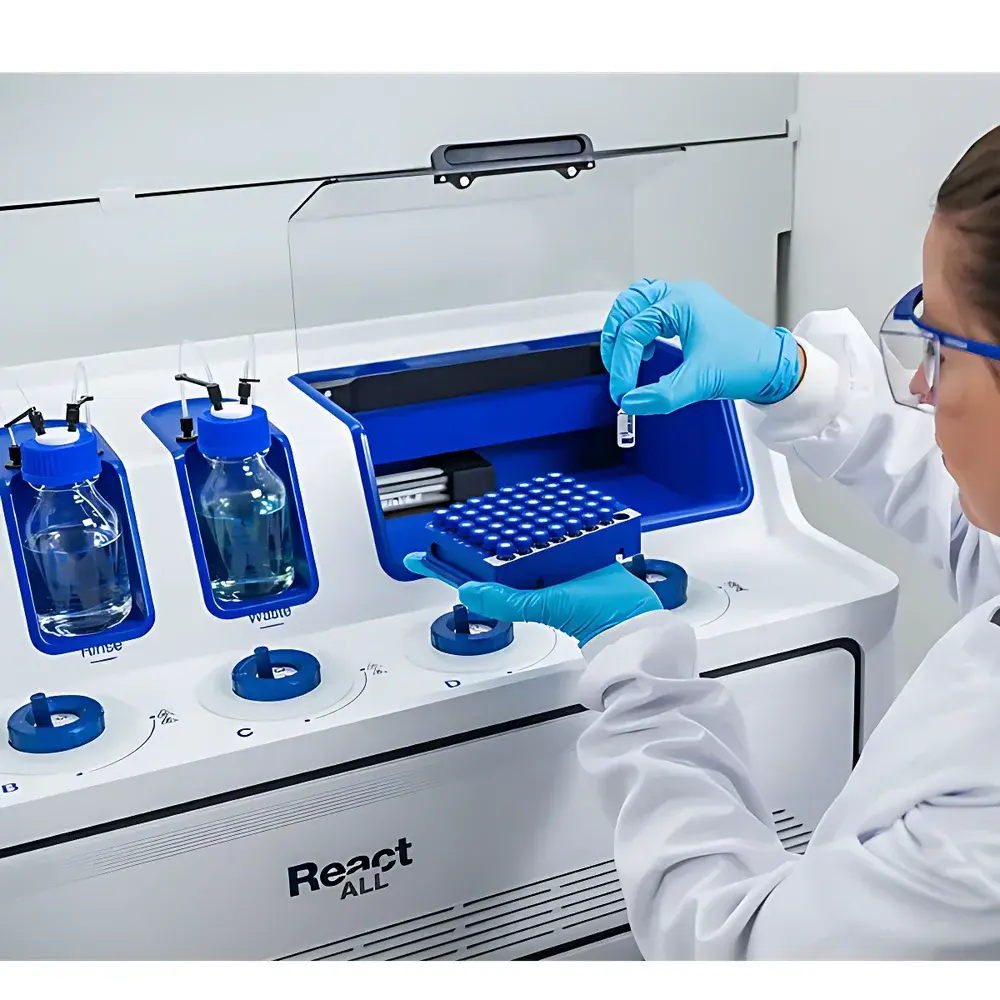
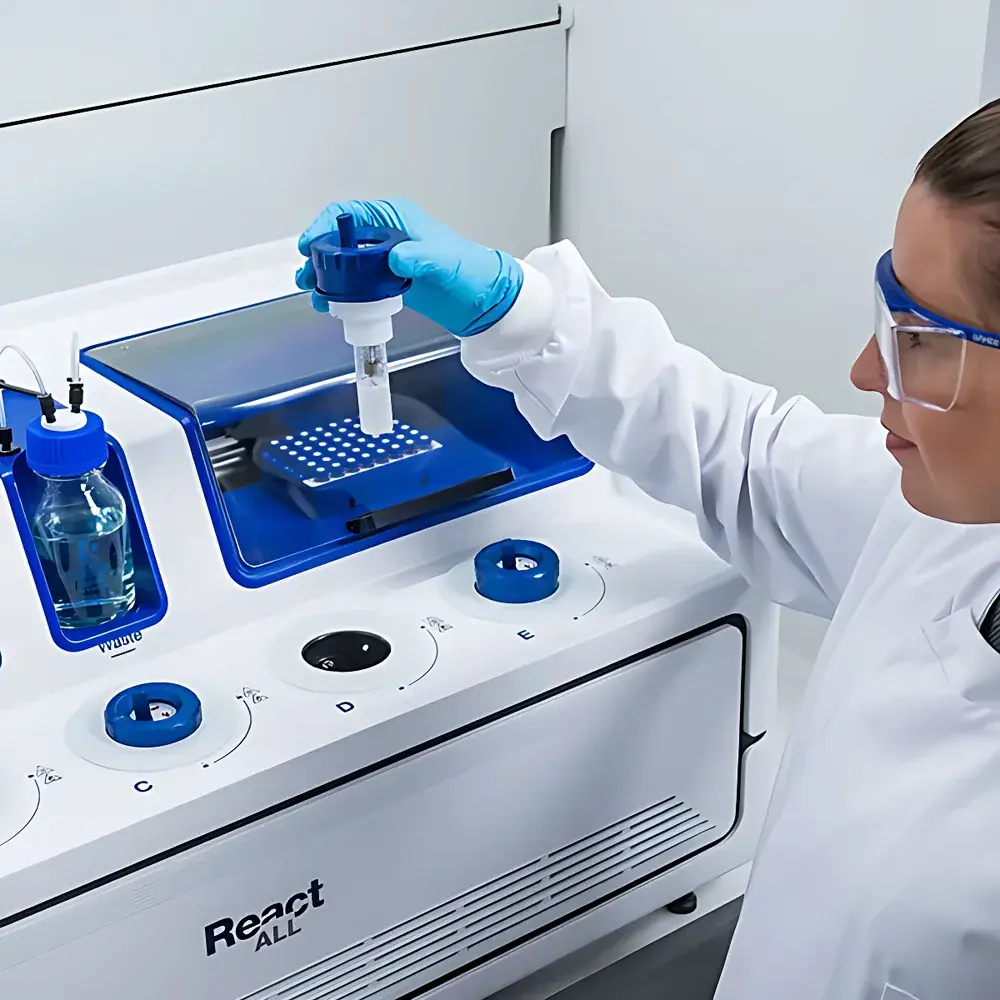
Technobis ReactALL Parallel Reaction System
| Brand | Technobis |
|---|---|
| Origin | Netherlands |
| Model | ReactALL |
| Temperature Range | −25 to 150 °C |
| Temperature Control Accuracy | ±0.5 °C |
| Number of Reaction Units | 5 |
| Vessel Capacity | 16 mL vials |
| Sample Throughput per Unit | Up to 18 samples |
| Fluid Handling | Non-puncturing, pump-free, wide-bore fluidic path |
| Stirring Mechanism | CFD-optimized helical impeller |
| Detection | Integrated color camera + turbidity module |
| Interface | Open API for robotic integration |
| Compliance | Designed for GLP-compliant workflow execution |
Overview
The Technobis ReactALL Parallel Reaction System is an engineered platform for high-throughput, reproducible chemical synthesis and reaction optimization under precisely controlled thermal conditions. Based on a modular five-vessel architecture, it implements a non-invasive, pump-free fluidic design grounded in principles of laminar flow dynamics and passive capillary-assisted transport—eliminating membrane puncturing, solvent evaporation, and cross-contamination risks common in conventional parallel reactors. Each 16 mL reaction vessel operates independently with real-time temperature regulation (−25 to 150 °C, ±0.5 °C accuracy), enabling systematic screening across broad kinetic and thermodynamic parameter spaces. The system’s core innovation lies in its SmartCap™-enabled sampling protocol: automated, sequential withdrawal of representative aliquots directly into standard 2 mL HPLC vials—followed immediately by quenching and dilution—without manual intervention or vessel opening. This closed-loop sample handling ensures stoichiometric fidelity and minimizes operator-induced variability, making ReactALL particularly suitable for kinetic profiling, catalyst evaluation, and process safety studies where temporal resolution and quantitative traceability are critical.
Key Features
- Five independently controlled reaction zones with individual temperature setpoints and real-time monitoring
- SmartCap™ technology: fully automated, non-puncturing sampling, quenching, and dilution—no septum penetration required
- CFD-optimized helical impeller providing homogeneous solid suspension without grinding or particle attrition
- Pump-free, wide-bore fluidic pathway engineered for stable transfer of heterogeneous slurries and viscous media
- Integrated color imaging and optical turbidity detection for real-time reaction progress monitoring
- Open RESTful API supporting bidirectional communication with laboratory automation systems, LIMS, and robotic arms
- GLP-ready audit trail generation: timestamped event logging for all thermal, sampling, and fluidic actions
Sample Compatibility & Compliance
The ReactALL accommodates a broad spectrum of reaction mixtures—including heterogeneous catalytic suspensions, organometallic systems, polymerization precursors, and air/moisture-sensitive transformations—thanks to its sealed, non-invasive sampling architecture. Vessels accept standard 16 mL screw-cap vials fitted with SmartCap™ lids, eliminating custom hardware dependencies. All fluid contact materials comply with USP Class VI and ISO 10993 biocompatibility standards. The system supports documentation workflows aligned with FDA 21 CFR Part 11 requirements, including electronic signatures, user access controls, and immutable audit logs. It is routinely deployed in environments adhering to ISO/IEC 17025, ASTM E2500, and ICH Q5C guidelines for analytical method development and process validation.
Software & Data Management
ReactALL is operated via the ReactOS™ control suite—a Windows-based application offering intuitive graphical configuration of temperature ramps, sampling schedules, quench/dilution ratios, and stirring profiles. All experimental parameters are stored as structured metadata alongside raw image frames and turbidity intensity values. Export formats include CSV, JSON, and mzML-compatible time-series annotations for downstream integration with chromatographic data systems (e.g., Empower, Chromeleon). The open API enables direct orchestration within digital lab notebooks (e.g., LabArchives, Benchling) and supports automated report generation compliant with ALCOA+ data integrity principles.
Applications
- Kinetic modeling of exothermic reactions under controlled heat removal profiles
- High-fidelity catalyst screening across ligand, metal, and solvent variables
- DoE-driven optimization of API crystallization and polymorph selection
- Reaction calorimetry proxy studies using turbidity and colorimetric trend analysis
- Automated stability testing of formulated intermediates under accelerated aging conditions
- Supporting Quality-by-Design (QbD) initiatives in pharmaceutical process development
FAQ
Does ReactALL require consumable cartridges or proprietary vials?
No—only standard 16 mL threaded glass vials with SmartCap™ lids are used; no disposable fluidic cassettes or vendor-locked components.
Can the system handle reactions under inert atmosphere?
Yes—vessels are sealable with inert gas purge capability; optional glovebox integration is supported via API-driven pressure monitoring.
Is remote monitoring and control possible?
Yes—ReactOS™ supports secure remote desktop access and real-time telemetry streaming via TLS-encrypted WebSocket connections.
What level of validation support is provided?
Technobis supplies IQ/OQ documentation templates, instrument-specific test protocols, and traceable calibration certificates compliant with ISO/IEC 17025 Annex A.2.
How is data integrity ensured during long-duration experiments?
All operational events—including temperature deviations, sampling triggers, and turbidity thresholds—are logged with cryptographic hashing and synchronized to NTP servers to prevent clock drift artifacts.



