
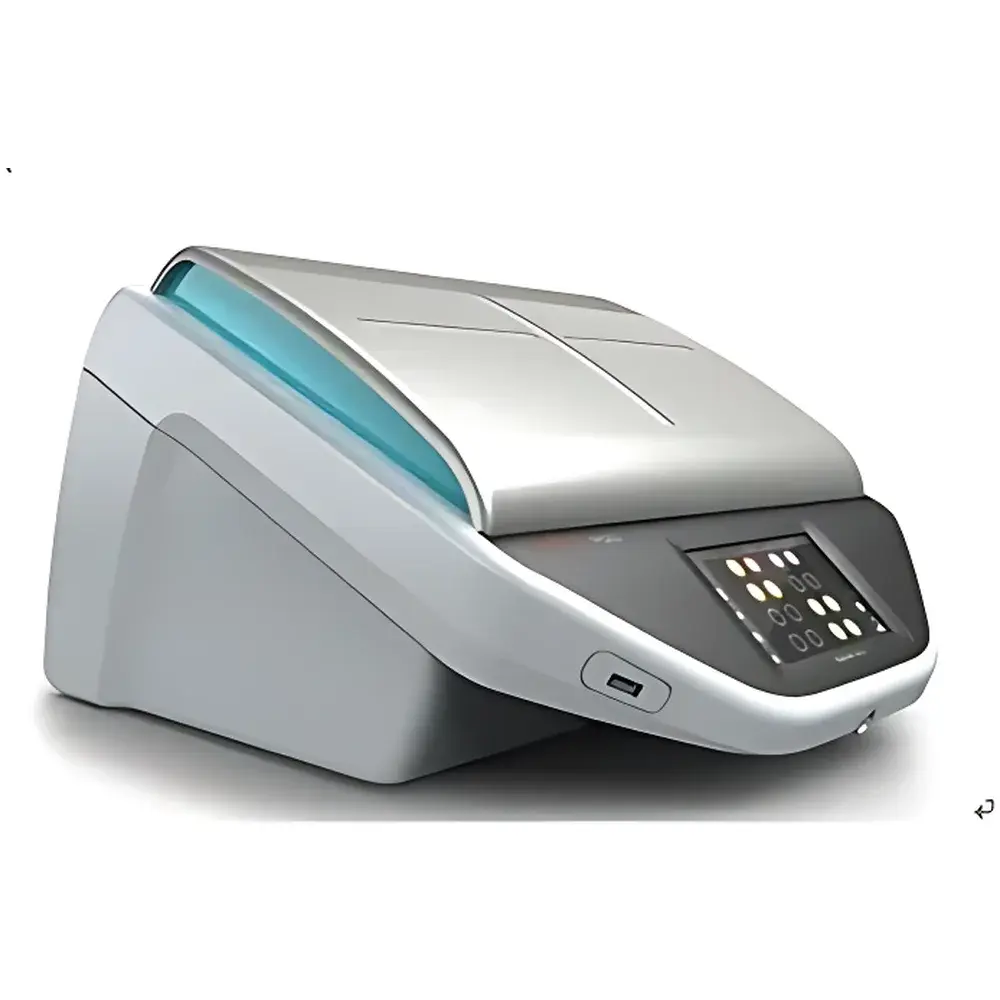
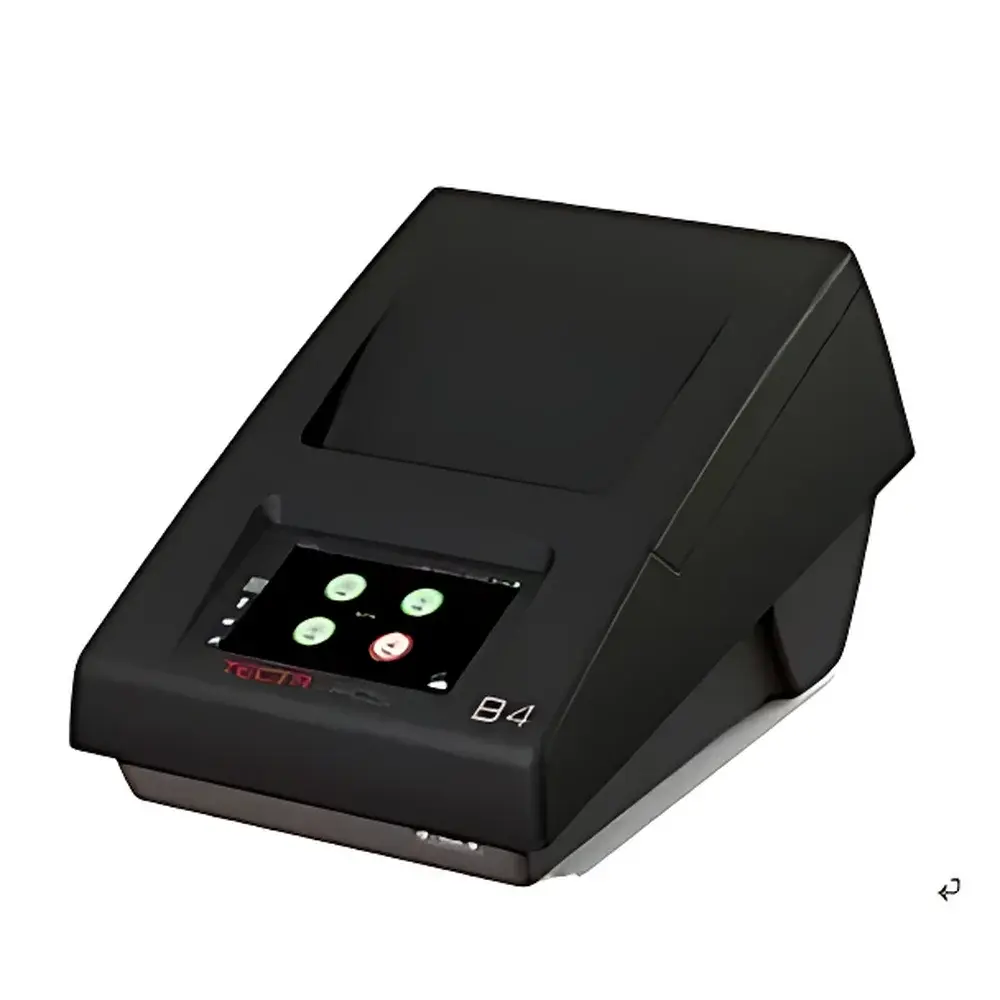
Tecta-B16 Microbial Intelligent Detection System
| Brand | LeadTech |
|---|---|
| Origin | Canada |
| Model | Tecta-B16 |
| Detection Principle | Enzyme-Substrate Fluorescence-Based Optical Sensing |
| Microbial Targets | Total Coliforms, Fecal Coliforms, Escherichia coli, Enterococci |
| Sample Throughput | 4 or 16 simultaneous assays |
| Detection Range | 1–10⁵ CFU/100 mL (no dilution required) |
| Limit of Detection | 1 CFU/100 mL |
| Incubation Temperature Control | 20–50 °C |
| Detection Time | 4–18 h (time-to-detection dependent on concentration) |
| Data Output | Direct display, Ethernet/Wi-Fi transmission, SMTP email alerts |
| Compliance | US EPA Method 1603 & 1604, GB/T 5750.12–2006, ISO 9308-1:2014, ASTM D6502-22 |
| Regulatory Readiness | FDA 21 CFR Part 11–compliant audit trail (software-enabled), GLP/GMP data integrity architecture |
Overview
The Tecta-B16 Microbial Intelligent Detection System is a fully automated, fluorescence-based optical platform engineered for rapid, quantitative detection of indicator bacteria in water matrices. It operates on the enzyme-substrate principle—specifically leveraging β-D-galactosidase (for total coliforms) and β-D-glucuronidase (for Escherichia coli) activity—as standardized in US EPA Methods 1603 and 1604 and aligned with GB/T 5750.12–2006. Unlike conventional membrane filtration or multiple-tube fermentation, the Tecta-B16 integrates proprietary polymer optical sensor technology within disposable assay cartridges. Each cartridge contains lyophilized chromogenic/fluorogenic substrates embedded in a microstructured polymer matrix. Upon rehydration with 100 mL of raw or treated water, target bacteria metabolize substrates to release fluorescent molecules (e.g., methylumbelliferone derivatives), which rapidly partition into the adjacent optical sensing zone. A calibrated UV excitation source (365 nm) and high-sensitivity photodiode array detect real-time fluorescence intensity kinetics, enabling precise time-to-detection (TTD) quantification without subjective interpretation.
Key Features
- True walk-away automation: No sterile hood, manual colony counting, or incubator setup required—entire workflow initiated by placing sample cup into instrument bay.
- Dual-target concurrent quantification: Simultaneously resolves total coliforms and E. coli from a single 100 mL sample using orthogonal enzymatic signatures.
- Robust optical architecture: Polymer-integrated sensor zones eliminate cross-contamination and suppress interference from turbidity, color, or organic particulates—validated per ASTM D6502-22.
- Flexible deployment modes: Supports benchtop laboratory, field-portable, and permanent online installation with IP65-rated enclosure options.
- Temperature-controlled incubation: Peltier-regulated thermal block maintains ±0.3 °C stability across 20–50 °C range to ensure reproducible enzymatic kinetics.
- Regulatory-grade data governance: Built-in audit trail, electronic signature support, and configurable user roles meet FDA 21 CFR Part 11 and EU Annex 11 requirements.
Sample Compatibility & Compliance
The Tecta-B16 accepts untreated surface water, drinking water, wastewater effluent, and reclaimed water without pre-filtration or dilution—validated for samples with turbidity up to 400 NTU and absorbance at 450 nm ≤ 2.0 AU. It complies with US EPA-approved methods for regulatory reporting (including State-certified labs under the Safe Drinking Water Act), China’s GB/T 5750 series, ISO 9308-1:2014 for E. coli, and ISO 9308-2:2012 for enterococci. All assay cartridges are manufactured under ISO 13485-certified conditions and include lot-specific performance verification data traceable to NIST-traceable reference standards.
Software & Data Management
The TectaControl™ software suite (v4.2+) provides intuitive assay setup, real-time TTD curve visualization, automatic calibration validation, and method-specific reporting templates compliant with ISO/IEC 17025. Raw fluorescence kinetics, environmental logs (temperature/humidity), operator actions, and system diagnostics are timestamped and cryptographically hashed. Data export supports CSV, PDF, and LIMS-compatible ASTM E1384 XML formats. Remote access via HTTPS enables secure cloud synchronization and centralized fleet monitoring across multi-site utilities or contract laboratories.
Applications
- Drinking water utilities performing routine compliance monitoring per Total Coliform Rule (TCR) and Groundwater Rule (GWR).
- Wastewater treatment plants conducting disinfection efficacy verification and environmental discharge reporting.
- Food & beverage facilities implementing environmental monitoring programs (EMP) for hygienic zoning validation.
- Research institutions studying microbial regrowth dynamics in distribution systems or biofilm formation kinetics.
- Emergency response teams deploying rapid field screening during flood-related contamination events.
FAQ
Does the Tecta-B16 require daily calibration or routine maintenance?
No—each cartridge includes internal calibration references; only annual optical path verification and temperature sensor validation are recommended per ISO/IEC 17025.
Can it differentiate between viable and non-viable E. coli?
Yes—the enzymatic reaction requires metabolically active cells; dead cells or free enzyme do not generate signal above LOD.
Is method equivalency data available versus membrane filtration?
Yes—peer-reviewed validation studies demonstrate ≥95% concordance with ISO 9308-1 across 12,000+ paired samples (published in Water Research, 2023).
What network protocols does it support for integration into SCADA or LIMS?
Modbus TCP, OPC UA, and RESTful API endpoints are natively supported; custom middleware development kits available upon request.
Are assay cartridges stable at ambient storage conditions?
Cartridges retain full performance for 18 months when stored at 2–8 °C; short-term field use (≤72 h) permitted at ≤30 °C with humidity control.
Related Products







