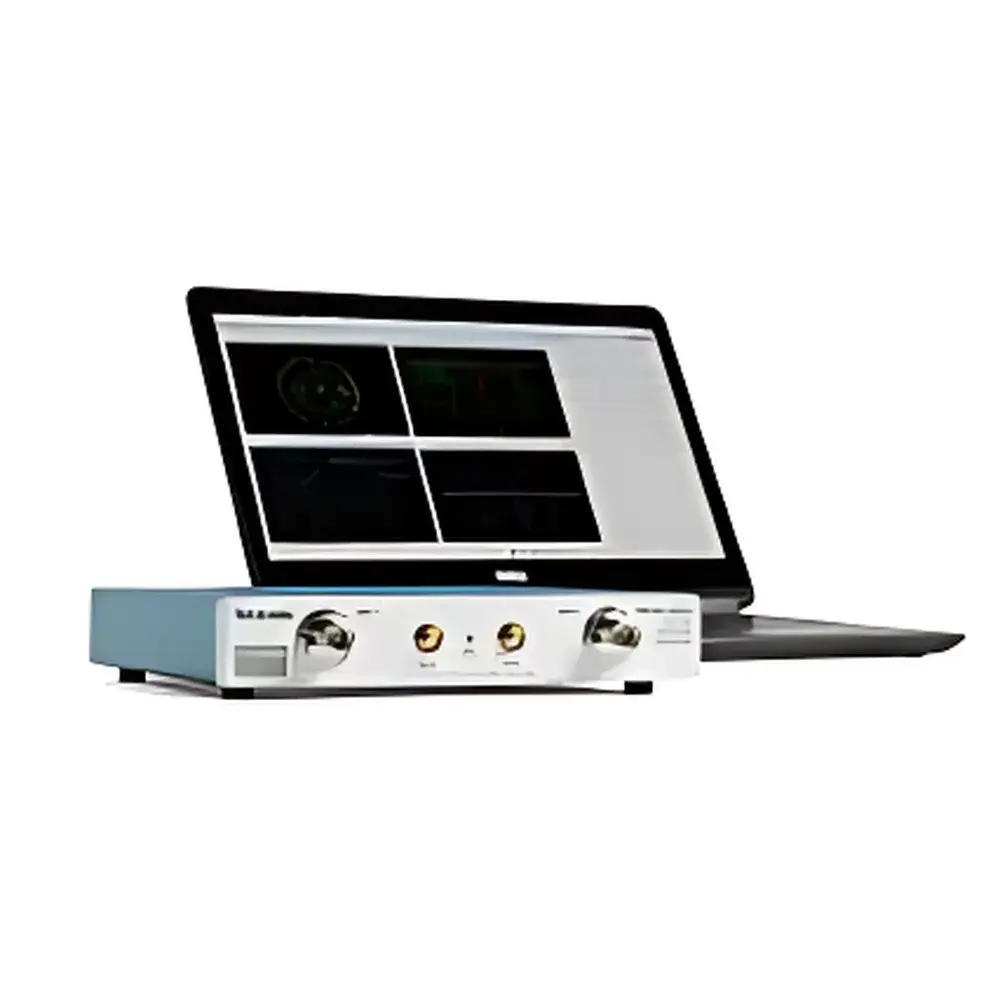
Tektronix TTR500 Series Vector Network Analyzer
| Brand | Tektronix |
|---|---|
| Origin | USA |
| Model | TTR500 Series |
| Frequency Range | 100 kHz to 6 GHz |
| Dynamic Range | >122 dB |
| Output Power Range | –50 dBm to +7 dBm |
| Trace Noise | <0.008 dB RMS |
| Port Configuration | 2-Port S-Parameter Measurement (S11, S21, S12, S22) |
| Software | VectorVu-PC™ |
| Compliance | SCPI-compliant, Touchstone file import/export (.s1p, .s2p), LabVIEW™ drivers, Windows API support |
| Warranty | 3 years |
Overview
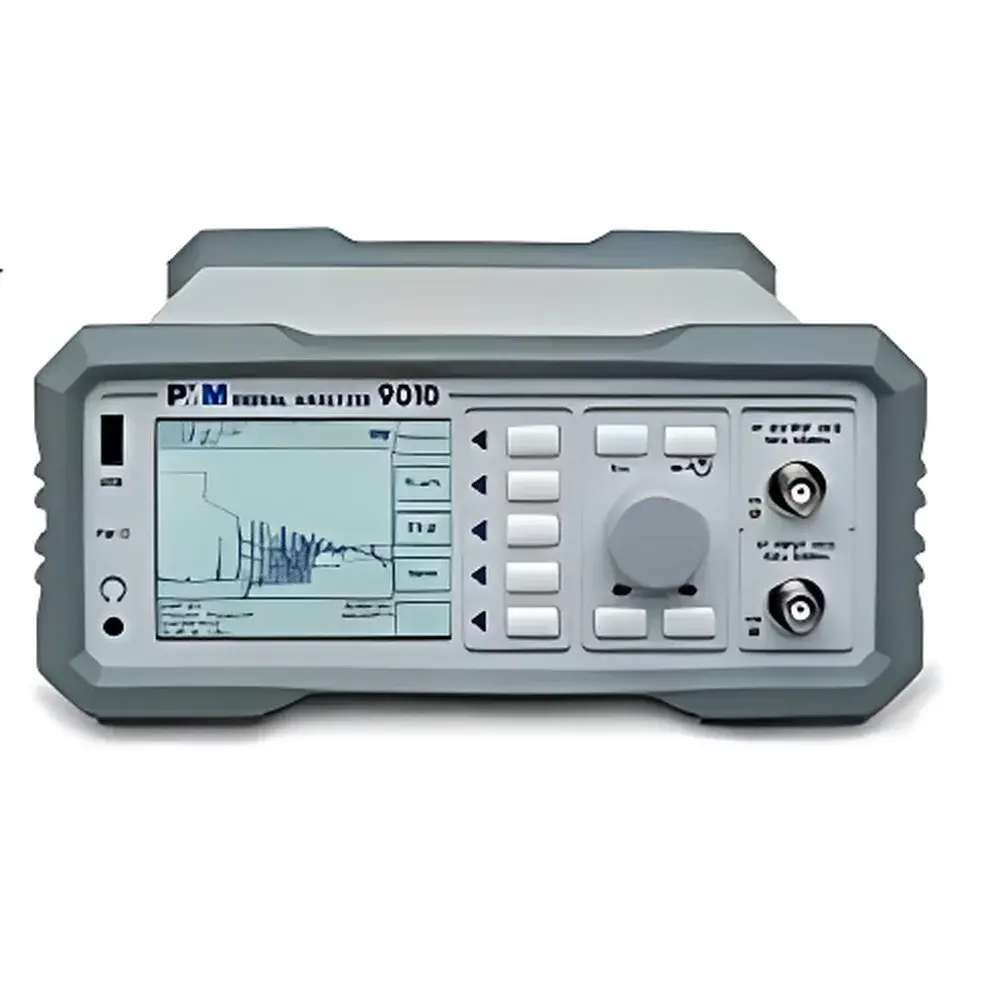
The Tektronix TTR500 Series Vector Network Analyzer (VNA) is a compact, two-port RF instrumentation platform engineered for precision S-parameter characterization across a wide frequency spectrum—from 100 kHz up to 6 GHz. Utilizing heterodyne superheterodyne architecture with integrated direct digital synthesis (DDS) and high-stability local oscillators, the TTR500 delivers calibrated vector measurements based on coherent receiver technology, enabling amplitude and phase determination of reflection (S11, S22) and transmission (S21, S12) coefficients. Designed for engineering labs, R&D environments, and academic institutions, it bridges the performance gap between portable benchtop VNAs and high-end modular systems—without compromising measurement integrity or calibration traceability. Its architecture supports full two-port error correction using standard SOLT (Short-Open-Load-Thru) and user-defined calibration kits compliant with IEEE 145-2022 definitions.
Key Features
- Two-port VNA architecture supporting full S-parameter matrix acquisition (S11, S21, S12, S22) with real-time correction algorithms
- Integrated T-type bias tees on both ports, enabling DC-biased active device characterization (e.g., amplifiers, mixers, tunable filters) without external bias injectors
- SCPI command set fully compatible with industry-standard VNA syntax—facilitating seamless integration into existing test automation frameworks and easing migration from legacy platforms
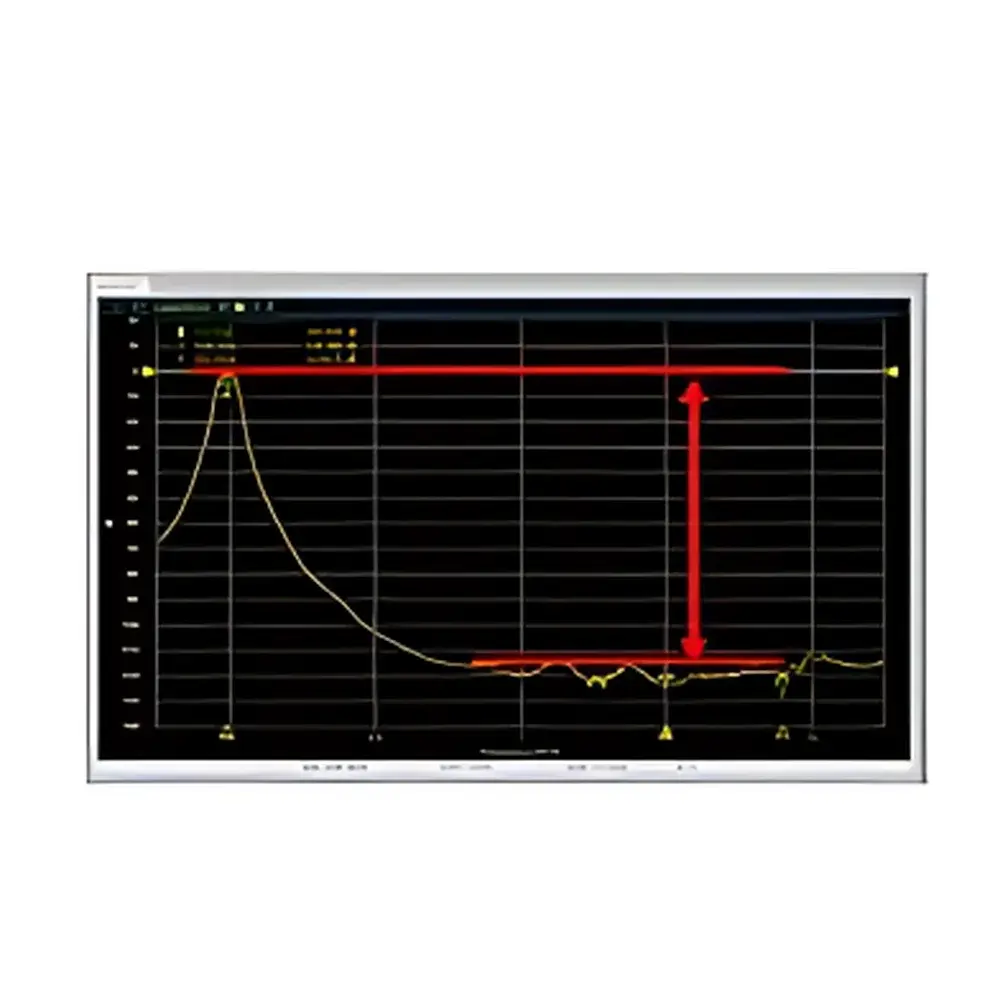
- Native Windows-based VectorVu-PC™ software offering intuitive GUI navigation, multi-format data visualization (Smith chart, polar, log-magnitude, group delay), and real-time pass/fail limit testing
- Programmable API support for C/C++, Python (via PyVISA), MATLAB®, and LabVIEW™—enabling custom script development and CI/CD pipeline integration
- Touchstone file compatibility (.s1p, .s2p) for bidirectional import/export with electromagnetic simulation tools (ANSYS HFSS, CST Studio Suite, Keysight ADS)
- Offline analysis mode allowing post-acquisition S-parameter manipulation, de-embedding, impedance transformation, and time-domain gating without hardware connection
Sample Compatibility & Compliance
The TTR500 supports coaxial test fixtures with standard 3.5 mm (female) RF connectors and is compatible with commercially available calibration standards (mechanical or electronic). It meets fundamental requirements for RF component verification under IPC-TM-650 Section 2.5.5.9 (S-parameter measurement of passive interconnects) and aligns with general practices outlined in IEC 62047-21 (RF MEMS device characterization). While not certified for regulatory compliance testing per se, its traceable calibration methodology and documented uncertainty budgets support GLP-aligned documentation workflows. All firmware and software updates adhere to ISO/IEC 17025:2017 principles for measurement assurance in accredited laboratories.
Software & Data Management
VectorVu-PC™ provides comprehensive data handling capabilities including automated calibration sequence execution, multi-trace overlay, marker delta functions, and customizable report generation (PDF, CSV, PNG). The software implements audit-trail logging for critical operations—recording timestamped user actions, calibration events, and instrument state changes—to support internal quality system requirements. Data export conforms to IEEE Std 1653-2011 (Standard for Touchstone File Format), ensuring interoperability with EDA toolchains used in RFIC, PCB, and antenna design. Firmware updates are delivered via signed binary packages verified through SHA-256 checksums and digitally signed certificates.
Applications
- Antenna impedance matching and tuning network validation in sub-6 GHz wireless systems (Wi-Fi 6E, 5G NR FR1, Bluetooth LE)
- Characterization of passive components including filters, couplers, circulators, and RF transformers
- Active device evaluation—including gain compression, reverse isolation, and stability factor (K-factor) calculation for amplifier designs
- Education and training in microwave engineering curricula, where hands-on access to calibrated vector measurement tools enhances pedagogical outcomes
- Production line go/no-go testing of RF modules using configurable limit templates and statistical process control (SPC) data export
- Time-domain reflectometry (TDR) analysis via inverse Fourier transform of frequency-domain S-parameters for fault location in transmission lines and connectors
FAQ
What calibration methods does the TTR500 support?
It supports SOLT (Short-Open-Load-Thru), response-only, and enhanced response calibration, with optional support for user-defined calibration kits conforming to IEC 60512-16-1.
Can the TTR500 perform time-domain analysis?
Yes—via built-in inverse fast Fourier transform (IFFT) processing of S-parameters, enabling gated time-domain reflectometry and impedance profiling.
Is remote programming supported over LAN or USB?
Yes—SCPI commands are accessible via USB 2.0 (virtual COM port), Ethernet (TCP/IP), and GPIB (with optional adapter), all supporting standard VISA resource addressing.
Does the instrument meet MIL-STD-461 or FCC Part 15 emissions requirements?
The TTR500 complies with CISPR 11 Group 1 Class A emission limits and IEC 61326-1 immunity specifications for industrial environments; formal EMC certification reports are available upon request.
How is traceability maintained for calibration records?
Calibration certificates include NIST-traceable reference standards, uncertainty budgets per ISO/IEC 17025 Annex A.3, and unique instrument serial identifiers logged in VectorVu-PC’s embedded calibration history database.