
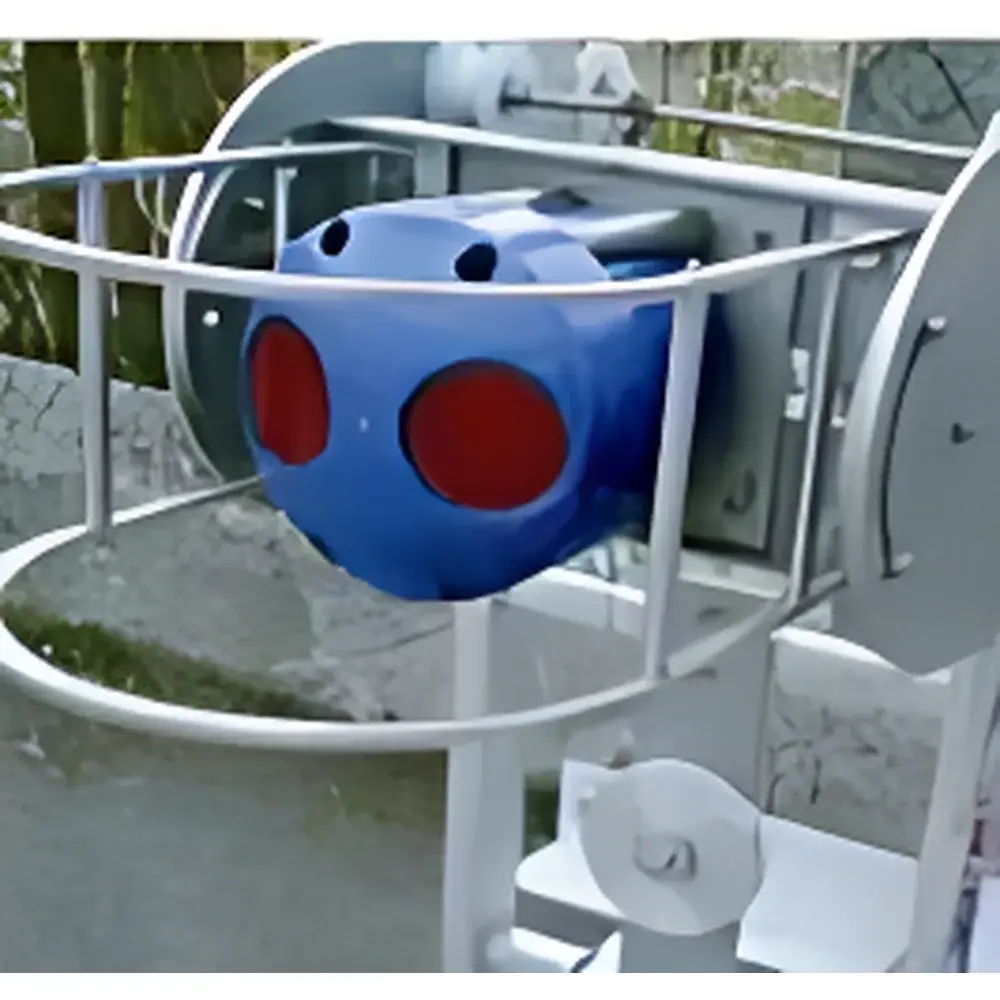
Teledyne RDI ChanneIMaster H-ADCP Horizontal Acoustic Doppler Current Profiler
| Brand | Teledyne RDI (distributed by AVVOR) |
|---|---|
| Origin | USA |
| Model | ChanneIMaster H-ADCP |
| Frequency Options | 300 kHz |
| Velocity Accuracy | ±0.5% of measured value or ±0.2 cm/s (whichever is greater) |
| Velocity Resolution | 1 mm/s |
| Velocity Range | ±5 m/s (default), ±20 m/s (max) |
| Cell Size Range | 0.25–8 m (model-dependent) |
| Maximum Profiling Range | 20–300 m (model-dependent) |
| Beam Configuration | Dual-beam, ±20° tilt, 1.5–2.2° beam divergence |
| Memory | 4 MB internal |
| Integrated Sensors | Ultrasonic water level sensor, pressure transducer, tilt sensor (pitch & roll) |
| Standard Cell Count | 128 user-configurable cells |
Overview
The Teledyne RDI ChanneIMaster H-ADCP is a horizontally mounted Acoustic Doppler Current Profiler engineered for continuous, high-fidelity measurement of surface water velocity profiles, water level, and real-time volumetric flow in open channels, rivers, and estuarine environments. Operating on the principle of broadband acoustic Doppler signal processing, the instrument transmits ultrasonic pulses across the water column and analyzes the frequency shift (Doppler shift) of backscattered signals from suspended particles to compute velocity vectors at discrete depth cells. Unlike point-sensor or float-based methods, the H-ADCP delivers spatially resolved, time-synchronized velocity data across the entire cross-section—enabling robust integration into automated hydrometric networks and supporting rigorous hydrodynamic modeling. Its horizontal deployment geometry eliminates the need for submerged mounting structures, significantly reducing installation complexity and long-term maintenance requirements in dynamic fluvial systems.
Key Features
- Broadband ADCP technology licensed from Teledyne RDI, delivering superior signal-to-noise ratio and enhanced discrimination of low-velocity flows (down to <0.01 m/s) and transient, non-stationary flow conditions.
- Three selectable operating frequencies (300 kHz, 600 kHz, 1200 kHz) optimized for trade-offs between profiling range, resolution, and sediment load tolerance—enabling application-specific configuration for large rivers, irrigation canals, or urban stormwater channels.
- Integrated multi-sensor suite: factory-calibrated ultrasonic water level sensor, absolute pressure transducer, and dual-axis tilt sensor (pitch and roll) for real-time platform orientation correction—critical for accurate velocity vector transformation in sloped or vibrating installations.
- Configurable cell structure: up to 128 user-defined depth cells with adjustable cell size (0.25–8 m), first-cell start distance (0.5–40 m), and adaptive bin mapping—supporting compliance with ISO 748 and ASTM D5389 for open-channel flow measurement protocols.
- Onboard 4 MB non-volatile memory with timestamped binary data logging; direct RS-232/RS-485 serial output of ASCII or binary velocity, level, and flow data—designed for seamless interoperability with industry-standard RTUs and SCADA platforms (e.g., Campbell Scientific CR1000X, Siemens Desigo CC).
Sample Compatibility & Compliance
The ChanneIMaster H-ADCP is validated for use in natural and engineered open-channel systems containing naturally occurring acoustic scatterers (e.g., suspended sediments, plankton, air bubbles). It performs reliably under low-flow, reverse-flow, and rapidly varying hydraulic conditions where traditional propeller or electromagnetic meters exhibit hysteresis or signal dropout. The system conforms to key international hydrometric standards, including ISO 11070 (acoustic velocity profiling), ISO 748 (open-channel flow measurement using velocity-area methods), and ASTM D5389 (standard guide for acoustic Doppler current profilers in open channels). Its embedded tilt compensation and temperature-stable transducers ensure long-term stability suitable for unattended operation in GLP-compliant environmental monitoring programs.
Software & Data Management
Data acquisition, configuration, and post-processing are supported via Teledyne RDI’s WinADCP v5.x software suite, which provides real-time display of velocity profiles, automatic discharge computation using standard area-velocity integration algorithms (e.g., Simpson’s rule), and export to CSV, NetCDF, or HDF5 formats. The instrument supports programmable data polling intervals (1 second to 24 hours), alarm-triggered logging, and metadata embedding (GPS time sync, sensor status flags). For regulatory reporting, raw and processed datasets maintain full audit trails—including firmware version, calibration coefficients, and user-modified parameters—ensuring traceability required under EPA Method 1604 and USGS Water Resources Mission Area data quality standards.
Applications
- Real-time discharge monitoring at USGS, WMO, and national hydrometric network stations.
- Flow-weighted pollutant load calculation in wastewater outfall and combined sewer overflow (CSO) monitoring systems.
- Boundary condition input and validation for 2D/3D hydrodynamic models (e.g., HEC-RAS, Delft3D, MIKE 21).
- Navigation safety support in port and harbor zones through continuous surface current mapping.
- Climate resilience studies requiring long-term, high-temporal-resolution flow records in tidal rivers and deltaic systems.
FAQ
How does the H-ADCP handle low-signal conditions in clear or low-turbidity water?
The broadband pulse-coherent mode enhances sensitivity to weak returns; optional bottom-tracking or external reflector targets may be deployed to augment scattering density where ambient particulate concentration is insufficient.
Is the device certified for regulatory compliance in EPA or EU water framework directive reporting?
While not individually certified, the ChanneIMaster H-ADCP meets the performance criteria specified in EPA Guidance Document 823-B-21-001 for flow measurement in TMDL and NPDES compliance monitoring when installed and operated per Teledyne RDI’s QA/QC manual.
Can it operate autonomously for extended periods without telemetry?
Yes—internal lithium battery options (up to 12 months at 15-minute sampling) and solar-charged configurations are available; all data remain stored onboard with time-synchronized integrity until retrieval or transmission.
What calibration documentation is provided?
Each unit ships with NIST-traceable factory calibration certificates for velocity, pressure, and tilt sensors, plus a site-specific installation report template aligned with ISO/IEC 17025 laboratory accreditation requirements.







