
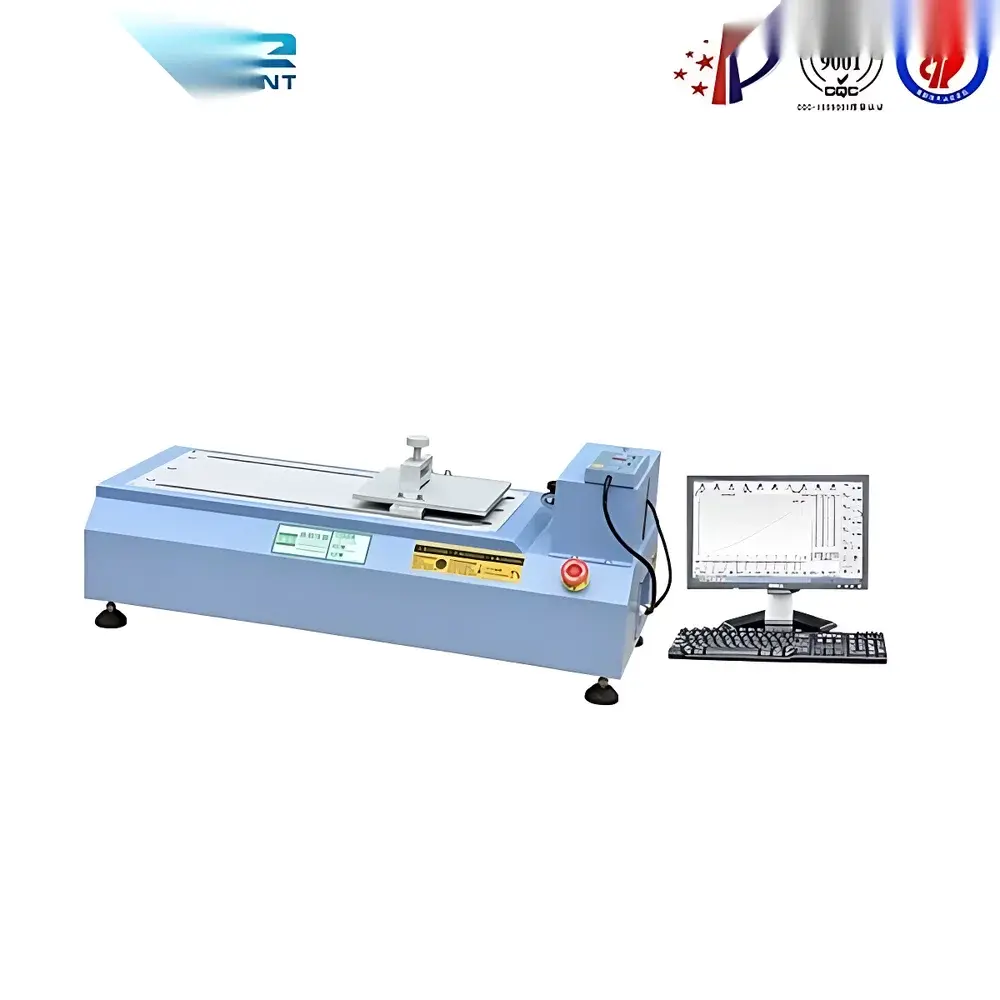
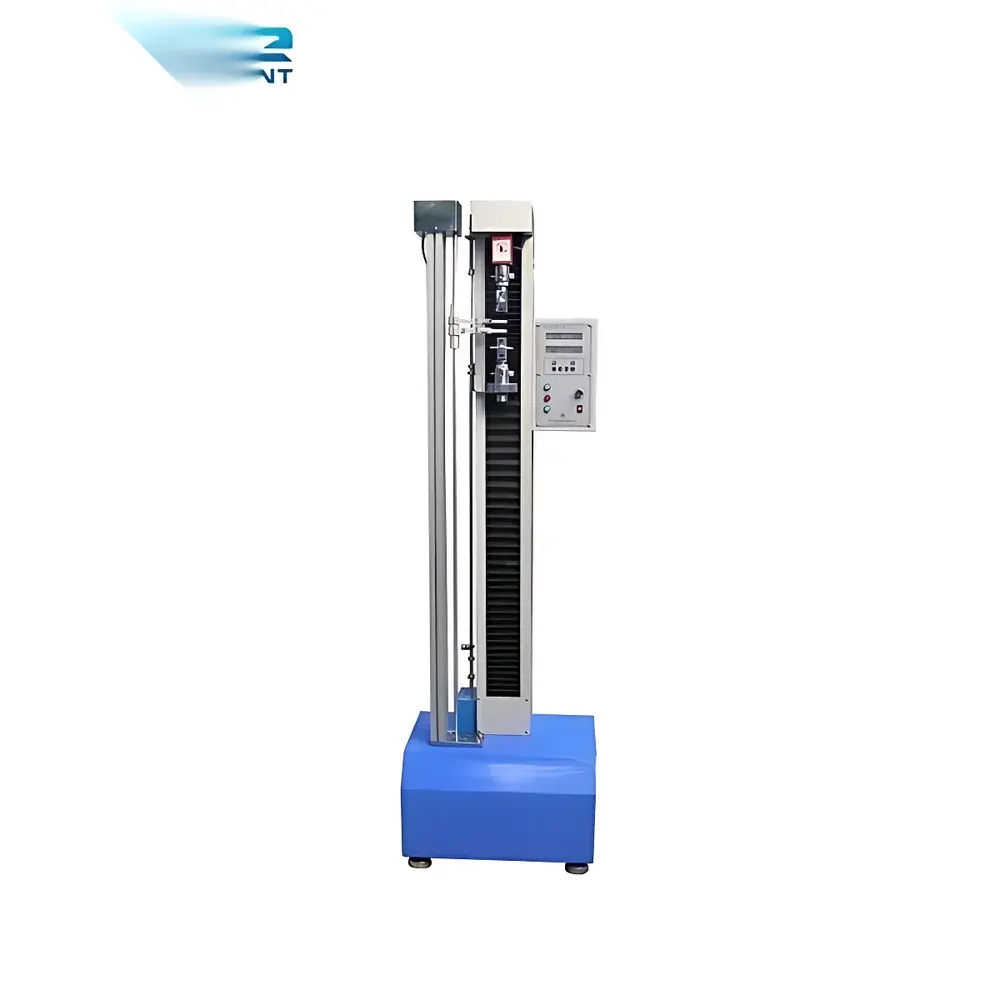
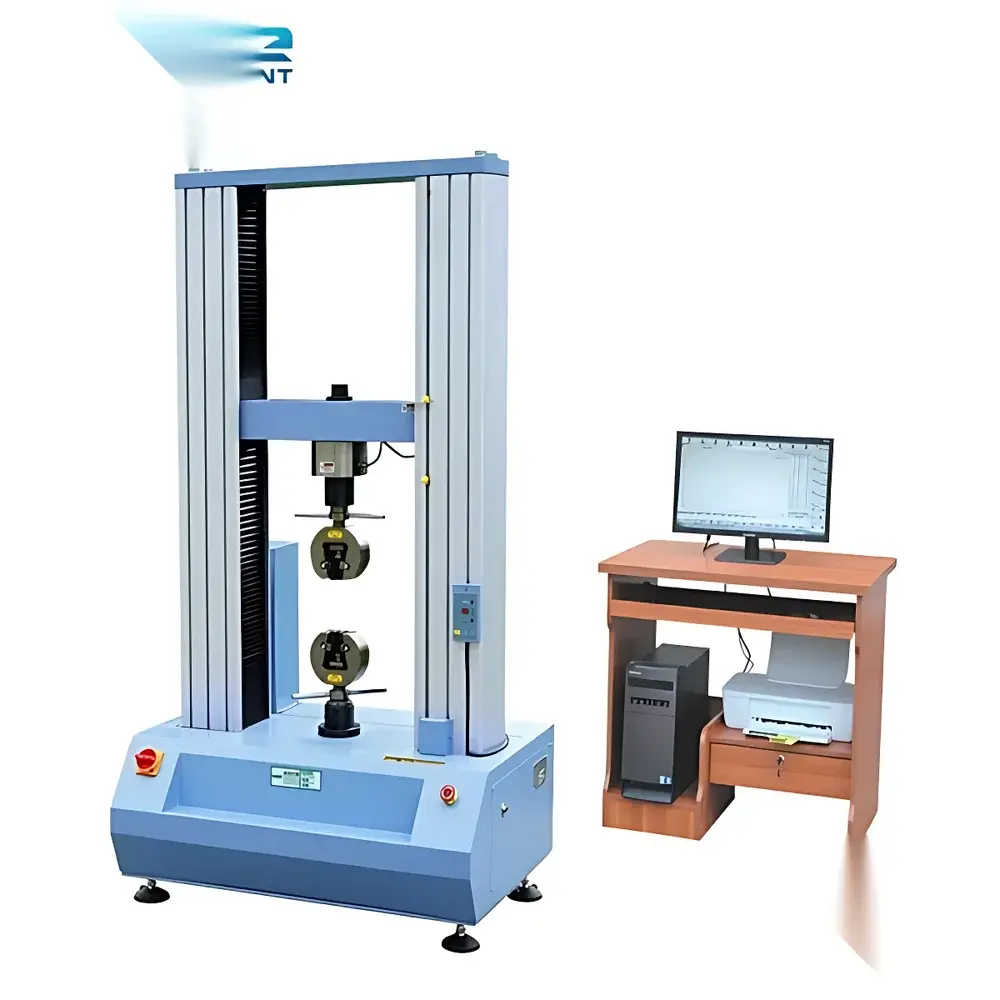
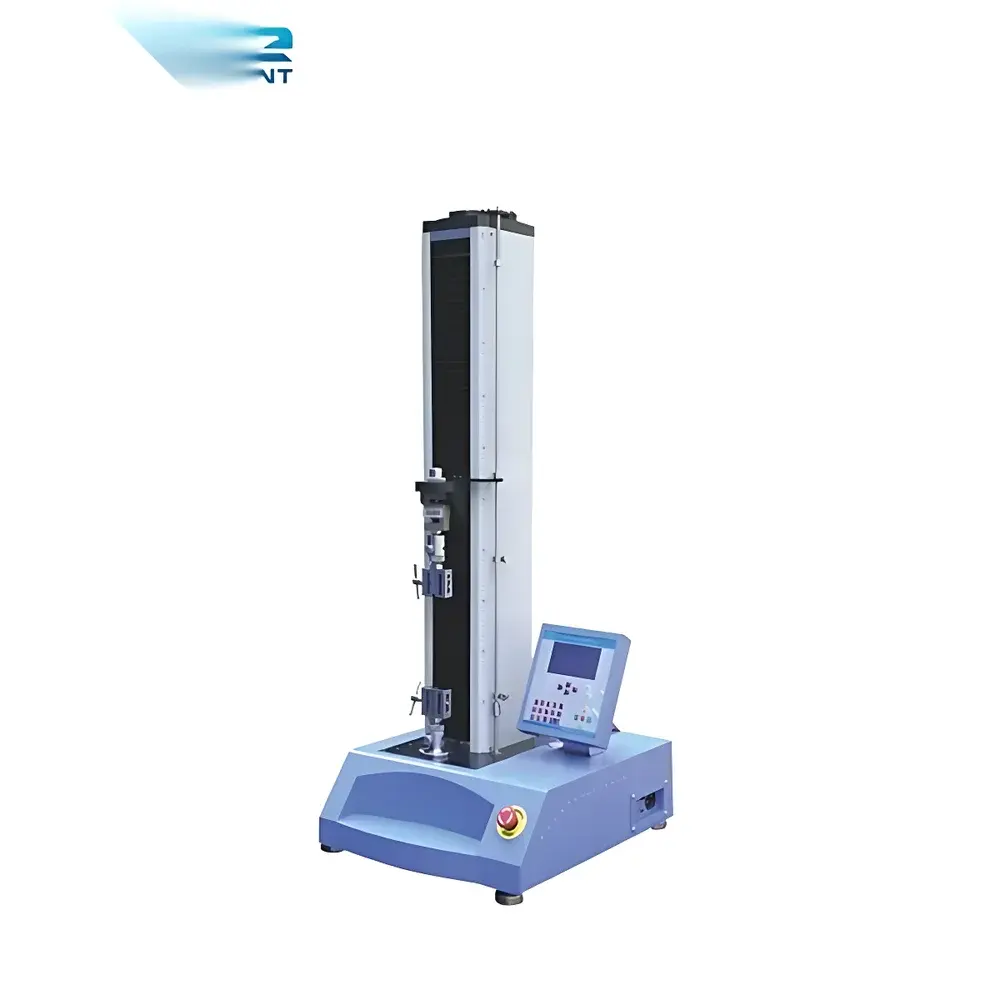
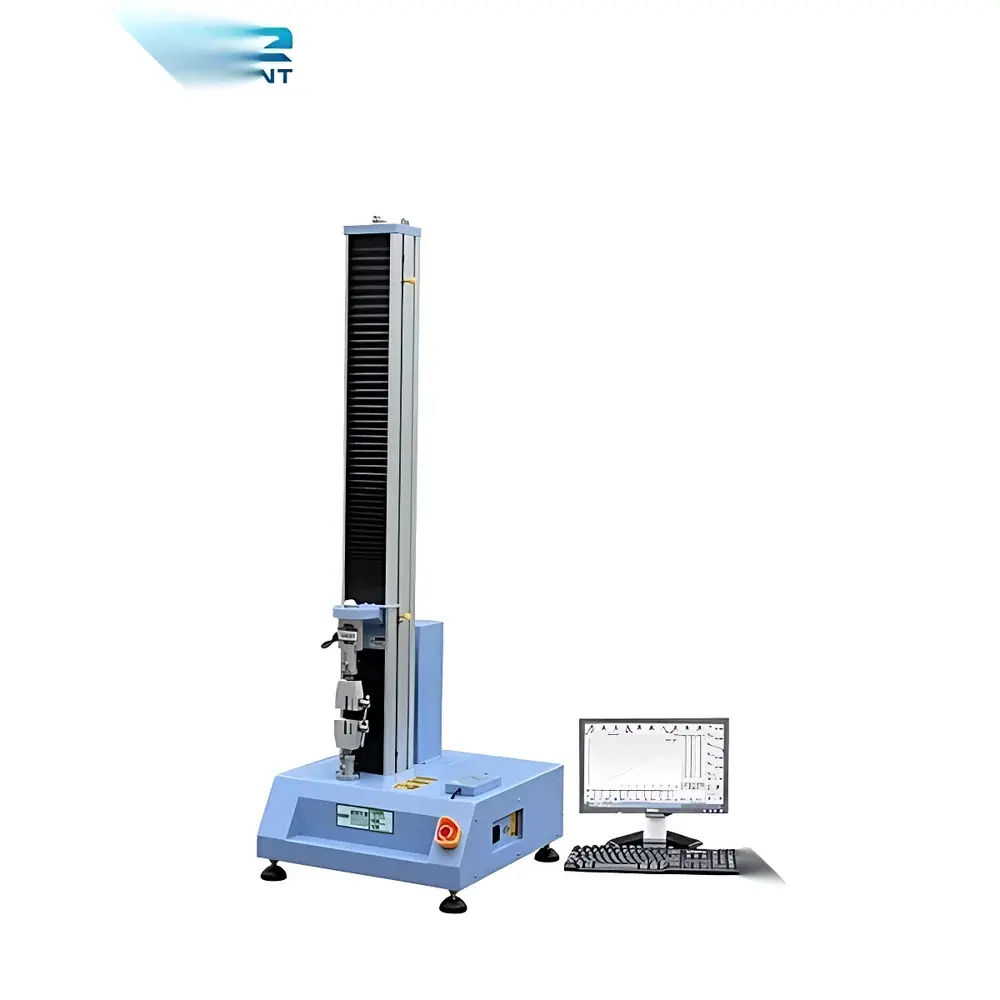
Tensile Testing Machine – Generic Industrial-Grade Universal Testing System
| Brand | Other Brands |
|---|---|
| Origin | Imported |
| Manufacturer Type | Authorized Distributor |
| Price | USD 3,200 (FOB) |
| Load Cell Accuracy | ±0.03% F.S. |
| Overload Capacity | 150% of Rated Capacity |
| Encoder Resolution | 2500 PPR |
| Drive System | Panasonic AC Servo Motor |
| Transmission | Precision Ball Screw + Linear Guide Rails |
| Protection | Mechanical Travel Limit Switch + Software Load Upper-Limit Alarm |
| Compliance | GB/T 16491, GB/T 1040, GB/T 2790–2792, GB/T 3923.1, GB/T 528, GB/T 6344, GB/T 17200, ISO 527, ISO 179, ASTM D638, ASTM D3039, ASTM D790 |
Overview
This industrial-grade universal tensile testing machine is engineered for static mechanical property evaluation of polymeric, fibrous, composite, and thin-film materials under controlled uniaxial loading conditions. Based on the fundamental principles of Hooke’s law and stress–strain continuum mechanics, the system applies precisely regulated axial force via a servo-controlled electromechanical actuator while synchronously measuring displacement, load, and deformation rate. Designed to meet the dimensional stability, thermal drift resistance, and signal fidelity requirements of QC laboratories and R&D centers, it delivers high reproducibility in yield strength, tensile strength, elongation at break, modulus of elasticity, and peel/adhesion performance assessment.
Key Features
- Panasonic AC servo motor drive with 2500 pulses per revolution (PPR) optical encoder ensures smooth, low-noise motion control and sub-micron positioning resolution across full stroke range.
- High-precision preloaded ball screw transmission coupled with hardened linear guide rails minimizes backlash and friction-induced hysteresis—critical for accurate creep and relaxation testing protocols.
- Explosion-proof precision load cell featuring automatic temperature compensation, ±0.03% full-scale (F.S.) accuracy, and transient overload tolerance up to 150% F.S., certified per ISO 376 Class 0.5.
- Dual-stage safety architecture: hardware-based mechanical travel limit switches prevent over-travel damage; software-enforced upper-load threshold triggers immediate stop and audible alarm to protect transducers and specimens.
- Modular controller interface supports interchangeable test fixtures—including pneumatic wedge grips, peel test jigs, and film clamping sets—for rapid reconfiguration between ASTM D638, ISO 527, GB/T 1040, and GB/T 2790-compliant protocols.
Sample Compatibility & Compliance
The system accommodates specimens ranging from ultra-thin polymer films (≥12 µm thickness) to rigid composites (up to 50 mm width × 10 mm thickness), including elastomers, nonwovens, geotextiles, biomedical sutures, and nanofiber mats. It fully satisfies national and international regulatory frameworks for material qualification: GB/T 16491 (Chinese standard for universal testing machines), GB/T 1040 (plastics tensile properties), GB/T 2790/2791/2792 (adhesion and peel testing), ISO 527-2, ISO 179-1, ASTM D638, ASTM D3039 (composite tensile), and ASTM D790 (flexural properties). All calibration certificates are traceable to NIM (National Institute of Metrology, China) and compatible with GLP audit documentation requirements.
Software & Data Management
Bundled Windows-based control and analysis software provides real-time curve plotting (load vs. displacement, stress vs. strain), automated parameter extraction (Young’s modulus, yield point, breaking elongation), and customizable report generation in PDF/Excel formats. The software supports 21 CFR Part 11-compliant user access levels (Administrator, Technician, Viewer), electronic signatures, and immutable audit trails for all test method changes, calibration events, and result exports—ensuring full compliance in GMP-regulated environments. Raw data files (.tdms or .csv) retain full sampling metadata (timestamp, operator ID, environmental conditions) for retrospective analysis and third-party validation.
Applications
- Quality assurance of extruded plastic profiles, blown films, and injection-molded components per ISO 527 and GB/T 1040.
- Mechanical characterization of textile reinforcements and fiber-reinforced polymer (FRP) laminates in aerospace and automotive composites development.
- Peel strength evaluation of pressure-sensitive adhesives (PSAs), medical tapes, and packaging seal integrity per GB/T 2790 and ASTM D903.
- Tensile behavior analysis of hydrogels, electrospun nanofibers, and biodegradable scaffolds in biomaterials research.
- Creep and stress-relaxation profiling of thermoplastic elastomers (TPEs) and silicone rubbers under ISO 899-1 and GB/T 17200.
FAQ
What standards does this tensile tester support out-of-the-box?
It natively implements test methods defined in GB/T 1040, GB/T 2790–2792, GB/T 3923.1, ISO 527, ASTM D638, and ASTM D3039—with preloaded test templates, calculation algorithms, and pass/fail criteria aligned to each standard.
Can the system be integrated into an existing LIMS or MES environment?
Yes—via TCP/IP or RS232 communication protocols, the controller supports bidirectional data exchange with laboratory information management systems (LIMS) and manufacturing execution systems (MES) using ASTM E1384 or HL7-compliant structured data packets.
Is third-party calibration and ISO/IEC 17025 certification available?
Calibration services traceable to national metrology institutes (NIM, NIST, PTB) are offered as optional add-ons, including full uncertainty budgeting and ISO/IEC 17025-accredited certificates upon request.
What is the typical lead time for delivery and installation?
Standard configuration units ship within 4–6 weeks after order confirmation; on-site commissioning and operator training are scheduled within 10 business days of arrival, subject to regional service coverage.
Does the machine support high-speed tensile testing (e.g., impact-like strain rates)?
This model operates within quasi-static strain rate ranges (0.001–500 mm/min); for dynamic or high-strain-rate applications (>1 s⁻¹), a dedicated servo-hydraulic or drop-weight impact system is recommended.



