TESCOM CableScout TV220E / TV220EX Advanced Time Domain Reflectometer
| Brand | TESCOM (USA) |
|---|---|
| Origin | USA |
| Model | TV220E / TV220EX |
| Max Measurement Range | 5.58 km (Vp = 0.93) |
| Basic Accuracy | ±0.01% ±300 ps |
| Horizontal Resolution | 0.05–20 ns |
| Display Resolution | 1024 × 600 (7″ capacitive touchscreen, 800 cd/m² brightness) |
| Pulse Width Options | 2, 5, 25, 125, 250, 500 ns |
| Output Impedance | 75 Ω |
| Output Pulse Amplitude | 4–6 V |
| Velocity Factor (Vp) Range | 0.300–1.000 |
| Event Markers | >6 |
| Battery | 4-cell Li-ion, 60 Wh (>8 h typical operation) |
| Dimensions (TV220E) | 27 × 16 × 5 cm |
| Weight (TV220E) | 1200 g |
| IP Rating (TV220EX) | IP67 |
| Interface | F-type connector with swappable couplers |
| Connectivity | USB, Bluetooth Low Energy (BLE), Wi-Fi |
| Storage Capacity | >100 trace files |
Overview
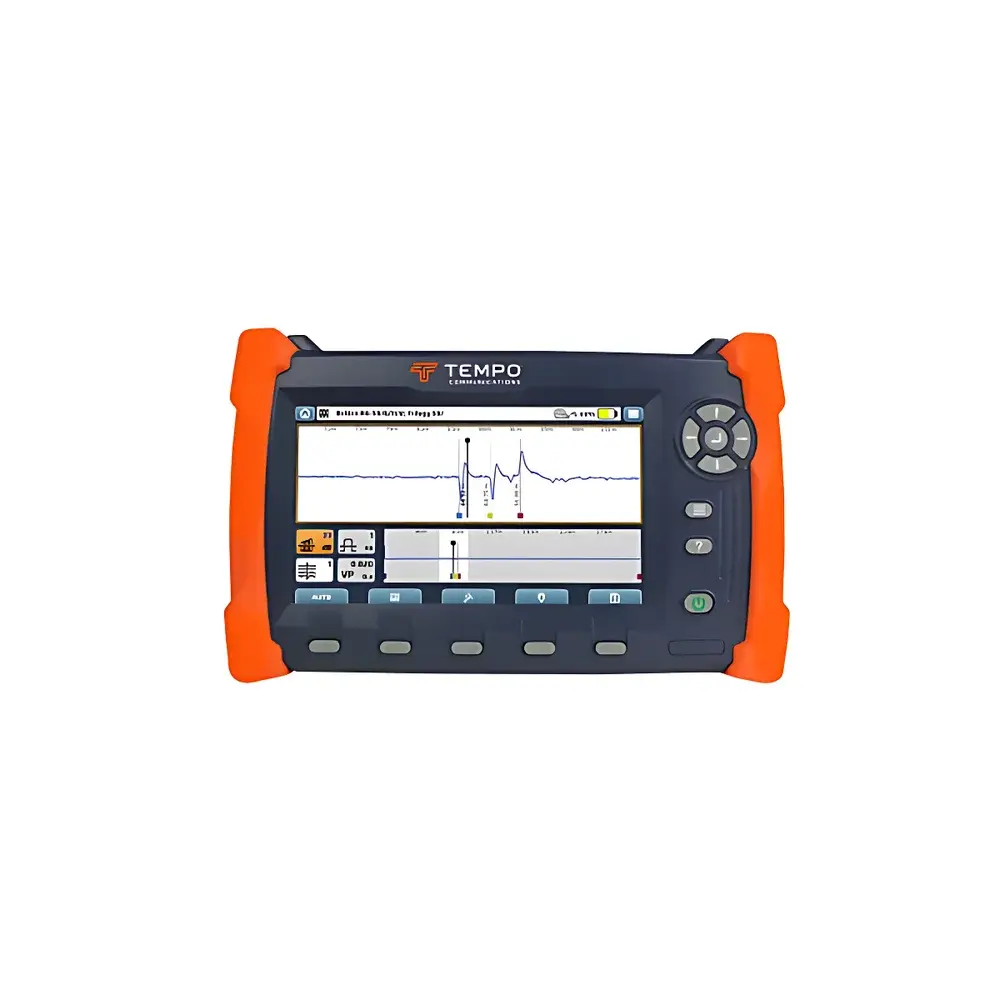
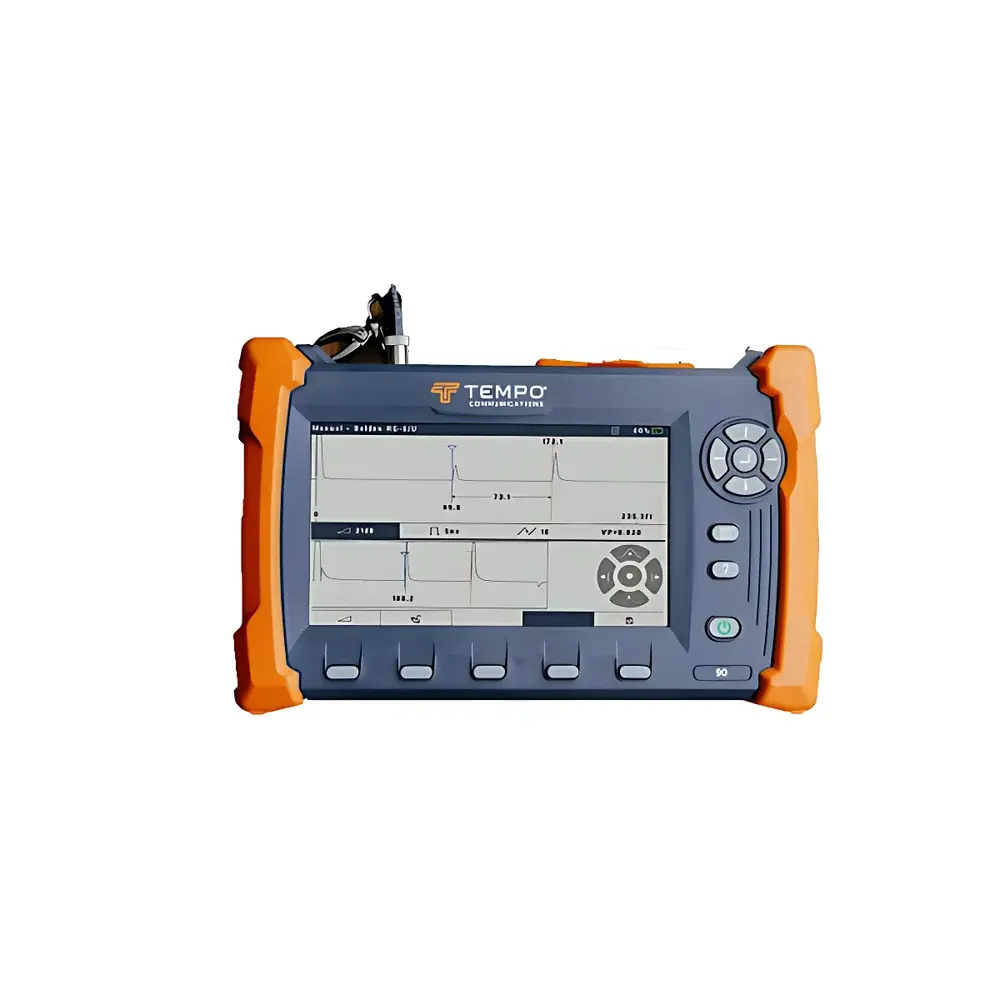
The TESCOM CableScout TV220E and TV220EX are high-performance, field-deployable Time Domain Reflectometers (TDRs) engineered for precision fault location, cable characterization, and infrastructure validation in hybrid fiber-coaxial (HFC) networks. Based on the principle of pulse-echo time-of-flight measurement, these instruments inject calibrated digital or raised-cosine voltage pulses into coaxial transmission lines and analyze the amplitude, polarity, and time delay of reflected signals to identify impedance discontinuities—including opens, shorts, splices, water ingress, shield damage, and connector degradation. Designed specifically for DOCSIS 3.1/4.0 network maintenance and deployment, the TV220 series delivers enhanced signal-to-noise ratio, extended dynamic range, and improved resolution over legacy TDR platforms—enabling detection of sub-centimeter anomalies in cables up to 5.58 km long (at Vp = 0.93). Its architecture adheres to fundamental electromagnetic theory governing transmission line behavior, ensuring traceable, repeatable, and physics-based diagnostics—not empirical approximations.
Key Features
- 7-inch sunlight-readable capacitive touchscreen (1024 × 600, 800 cd/m² brightness) with multi-touch gesture support (pinch-to-zoom, swipe navigation)
- Dual-input interface: 13 tactile mechanical keys for gloved operation + intuitive GUI—ensuring reliability in harsh outdoor environments
- Configurable pulse generation: six selectable pulse widths (2–500 ns), dual pulse shapes (raised-cosine for low-noise analog analysis; digital for high-energy reflection capture)
- High-fidelity acquisition: ±0.01% basic accuracy with ±300 ps timebase uncertainty; horizontal resolution adjustable from 0.05 ns to 20 ns
- Robust physical design: TV220E optimized for portability (27 × 16 × 5 cm, 1.2 kg); TV220EX housed in an IP67-rated ruggedized enclosure with integrated accessory storage
- Flexible connectivity: USB host/device, Bluetooth Low Energy (BLE), and IEEE 802.11 b/g/n Wi-Fi for real-time data streaming, remote firmware updates, and cloud-assisted reporting
Sample Compatibility & Compliance
The CableScout TV220E/TV220EX is calibrated and validated for use with standard 75 Ω coaxial infrastructure—including RG-6, RG-11, H100, and equivalent broadband distribution cables used in CATV, MSO, and municipal fiber-to-the-node (FTTN) deployments. It supports velocity factor (Vp) entry in multiple formats (decimal, %, m/µs, ft/µs) to accommodate diverse dielectric materials (e.g., PE, FPE, foam PE). While not a certified metrology instrument per ISO/IEC 17025, its timebase stability, temperature-compensated oscillator, and factory-traceable calibration align with industry best practices defined in SCTE-ANSI standards (e.g., SCTE 17-1, SCTE 30) and ANSI/TIA-568.4 for coaxial cable certification. The device operates within FCC Part 15 Class B and CE RED compliance limits for conducted and radiated emissions.
Software & Data Management
Data acquisition, annotation, and comparative analysis are managed via the embedded TestWizard™ platform—a context-aware workflow engine that guides technicians through standardized test sequences (e.g., baseline verification, intermittent fault hunting, post-repair validation). The instrument natively stores >100 full-resolution traces with timestamp, GPS metadata (when enabled via BLE-connected smartphone), and user-defined event markers (>6 per trace). Exported .tdr files are compatible with Tempo Report Writer for Windows—a desktop application supporting automated PDF report generation, side-by-side trace comparison, delta-difference overlays, and pass/fail thresholding per configurable event sensitivity. Future Android and iOS versions will extend offline annotation and cloud sync capabilities. All firmware updates follow signed binary delivery protocols to ensure integrity; audit logs record configuration changes and calibration events for GLP-aligned documentation.
Applications
- HFC network commissioning and acceptance testing—verifying continuity, length, and characteristic impedance before service activation
- Intermittent fault isolation in live or de-energized coaxial drops—leveraging time-synchronized sampling to capture transient reflections
- Post-storm or post-construction damage assessment—identifying crushed cables, moisture-induced impedance shifts, or compromised shielding
- Preventive maintenance benchmarking—archiving baseline traces for trend analysis across cable aging, temperature cycling, or connector wear
- DOCSIS 4.0 channel bonding validation—correlating TDR-derived distance-to-fault with upstream channel SNR degradation patterns
- Training and certification—used by SCTE-certified technicians for hands-on TDR methodology instruction under ANSI/SCTE 0/2020 standards
FAQ
What is the difference between the TV220E and TV220EX models?
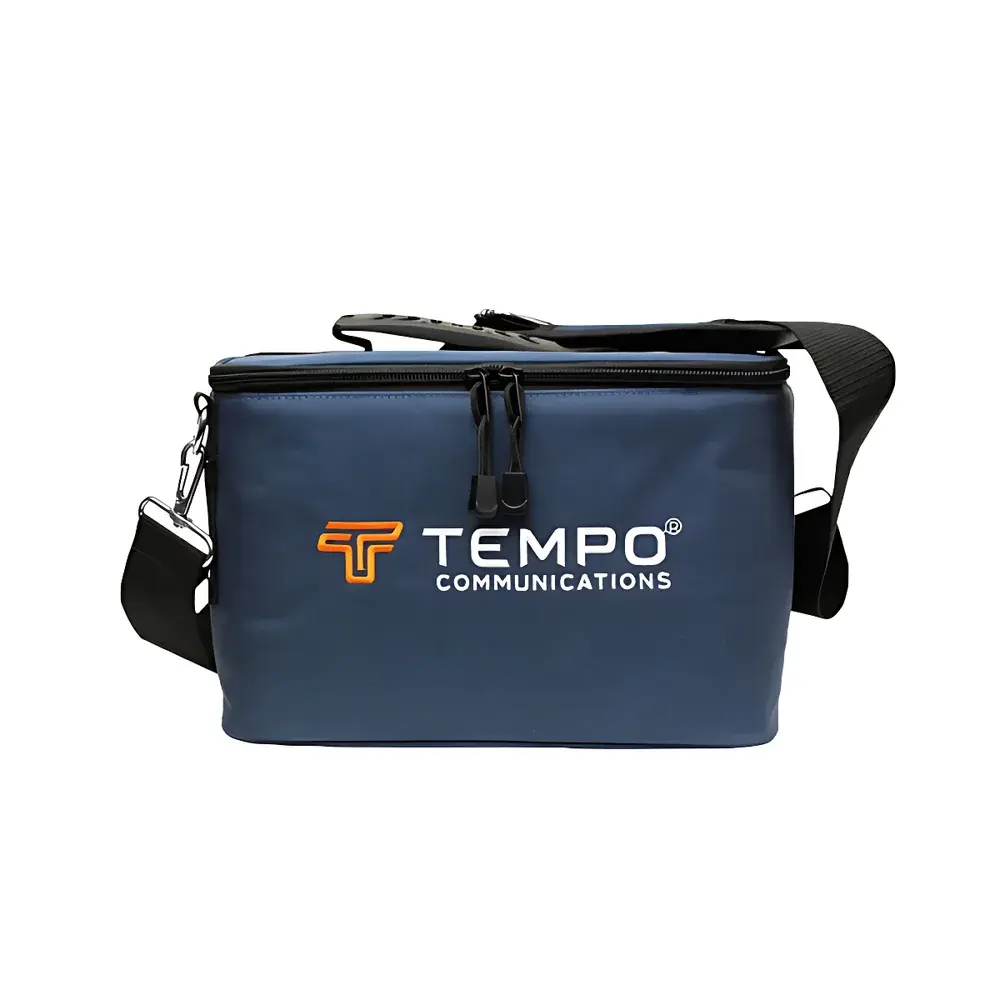
The TV220EX integrates the identical TDR engine and firmware of the TV220E but is sealed within an IP67-rated portable case with internal compartments for adapters, jumpers, and calibration loads—making it suitable for uncontrolled field conditions including rain, dust, and mechanical impact.
Does the TV220E/TV220EX support automatic fault classification?
It does not perform AI-driven classification; instead, it provides configurable event detection thresholds and visual differentiation (e.g., polarity, amplitude, slope) aligned with recognized failure signatures per SCTE-ANSI guidelines—requiring technician interpretation per documented procedures.
Can the device measure velocity factor (Vp) automatically?
No. Vp must be entered manually based on cable manufacturer specifications or determined via known-length calibration—consistent with TDR best practices outlined in IEC 61190-2-2 and MIL-STD-2164A.
Is firmware update capability available over Wi-Fi?
Yes—signed firmware packages can be downloaded and installed wirelessly, with cryptographic verification performed onboard prior to execution to maintain system integrity.
How is measurement repeatability ensured across temperature variations?
The unit employs a temperature-compensated crystal oscillator (TCXO) and internal thermal monitoring; calibration coefficients are adjusted in real time using embedded lookup tables derived from factory thermal profiling across –10 °C to +50 °C.