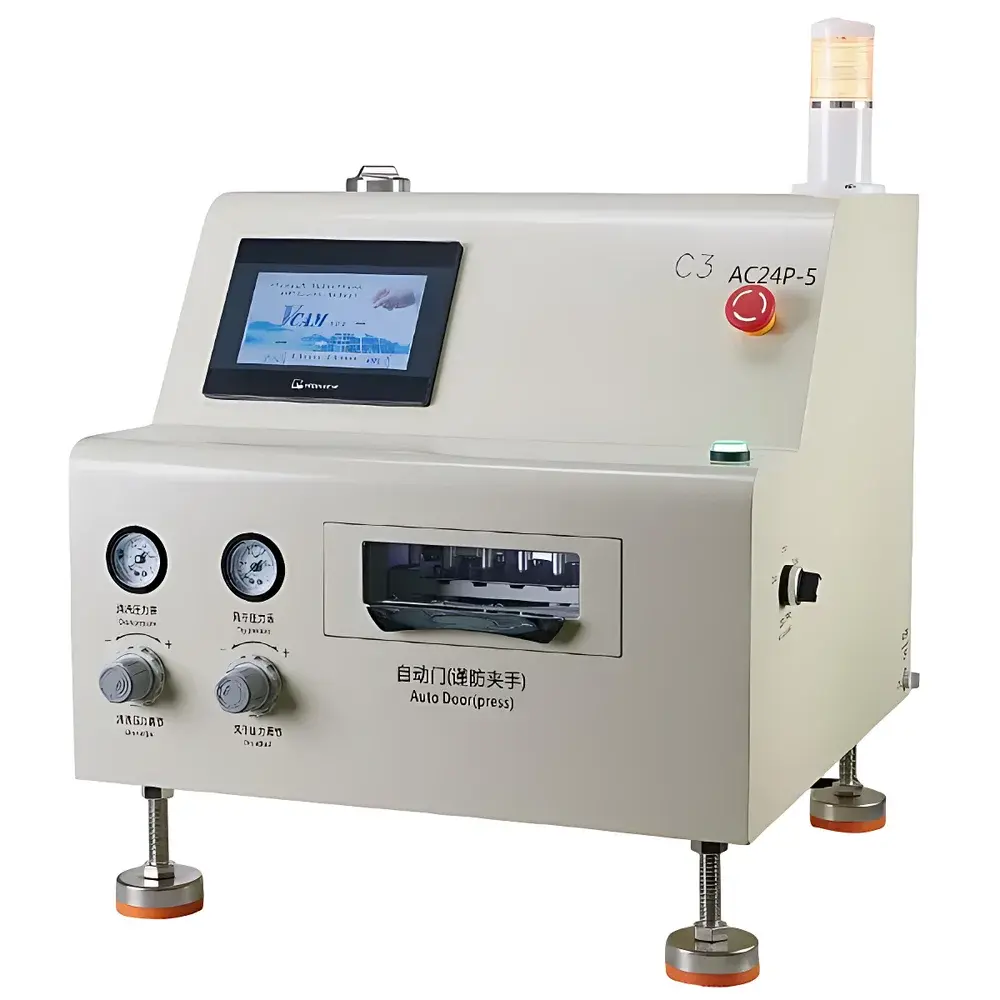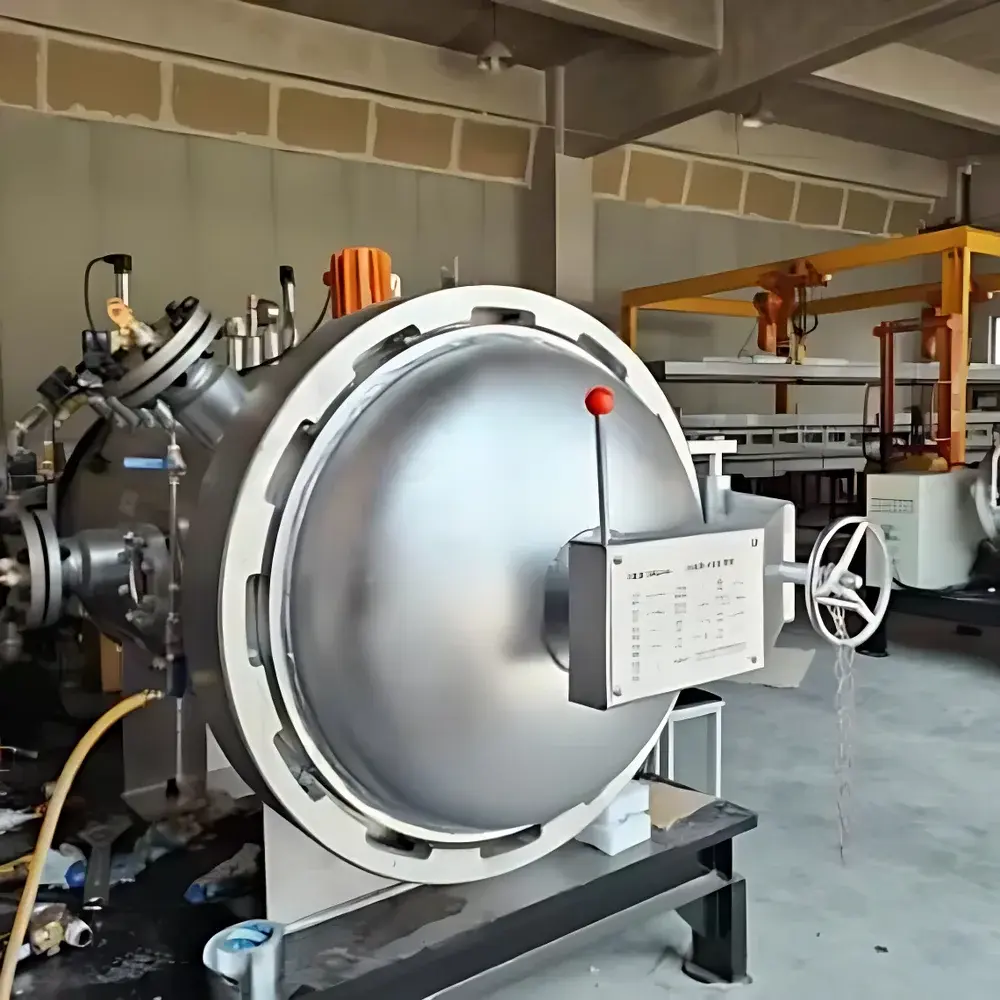
TESTech TTech-CQG-1 In Situ Thermal Runaway Gas Evolution & Explosion Pressure Test Chamber
| Brand | TESTech |
|---|---|
| Origin | Jiangsu, China |
| Manufacturer Type | OEM Manufacturer |
| Country of Origin | China |
| Model | TTech-CQG-1 |
| Price Range | USD 150–300 (FOB) |
Overview
The TESTech TTech-CQG-1 In Situ Thermal Runaway Gas Evolution & Explosion Pressure Test Chamber is an engineered solution for high-fidelity simulation and quantitative assessment of lithium-ion battery thermal runaway under ambient atmospheric conditions. Unlike conventional inert-atmosphere calorimetric combustion bombs—typically purged with nitrogen or argon to suppress combustion—the TTech-CQG-1 maintains a controlled, oxygen-containing environment (21% O₂ in air) during thermal propagation testing. This enables physicochemically representative evaluation of gas evolution kinetics, autoignition behavior, flame acceleration dynamics, and maximum explosion pressure (Pmax) development in real-time. The chamber integrates a robust pressure-rated vessel (designed to withstand ≥20 bar peak overpressure), calibrated piezoresistive transducers, high-speed data acquisition (≥10 kHz sampling), and synchronized thermal imaging inputs—allowing correlation between temperature rise, gas release onset, pressure transient morphology, and venting event timing. It serves as a critical platform for failure mode analysis, safety margin quantification, and validation of computational fluid dynamics (CFD) models used in battery pack-level hazard assessment.
Key Features
- Atmospheric-compatibility design: Supports full thermal runaway testing in ambient air (21% O₂), enabling realistic combustion-driven pressure generation and flame propagation studies.
- In situ multi-parameter monitoring: Simultaneous acquisition of internal pressure (±0.1% FS accuracy), surface temperature (via integrated thermocouple ports and IR window), voltage/current (via feedthrough terminals), and vent gas composition (when interfaced with GC/MS or FTIR).
- Dual-mode operational capability: Configurable for either closed-vessel explosion pressure measurement (ASTM E1515-compliant) or open-vent gas evolution rate quantification (mass flow + pressure decay modeling).
- Modular integration architecture: Compatible with external thermal abuse sources (e.g., oven, laser heater, nail penetration rig) and downstream analytical systems (gas chromatography, Fourier-transform infrared spectroscopy).
- Structural integrity assurance: Vessel constructed from 316L stainless steel with ASME Section VIII Div. 1 compliance documentation; rupture disc and passive venting pathways included for fail-safe overpressure relief.
Sample Compatibility & Compliance
The TTech-CQG-1 accommodates cylindrical (18650, 21700, 26650), prismatic (up to 200 × 150 × 20 mm), and pouch-type cells (with optional restraint fixtures). All internal surfaces are electropolished to minimize catalytic decomposition artifacts. The system supports test protocols aligned with UN Manual of Tests and Criteria Part III, Subsection 38.3; UL 1642 Annex B; and GB/T 36276–2018 Clause 7.3. Data traceability meets GLP requirements, with timestamped binary logging and optional 21 CFR Part 11-compliant software audit trail modules available upon request.
Software & Data Management
Acquisition and visualization are managed via TESTech’s proprietary T-Runaway Control Suite (v3.2+), running on Windows OS with real-time waveform display, trigger-based event segmentation, and export to CSV, HDF5, or MATLAB .mat formats. Pressure transients are automatically annotated with thermal runaway onset (defined as dT/dt ≥ 1 °C/s sustained for ≥2 s), vent initiation, and Pmax detection. Raw datasets include metadata tags for cell ID, SOC, ambient RH, and operator credentials—enabling structured database ingestion for cross-lab comparative analysis and AI-driven failure pattern recognition.
Applications
- Quantification of maximum explosion pressure (Pmax) and deflagration index (KG) for cathode-electrolyte decomposition gases (e.g., CO, H₂, C₂H₄, CH₄, HF).
- Validation of electrolyte flame inhibition additives by comparing Pmax reduction across formulations under identical air-dilution ratios.
- Correlation of gas evolution profiles (dV/dt) with electrochemical impedance spectroscopy (EIS) degradation signatures pre-runaway.
- Generation of empirical input parameters for CFD-based battery module explosion modeling (e.g., ANSYS Fluent, CONVERGE).
- Support for ISO 6144, ISO 10156, and EN 1839-compliant flammability envelope mapping using synthetic gas mixtures derived from prior GC analysis.
FAQ
Can the TTech-CQG-1 be used for testing large-format prismatic or pouch cells?
Yes—customizable internal fixtures and adjustable mounting rails accommodate cells up to 200 × 150 × 20 mm; optional vacuum-assisted clamping ensures thermal contact stability during rapid heating.
Does the system support automated gas sampling during pressure rise?
It provides standardized 1/8″ Swagelok ports with septum-sealed valves for timed syringe extraction; integration with autosamplers (e.g., VICI Valco) requires optional pneumatic actuation kit.
Is explosion pressure data traceable to national standards?
Pressure sensors are NIST-traceable (calibration certificate provided); Pmax calculation follows ASTM E1515–22 Annex A1 methodology for confined gas explosions.
What safety certifications does the chamber carry?
The pressure vessel carries CE marking per PED 2014/68/EU; electrical components comply with IEC 61000-6-4 EMC and IEC 60529 IP54 enclosure rating.
Can the system operate in a fume hood or dedicated explosion-proof room?
Yes—external dimensions (W×D×H: 650 × 650 × 900 mm) and modular cabling allow installation in Class I, Division 1 hazardous locations when paired with intrinsically safe signal isolators (optional).