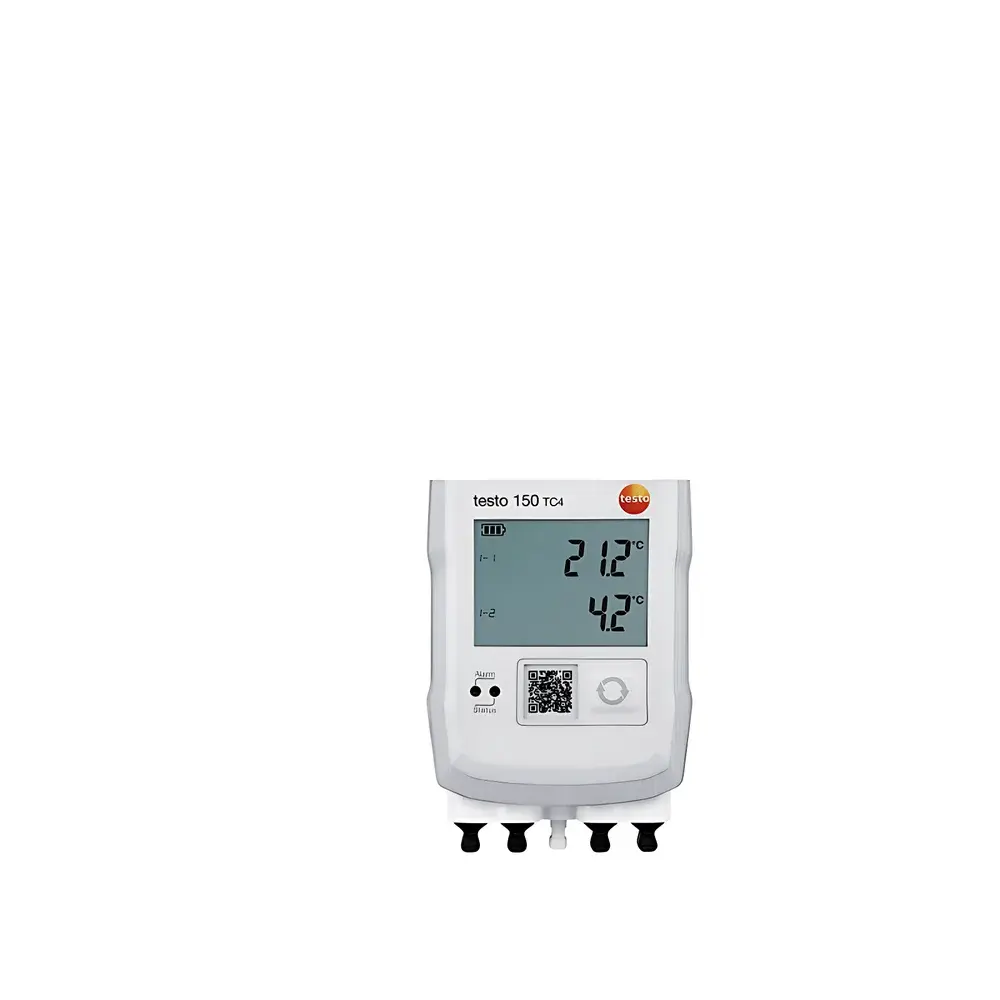
testo 150 TC4 Four-Channel Thermocouple Data Logger Module
| Brand | testo |
|---|---|
| Origin | Germany |
| Model | 0572 3330 |
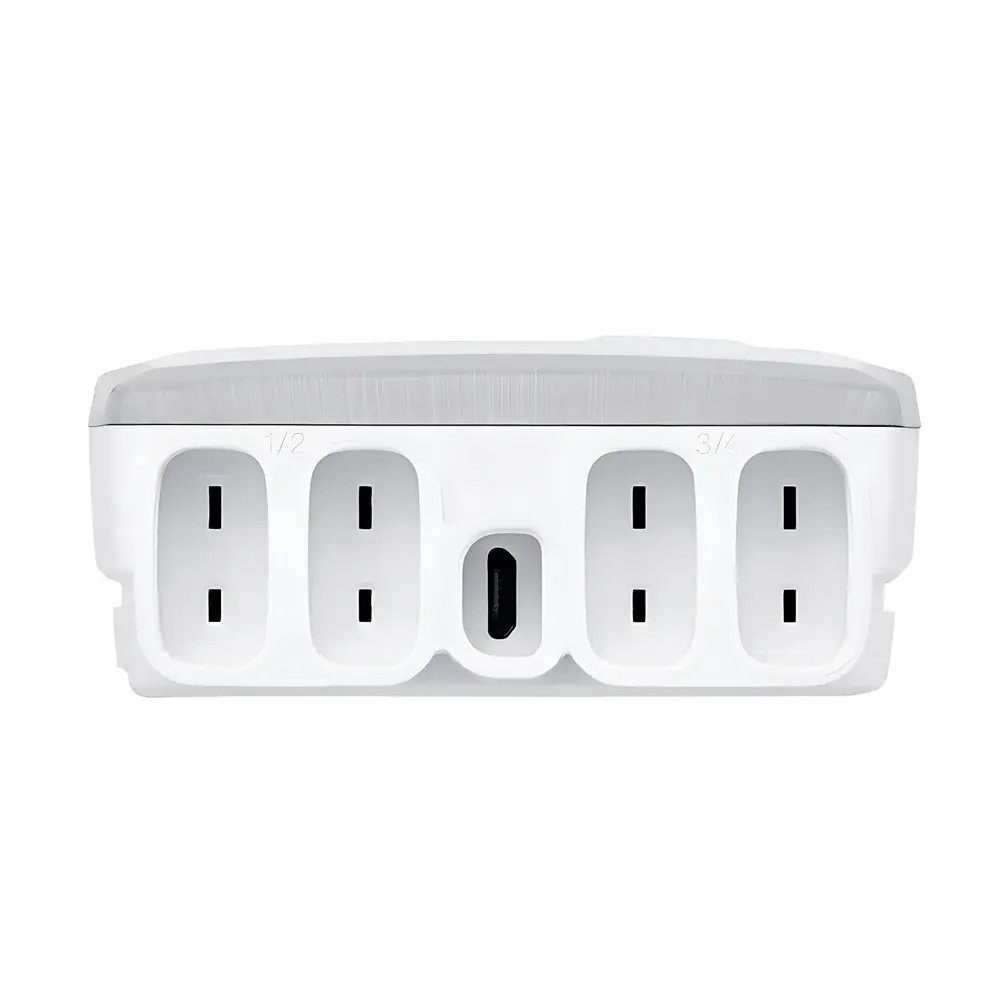
| Channels | 4 thermocouple inputs (Type K, J, T, N, S, R, B, E, U, L) |
| Compliance | DIN EN 12830:2018 certified |
| Communication | WLAN, LAN, or optional testo UltraRange radio (up to 1 km line-of-sight) |
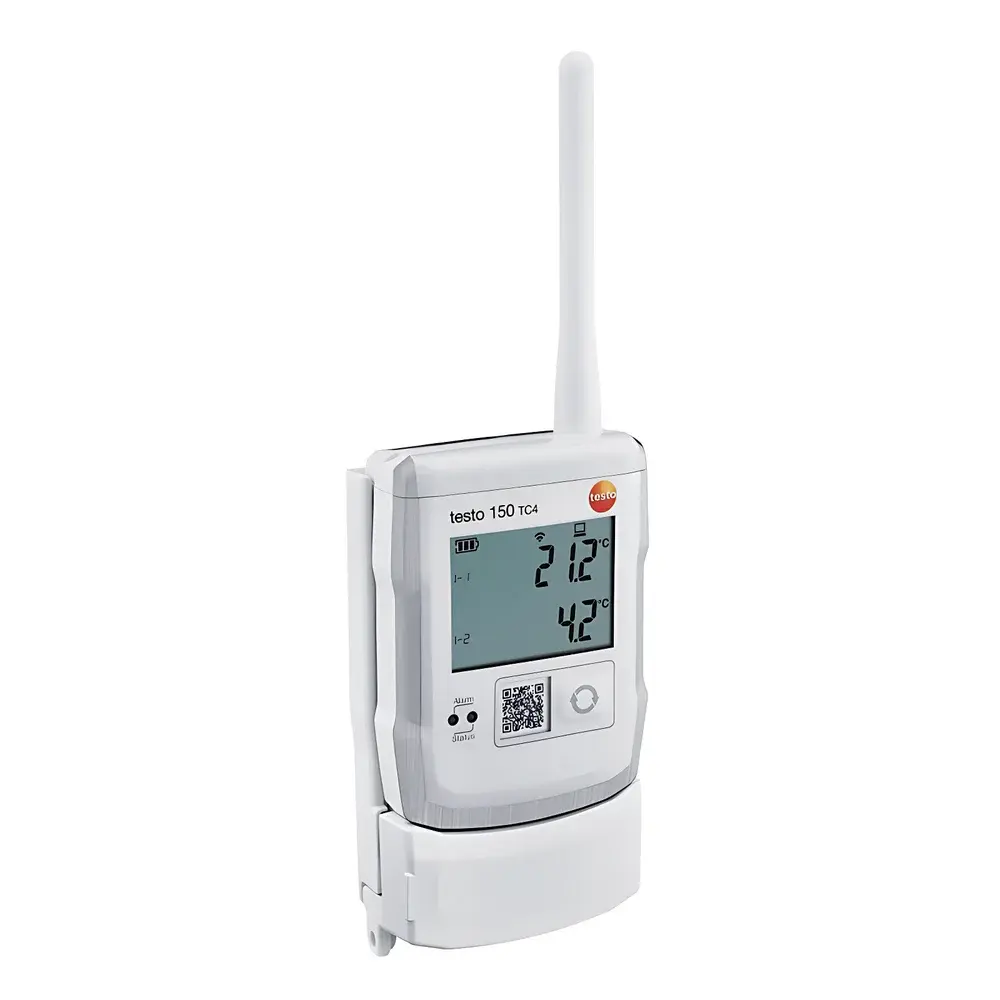
| Display | Integrated backlit LCD |
| Power | Internal battery (typ. 1 year operation) |
| Alarm | Visual LED indicator (flashing on limit violation) |
| Software Integration | Compatible with testo Saveris PRO, testo Saveris CFR (21 CFR Part 11 compliant), and testo Saveris Cockpit |
| Calibration | Supplied with factory calibration protocol |
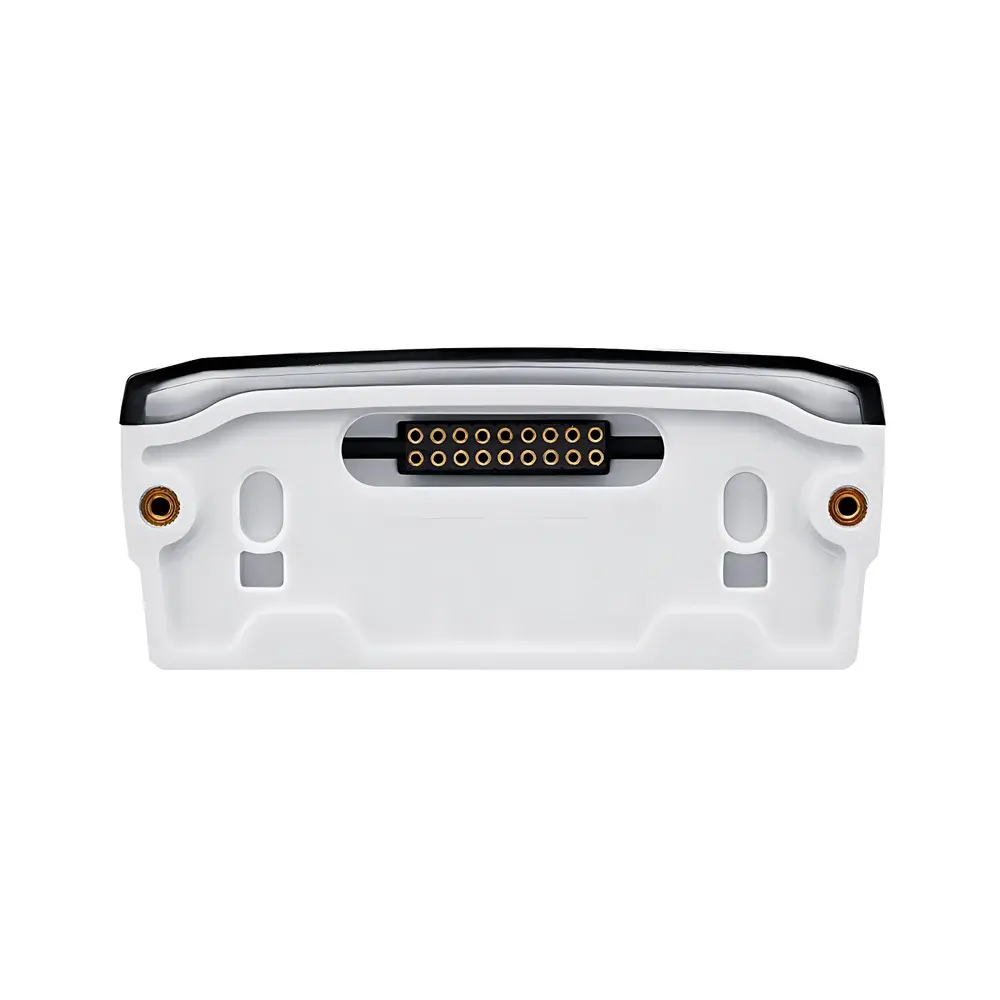
| Enclosure | IP65-rated housing (dust- and water-resistant) |
Overview
The testo 150 TC4 is a DIN EN 12830:2018-certified, four-channel thermocouple data logger module engineered for continuous, high-integrity temperature monitoring in regulated environments. As a core component of the testo Saveris Pharma environmental monitoring system (EMS), it operates on a modular architecture designed to meet stringent pharmaceutical, biotech, and clinical storage requirements—including cold chain validation, stability chambers, incubators, and warehouse ambient monitoring. The device employs precision cold-junction compensation and digital signal processing to ensure traceable, low-drift measurements across Type K, J, T, N, S, R, B, E, U, and L thermocouples. Its measurement principle relies on direct analog-to-digital conversion of thermoelectric voltage signals, with automatic linearization per thermocouple type per IEC 60584-1. Unlike standalone loggers, the 150 TC4 is purpose-built for integration into validated infrastructure—supporting audit-ready data integrity through secure, time-synchronized transmission and immutable storage.
Key Features
- Four independently configurable thermocouple inputs with auto-type recognition and real-time cold-junction compensation
- Integrated backlit LCD display showing live channel values, status icons, and alarm indicators
- Visual alarm system: dual-color LED (red/green) with programmable flashing pattern upon deviation from user-defined upper/lower limits
- IP65-rated enclosure suitable for industrial and controlled-environment applications including washdown zones and high-humidity areas
- Battery-powered operation (typical 12-month service life) with low-battery warning and seamless transition to external power if connected
- Modular communication flexibility: native support for testo WLAN/LAN communication modules; optional testo UltraRange radio enables license-free, encrypted long-range transmission (up to 1 km line-of-sight)
- Firmware-upgradable via USB or network interface to maintain compliance with evolving regulatory expectations
Sample Compatibility & Compliance
The testo 150 TC4 is not a sample-contact instrument but a signal acquisition and logging platform for thermocouple sensors deployed in situ. It accepts industry-standard miniature and standard thermocouple connectors (e.g., mini-TC, subminiature, or screw-terminal types) and supports sensor cable lengths up to 100 m without significant noise-induced error—provided shielded twisted-pair cabling is used per IEC 61000-4-5. Regulatory alignment includes full conformance with DIN EN 12830:2018 for temperature monitoring equipment used in refrigerated transport and storage of medicinal products. When deployed within a validated testo Saveris Pharma EMS, the module satisfies Annex 15 (EU GMP), FDA Guidance for Industry: Cold Chain Management, and WHO Technical Report Series No. 961 (2011) requirements for data integrity, alarm response, and electronic record retention. All firmware and software interactions are designed to support 21 CFR Part 11-compliant audit trails when used with testo Saveris CFR.
Software & Data Management
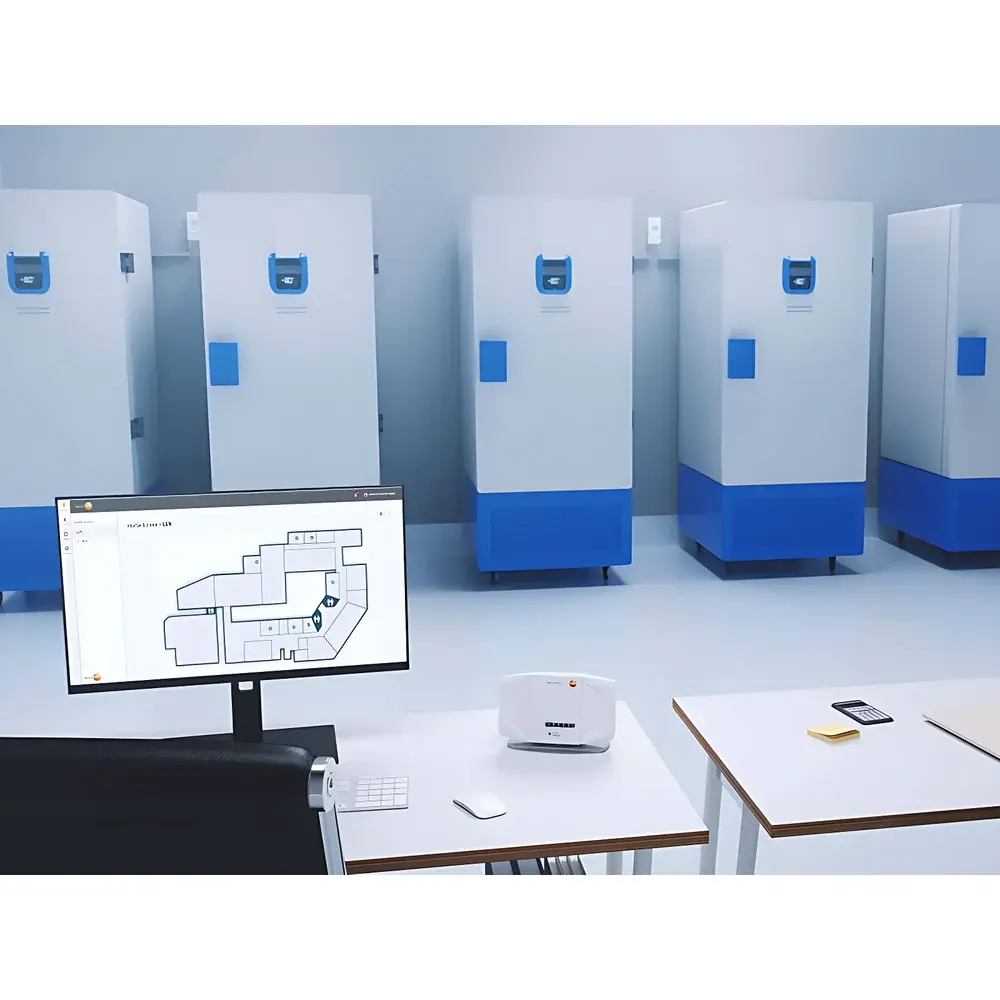
Data acquisition, configuration, and alarm management are performed exclusively through testo’s validated software suite. testo Saveris PRO provides local PC-based setup, real-time visualization, and report generation compliant with ISO/IEC 17025 documentation standards. For regulated users, testo Saveris CFR implements role-based access control, electronic signatures, change history logging, and automated backup—all aligned with FDA 21 CFR Part 11 and EU Annex 11. Remote access is enabled via testo Saveris Cockpit, a browser-based dashboard supporting multi-site overview, centralized alarm routing (email/SMS), and trend analysis across hundreds of distributed modules. Raw measurement data is stored in encrypted binary format with SHA-256 checksums; export options include CSV, PDF, and XML with embedded metadata (timestamp, channel ID, sensor ID, calibration due date).
Applications
- Pharmaceutical warehouse and distribution center temperature mapping and continuous monitoring
- Stability testing chambers (ICH Q1–Q5), lyophilizers, and cleanroom HVAC validation
- Vaccine cold chain monitoring in transport vehicles and point-of-care refrigeration units
- Bioreactor jacket temperature profiling and fermentation process support
- Industrial oven, furnace, and autoclave qualification (IQ/OQ/PQ) using thermocouple-based sensor arrays
- Environmental qualification of laboratory freezers (-80 °C), ultra-low temperature storage, and cryogenic dewars
FAQ
Does the testo 150 TC4 require external power to operate?
No—it operates autonomously on internal batteries for approximately 12 months under typical conditions. External power (via micro-USB or PoE-compatible communication modules) extends operational uptime and disables battery drain.
Can the device be calibrated onsite by the user?
Field calibration is not supported; however, the module accepts user-imported calibration offset files for individual channels. Full metrological verification requires traceable thermocouple calibration at an accredited lab, with results documented in the supplied calibration protocol.
Is the testo 150 TC4 compatible with non-testo communication gateways?
It is designed exclusively for use with testo’s certified communication infrastructure (WLAN/LAN modules or UltraRange radio). Third-party gateways are not supported due to encryption, synchronization, and firmware handshake requirements.
How is data integrity ensured during wireless transmission?
All WLAN, LAN, and UltraRange transmissions use AES-128 encryption and packet-level CRC validation. Lost packets are automatically retransmitted, and timestamped sequence numbers prevent replay or out-of-order insertion in the database.
What happens if the network connection is interrupted?
The module continues logging locally with full timestamp resolution (1-second minimum interval) and stores up to 1 million readings in non-volatile memory. Upon reconnection, buffered data is transmitted without loss or gap.