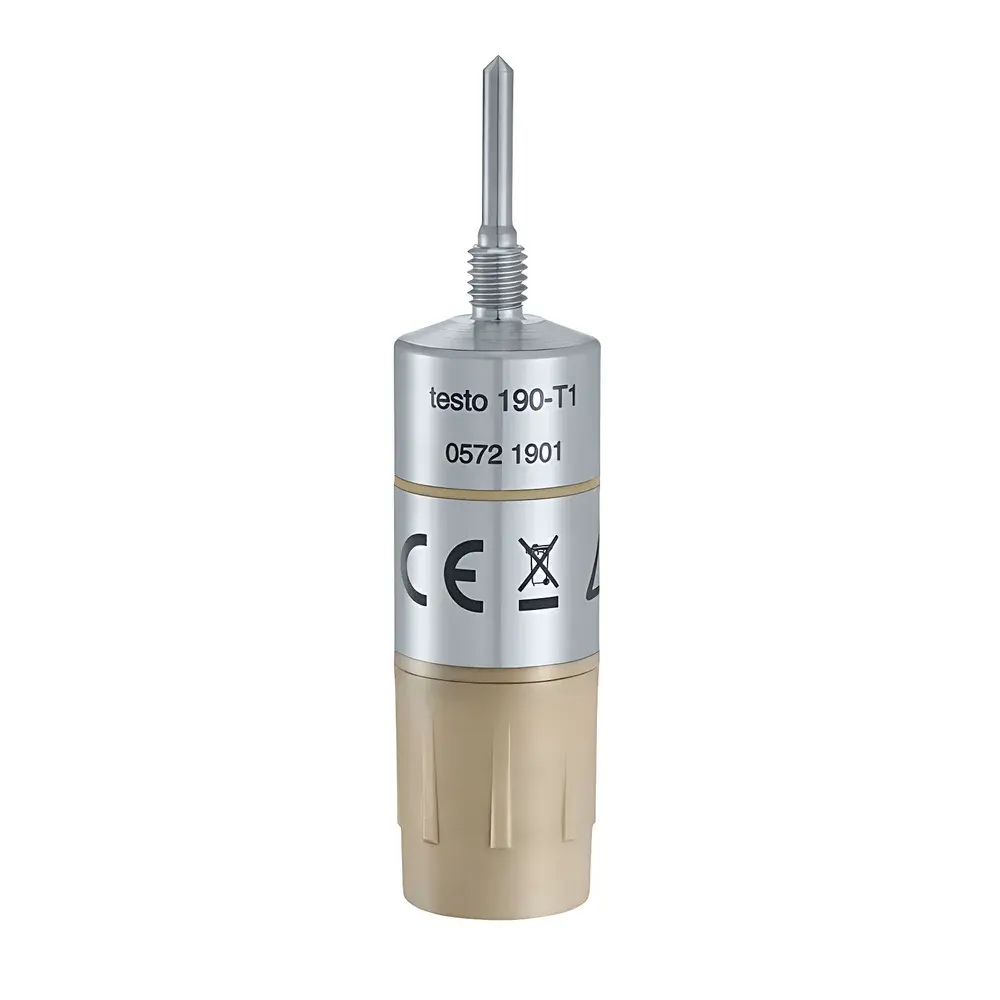
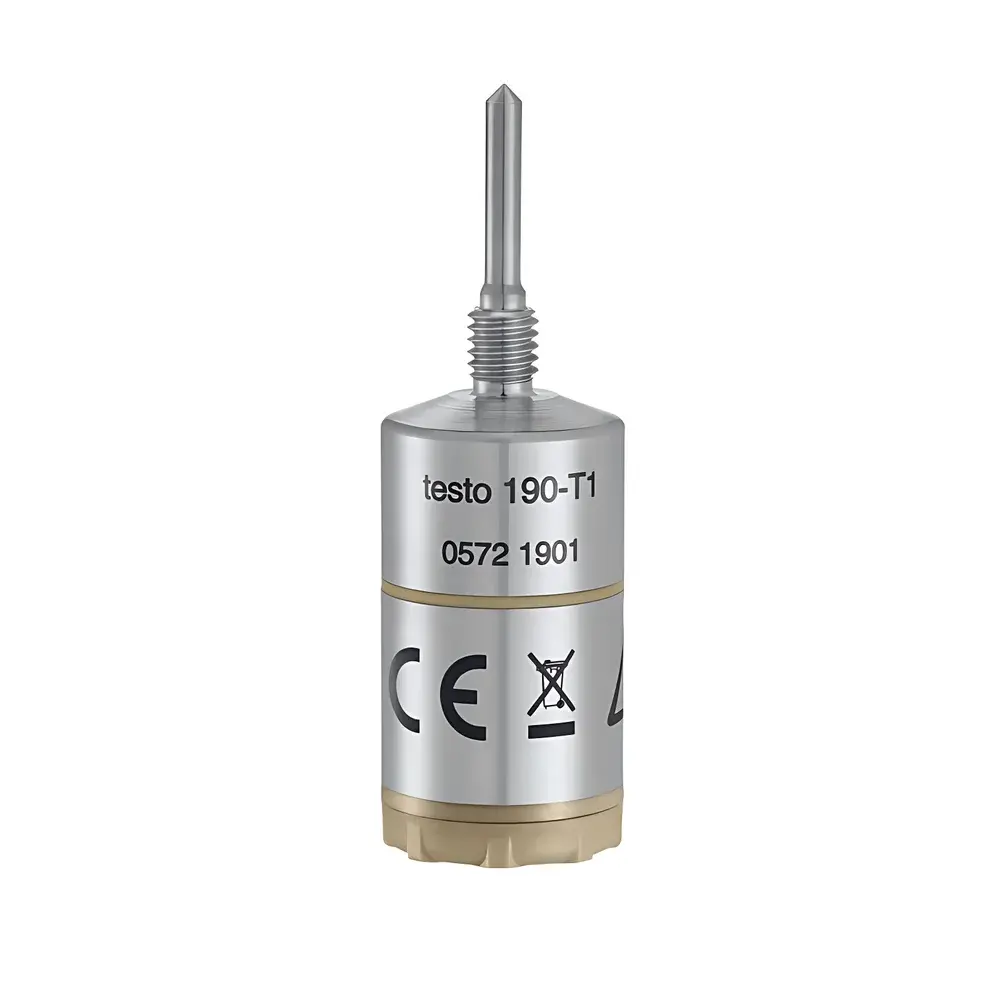
testo 190-T1 CFR Temperature Data Logger with Rigid Short Probe
| Brand | testo |
|---|---|
| Origin | Germany |
| Model | 0572 1901 |
| Operating Temperature | −50 to +140 °C |
| Probe Length | 25 mm |
| Probe Diameter | 3 mm |
| Housing Dimensions | Ø20 × 59 mm |
| Enclosure Material | Stainless Steel + PEEK |
| IP Rating | IP68 |
| Sensor Type | Pt1000 |
| Measurement Accuracy | ±0.1 °C (−40 to +140 °C), ±0.2 °C (−50 to −40 °C) |
| Resolution | 0.01 °C |
| Memory Capacity | 60,000 readings |
| Sampling Interval | 1 s to 24 h |
| Battery | 1/2 AA lithium |
| Battery Life | 2,500 h (at 10 s interval, +121 °C) |
| Storage Temperature | −20 to +50 °C |
| Response Time (t₉₀) | 7 s |
Overview
The testo 190-T1 CFR Temperature Data Logger is an FDA 21 CFR Part 11–compliant, stainless-steel-encapsulated precision instrument engineered for validated thermal process monitoring in regulated pharmaceutical and biotechnology environments. It employs a high-stability Pt1000 resistance temperature detector (RTD) sensor embedded in a rigid, compact probe (Ø3 mm × 25 mm), enabling direct, contact-based temperature measurement in confined geometries—such as autoclave chambers, sterilization trays, lyophilizer shelves, and narrow ducts—where conventional probes cannot be positioned or would compromise thermal mass equivalence. Its sealed, monolithic construction—featuring laser-welded stainless steel housing and PEEK-coated battery compartment—ensures full IP68 ingress protection and maintains integrity across repeated steam sterilization cycles (up to +140 °C). Designed explicitly for critical validation activities—including IQ/OQ/PQ, sterilization cycle mapping, depyrogenation studies, and cold chain qualification—the device delivers traceable, tamper-evident data compliant with ISO 13485, EU GMP Annex 15, and WHO TRS 961 requirements.
Key Features
- CFR 21 Part 11–Ready Architecture: Hardware-level audit trail support, electronic signature capability, and role-based user access control when paired with testo 190 CFR software—fully aligned with FDA expectations for electronic records and signatures in GxP environments.
- Rigid Short-Form Factor: Compact Ø20 mm × 59 mm cylindrical housing with ultra-low-profile probe enables insertion into recesses, tubing, and multi-layer packaging without mechanical interference or thermal lag artifacts.
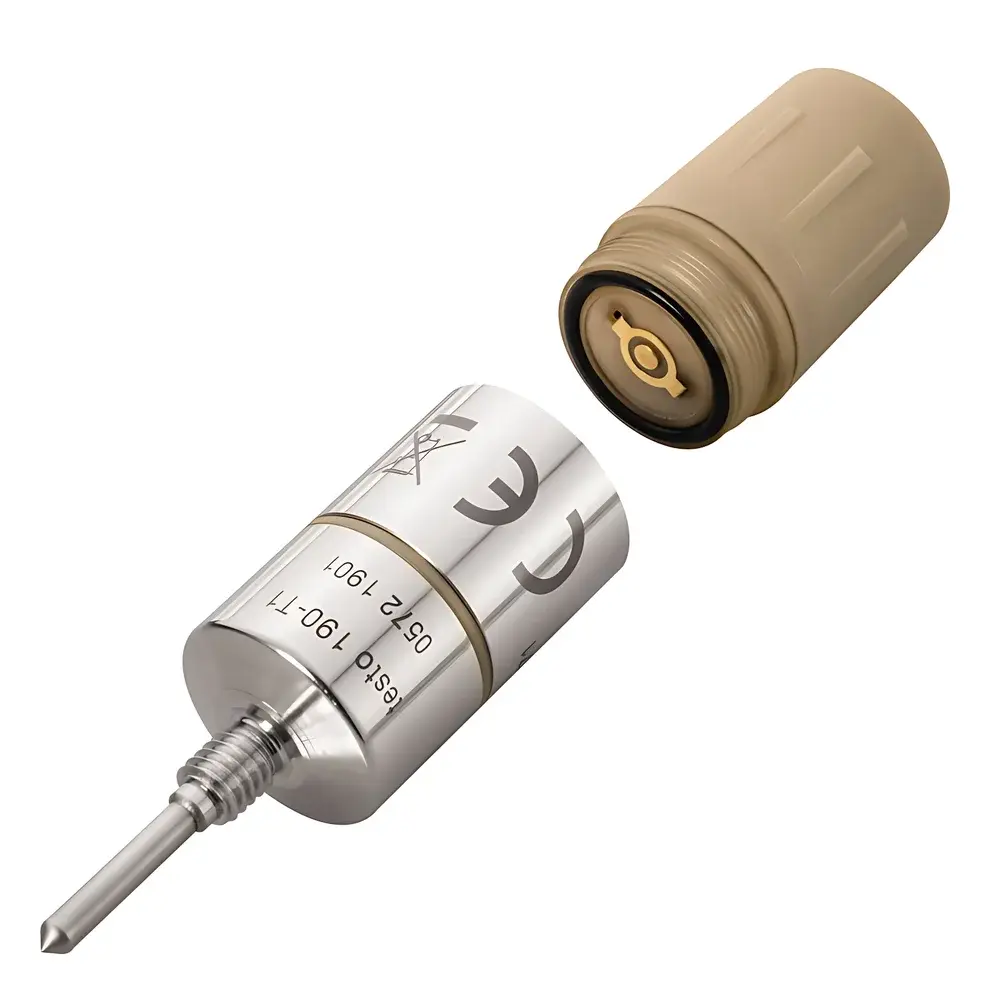
- True Sterilization-Grade Sealing: Hermetically sealed stainless steel body with PEEK-lined battery cap maintains 100% IP68 rating even after battery replacement—no revalidation required post-battery change.
- Tool-Free Battery Exchange: Rotational-thread battery cap allows rapid, intuitive, and repeatable battery replacement in under 3 seconds—minimizing downtime during high-throughput validation campaigns.
- Dual-Battery Flexibility: Compatible with both standard and extended-capacity 1/2 AA lithium cells; the latter extends operational life for low-temperature applications (e.g., −50 °C freezer mapping) while maintaining dimensional compatibility.
- High-Fidelity Metrology: Pt1000 sensor calibrated to ±0.1 °C accuracy over −40 to +140 °C range, with 0.01 °C resolution and t₉₀ response time of 7 seconds—ensuring dynamic thermal profiling fidelity during fast-ramp sterilization cycles.
Sample Compatibility & Compliance
The testo 190-T1 is validated for use with liquid, semi-solid, and solid matrices encountered in pharmaceutical manufacturing—including aqueous solutions, nutrient broths, vial fill volumes, and lyophilized cake interfaces. Its rigid probe ensures mechanical stability during autoclave tumbling, steam penetration, and vacuum drying phases. The device complies with IEC 60751 (Pt1000 tolerance class A), EN 12830 (temperature monitoring of refrigerated transport), and meets essential requirements of the EU Medical Device Regulation (MDR) Annex I for Class I non-invasive monitoring devices. All units ship with individual factory calibration certificates traceable to DKD/DAkkS-accredited standards, including uncertainty budgets at key points (−40 °C, +25 °C, +121 °C).
Software & Data Management
Data configuration, download, and analysis are performed using the dedicated testo 190 CFR Software (sold separately), a validated Windows application designed for 21 CFR Part 11 compliance. The software enforces mandatory fields, prevents unauthorized parameter edits via digital signature lock, and generates comprehensive audit trails—including timestamped user actions, configuration changes, and data export events. Raw measurement files (.tdl) include embedded cryptographic hashes and digital signatures to ensure data integrity. Export options include CSV (with metadata headers), PDF reports (customizable per SOP), and XML for LIMS integration. The software supports concurrent readout and programming of up to eight testo 190-T1 loggers via the multifunctional docking station—eliminating need for individual USB readers and reducing validation overhead for large-scale mapping studies.
Applications
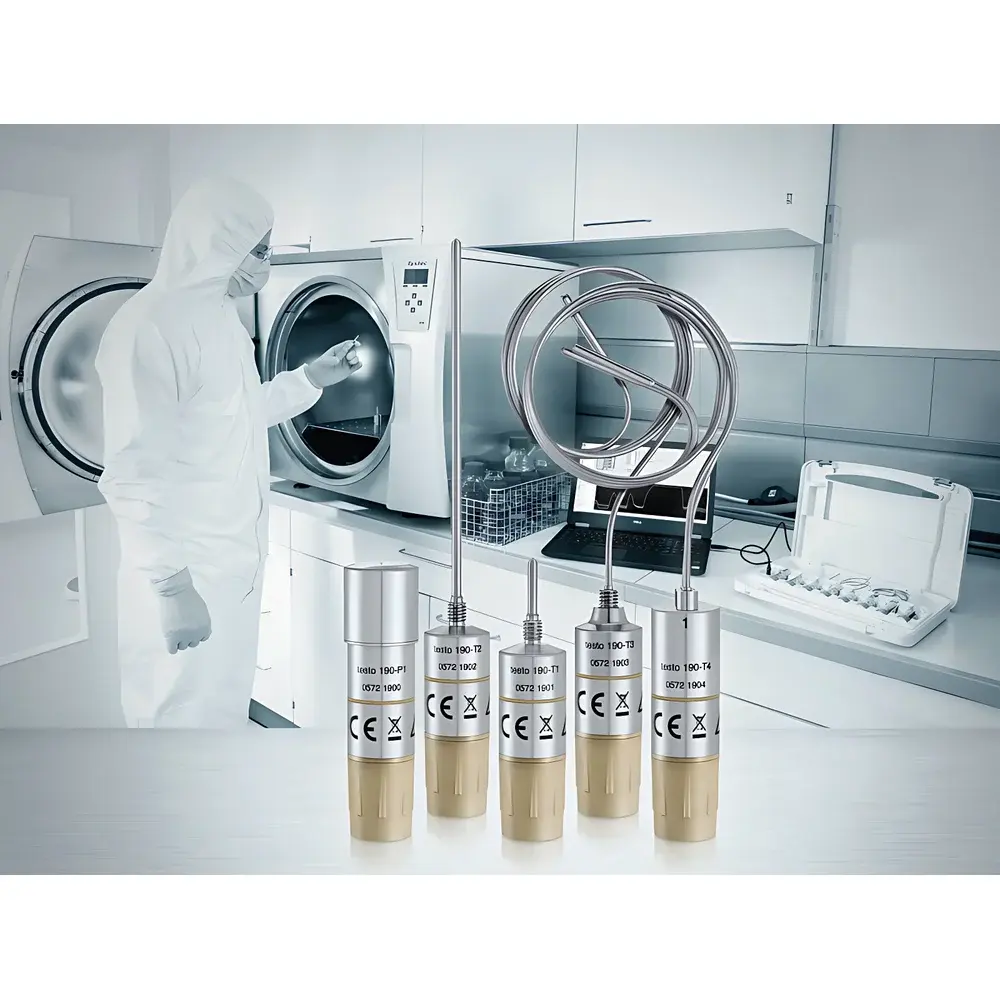
- Autoclave and steam sterilizer chamber mapping (EN 285, ISO 17665)
- Depyrogenation tunnel validation (dry heat, 250–350 °C surrogate monitoring)
- Lyophilizer shelf temperature uniformity testing (ISO 20957-3)
- Cold storage and transport temperature qualification (ICH Q5C, USP <1079>)
- Vial and ampoule core temperature profiling during terminal sterilization
- Environmental monitoring of cleanroom HVAC systems during media fills
FAQ
Is the testo 190-T1 suitable for repeated autoclaving cycles?
Yes. Its stainless steel housing and PEEK-sealed battery compartment withstand repeated exposure to saturated steam at 121 °C and 134 °C per EN 285 Annex C, with no degradation in sealing performance or measurement accuracy.
Does the device require recalibration after battery replacement?
No. The hermetic seal remains intact post-battery exchange; metrological traceability is preserved without interruption.
Can the logger be used in frozen environments below −40 °C?
The unit operates down to −50 °C, but the specified accuracy of ±0.2 °C applies only from −50 to −40 °C; for routine cryogenic qualification, consider supplemental verification per ISO/IEC 17025.
Is the docking station included in the base package?
Yes—the delivery includes one distance adapter for the multifunctional docking station, enabling simultaneous programming and readout of multiple units.
What documentation accompanies the device?
Each unit ships with a DKD/DAkkS-traceable calibration certificate, CE declaration of conformity, user manual, and validation-ready technical file excerpts supporting IQ/OQ protocol development.