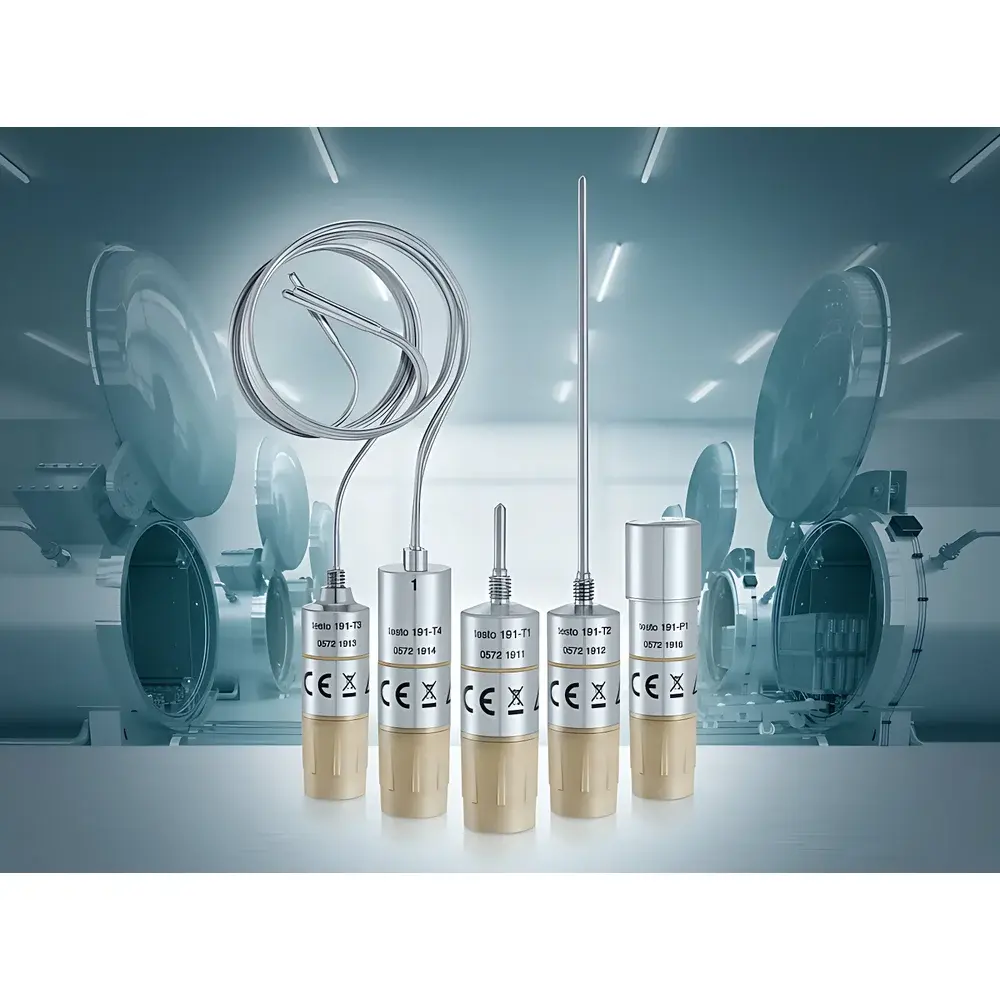
testo 191-T1 HACCP Temperature Data Logger
| Brand | testo |
|---|---|
| Origin | Germany |
| Model | 0572 1911 |
| Measurement Principle | Pt1000 Resistance Thermometry |
| Temperature Range | -50 to +140 °C |
| Accuracy | ±0.1 °C (-40 to +140 °C), ±0.2 °C (-50 to -40 °C) |
| Resolution | 0.01 °C |
| Storage Capacity | 60,000 measurements |
| IP Rating | IP68 |
| Probe Dimensions | Ø3 mm × 25 mm |
| Device Dimensions | Ø20 mm × 59 mm |
| Battery | 1/2 AA lithium |
| Operating Life | 2,500 h (at 10 s interval, +121 °C) |
| Response Time t₉₀ | 7 s |
| Enclosure Material | Stainless steel housing with PEEK sealing ring |
| Compliance | CE-marked, HACCP-compliant, suitable for FDA-regulated food processing environments |
Overview
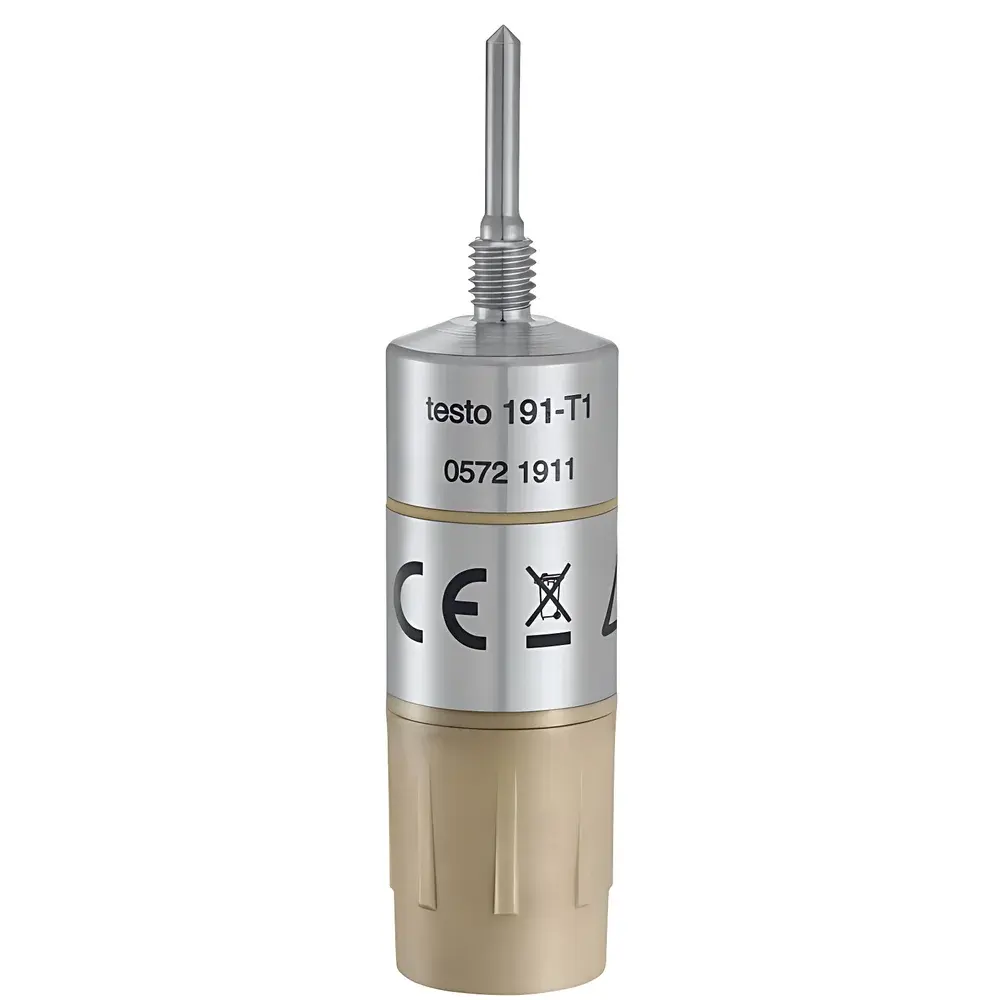
The testo 191-T1 HACCP Temperature Data Logger is an intrinsically robust, stainless-steel-bodied electronic data logger engineered specifically for validated thermal process monitoring in food manufacturing—particularly pasteurization, sterilization, retorting, and thermal validation of canned or vacuum-packed products. Its core measurement technology employs a high-stability Pt1000 resistance temperature detector (RTD), calibrated to meet the stringent traceability and repeatability requirements of Hazard Analysis and Critical Control Point (HACCP) systems. Unlike thermocouple-based loggers, the Pt1000 sensor delivers superior long-term stability, minimal drift, and intrinsic linearity across its full operational range of −50 °C to +140 °C—enabling reliable capture of critical thermal profiles during high-temperature hold phases (e.g., F₀ calculations in retort validation) and low-temperature storage verification. The device’s compact cylindrical form factor (Ø20 mm × 59 mm) allows unobtrusive placement inside sealed containers, autoclave baskets, or narrow product cavities without compromising thermal mass equivalence.
Key Features
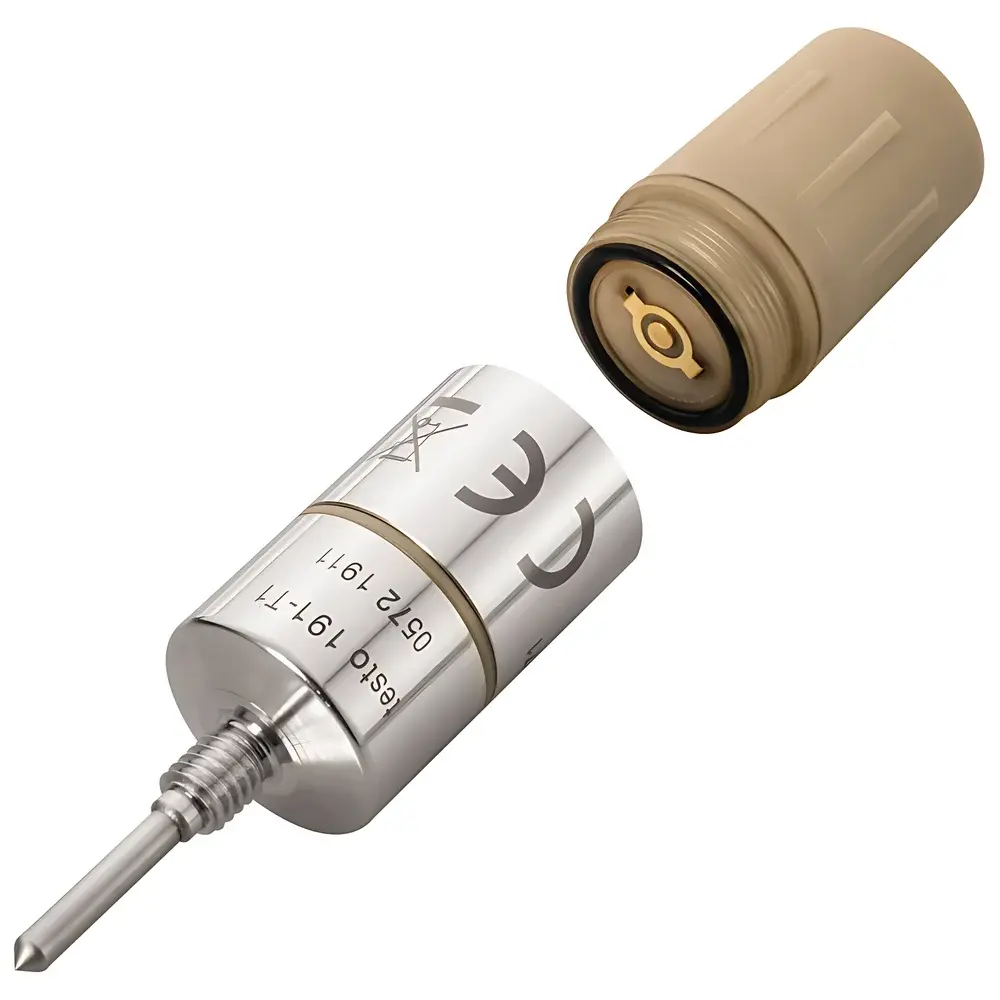
- Hermetically sealed stainless-steel enclosure with PEEK (polyether ether ketone) compression gasket—maintains IP68 ingress protection even after battery replacement
- Tool-free, threaded battery cap design enabling sub-5-second battery exchange under production-line conditions—no disassembly or recalibration required
- Dual battery configuration support: compact 1/2 AA lithium cell for space-constrained deployments; extended-capacity variant (included) optimized for low-temperature operation (e.g., frozen storage validation)
- High-resolution logging at configurable intervals from 1 second to 24 hours—60,000 measurement slots ensure full-process coverage for multi-hour sterilization cycles
- Fast thermal response: t₉₀ ≤ 7 seconds with a 3 mm Ø × 25 mm rigid probe—minimizes lag error during rapid temperature transitions typical in steam sterilization
- Factory-calibrated Pt1000 sensor with documented uncertainty budget per ISO/IEC 17025-accredited calibration certificate (included)
Sample Compatibility & Compliance
The testo 191-T1 is designed for direct immersion or insertion into food matrices, packaging materials, and process equipment where physical access is limited. Its stainless-steel body and chemically inert PEEK seal withstand repeated exposure to saturated steam (up to 140 °C), caustic cleaning agents (CIP), and food-grade sanitizers. It complies with EU Regulation (EC) No 852/2004 on food hygiene and supports compliance with FDA 21 CFR Part 11 when used with testo 191 Professional software (with audit trail, electronic signature, and user access control). All units are CE-marked and conform to EN 13485 for medical device-associated thermal validation—making them suitable for dual-use in pharmaceutical-grade food contact applications. The device meets the mechanical durability criteria outlined in ISO 22000:2018 Annex A.3.6 for monitoring equipment integrity in HACCP plans.
Software & Data Management
Data acquisition, configuration, and analysis are performed via testo 191 Professional software (sold separately), a Windows-based application validated for GxP environments. The software supports automated batch reporting per USP , generates PDF/CSV export with embedded metadata (timestamp, device ID, calibration status), and enforces role-based permissions aligned with ALCOA+ principles. When paired with the optional multi-slot programming/reading station (available in 4- or 8-channel variants), up to eight loggers can be simultaneously configured, downloaded, and verified—eliminating serial readout bottlenecks during shift handovers or routine validation audits. All measurement files retain embedded digital signatures and immutable timestamps, satisfying requirements for 21 CFR Part 11 compliance when deployed in FDA-regulated facilities.
Applications
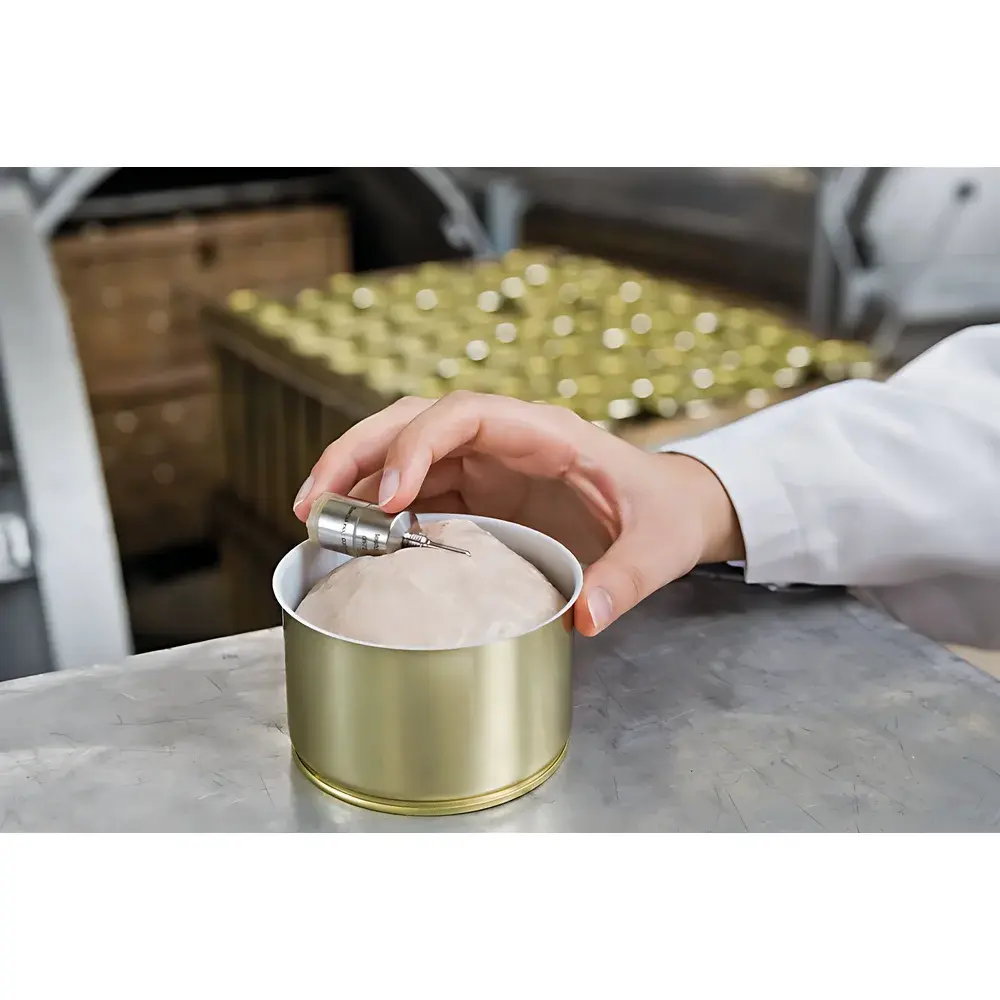
- Thermal process validation of retort cycles (canned vegetables, pet food, ready meals)
- Steam sterilization mapping in jacketed kettles and continuous cookers
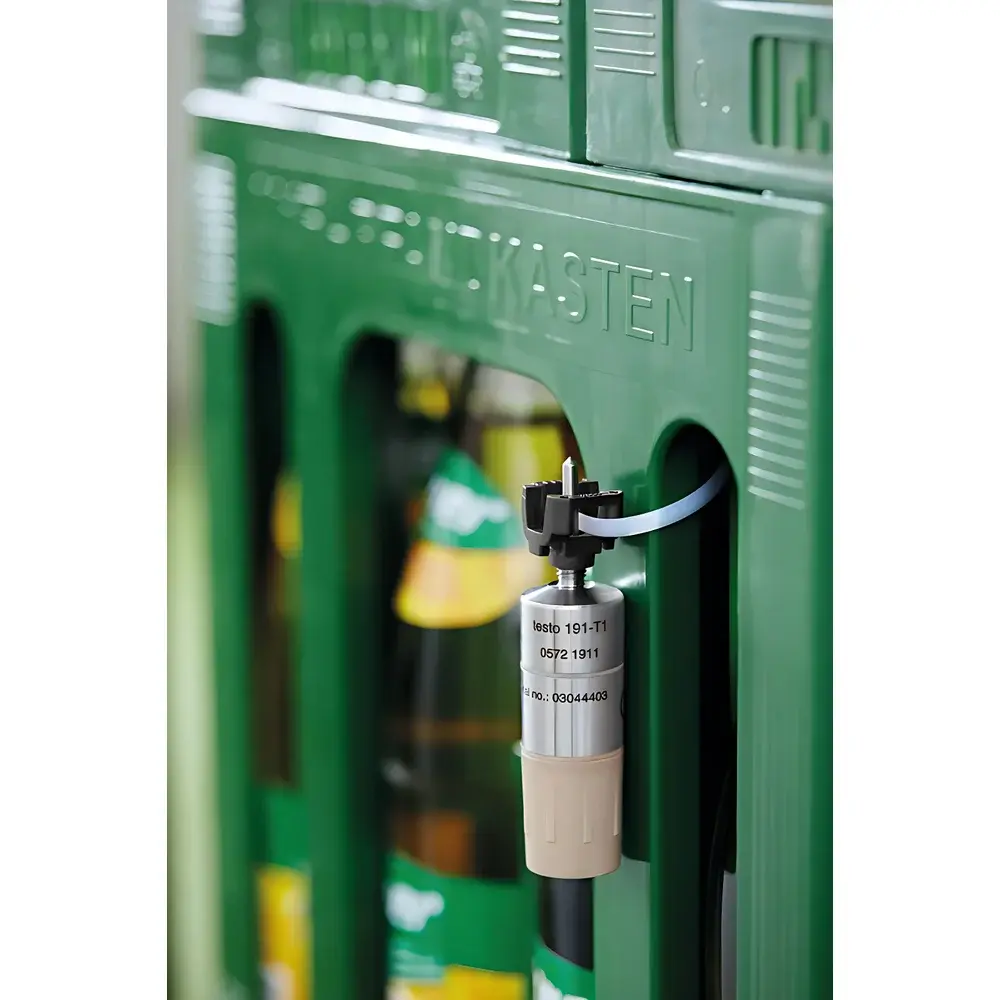
- Cold chain monitoring during frozen transport and warehouse storage (-50 °C capability)
- HACCP critical limit verification for post-process cooling stages
- Calibration verification of fixed plant sensors using mobile reference standards
- Microbiological challenge study support (e.g., D-value and z-value determination)
FAQ
Is the testo 191-T1 suitable for use inside sealed cans during retorting?
Yes—the device’s compact dimensions, IP68 rating, and steam-resistant stainless-steel/PEEK construction enable direct placement inside sealed containers during thermal processing.
Does the logger require recalibration after battery replacement?
No—its hermetic resealing mechanism preserves metrological integrity; no field recalibration is needed post-battery change.
Can measurement intervals be changed in the field without a PC?
No—interval configuration requires testo 191 Professional software and a programming station; however, pre-configured settings can be duplicated across multiple units via batch programming.
What is the maximum allowable operating temperature for continuous use?
The device is rated for continuous operation up to +140 °C, validated per IEC 60529 for thermal endurance under saturated steam conditions.
Is raw measurement data exportable in machine-readable format for LIMS integration?
Yes—CSV and XML exports include full metadata (sensor ID, calibration date, measurement uncertainty, timestamp in UTC), supporting automated ingestion into laboratory information management systems (LIMS) and MES platforms.