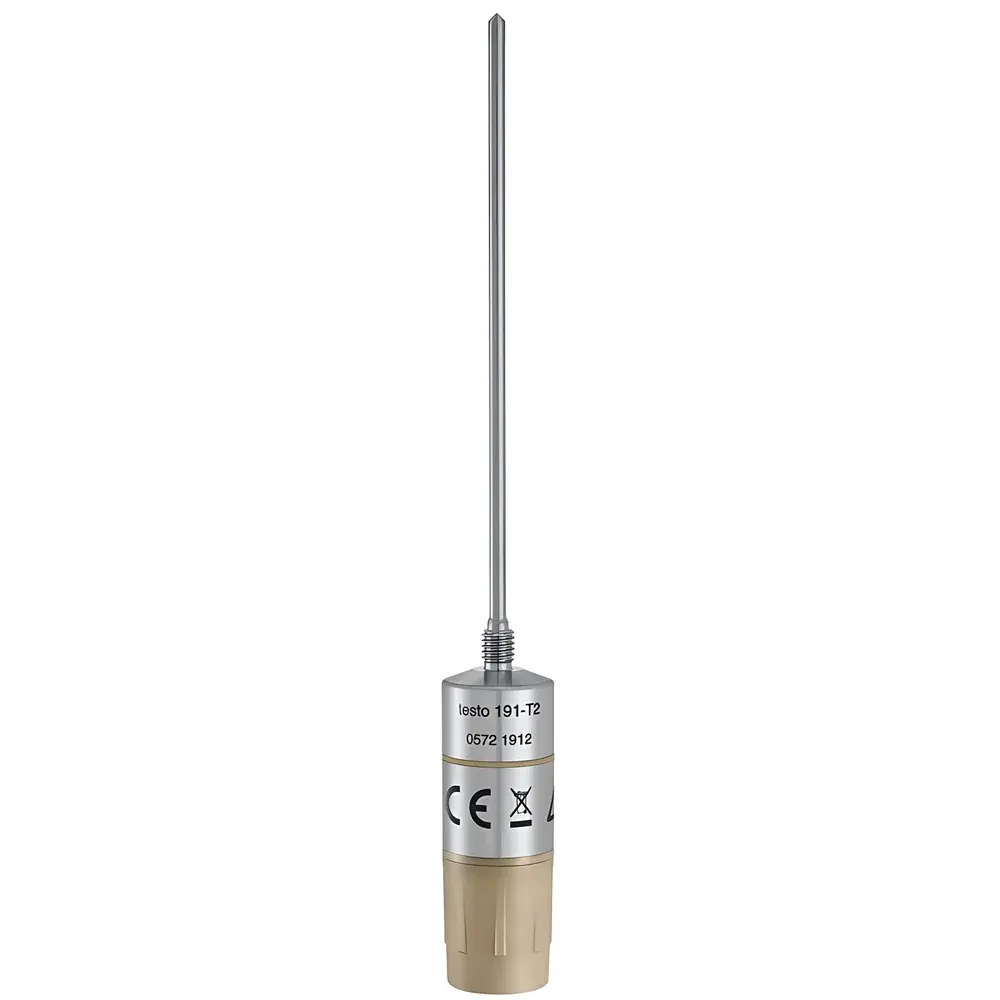
testo 191-T2 HACCP Temperature Data Logger
| Brand | testo |
|---|---|
| Origin | Germany |
| Model | 0572 1912 |
| Measurement Range | -50 to +140 °C |
| Accuracy | ±0.1 °C (-40 to +140 °C), ±0.2 °C (-50 to -40 °C) |
| Resolution | 0.01 °C |
| Sensor Type | Pt1000 |
| Probe Length | 115 mm |
| Probe Diameter | 3 mm |
| Device Dimensions | Ø20 × 59 mm |
| IP Rating | IP68 |
| Battery | 1/2 AA lithium |
| Battery Life | 2,500 h (at 10 s interval, +121 °C) |
| Memory Capacity | 60,000 values |
| Measurement Interval | 1 s – 24 h |
| Operating Temperature | -50 to +140 °C |
| Storage Temperature | -20 to +50 °C |
| Enclosure Material | Stainless steel housing with PEEK-coated battery cap |
Overview
The testo 191-T2 HACCP Temperature Data Logger is a purpose-built, certified instrument engineered for continuous, high-integrity temperature monitoring in thermal process validation and critical food safety applications—particularly pasteurization, sterilization, retorting, and thermal hold procedures governed by Hazard Analysis and Critical Control Point (HACCP) frameworks. It operates on the principle of resistance temperature detection using a precision Pt1000 sensor embedded in a rigid, stainless-steel probe, ensuring traceable, stable, and repeatable measurements under extreme thermal stress. Designed to meet stringent regulatory expectations for process verification in food manufacturing, pharmaceutical production, and catering logistics, the device delivers metrological reliability across its full operating range of −50 °C to +140 °C—enabling validated compliance with ISO 22000, FDA 21 CFR Part 11 (when used with testo 191 Professional software), and EU Regulation (EC) No 852/2004 on food hygiene.
Key Features
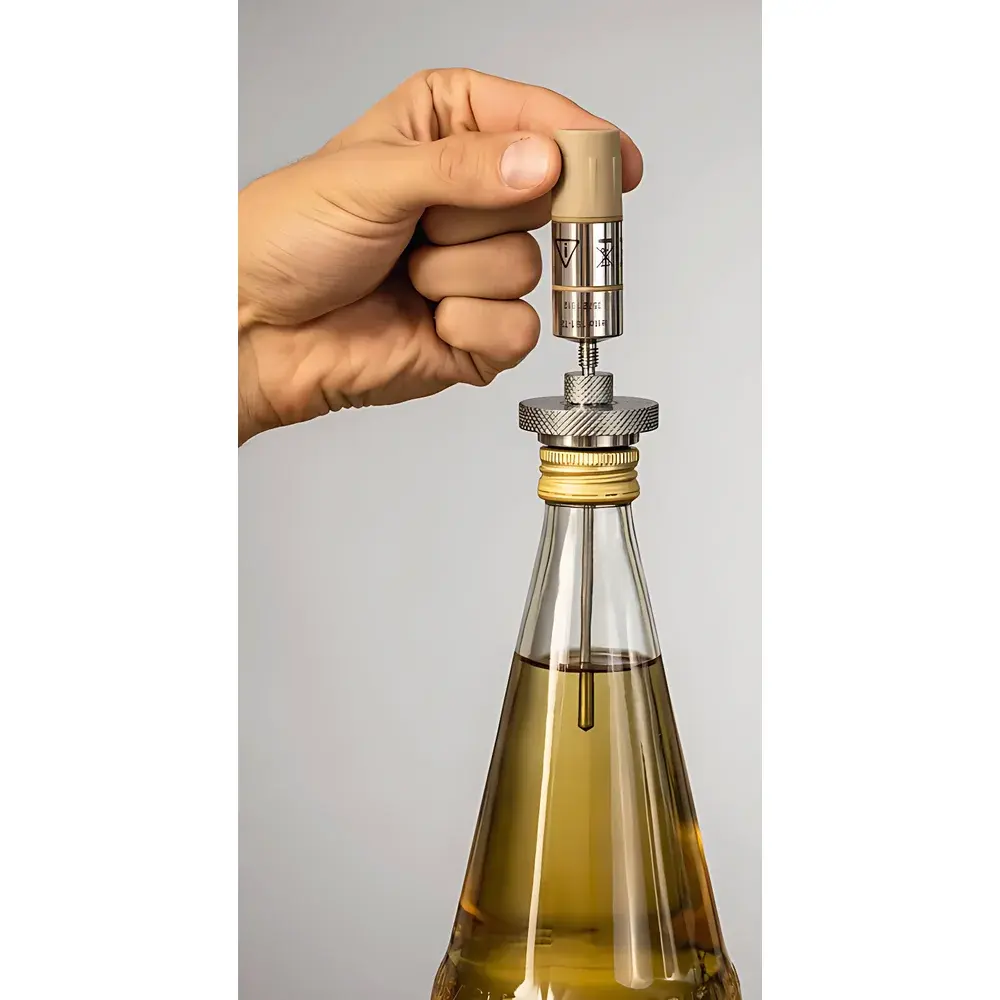
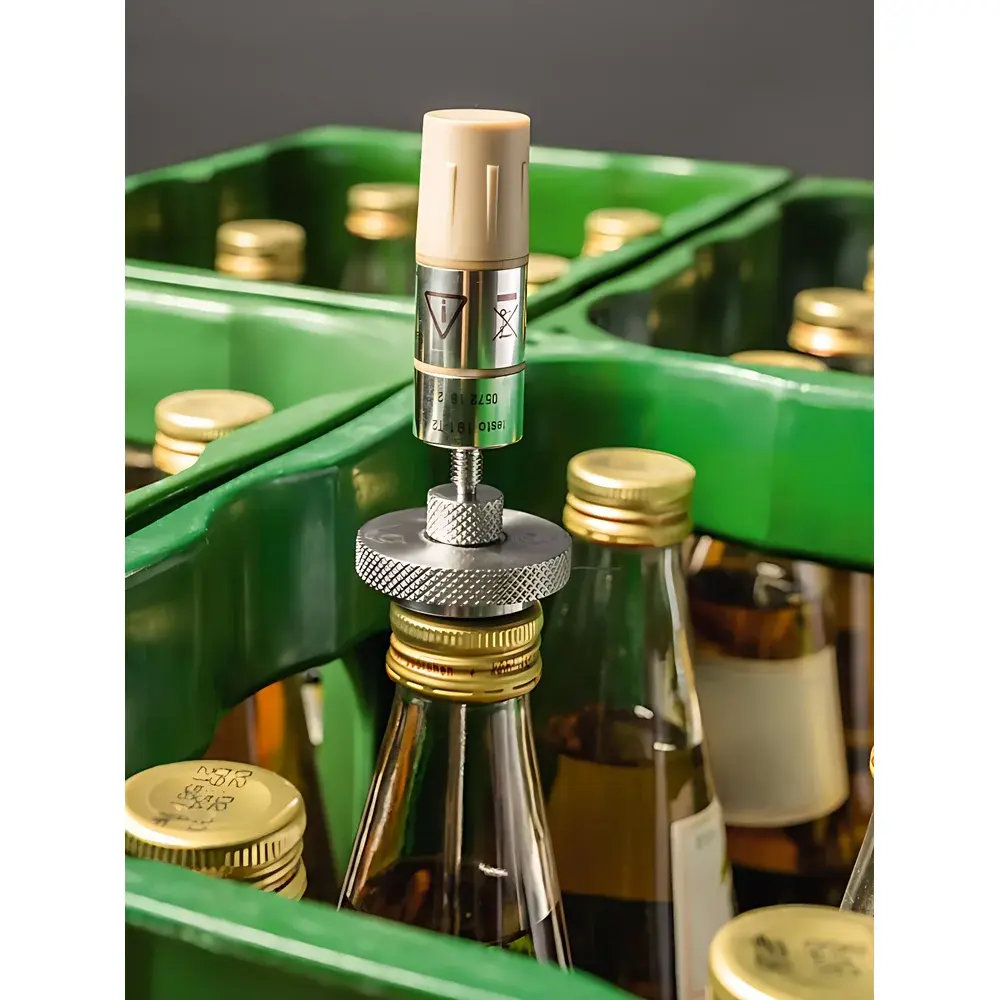
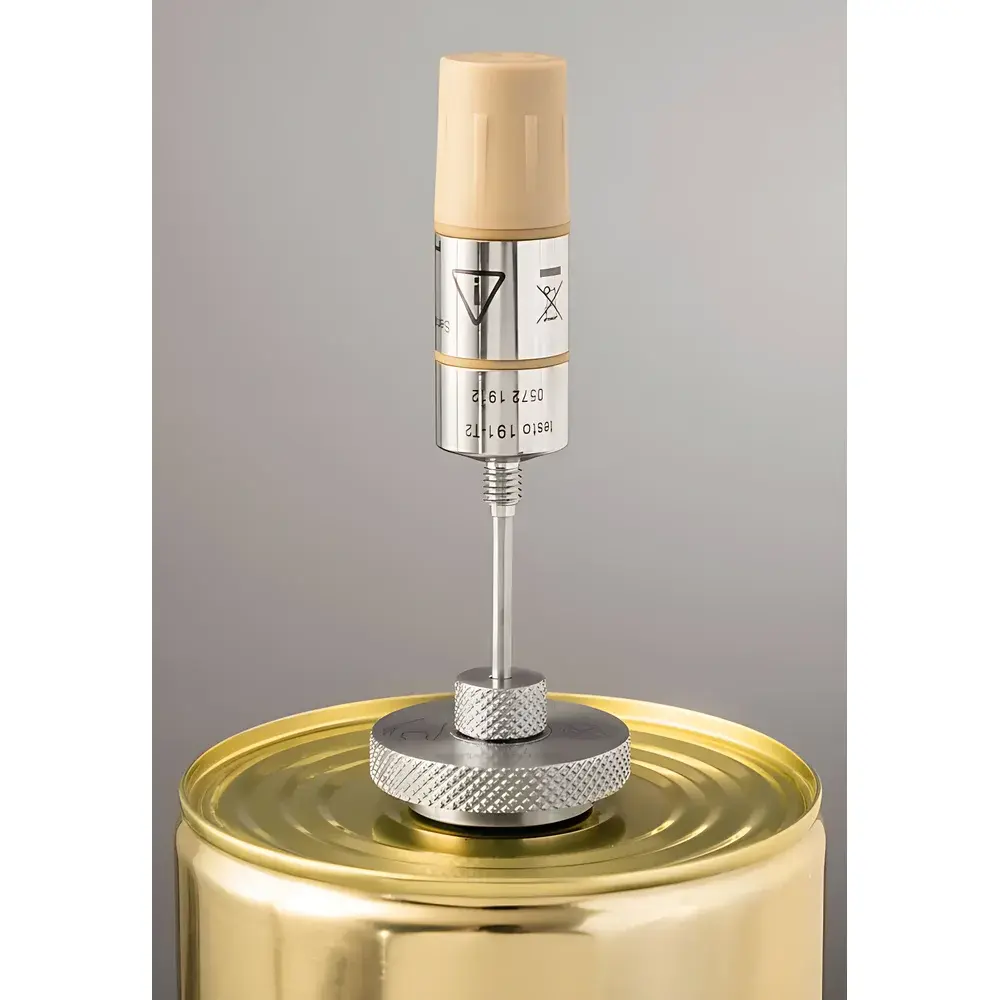
- Rigid, High-Integrity Probe: 115 mm long, Ø3 mm stainless-steel probe optimized for insertion into sealed containers (e.g., cans, bottles, pouches) and narrow process vessels without bending or thermal lag.
- IP68-Rated Hermetic Sealing: Fully submersible enclosure constructed from corrosion-resistant stainless steel; battery compartment features PEEK-coated threaded cap ensuring 100% resealability after battery replacement—even at elevated temperatures up to +140 °C.
- Tool-Free, Sub-Second Battery Exchange: Rotating screw-cap design allows rapid, tactile battery replacement without disassembly tools—critical during high-throughput validation campaigns where downtime must be minimized.
- Configurable Form Factor: Supports two battery options: compact 1/2 AA lithium cell for space-constrained deployments, or extended-life variant (included) for low-temperature environments (e.g., blast freezers down to −50 °C).
- High-Capacity Internal Memory: Stores up to 60,000 timestamped temperature readings with 0.01 °C resolution and measurement intervals programmable from 1 second to 24 hours.
- Thermal Stability & Response: Achieves t90 ≤ 6 s in liquid media, minimizing dynamic measurement error during rapid thermal transitions typical in autoclave cycles and HTST pasteurization.
Sample Compatibility & Compliance
The testo 191-T2 is validated for direct immersion in food matrices, steam-saturated environments, and pressurized thermal chambers. Its stainless-steel probe and IP68-rated body resist microbial ingress, chemical exposure (including cleaning agents per EN 13697), and mechanical abrasion during repeated use in industrial settings. The device conforms to CE marking requirements for electromagnetic compatibility (2014/30/EU) and low-voltage safety (2014/35/EU). When deployed as part of a documented validation protocol—including calibration against NIST-traceable references—it supports audit readiness for BRCGS Food Safety Issue 9, IFS Food v7, and SQF Edition 9.0. Its measurement uncertainty profile satisfies the criteria defined in EN 13485 for thermal process recorders used in sterilization validation.
Software & Data Management
Data retrieval, configuration, and analysis are performed via testo 191 Professional Software (sold separately), a Windows-based application compliant with FDA 21 CFR Part 11 for electronic records and signatures. The software provides role-based user access control, full audit trail logging (including parameter changes, data exports, and firmware updates), and automated report generation with configurable pass/fail thresholds aligned with HACCP critical limits. Measurement data export supports CSV, PDF, and XML formats for integration into LIMS or MES platforms. Programming and readout can be executed simultaneously for up to eight units using the optional testo Multi-Station Docking Box—eliminating the need for individual USB interfaces and reducing validation setup time by >70% in multi-point mapping studies.
Applications
- Validation and routine monitoring of steam sterilizers (autoclaves), retorts, and hydrostatic cookers
- Temperature profiling during pasteurization of dairy, juice, and ready-to-eat meals
- Thermal mapping of refrigerated transport units and cold storage rooms (−50 °C to +10 °C range)
- Verification of thermal hold times in sous-vide and vacuum-packed product processing
- Compliance documentation for third-party audits (e.g., FDA inspections, retailer supplier assessments)
- Research-grade thermal kinetics studies requiring high temporal resolution and environmental resilience
FAQ
Is the testo 191-T2 suitable for steam sterilization validation at 134 °C?
Yes—the device is rated for continuous operation up to +140 °C and maintains IP68 integrity under saturated steam conditions. Calibration stability has been verified per DIN EN 60751 for Pt1000 sensors in autoclave environments.
Can measurement intervals be changed after deployment?
No—interval and start/stop parameters must be pre-programmed prior to deployment. Once initiated, the logger operates autonomously without real-time communication capability.
Does the device support external probe connectivity?
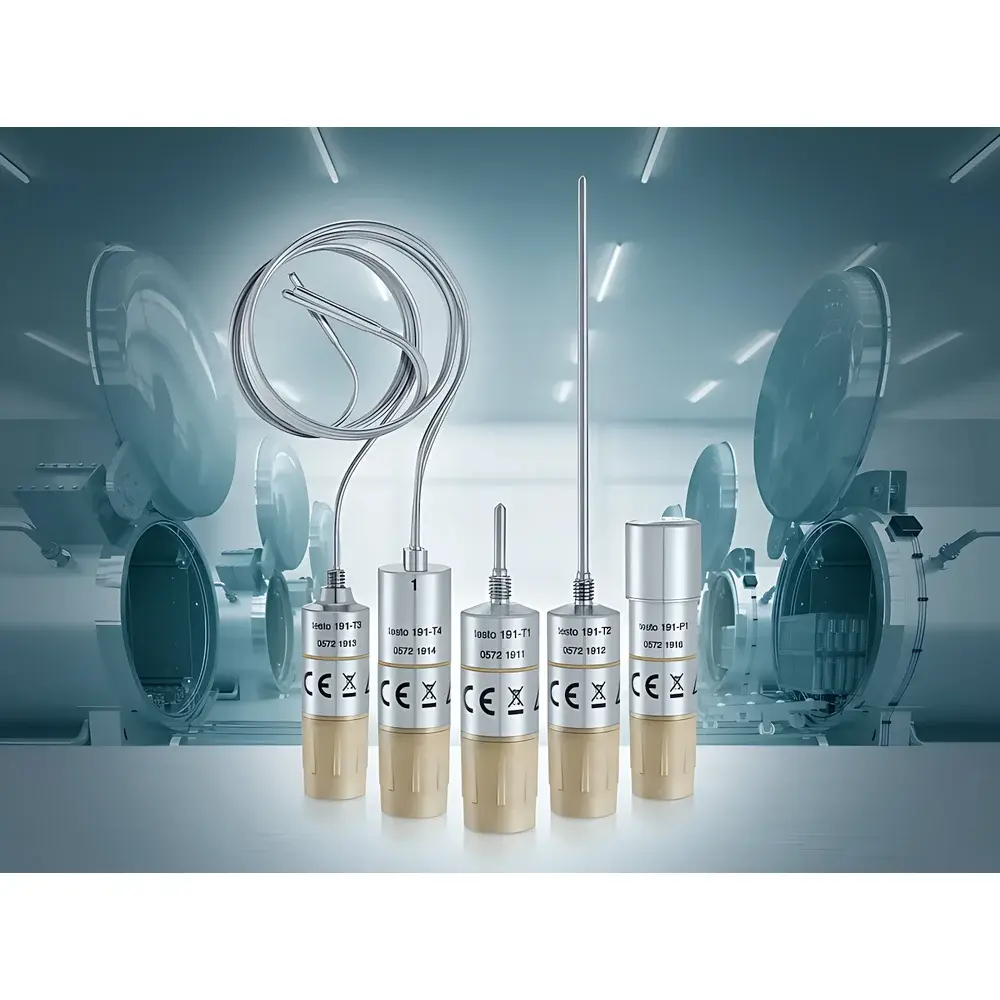
No—the testo 191-T2 integrates a fixed, non-removable Pt1000 probe. For multi-sensor configurations, consider the testo 191-T3 (dual-channel) or testo Saveris 2 wireless system.
What is the recommended calibration frequency?
Per ISO/IEC 17025 and industry best practice, annual calibration is advised; however, calibration before and after each critical validation run is required for auditable HACCP compliance.
Is firmware update capability available in the field?
Firmware updates require connection to testo 191 Professional Software and are only supported on Windows OS. Updates preserve all stored measurement data.