
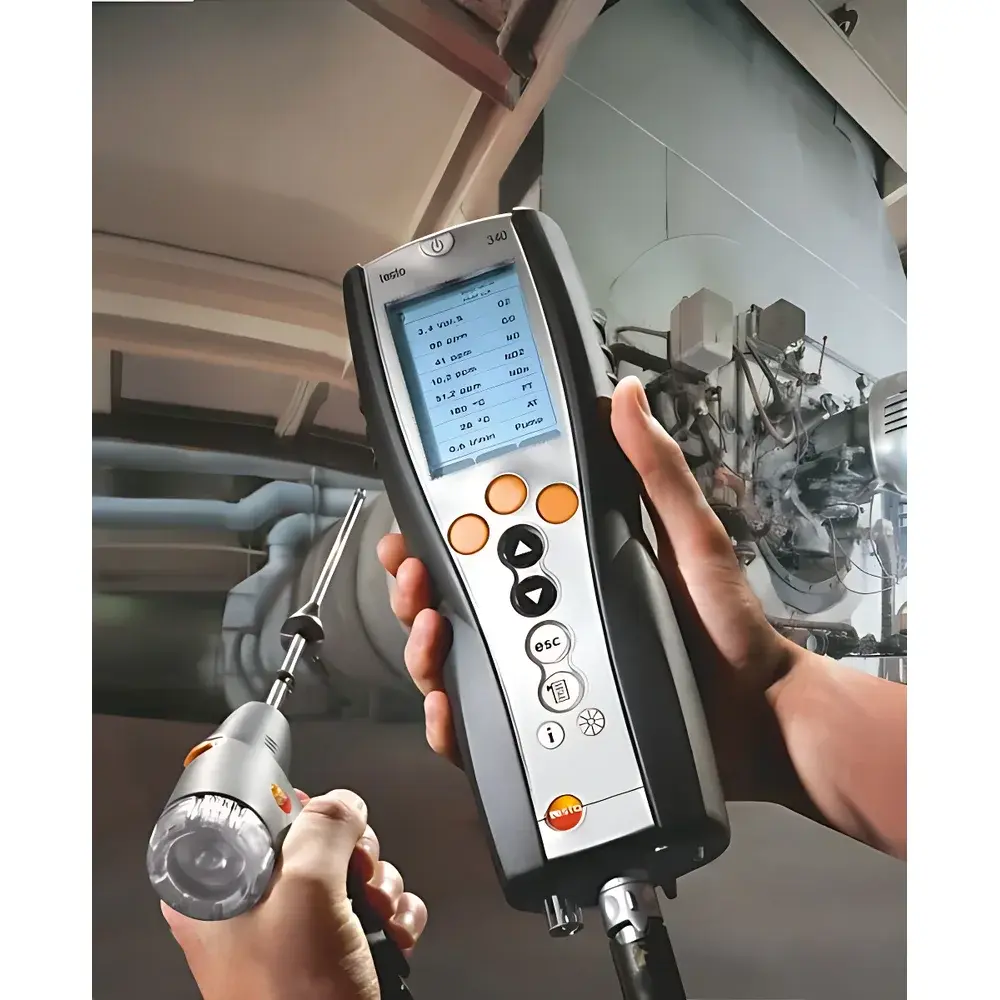
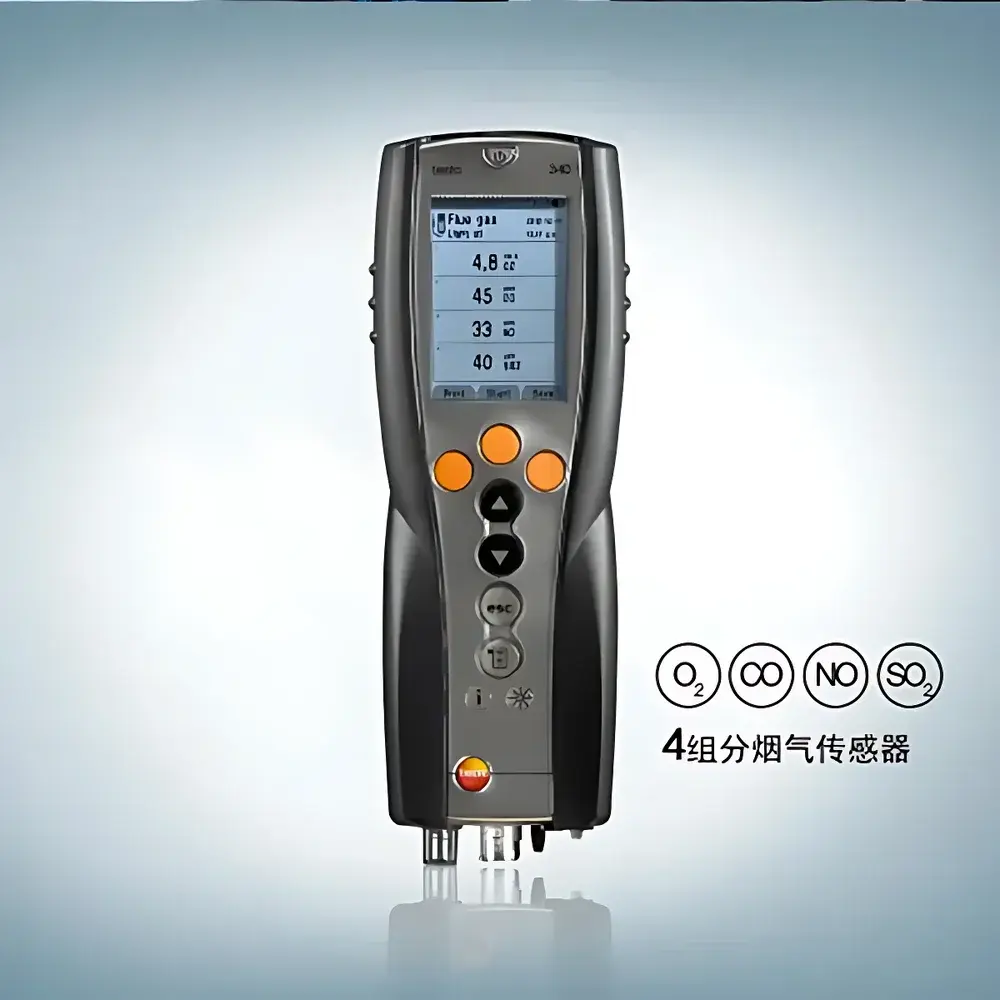
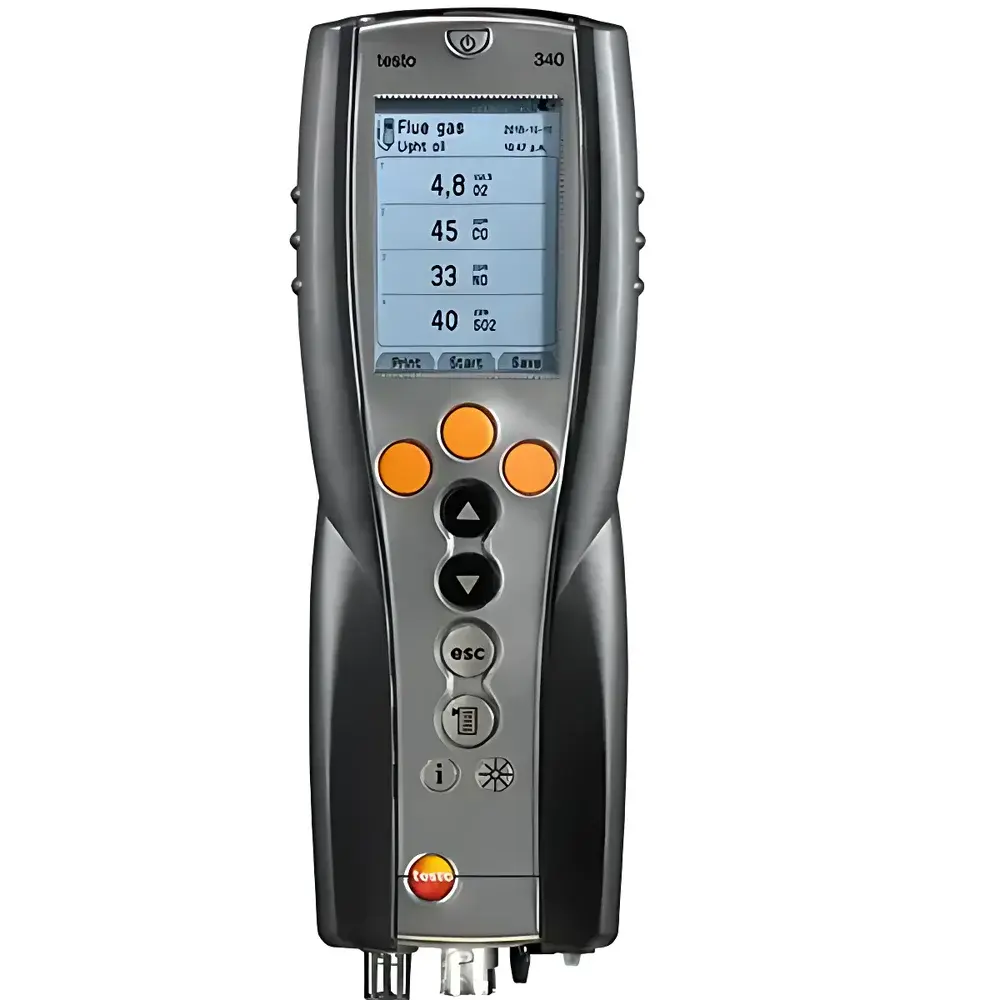
testo 340 Portable Flue Gas Analyzer
| Brand | testo |
|---|---|
| Origin | Germany |
| Model | 340 |
| Instrument Type | Portable Flue Gas Analyzer |
| Measurement Accuracy | ±5% (gas sensors), ±0.5 hPa (differential pressure, -49.9 to +49.9 hPa) |
| Repeatability | ≤2% |
| Response Time | <20 s (O₂), <30–40 s (CO, NO, NO₂, SO₂, COlow, NOlow) |
| Stability | ≤5% |
| Measured Gases | CO, COlow, NO, NOlow, NO₂, SO₂, O₂, differential pressure, flue gas temperature, ambient temperature, draft, efficiency, flue gas loss, dew point, CO₂ (calculated) |
Overview
The testo 340 Portable Flue Gas Analyzer is an engineered solution for precision combustion efficiency assessment and regulatory-compliant emissions verification in industrial boilers, commercial heating systems, and stationary combustion plants. Built upon electrochemical sensor technology with integrated paramagnetic O₂ detection, the instrument delivers trace-level quantification of key combustion byproducts—including CO, NO, NO₂, SO₂, and low-range CO/NO—while simultaneously measuring differential pressure, flue gas temperature (up to 1200 °C), ambient conditions, and derived parameters such as combustion efficiency, flue gas loss, and dew point. Its modular probe architecture supports field-adaptable configurations, enabling real-time, in-situ analysis without requiring gas extraction or conditioning. Designed and manufactured in Germany, the testo 340 adheres to EN 50379-1 and EN 50379-2 standards for portable emission analyzers and meets essential requirements for use in routine maintenance, commissioning, and periodic inspection under EU Directive 2010/75/EU (IED) and national air quality regulations.
Key Features
- Multi-gas electrochemical sensing platform with dedicated low-range channels for CO (0–500 ppm) and NO (0–300 ppm), minimizing cross-sensitivity and extending dynamic range for lean-burn and low-emission applications.
- Dual-pressure measurement capability: high-resolution differential pressure (–200 to +200 hPa, 0.1 hPa resolution) and absolute pressure (600–1150 hPa) for accurate draft and stack velocity estimation.
- Integrated Class II Pt100 temperature sensor with ±0.5 °C accuracy (0–99 °C) and extended range up to 1200 °C for direct flue gas thermometry.
- Graphical LCD display (160 × 240 pixels) with intuitive menu navigation, real-time trend plotting, and on-device data annotation—no external software required for basic operation.
- Rugged TPE/PC housing (IP40 rated), 960 g weight, and ergonomic form factor optimized for single-hand operation in confined mechanical rooms or rooftop installations.
- Rechargeable Li-ion battery (3.7 V / 2.4 Ah) supporting >6 hours of continuous operation with pump active and backlight off at 20 °C; compatible with optional AC adapter (6.3 V / 2 A).
Sample Compatibility & Compliance
The testo 340 is validated for direct sampling of hot, humid, and particulate-laden flue gases from natural gas, oil, biomass, and coal-fired combustion sources. Its heated sampling line option (not included) mitigates condensation-related errors during low-temperature exhaust measurements. All gas sensors are factory-calibrated and certified per ISO 12039 and EN 15267-3 for performance verification. The analyzer supports traceability via built-in calibration certificate storage and user-initiated zero/span checks using certified calibration gases (e.g., NIST-traceable CO, NO, SO₂ standards). It fulfills technical prerequisites for reporting under EPA Method 7E (for NOₓ), ASTM D6522 (for NO/NO₂), and EN 14792 (for CO and O₂ in flue gas), and is routinely deployed in GLP-aligned QA/QC workflows for boiler efficiency audits and environmental compliance monitoring.
Software & Data Management
Data acquisition and reporting are supported via testo Smart Probes app (iOS/Android) and desktop software testo IRSoft. Raw measurements—including time-stamped sensor readings, calculated parameters (efficiency %, loss %, dew point °Ctd), and diagnostic flags—are exportable in CSV, PDF, or XML formats. IRSoft enables advanced post-processing: stoichiometric ratio analysis, excess air correction, seasonal efficiency modeling, and automated report generation compliant with DIN EN 12953-10 and VDI 2066. Audit trails record all user actions (calibrations, parameter edits, firmware updates), satisfying documentation requirements under ISO/IEC 17025 and FDA 21 CFR Part 11 when configured with electronic signature modules.
Applications
- Commissioning and tuning of condensing boilers, steam generators, and thermal oil heaters.
- Annual emissions verification for facilities subject to IED permitting or local air district rules.
- Energy audits per ISO 50001 and ASHRAE Guideline 36, including combustion optimization and fuel savings estimation.
- Troubleshooting incomplete combustion events (e.g., elevated CO, low O₂, negative draft) in HVAC and process heating systems.
- Educational use in mechanical engineering and environmental science laboratories for hands-on flue gas chemistry instruction.
FAQ
What is the maximum recommended sampling duration for SO₂ and NO₂ measurements?
To prevent sensor surface adsorption and signal drift, continuous measurement of SO₂ and NO₂ should not exceed two hours per session. For extended monitoring, users must implement scheduled zero-point verification and allow sensor recovery intervals.
Does the testo 340 support automatic compensation for ambient temperature fluctuations?
Yes—the instrument applies real-time temperature compensation to all gas sensors, with a documented coefficient of 0.25 % of reading per Kelvin deviation from 20 °C reference temperature.
Can CO₂ be measured directly, or is it always calculated from O₂?
CO₂ is calculated stoichiometrically from measured O₂ concentration and fuel-specific combustion equations; no dedicated infrared CO₂ sensor is installed. Accuracy assumes consistent fuel composition and complete mixing.
Is the testo 340 suitable for use in explosive atmospheres?
No—the device is not ATEX or IECEx certified and must not be operated in Zone 0, 1, or 2 hazardous areas. Use only in well-ventilated, non-classified environments.
How often does the system require recalibration?
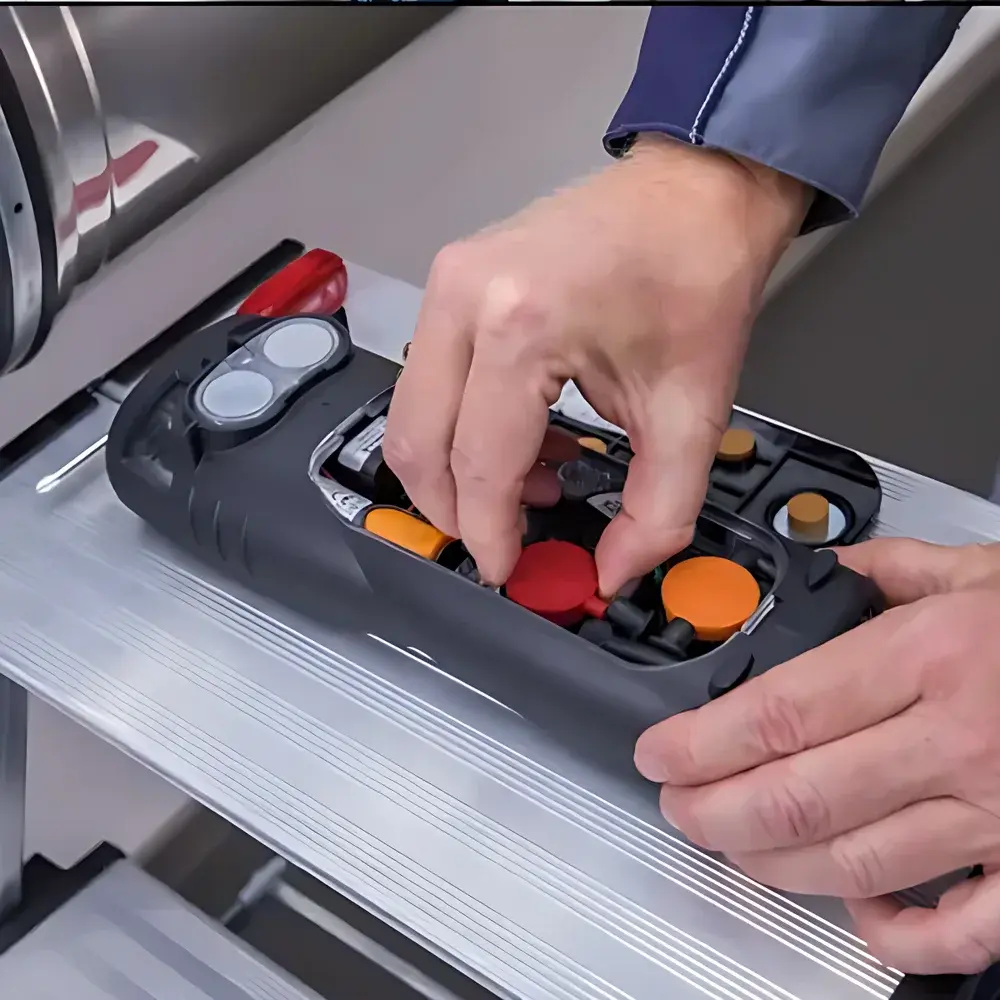
Field recalibration is recommended before each day’s measurement campaign using certified span gases; full sensor replacement is advised every 18–24 months depending on cumulative exposure to high-concentration pollutants and condensate ingress.







