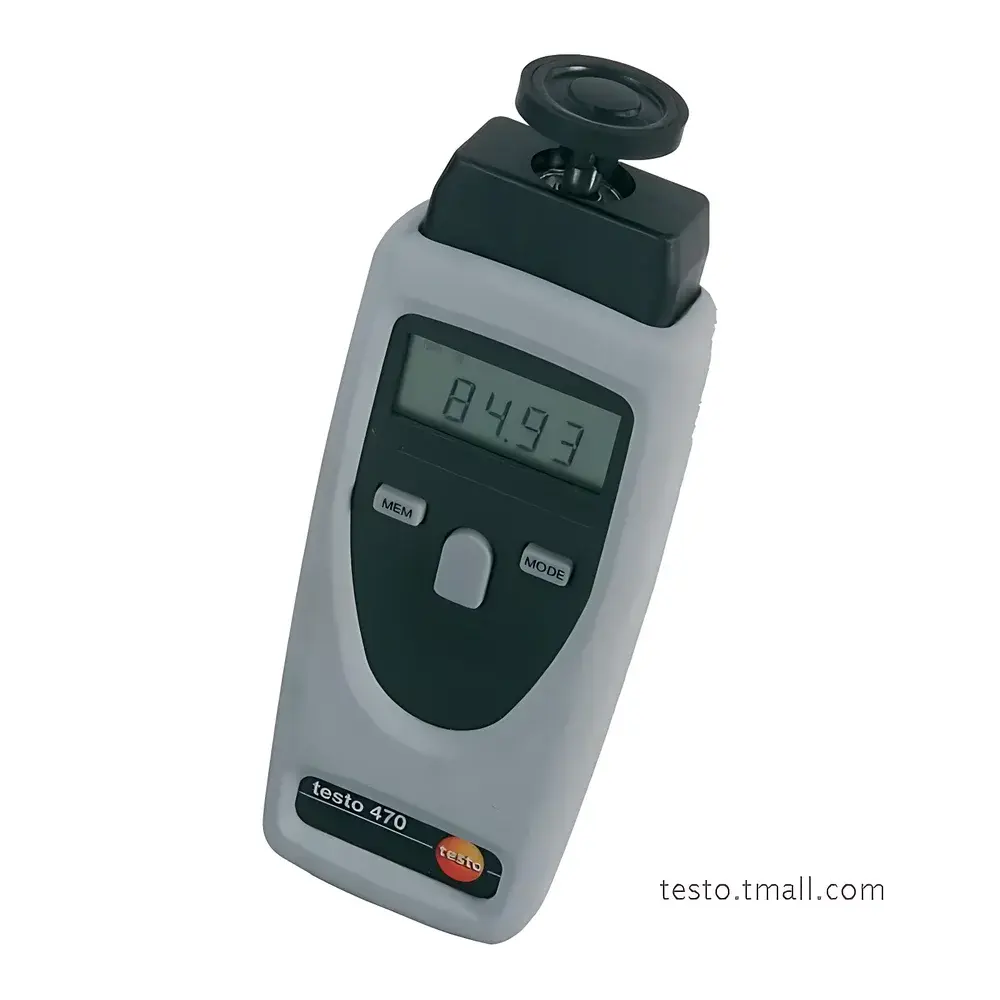
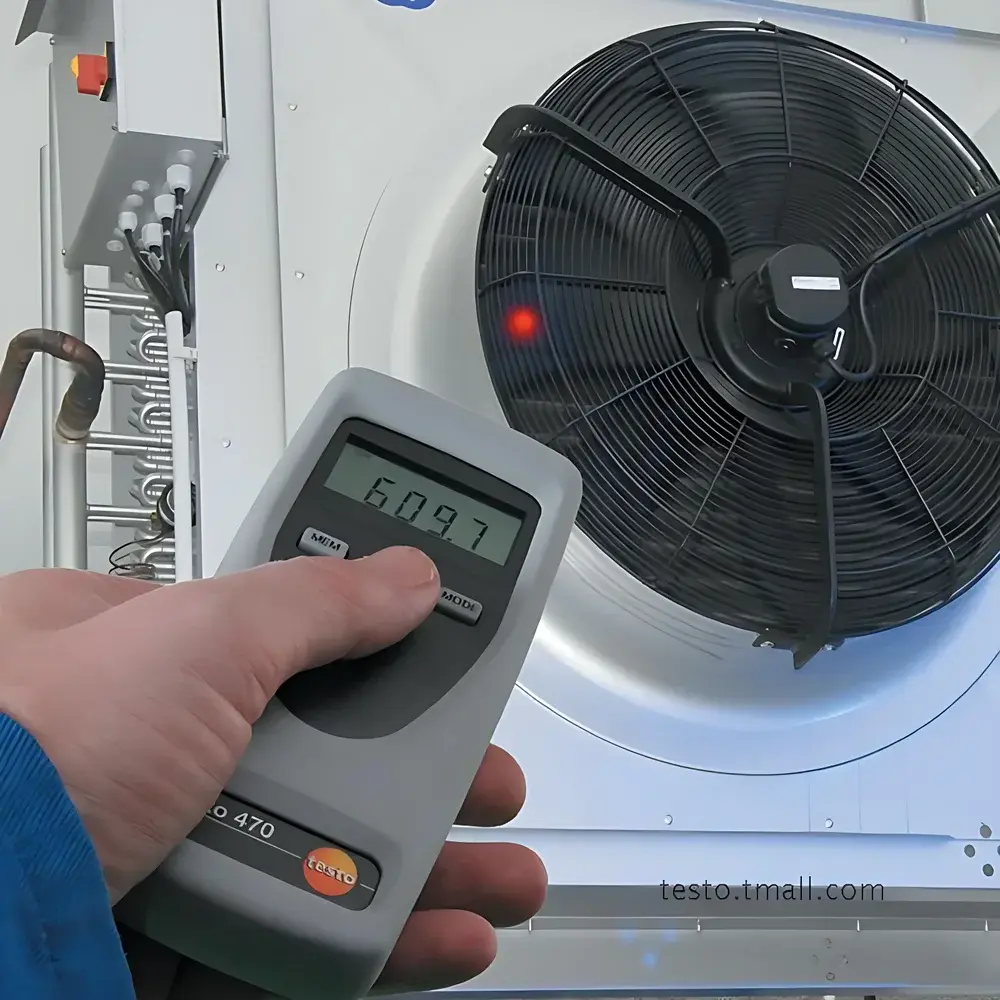
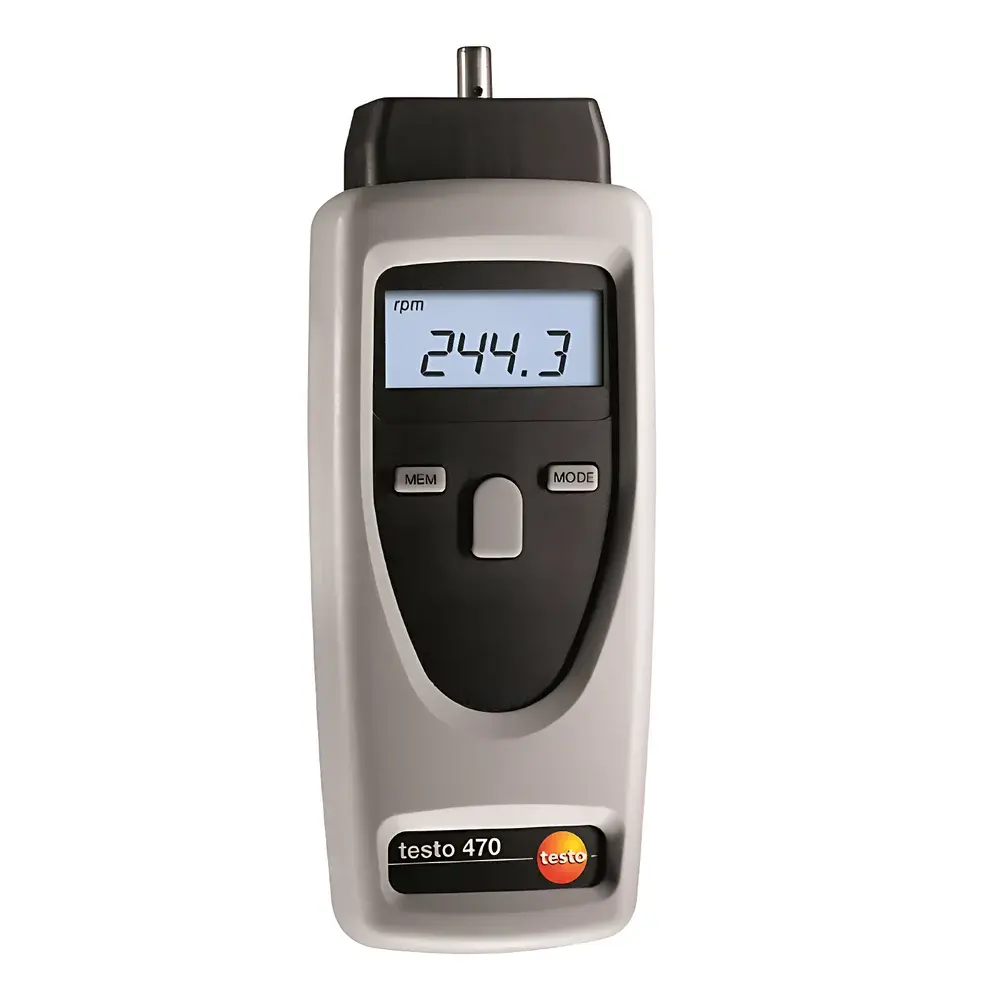
testo 470 Precision Optical & Contact Tachometer Kit
| Brand | testo |
|---|---|
| Origin | Germany |
| Model | 0563 0470 |
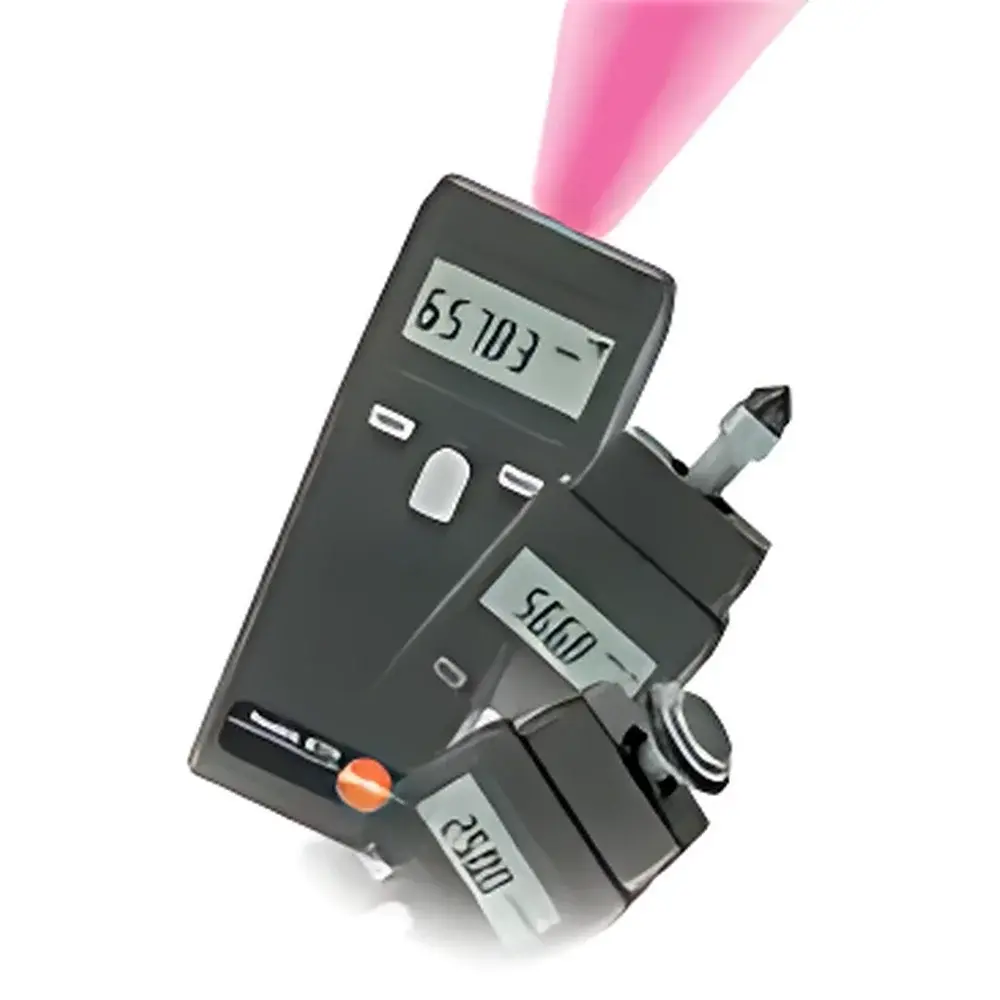
| Measurement Principle | Optical (reflective) and mechanical contact |
| Optical RPM Range | 1–99,999 rpm |
| Optical Accuracy | ±0.02% of reading |
| Optical Resolution | 0.01 rpm (1–99.99 rpm), 0.1 rpm (100–999.9 rpm), 1 rpm (1,000–99,999 rpm) |
| Contact RPM Range | 0.1–19,999 rpm |
| Contact Accuracy | ±0.2% of reading |
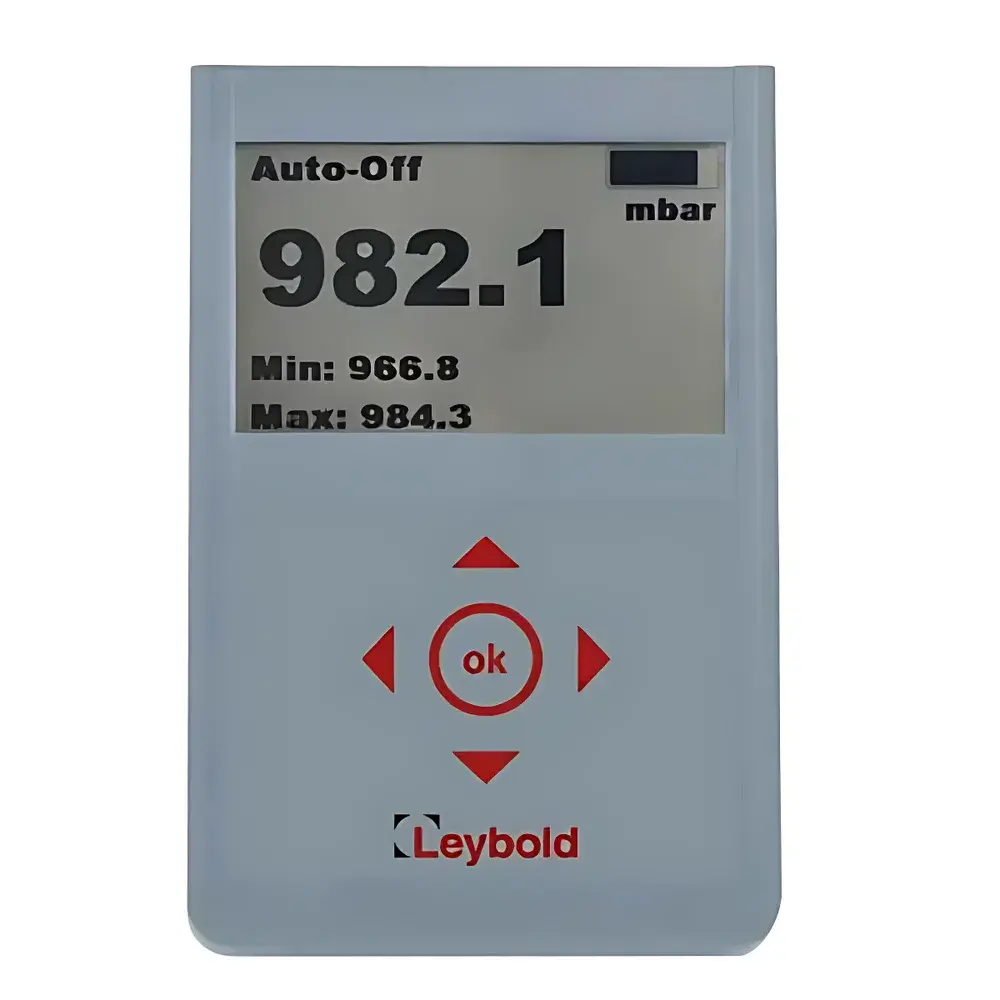
| Display | 5-digit LCD, single-line |
| Power | Included batteries |
| Accessories | Reflective tape, protective soft case, instrument carrying case, adapter, probe tip, surface speed disc (0.1 m and 6"), factory calibration report |
Overview
The testo 470 Precision Optical & Contact Tachometer Kit is an engineered solution for laboratory, industrial maintenance, and quality assurance professionals requiring traceable, dual-mode rotational speed measurement. Based on proven optical reflectance and mechanical contact principles, the device delivers high reproducibility in both non-contact and physical interface applications. Its core optical mode relies on a Class 2 red LED emitter (650 nm) and photodiode receiver, detecting periodic reflection from standard testo reflective tape applied to rotating surfaces—enabling reliable measurements up to 600 mm working distance. The mechanical mode employs a spring-loaded, low-inertia probe tip or calibrated surface speed disc (diameter options: 0.1 m and 6″) to convert linear tangential velocity into rotational frequency via direct kinematic coupling. Designed and manufactured in Germany, the instrument adheres to IEC 61000-6-3 (EMC) and IEC 61000-6-2 (immunity) standards, with full traceability supported by an ISO/IEC 17025-accredited factory calibration report included.
Key Features
- Single-hand operation with ergonomic, compact housing (138 × 65 × 35 mm) and intuitive button layout for rapid mode switching between optical and contact measurement
- Dual measurement capability: optical reflectance (for motors, shafts, fans, turbines) and mechanical contact (for conveyor belts, rollers, pulleys, and rotating drums)
- High-resolution 5-digit LCD display with automatic range scaling and real-time update rate ≥2 Hz
- On-device data retention of Min/Max/Avg/Last values—no external software required for basic statistical review
- Integrated memory for up to 99 measurement sessions (each storing Min/Max/Avg/Last), accessible via recall function
- Factory-calibrated system with documented uncertainty budget per ISO/IEC 17025; calibration certificate supplied with each unit
- Ruggedized design featuring IP52-rated enclosure, shock-absorbing soft case, and abrasion-resistant probe components
Sample Compatibility & Compliance
The testo 470 accommodates a broad spectrum of rotating and linear-moving targets without modification. Optical mode is compatible with any surface accepting standard reflective tape (e.g., painted metal, plastic housings, composite rotors); no special surface preparation beyond clean application is required. Contact mode supports flat, curved, or textured surfaces via interchangeable probe tips and two precision-machined surface speed discs (0.1 m and 6″ diameter), enabling consistent tangential velocity capture across belt widths from 20 mm to 300 mm. The instrument meets requirements for routine verification under ISO 5348 (mechanical vibration — determination of rotational speed), ASTM E178 (standard practice for dealing with outliers), and supports audit-ready documentation for GLP and GMP environments. While not FDA 21 CFR Part 11–compliant out-of-the-box (lacking electronic signature and audit trail functionality), its calibration records and measurement logs satisfy baseline regulatory documentation needs for ISO 9001:2015 and ISO/IEC 17025 internal audits.
Software & Data Management
The testo 470 operates as a standalone field instrument with no mandatory PC connectivity. All measurement parameters—including timestamped Min/Max/Avg/Last values per session—are stored internally and retrievable directly on-device. For extended data handling, optional testo ComSoft Basic software (v4.x or later) enables USB transfer of logged sessions to Windows-based workstations. Export formats include CSV and PDF reports, supporting integration into LIMS or CMMS platforms. The software provides basic statistical analysis (standard deviation, trend graphs) and allows annotation of individual measurement sets. No cloud synchronization, remote configuration, or firmware over-the-air updates are supported—ensuring deterministic behavior and cybersecurity resilience in regulated manufacturing settings.
Applications
- Preventive maintenance: monitoring motor speed drift, bearing wear indicators, and fan imbalance in HVAC and production line systems
- Conveyor system validation: verifying belt speed consistency across zones, calculating throughput rates, and diagnosing drive slippage
- Rotating equipment commissioning: verifying nameplate RPM under load conditions for pumps, compressors, and mixers
- Academic and vocational training: hands-on demonstration of rotational kinematics, slip ratio calculation, and sensor interface fundamentals
- Quality control labs: incoming inspection of rotating components (e.g., centrifuge rotors, dental handpieces) against specification tolerances
- Energy efficiency audits: correlating RPM with power draw to identify parasitic losses in mechanical drives
FAQ
What is the maximum optical measurement distance?
The specified operational distance is ≤600 mm between the instrument’s optical port and the reflective tape surface. Performance remains stable within this range under ambient lighting conditions typical of industrial indoor environments.
Can the testo 470 measure linear speed directly?
Yes—via the included surface speed disc or probe tip, the instrument calculates linear velocity (m/s or ft/min) from measured RPM and known circumference, with automatic unit conversion.
Is recalibration required before each use?
No. The device maintains stability between scheduled calibrations; however, users should perform a functional check using the included reference tape or known-speed source prior to critical measurements.
Does the instrument support analog output or data logging via external interfaces?
No. It features only a USB port for optional data export to PC; no analog voltage/current output, Bluetooth, or RS-232 is provided.
Are replacement reflective tapes available as consumables?
Yes—testo offers certified reflective tape rolls (Art. No. 0554 0010) designed for optimal signal-to-noise ratio and long-term adhesion on metallic and polymer substrates.