
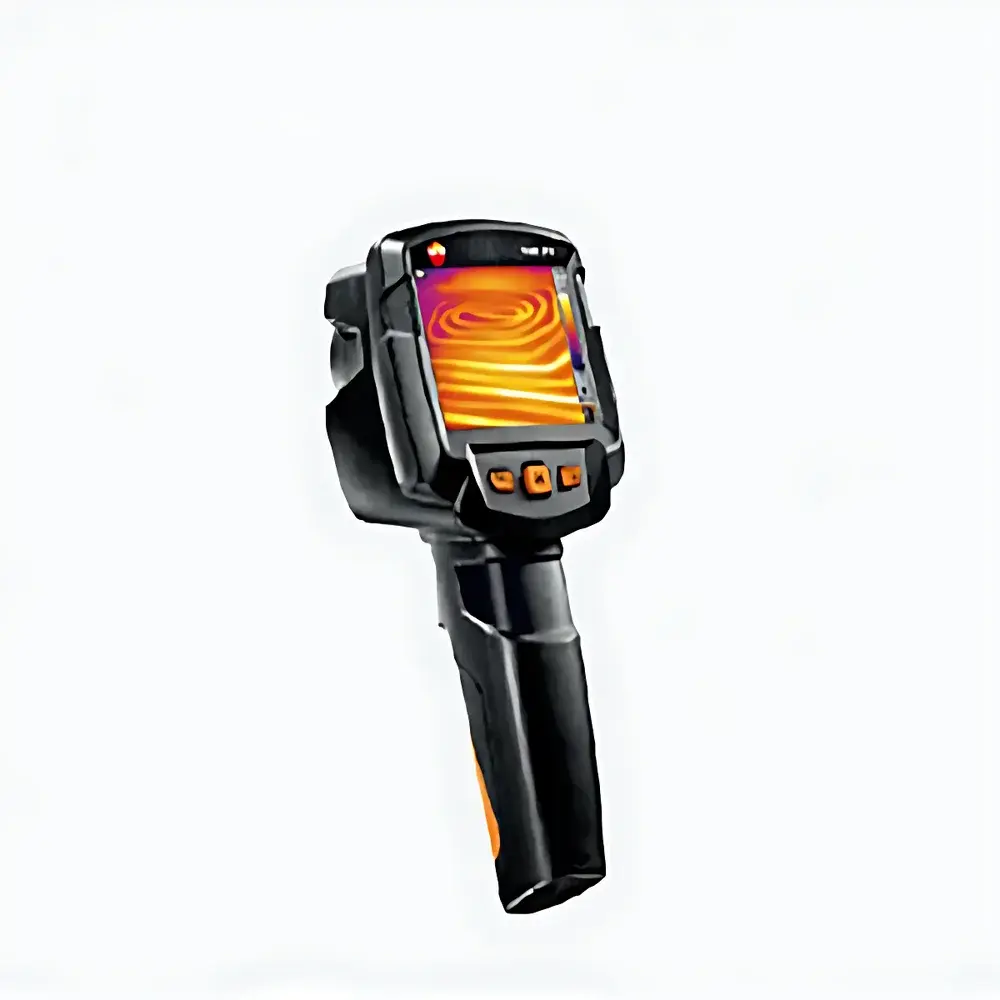
testo 865 Infrared Thermal Imaging Camera
| Brand | testo |
|---|---|
| Origin | Germany |
| Model | 865 |
| Detector Type | Scanning Focal Plane Array |
| Spectral Range | 7.5–14 µm |
| IR Resolution | 160 × 120 pixels |
| Enhanced Resolution (via IR SuperResolution) | 320 × 240 pixels |
| Thermal Sensitivity (NETD) | < 0.12 °C |
| Temperature Range | –20 to +280 °C |
| Accuracy | ±2 °C or ±2% of reading |
| Measurement Method | Non-contact infrared radiometry |
| Frame Rate | 9 Hz @ 160 × 120 |
| Operating Mode | Uncooled microbolometer |
| Wavelength Band | Mid-wave infrared (MWIR) |
| Total Measurement Points | 19,200 per frame |
| Image Export Format | JPEG |
| Software Included | testo IRSoft |
Overview
The testo 865 Infrared Thermal Imaging Camera is a compact, field-deployable thermographic instrument engineered for precision non-contact surface temperature mapping in industrial maintenance, building diagnostics, and energy auditing applications. It operates on the principle of passive infrared radiometry—detecting mid-wave infrared radiation (7.5–14 µm) emitted by objects and converting it into a calibrated thermal image based on Planck’s law of blackbody radiation. Its uncooled microbolometer detector eliminates the need for cryogenic cooling, ensuring operational reliability across ambient temperatures from –10 to +50 °C without thermal drift or startup delay. Designed for consistent repeatability in real-world conditions, the device delivers high spatial resolution (160 × 120 IR pixels) enhanced to 320 × 240 via testo’s proprietary IR SuperResolution algorithm—a hardware-accelerated interpolation method that preserves edge fidelity while increasing effective pixel density without compromising measurement integrity.
Key Features
- Integrated ScaleAssist function—automatically optimizes thermal scale settings during live imaging to ensure optimal contrast and dynamic range for building envelope analysis.
- 19,200 independent temperature measurement points per frame, enabling granular thermal profiling of complex surfaces and small components.
- Thermal sensitivity (NETD) < 0.12 °C at 30 °C ambient, supporting detection of subtle thermal anomalies such as early-stage insulation degradation or minor electrical imbalances.
- Robust ergonomic housing with integrated laser pointer and digital camera for precise spatial referencing and overlay annotation.
- Built-in rechargeable lithium-ion battery providing up to 2.5 hours of continuous operation; USB-powered charging and data transfer compatibility.
- Real-time temperature spot tracking with min/max/avg/delta readouts directly on the display, configurable via intuitive menu navigation.
Sample Compatibility & Compliance
The testo 865 is optimized for use on opaque, non-reflective surfaces including concrete, plaster, brick, metal cladding, PVC piping, and electrical enclosures. Emissivity correction (0.10–1.00 adjustable in 0.01 increments) and reflected temperature compensation allow accurate measurements on semi-reflective substrates such as painted steel or anodized aluminum. The instrument complies with IEC 62906-2-2 (infrared imaging equipment—performance testing) and meets CE marking requirements under the EU Electromagnetic Compatibility Directive 2014/30/EU and Low Voltage Directive 2014/35/EU. Calibration traceability follows ISO/IEC 17025 standards, with factory calibration documented in the included certificate valid for 12 months post-delivery.
Software & Data Management
testo IRSoft is a Windows-based analytical platform supporting full radiometric data export (including raw temperature matrices), emissivity mapping, isotherm contour generation, and comparative thermal trend analysis across multiple images. The software supports audit-ready reporting templates compliant with EN 13187 (thermal performance of buildings) and ASTM C1060 (standard practice for thermographic inspections of building envelopes). All thermal images are stored with embedded metadata—including date/time stamp, GPS coordinates (when connected via optional Bluetooth module), lens configuration, and measurement parameters—ensuring full traceability. JPEG exports retain embedded temperature data for third-party analysis, and IRSoft logs all user actions for GLP-aligned documentation workflows.
Applications
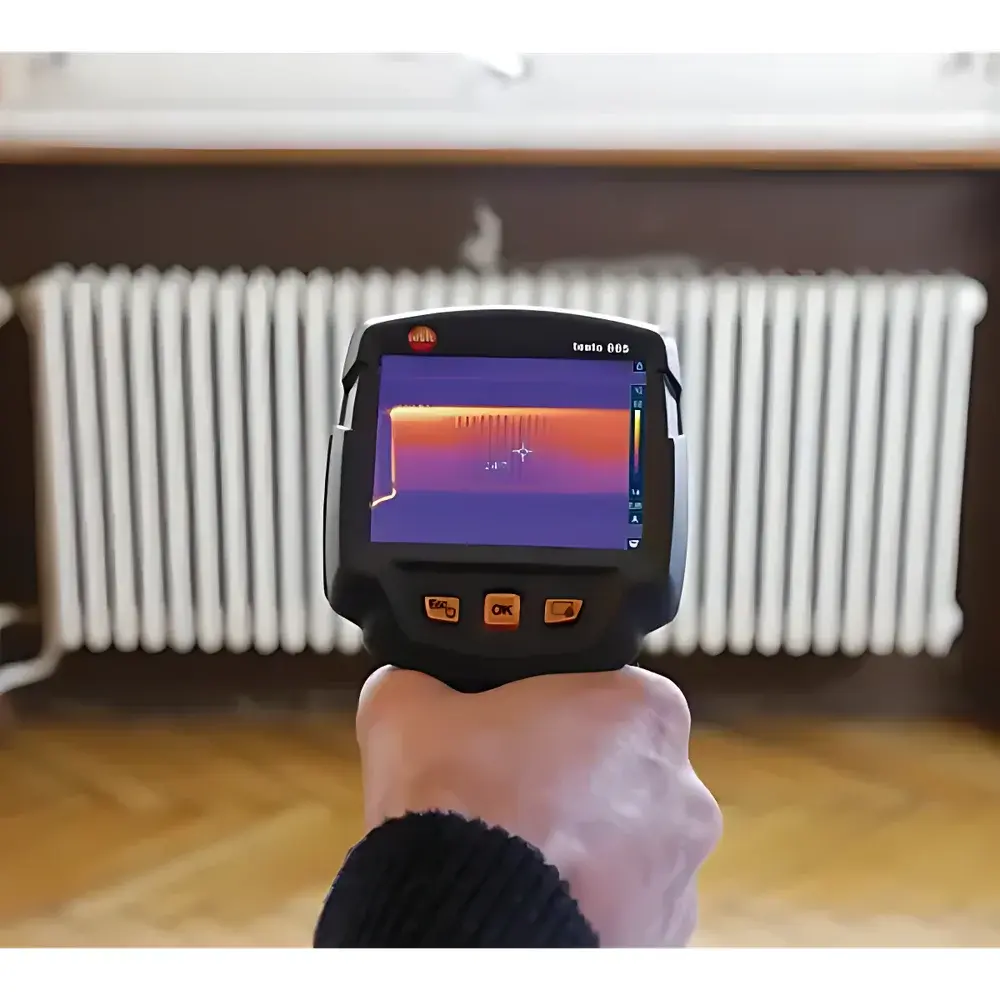
- Building diagnostics: identification of thermal bridges, air leakage paths, moisture ingress, and insulation voids per ISO 6781-3 and EN 13187 protocols.
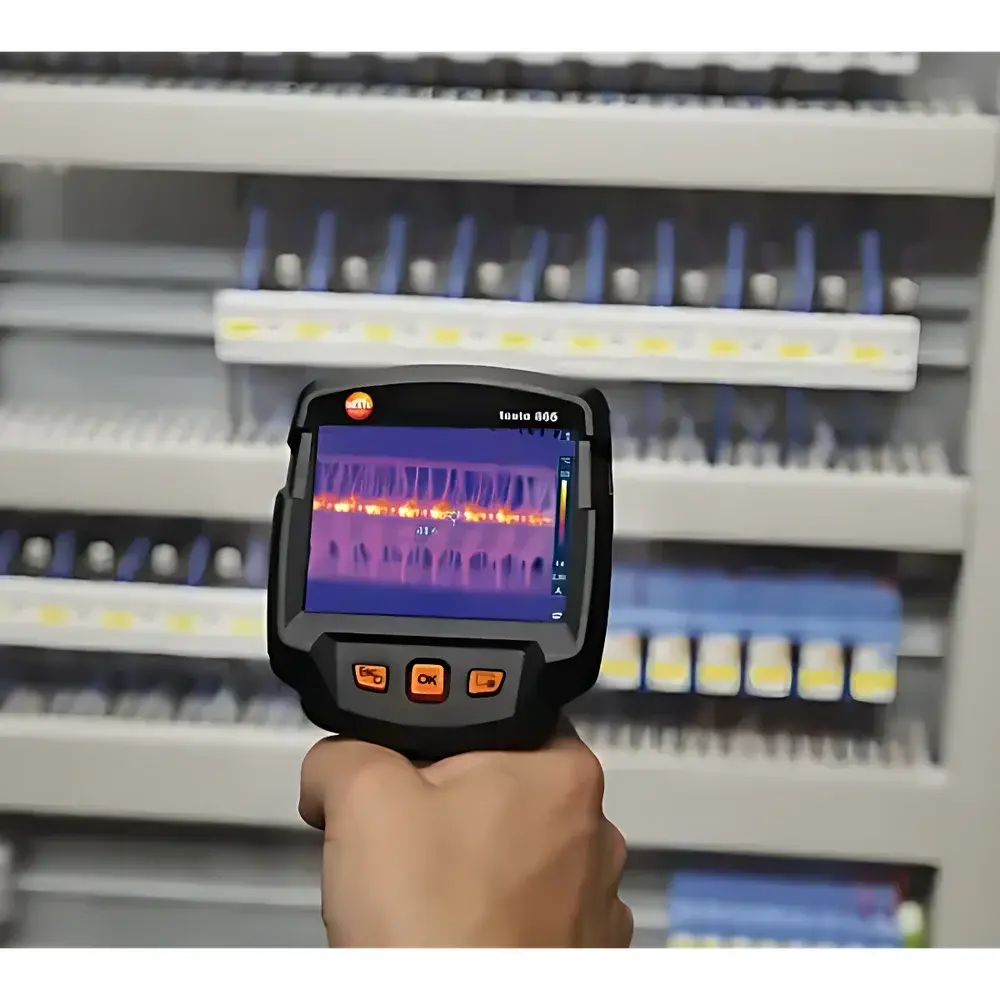
- Electrical infrastructure inspection: detection of loose connections, overloaded circuits, and failing breakers in switchgear, transformers, and distribution panels.
- Mechanical systems assessment: monitoring bearing temperatures, steam trap functionality, heat exchanger fouling, and refractory integrity.
- Facility energy audits: quantification of surface temperature differentials to prioritize retrofit measures and validate post-intervention performance.
- Preventive maintenance programs: integration into CMMS platforms via CSV/TXT export for scheduled thermographic route planning and historical anomaly trending.
FAQ
What is the spectral response range of the testo 865, and why is it specified as mid-wave infrared?
The testo 865 operates within 7.5–14 µm, which falls within the long-wave infrared (LWIR) band—not mid-wave. This designation reflects common industry misnomer; its spectral window is optimized for terrestrial object emissions near ambient temperatures, aligning with peak Planck radiation curves between –20 °C and +280 °C.
Does the testo 865 support radiometric video recording?
No. The device captures single-frame radiometric stills only. Video output is non-radiometric (live preview only) and not suitable for quantitative temporal analysis.
Is testo IRSoft compatible with macOS or Linux operating systems?
testo IRSoft is developed exclusively for Microsoft Windows (Windows 10/11, 64-bit). No native macOS or Linux version is available; virtualization or Boot Camp may be used with limited driver support.
Can the testo 865 be used for medical or veterinary thermography?
No. The testo 865 is not certified as a medical device under FDA 21 CFR Part 820 or EU MDR 2017/745. It lacks clinical validation, medical-grade calibration stability, and regulatory clearance for human or animal diagnostic use.
How frequently should the instrument undergo recalibration?
Annual recalibration is recommended for metrological continuity. Testo-certified service centers perform full system verification against NIST-traceable blackbody sources and issue ISO/IEC 17025-compliant certificates.





