
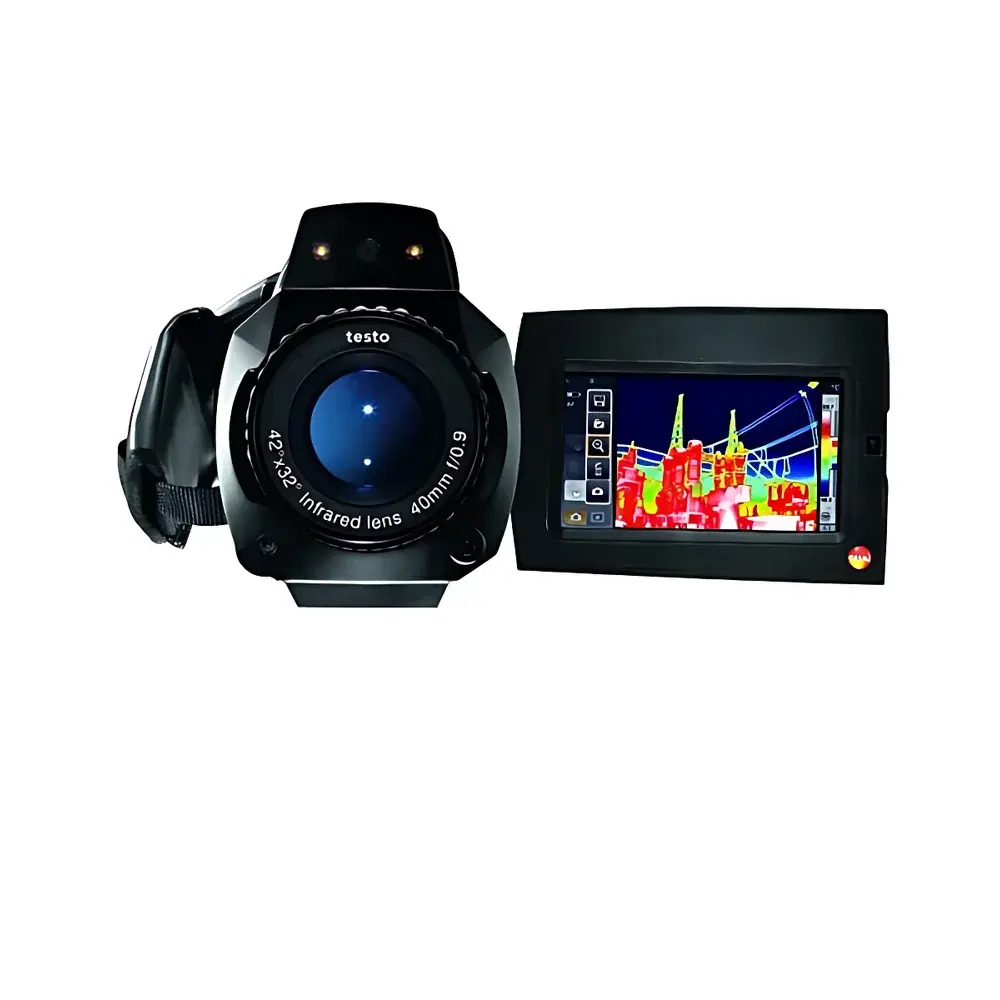
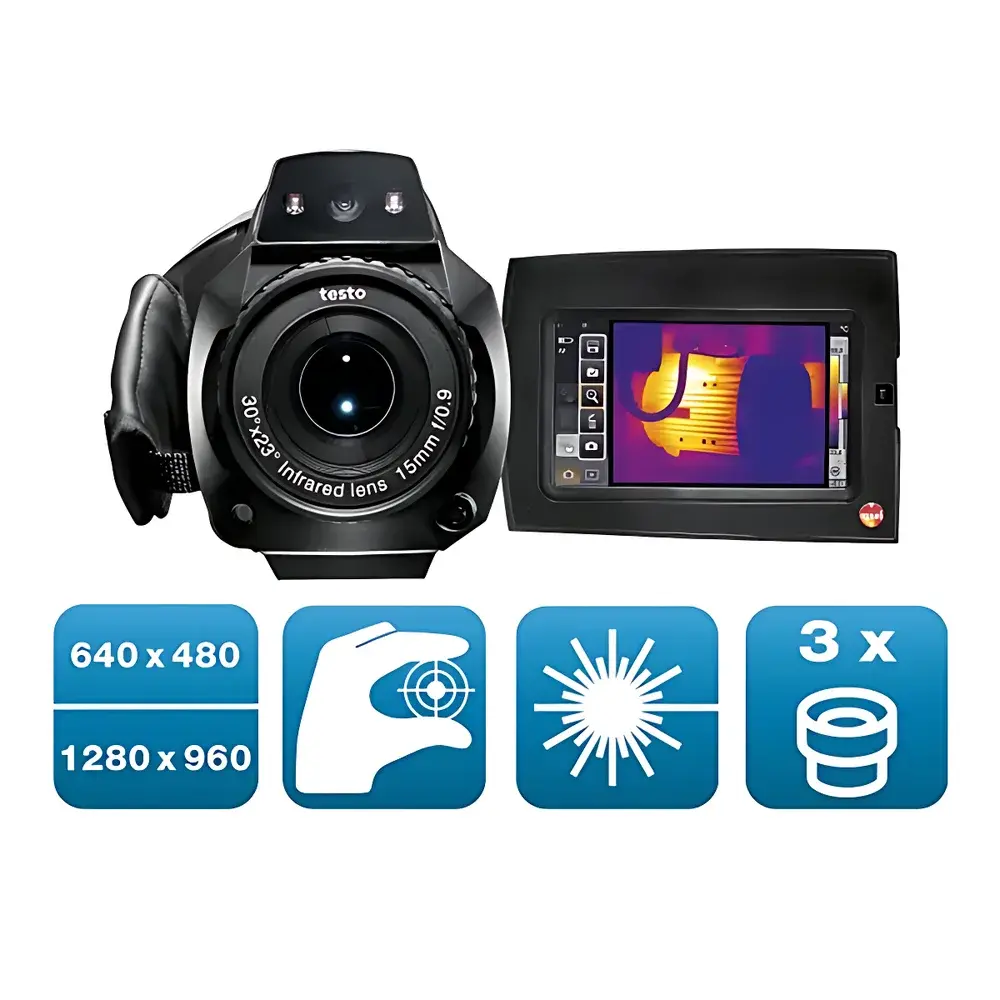
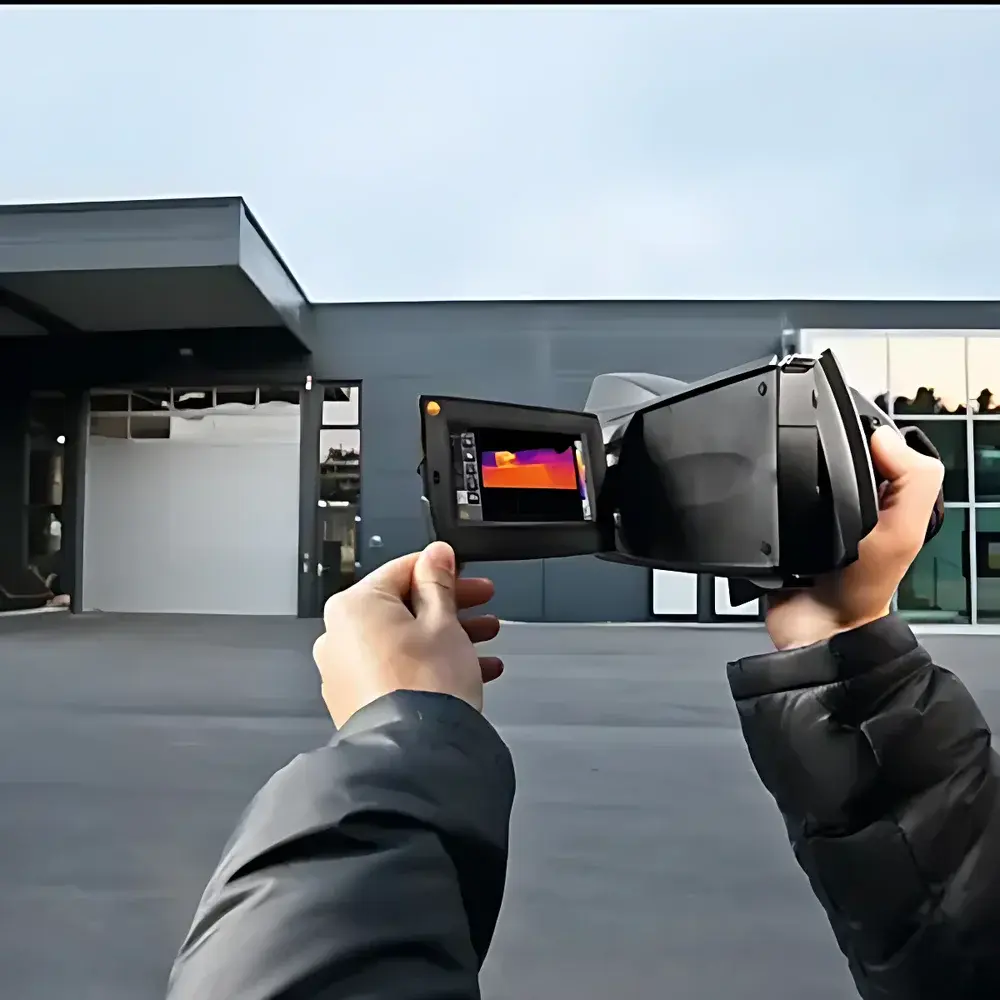
testo 890 Advanced Infrared Thermal Imaging Camera
| Brand | testo |
|---|---|
| Origin | Germany |
| Model | 890 |
| Frame Rate | 33 Hz |
| Temperature Accuracy | ±2 °C or ±2% of reading |
| Temperature Range | −30 to +100 °C |
| Infrared Resolution | 640 × 480 pixels |
| Spectral Range | 7.5–14 µm |
| Thermal Sensitivity (NETD) | < 40 mK at 30 °C |
| Detector Type | Uncooled microbolometer |
| Operating Principle | Passive infrared radiometry based on Planck’s law |
| Image Enhancement | SuperResolution upscaling to 1280 × 960 pixels |
| Focus | Motorized autofocus, minimum focus distance 10 cm |
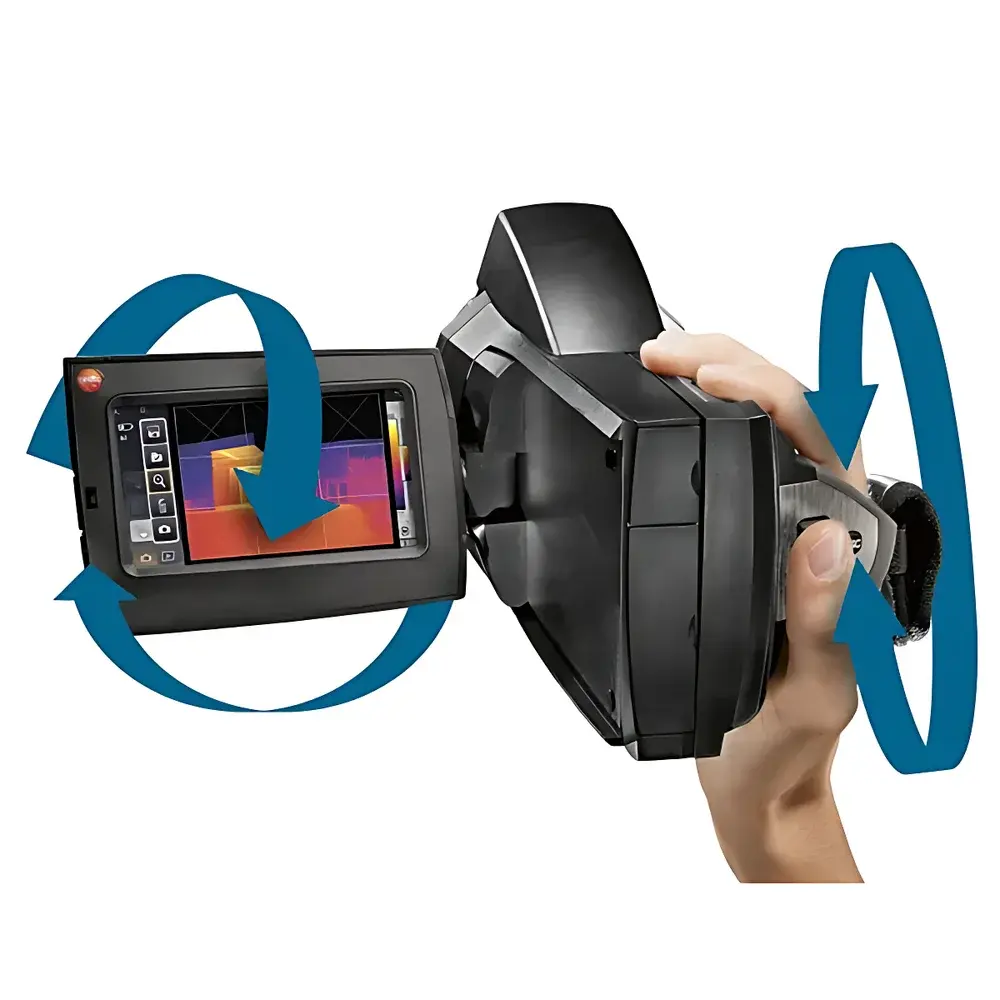
| Display | Rotating, foldable LCD touchscreen |
| Data Storage | JPEG + embedded radiometric data, SD card (2 GB included) |
| Optional Modules | PTA Process Trend Analysis, IR Video Recording, Panorama Stitching, QR Code Auto-Tagging, High-Temp Extension (up to 1200 °C), Surface Moisture Risk Assessment, Fever Screening Mode |
Overview
The testo 890 Advanced Infrared Thermal Imaging Camera is a high-performance, uncooled microbolometer-based thermographic instrument engineered for precision diagnostics in industrial maintenance, building science, electrical infrastructure assessment, and R&D environments. Operating within the long-wave infrared (LWIR) spectral band (7.5–14 µm), it captures thermal radiation emitted by objects in accordance with Planck’s blackbody radiation law—enabling non-contact, quantitative surface temperature mapping without emissivity-dependent calibration drift under stable ambient conditions. Its native 640 × 480 detector array delivers 307,200 independent measurement points per frame, while proprietary SuperResolution technology interpolates spatial detail to an effective resolution of 1280 × 960 pixels—enhancing edge definition and enabling reliable detection of sub-millimeter thermal anomalies. With a thermal sensitivity (NETD) of < 40 mK at 30 °C, the device resolves minute temperature gradients critical for early-stage fault identification in circuit boards, insulation voids, or latent moisture ingress.
Key Features
- Motorized autofocus system with 10 cm minimum focus distance—optimized for one-handed operation and consistent image sharpness across variable working distances.
- Rotating, foldable high-resolution LCD touchscreen display—provides ergonomic viewing angles during overhead, confined-space, or inverted inspections.
- Interchangeable lens system (standard, wide-angle, telephoto, and super-telephoto) supporting field-of-view adaptability from 42° × 32° down to 6.6° × 5°, with corresponding IFOV values ranging from 1.13 mrad to 0.11 mrad (SuperResolution-enabled).
- Integrated visible-light camera with LED illumination—automatically synchronizes georeferenced RGB images with corresponding thermal frames for intuitive contextual analysis and archival traceability.
- Voice annotation via included headset—enables real-time audio metadata tagging directly linked to individual thermal images, compliant with ISO 18436-1 documentation requirements for condition monitoring reports.
- Built-in GPS and digital compass—supports location-stamped reporting essential for facility-wide thermal audits and regulatory compliance documentation.
Sample Compatibility & Compliance
The testo 890 is designed for non-destructive evaluation of solid surfaces across diverse material classes—including metals, composites, concrete, polymers, and insulating materials—without requiring surface preparation or emissivity correction presets. Its measurement uncertainty (±2 °C or ±2% of reading) meets the repeatability thresholds specified in ASTM E1934–19 (Standard Guide for Examining Electrical and Mechanical Equipment with Infrared Thermography) and aligns with EN 13187:2015 (Thermal Performance of Buildings — Qualitative Detection of Thermal Irregularities). Optional modules such as Surface Moisture Risk Assessment operate under validated psychrometric algorithms compliant with ISO 13788:2012 (Hygrothermal performance of building components), calculating dew point differentials and rendering risk indicators using standardized traffic-light visualization. All firmware and software components adhere to IEC 62443-3-3 cybersecurity framework principles for industrial control systems.
Software & Data Management
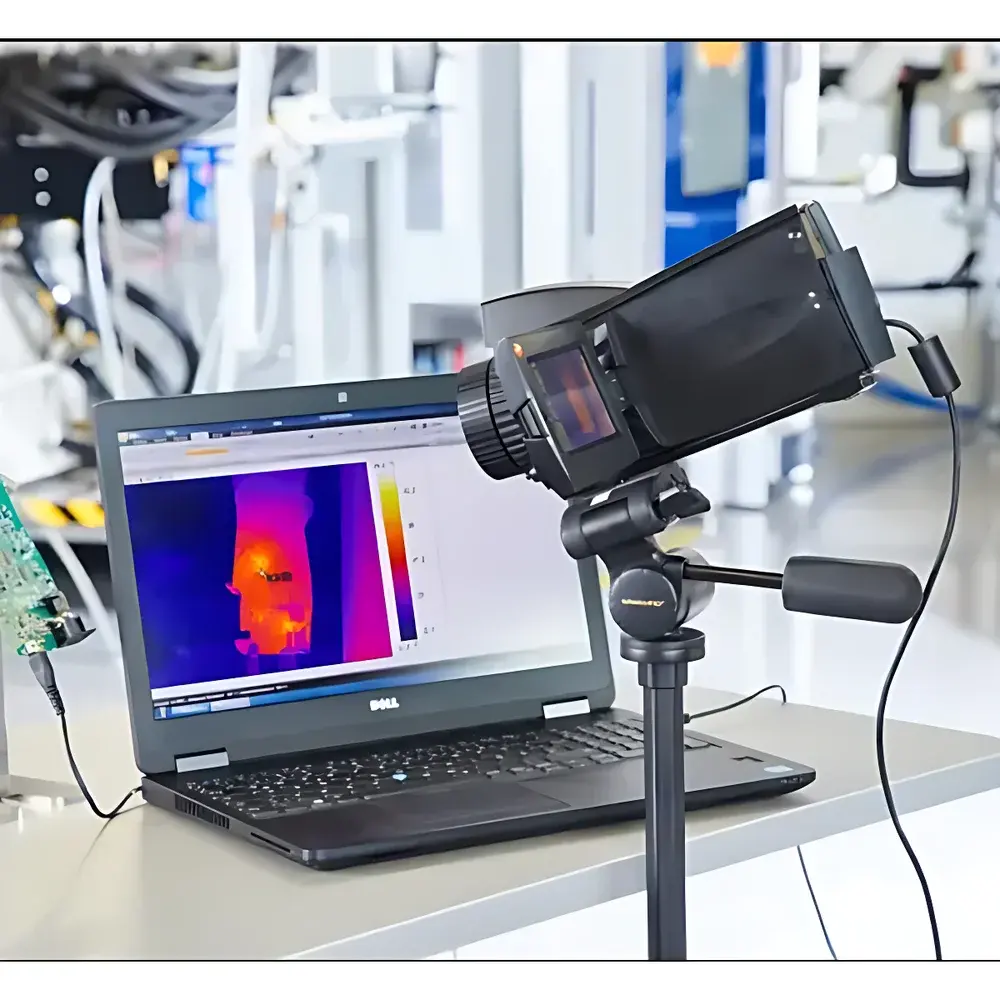
The included testo IRSoft desktop software provides full radiometric post-processing capability—including emissivity adjustment, reflected apparent temperature compensation, isotherm overlay, delta-T analysis, and customizable report generation per ISO/IEC 17025 clause 7.8.2. Data export supports CSV, PDF, and XML formats compatible with CMMS platforms (e.g., IBM Maximo, SAP PM) and LIMS integration via RESTful API. Optional PTA (Process Trend Analysis) module enables time-synchronized thermal sequence capture at user-defined intervals—supporting GLP-compliant audit trails with timestamped metadata, operator ID, and instrument calibration status. IR video recordings are encoded in H.264/MPEG-4 AVC format with embedded radiometric metadata, ensuring traceability under FDA 21 CFR Part 11 when used in pharmaceutical facility qualification protocols.
Applications
- Electrical infrastructure: Identification of loose connections, overloaded circuits, and deteriorating busbar joints in switchgear, transformers, and distribution panels—prioritizing interventions per IEEE 1434–2017 thermal risk classification.
- Building envelope diagnostics: Quantification of U-value deviations, thermal bridging, air leakage pathways, and insulation discontinuities—supporting compliance with ASHRAE 90.1 and EN ISO 52016-1 energy modeling inputs.
- Industrial predictive maintenance: Monitoring bearing temperatures, motor windings, steam trap functionality, and refractory lining integrity in process plants—feeding into reliability-centered maintenance (RCM) strategies.
- R&D thermal profiling: Capturing transient heat dissipation patterns on PCBs, battery cells, and power electronics under dynamic load conditions—facilitating thermal simulation model validation.
- Facility health & safety: Deployment of optional Fever Screening Mode in controlled-access zones—operating within EN 868-5:2018 and IEC 80601-2-59:2017 clinical thermometer equivalence guidelines when configured with ambient stabilization and reference source verification.
FAQ
What standards does the testo 890 comply with for thermographic reporting?
It conforms to ASTM E1934–19, EN 13187:2015, and ISO 18436-1 for diagnostic thermography methodology and personnel qualification frameworks.
Can radiometric video be exported with raw pixel temperature data?
Yes—H.264-encoded IR video retains full radiometric metadata per frame, accessible via testo IRSoft for frame-by-frame temperature extraction and statistical analysis.
Is the Surface Moisture Risk Assessment function validated against hygrothermal models?
Yes—it implements ISO 13788:2012-compliant dew point calculation using manually entered ambient T/RH, then compares surface temperature to determine condensation potential per EN 15026:2017.
Does the device support automated report generation for ISO 55001 asset management compliance?
testo IRSoft allows template-driven report creation with configurable pass/fail criteria, signature fields, and version-controlled output—fully traceable for ISO 55001 Clause 8.2.3 documentation requirements.
How is calibration traceability maintained across extended deployments?
Each unit ships with NIST-traceable calibration certificate (ISO/IEC 17025 accredited); firmware logs all calibration events, including date, technician ID, and reference source serial number—accessible via diagnostic menu.





