
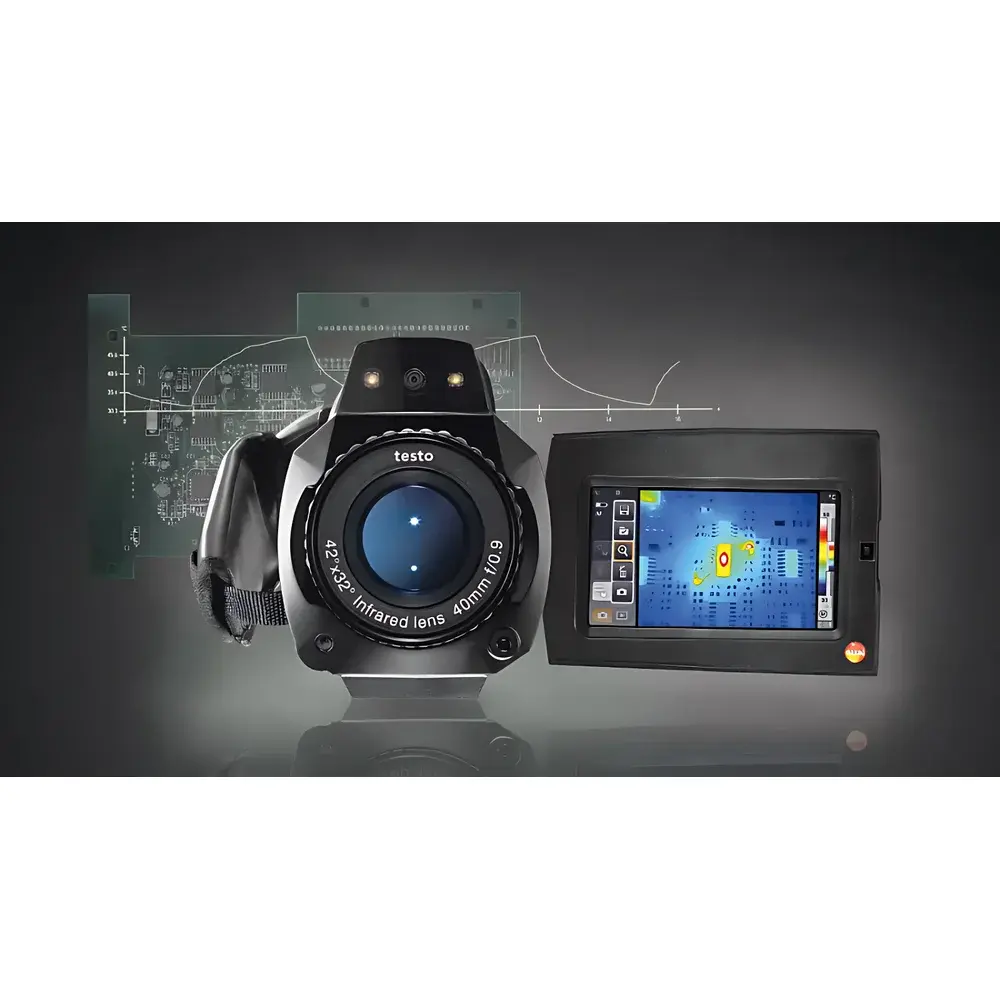
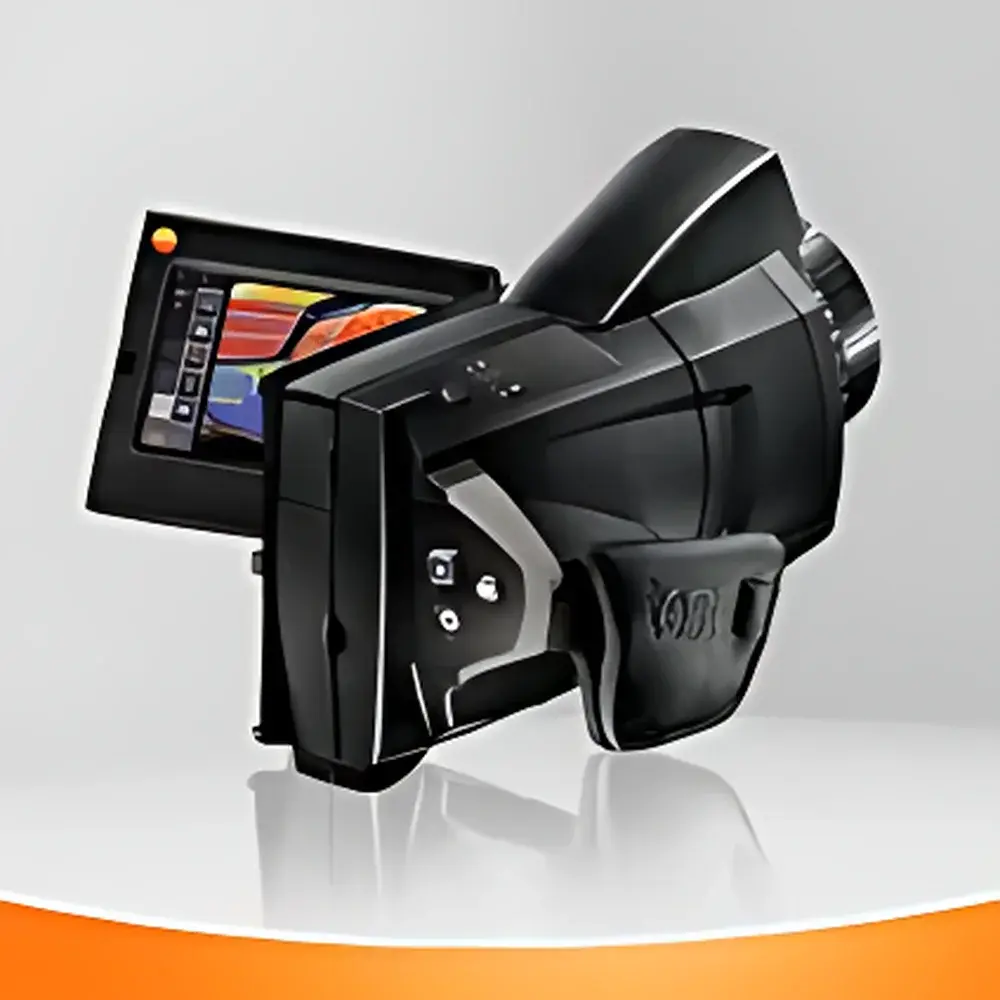
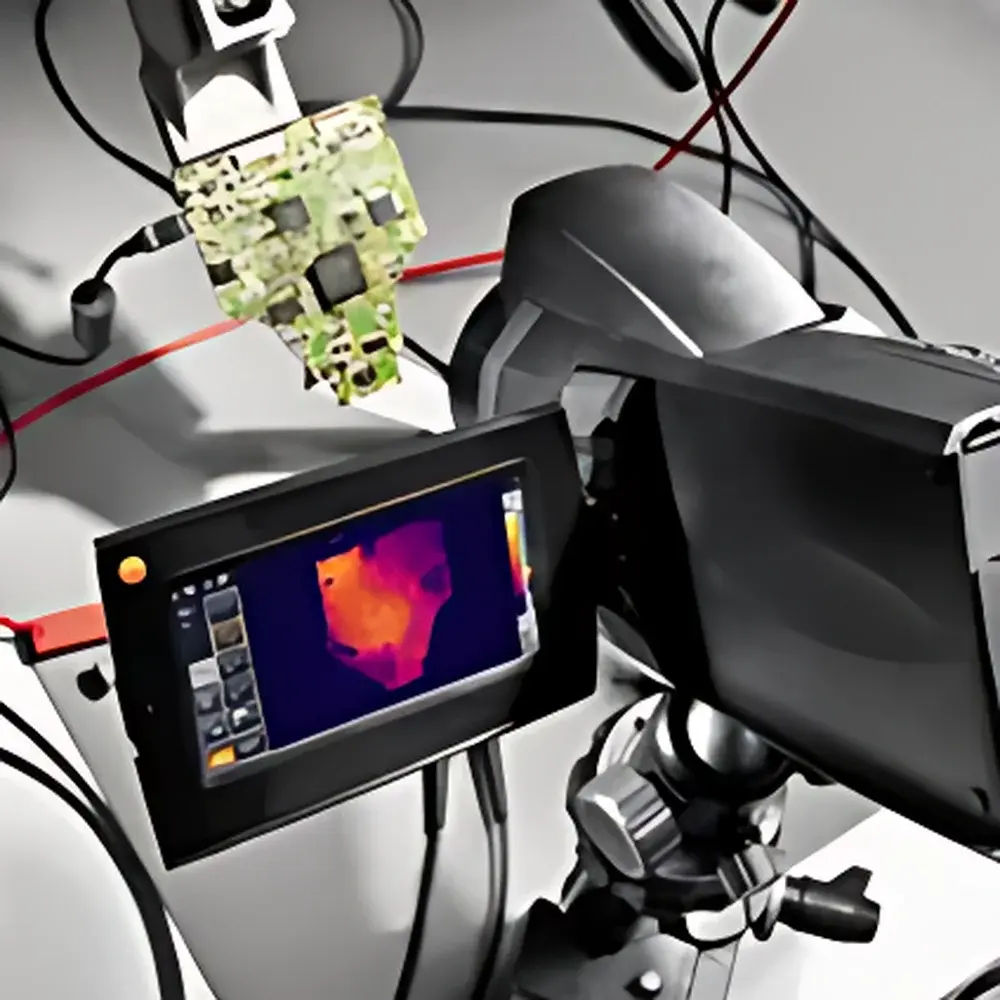
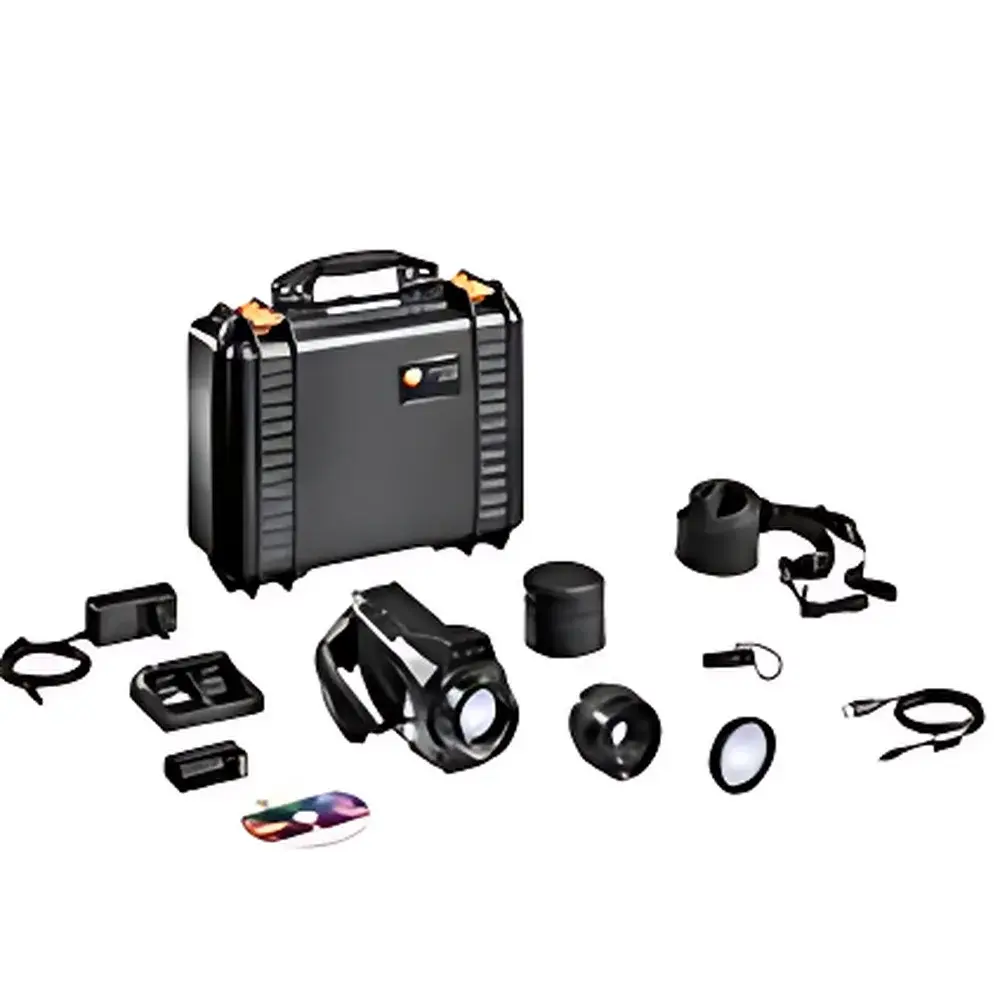
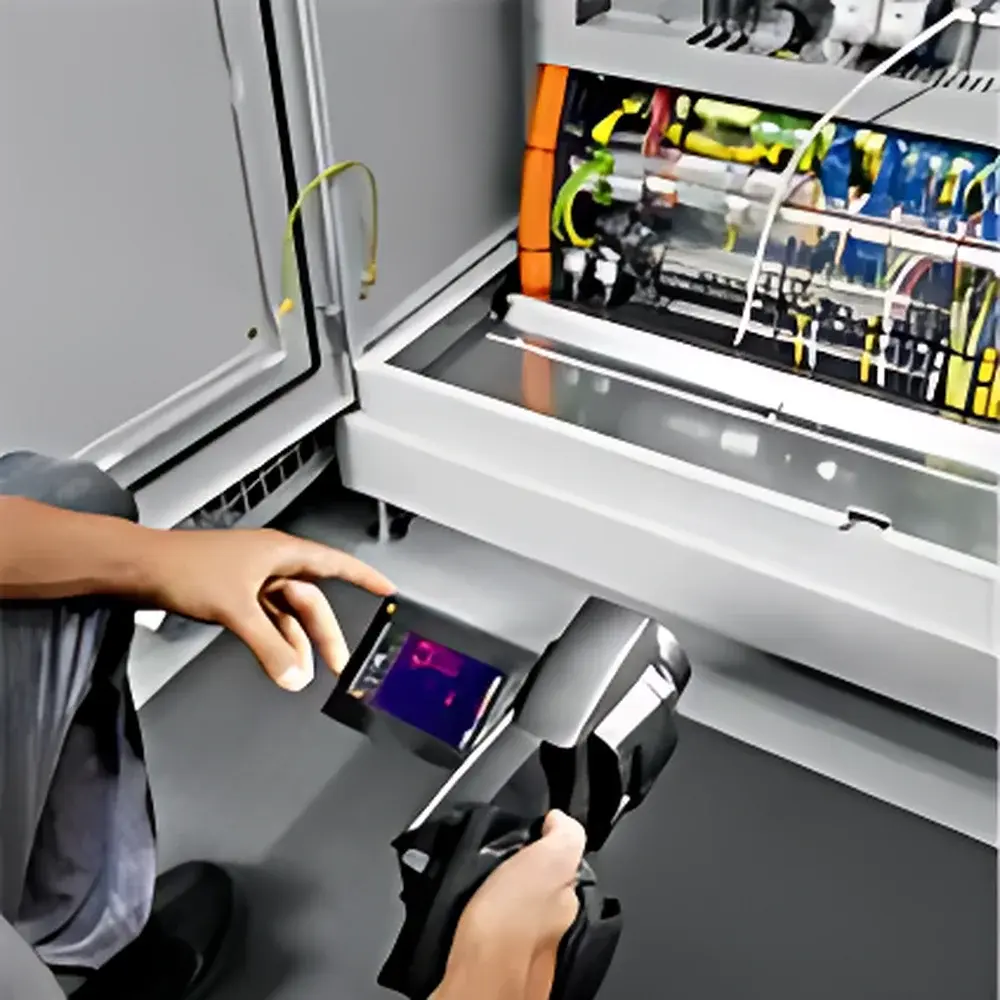
testo 890 Professional Infrared Thermal Imaging Camera
| Brand | testo |
|---|---|
| Origin | Germany |
| Manufacturer Type | Authorized Distributor |
| Import Status | Imported |
| Model | 0563 0890 |
| Price Range | USD 13,500 – 40,500 (est.) |
| Spectral Range | 7.5–14 µm |
| Detector Type | Uncooled Scanning Focal Plane Array (FPA) |
| Thermal Resolution | 640 × 480 pixels |
| NETD | < 40 mK @ 30 °C |
| Frame Rate | 33 Hz |
| Temperature Range | −30 to +100 °C (standard) |
| optional extended ranges | 0 to +350 °C and 0 to +650 °C |
| Accuracy | ±2 °C or ±2% of reading (whichever is greater) |
| Measurement Principle | Non-contact infrared radiometry |
| Operating Mode | Handheld, battery-powered thermal imaging system |
Overview
The testo 890 Professional Infrared Thermal Imaging Camera is a high-resolution, uncooled thermal imaging instrument engineered for precision thermographic diagnostics across industrial, mechanical, and building science applications. Based on calibrated infrared radiometry in the long-wave infrared (LWIR) spectral band (7.5–14 µm), the device captures surface temperature distributions without physical contact by detecting emitted thermal radiation. Its 640 × 480 pixel microbolometer focal plane array delivers spatial resolution sufficient to resolve fine thermal gradients on electrical connections, rotating machinery components, insulation interfaces, and building envelope assemblies. Designed and manufactured in Germany, the testo 890 complies with IEC 62906-2-2 for thermal imaging performance verification and meets CE marking requirements for electromagnetic compatibility (EMC) and low-voltage directive conformity. The camera operates at a real-time frame rate of 33 Hz—enabling dynamic thermal event capture during motor startup, valve actuation, or HVAC system transient response.
Key Features
- High-definition thermal imaging core: 640 × 480 uncooled microbolometer detector with < 40 mK noise-equivalent temperature difference (NETD) at 30 °C ambient—ensuring reliable detection of subtle thermal anomalies.
- Dual-lens optical system with interchangeable wide-angle (24°) and telephoto (6°) lenses, supporting both broad-area scanning and targeted component-level analysis.
- Integrated visible-light camera with automatic image fusion (MSX® technology), overlaying edge contrast from the digital image onto the thermal display to enhance spatial interpretation without compromising radiometric integrity.
- Real-time radiometric video streaming via USB-C and Wi-Fi; supports direct transfer to testo IRSoft™ software for post-acquisition quantitative analysis.
- Ruggedized magnesium alloy housing rated IP54 for dust and water resistance; operational temperature range: −15 to +50 °C ambient.
- Built-in GPS, laser distance meter, and voice annotation—enabling geotagged, dimensionally referenced, and contextually documented thermal reports.
Sample Compatibility & Compliance
The testo 890 is optimized for non-contact surface temperature measurement of electrically conductive, oxidized, painted, or insulated materials—including copper busbars, transformer windings, steam traps, refractory linings, and exterior wall assemblies. Emissivity correction is supported via preset material libraries (e.g., oxidized steel, aluminum, concrete, brick) and user-defined values (0.01–1.00). Calibration traceability follows ISO/IEC 17025-accredited procedures, with factory calibration valid for 24 months. The instrument satisfies technical requirements outlined in ASTM E1934 (Standard Guide for Examining Electrical and Mechanical Equipment with Infrared Thermography), ISO 18436-7 (Condition monitoring and diagnostics of machines — Thermography), and EN 13187 (Thermal performance of buildings — Qualitative detection of thermal irregularities in building envelopes).
Software & Data Management
All thermal images and radiometric video sequences are stored in standardized .seq and .jpg formats compliant with ISO 13374-2 (Condition monitoring — Data processing, communication and presentation). testo IRSoft™ v5.0 provides full radiometric analysis tools including isotherm mapping, line profiles, area statistics, delta-T calculations, and customizable report generation (PDF/HTML). Audit trail functionality logs user actions, parameter changes, and calibration events—supporting GLP-compliant documentation workflows. Export options include CSV for integration into CMMS platforms (e.g., IBM Maximo, SAP PM) and DICOM-compatible output for cross-platform thermal data archival.
Applications
- Preventive maintenance of rotating equipment: early identification of bearing overheating, misalignment-induced friction, and lubrication failure through trending of thermal signatures over time.
- Electrical distribution systems: detection of loose terminations, overloaded circuits, and imbalanced phase loading in switchgear, MCCs, and UPS units per NFPA 70B guidelines.
- Building envelope diagnostics: quantitative assessment of thermal bridging, insulation voids, air leakage pathways, and moisture accumulation behind cladding using comparative thermography under controlled ΔT conditions.
- Process heating and steam system integrity: validation of trap operation, tracing of heat loss along insulated piping, and verification of refractory integrity in kilns and boilers.
- Renewable energy infrastructure: thermal screening of photovoltaic module hotspots, inverter cooling performance, and wind turbine gearbox condition monitoring.
FAQ
What is the recommended minimum temperature difference detectable by the testo 890 under field conditions?
Under typical ambient conditions (20–30 °C), the instrument reliably resolves temperature differences ≥0.05 °C over uniform surfaces when using optimal focus, stable emissivity settings, and averaging over ≥16 frames.
Does the testo 890 support compliance with FDA 21 CFR Part 11 for electronic records in pharmaceutical facilities?
While the hardware itself does not embed Part 11 controls, testo IRSoft™ v5.0 offers configurable user authentication, electronic signatures, and audit trail export—enabling implementation of Part 11–compliant workflows when deployed within validated IT infrastructure.
Can the camera be used for quantitative thermography in outdoor environments during daylight hours?
Yes—its LWIR spectral response minimizes solar reflectance interference; however, measurement accuracy requires compensation for reflected apparent temperature, particularly on low-emissivity metallic surfaces exposed to direct sunlight.
Is firmware update capability available remotely?
Firmware updates are distributed via testo’s official support portal and installed locally using USB or Wi-Fi; no remote execution or cloud-based update mechanism is implemented to preserve system integrity and cybersecurity standards.
What is the expected service life of the internal rechargeable battery under standard duty cycles?
The dual Li-ion battery pack delivers ≥2.5 hours of continuous operation at 25 °C; cycle life exceeds 500 full charge/discharge cycles before capacity degrades below 80% of nominal rating.





