testo Saveris 2-T3 WiFi Temperature Data Logger with Dual Thermocouple Inputs (K/T/J)
| Brand | testo |
|---|---|
| Origin | Germany |
| Model | 0572 2033 |
| Channel Count | 2-channel |
| Communication | Wi-Fi (802.11 b/g/n), MQTT protocol, SNTP time sync |
| Enclosure Rating | IP54 |
| Operating Temperature | -30 to +50 °C |
| Storage Capacity | 2 × 10,000 measurements |
| Battery | 4 × AA (24-month typical life) |
| Thermocouple Types Supported | K, T, J |
| Temp. Range (K) | -195 to +1350 °C |
| Temp. Range (T) | -200 to +400 °C |
| Temp. Range (J) | -100 to +750 °C |
| Accuracy | ±(0.5 + 0.5 % of reading) °C |
| Resolution | 0.1 °C |
| Cloud Reporting | Basic (free, 3-month retention, 15-min interval) / Advanced (2-year retention, 1-min interval, SMS alerts, API, multi-user support) |
Overview
The testo Saveris 2-T3 is a CE-certified, cloud-connected wireless temperature data logger engineered for continuous, unattended monitoring in regulated and non-regulated environments—including pharmaceutical cold chains, food storage facilities, laboratory incubators, HVAC validation, and industrial process control. It operates on the principle of high-fidelity thermocouple signal acquisition—digitally conditioned and timestamped via internal SNTP-synchronized real-time clock—then securely transmitted over encrypted Wi-Fi (WPA2/WPA2 Enterprise supported) to the testo Cloud platform using the lightweight, publish-subscribe MQTT protocol. Unlike standalone loggers with local USB retrieval, the Saveris 2-T3 eliminates manual data collection by enabling fully remote configuration, live visualization, and automated compliance reporting. Its dual-channel architecture accepts industry-standard Type K, T, or J thermocouples—extending measurable range from -200 °C (Type T) up to +1350 °C (Type K)—making it suitable for cryogenic storage, sterilization autoclaves, and furnace qualification where probe interchangeability and wide dynamic range are essential.
Key Features
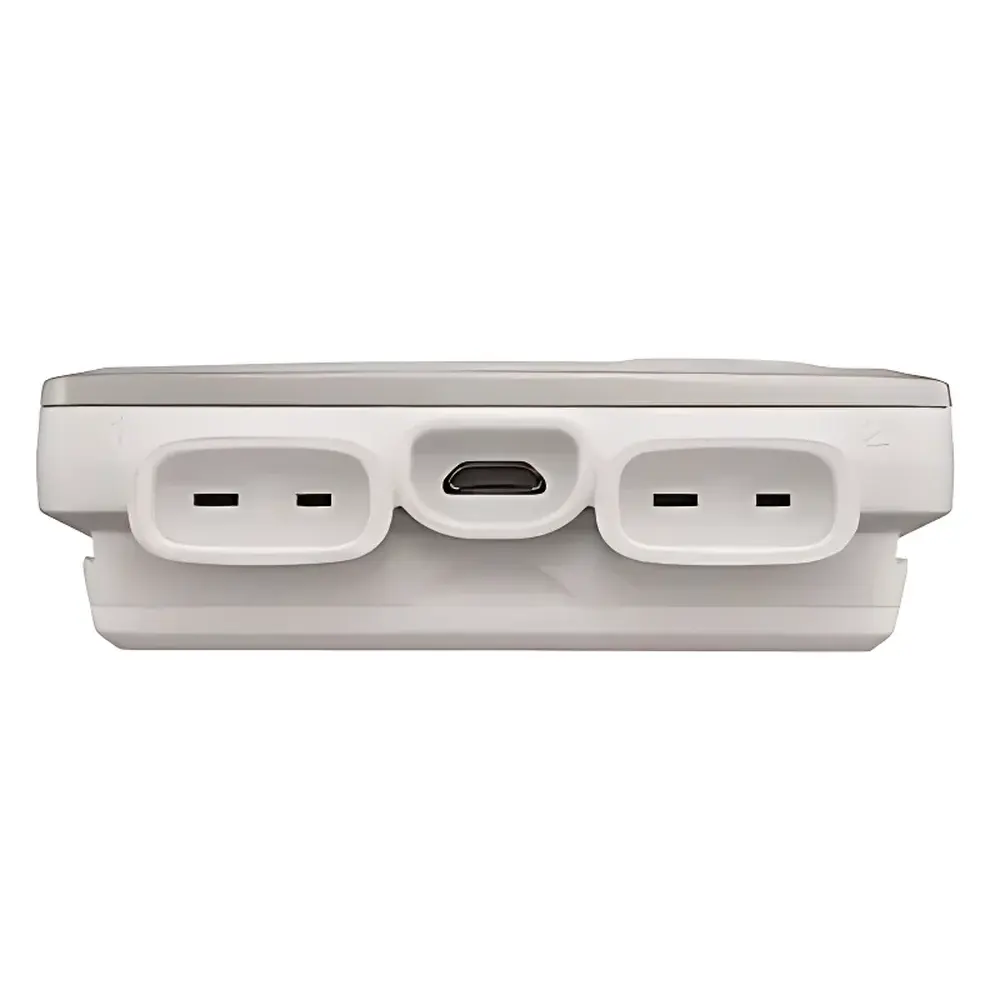
- Dual independent thermocouple inputs supporting simultaneous K-, T-, and J-type probes—each with full-range calibration traceability per EN 60584-1 and NIST-traceable reference standards
- IP54-rated enclosure with robust ABS/PC housing, rated for continuous operation between -30 °C and +50 °C ambient; battery compartment sealed against dust ingress
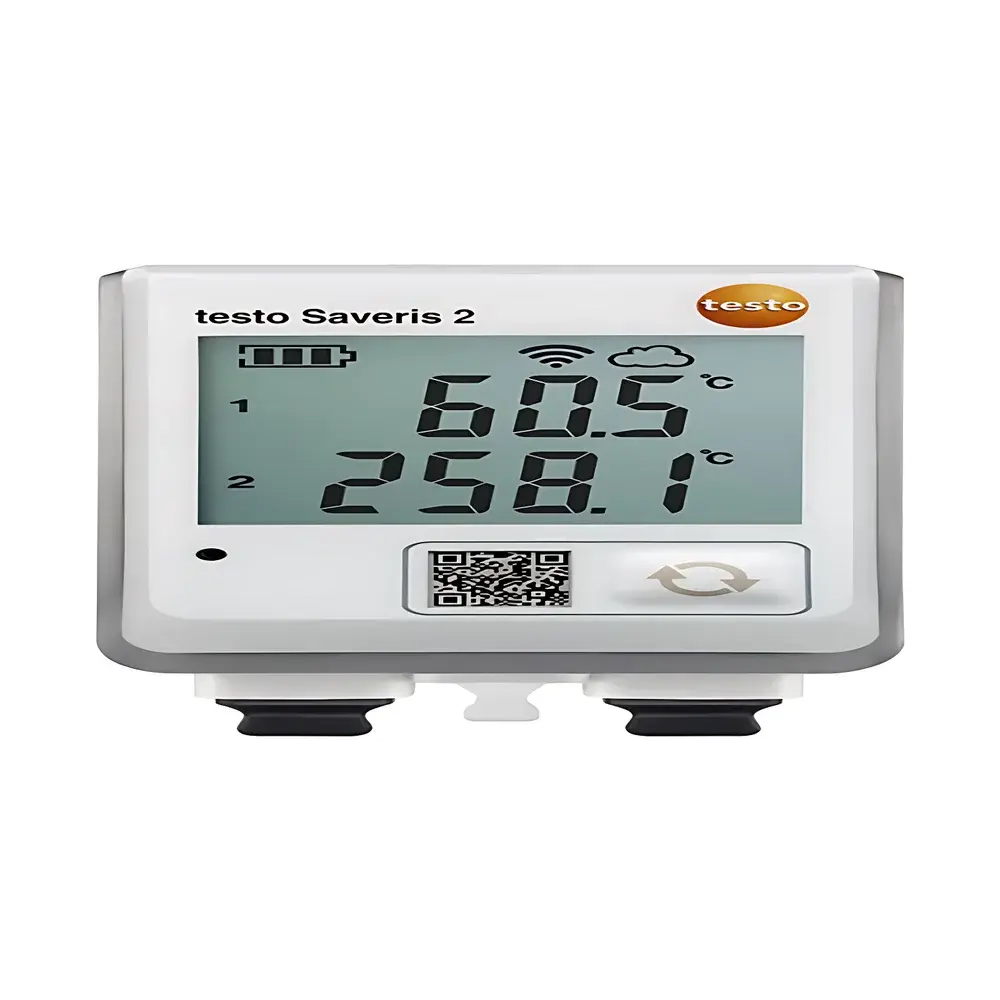
- On-device LCD display showing real-time channel values, alarm status (visual icon + backlight flash), battery level (4-segment indicator), and Wi-Fi connectivity status
- Internal memory stores up to 10,000 readings per channel (20,000 total); automatic overwrite logic prevents data loss during transient network outages
- Configurable measurement and transmission intervals—from 1 minute (Advanced Cloud license) to 24 hours—ensuring optimal balance between resolution and battery longevity
- Integrated alarm engine supporting upper/lower limit thresholds, delay timers (to suppress transient spikes), and system-level event detection (low battery, Wi-Fi dropout, power interruption)
- AA battery-powered design (4× LR6) with 24-month typical service life under standard 15-min logging; user-replaceable without tools or recalibration
Sample Compatibility & Compliance
The Saveris 2-T3 does not measure samples directly but interfaces with externally mounted thermocouples selected for application-specific thermal mass, response time, and chemical compatibility. Probe selection follows ISO 14644-3 (cleanroom monitoring), USP / (pharmaceutical compounding), and EN 12830 (refrigerated transport). While the logger itself carries no intrinsic FDA 21 CFR Part 11 certification, its Advanced Cloud service provides full audit trail functionality—including immutable timestamps, user login logs, change history for alarm limits and configurations, and electronic signature support—enabling alignment with GxP, GLP, and HACCP documentation requirements. All cloud-stored data is hosted on ISO/IEC 27001-certified infrastructure within the EU, ensuring GDPR-compliant data residency.
Software & Data Management
Data management is centralized via the testo Cloud web portal and mobile apps (iOS/Android), accessible through any HTML5-compliant browser. The platform supports role-based access control (RBAC), allowing administrators to assign view-only or edit permissions across users and devices. Basic Cloud includes manual PDF/CSV export, 3-month rolling data retention, and email alerting only. Advanced Cloud adds scheduled report generation, RESTful API integration (for ERP/MES/LIMS synchronization), SMS alerts (25 messages/year/device, expandable via add-on packs), and long-term archival (up to 24 months). All exported reports include embedded metadata: device ID, probe serial numbers, calibration due dates, and cryptographic hash verification for data integrity assurance—critical for internal audits and regulatory inspections.
Applications
- Pharmaceutical cold chain validation: continuous monitoring of vaccine refrigerators (-20 °C), ultra-low freezers (-80 °C), and shipping containers during distribution
- Food safety compliance: HACCP-critical point logging in blast chillers, proofing cabinets, and warehouse ambient zones per FDA Food Code §3-501.12
- Industrial thermal process verification: oven, dryer, and autoclave cycle mapping using K-type probes rated for >1000 °C
- Building environmental monitoring: HVAC system performance tracking across server rooms, archives, and museum storage vaults
- Research lab incubator and environmental chamber qualification per ISO/IEC 17025 clause 5.8.2 (equipment verification)
FAQ
Is the testo Saveris 2-T3 compliant with FDA 21 CFR Part 11?
The hardware unit itself is not individually certified; however, the Advanced Cloud service implements electronic signature workflows, audit trails, and data integrity safeguards aligned with Part 11 expectations for systems used in regulated environments.
Can I use my own thermocouple probes—or must I purchase testo-branded ones?
Any standard miniature or subminiature connectors conforming to DIN 43710 or IEC 60584-2 pinout specifications are compatible. Calibration certificates must be maintained separately if using third-party probes.
What happens if Wi-Fi connectivity is lost during operation?
Measurements continue uninterrupted and are stored locally. Once connection resumes, buffered data is transmitted in chronological order with preserved timestamps—no interpolation or gap-filling applied.
Does the device support external power supply in addition to batteries?
Yes—optional 5–12 V DC external power adapter (testo 0554 0001) is available for permanent installations where battery replacement is impractical.
How is time synchronization maintained across multiple loggers in a distributed system?
All units perform periodic SNTP synchronization with configurable NTP servers—including private enterprise NTP sources—ensuring sub-second consistency across geographically dispersed deployments.