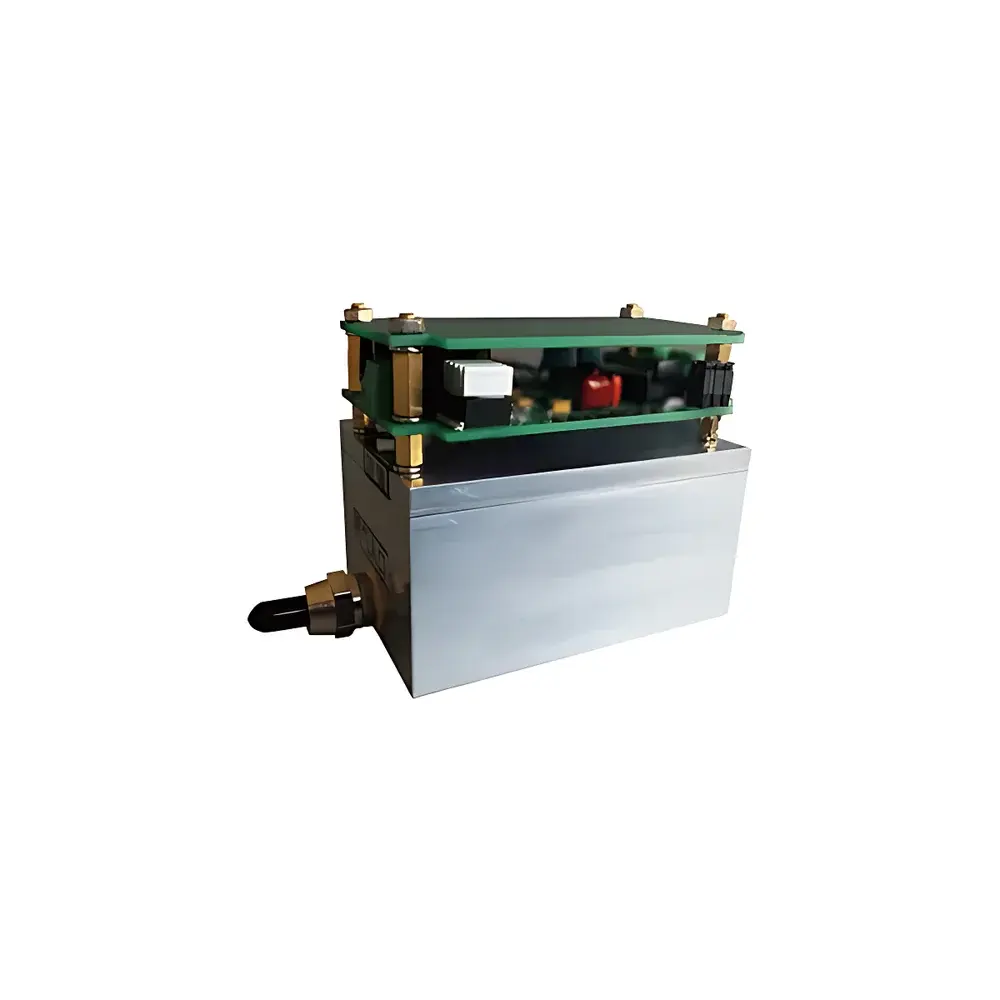
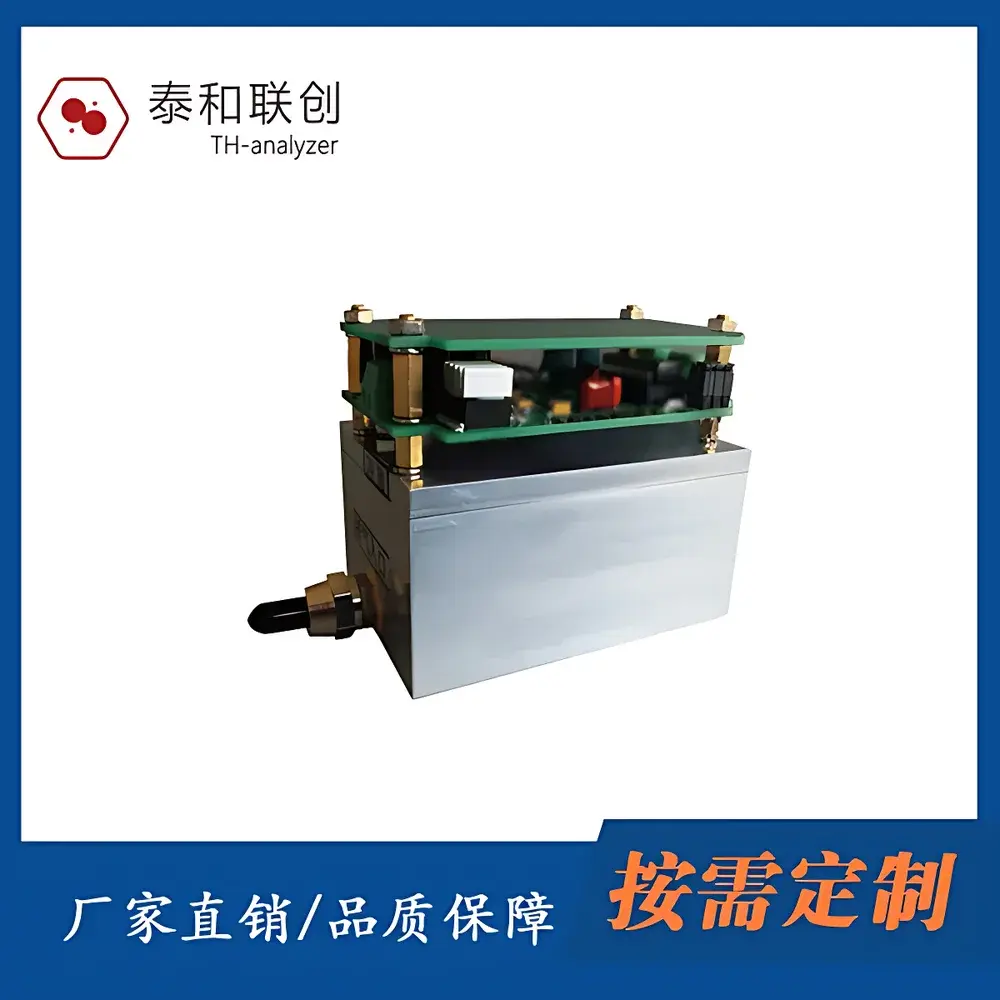
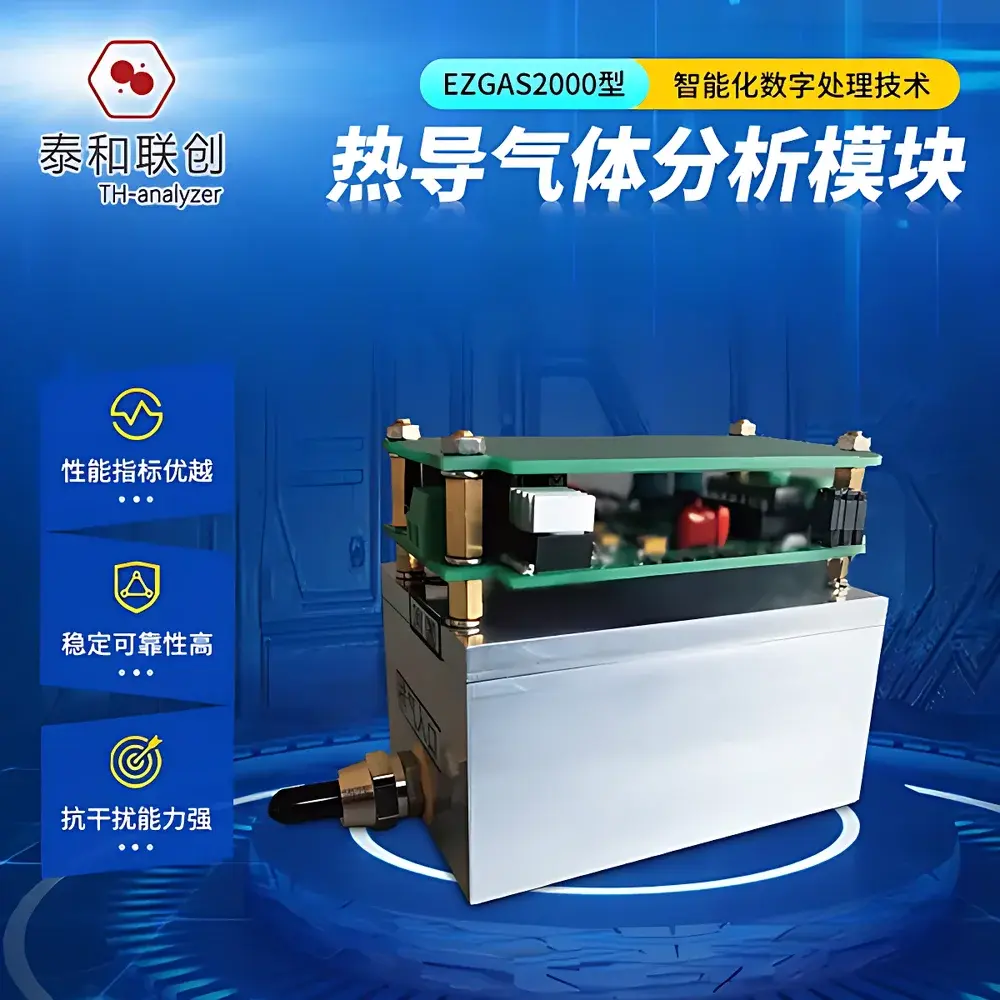
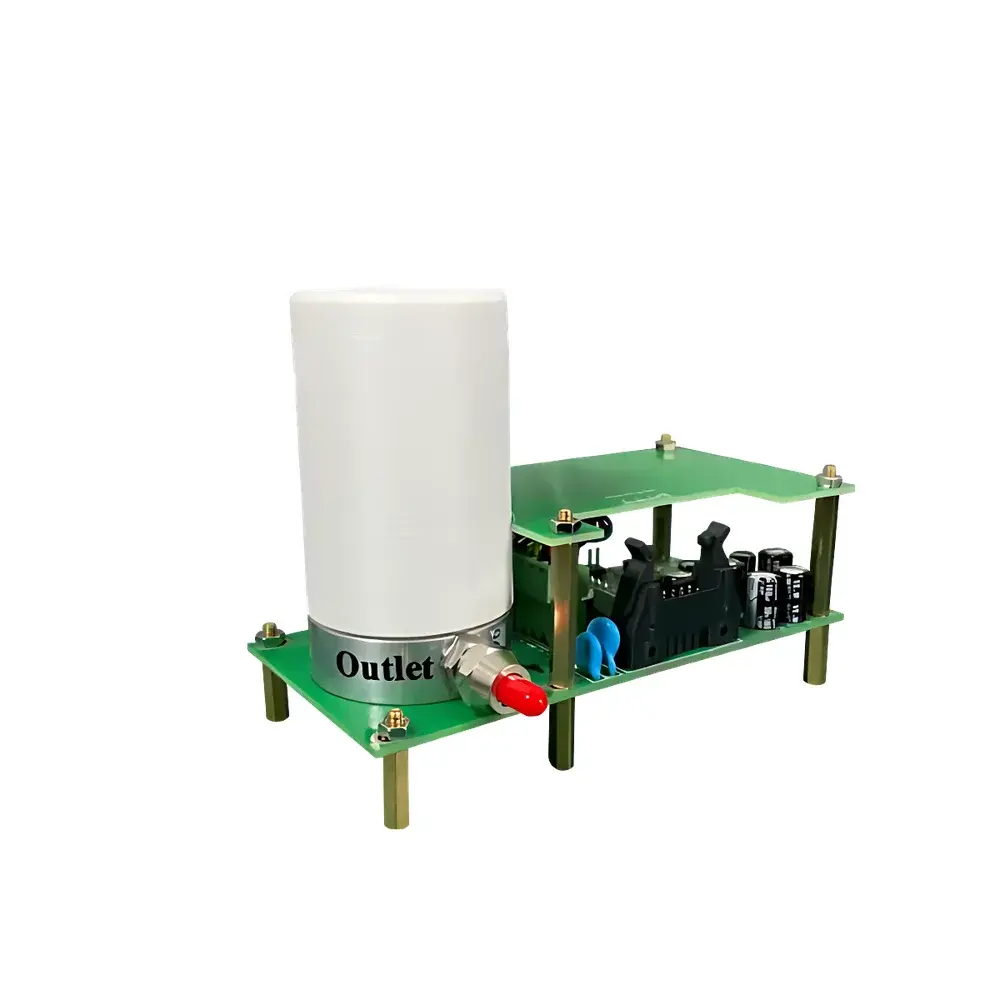
TH-analyzer EZGAS2000H2 Thermal Conductivity Hydrogen Analysis Module
| Brand | TH-analyzer |
|---|---|
| Origin | Beijing, China |
| Manufacturer | TH-analyzer Co., Ltd. |
| Model | EZGAS2000H2 |
| Measuring Range (H₂) | 0–10%, 0–50%, 0–100% |
| Linearity Error | ±2% FS |
| Stability | ±2% FS / 7 days |
| Repeatability | ≤1% FS |
| Response Time (T90) | ≤30 s |
| Operating Ambient Temperature | 5–45 °C |
| Sample Gas Pressure | ≤20 kPa |
| Sample Flow Rate | 0.2–1.0 L/min |
| Power Supply | 12–24 VDC |
| Output Signal | 4–20 mA (isolated) |
| Communication Interface | RS485 (Modbus RTU protocol) |
| Dimensions | 50 × 74 × 75 mm (W × H × D) |
| Enclosure Rating | IP65 (module housing) |
Overview
The TH-analyzer EZGAS2000H2 is a compact, embedded thermal conductivity hydrogen analysis module engineered for continuous, real-time measurement of hydrogen (H₂) concentration in binary or multi-component gas streams. It operates on the fundamental principle of thermal conductivity differential analysis: hydrogen exhibits a significantly higher thermal conductivity (~7 times that of nitrogen and ~14 times that of argon), enabling selective quantification when measured against a stable reference gas or background matrix. The module integrates a precision micro-machined thermal conductivity sensor with a low-drift Wheatstone bridge configuration, optimized for long-term baseline stability under industrial process conditions. Unlike optical or electrochemical methods, thermal conductivity detection requires no consumables, catalysts, or calibration gases—making it inherently robust for unattended operation in harsh environments such as ammonia synthesis loops, nuclear containment atmospheres, or coke oven gas monitoring. Its modular architecture allows seamless integration into OEM analyzers, PLC-controlled skids, or distributed control systems (DCS) without requiring external signal conditioning.
Key Features
- Thermal conductivity sensing core with proprietary low-drift bridge design, delivering ≤2% FS drift over 7 days—validated per IEC 61298-2 for stability under thermal cycling.
- Three factory-configurable linear ranges: 0–10%, 0–50%, and 0–100% H₂ by volume—each calibrated traceably to NIST-traceable standard gas mixtures.
- Corrosion-resistant sensor chamber compatible with sample streams containing low-concentration acidic or sulfur-bearing species (e.g., H₂S ≤50 ppm), extending service life in refinery and syngas applications.
- Compact form factor (50 × 74 × 75 mm) with IP65-rated housing—designed for panel mounting, inline sampling manifolds, or direct insertion into gas ducts with minimal pressure drop.
- Dual-output capability: isolated 4–20 mA analog output (HART-compatible wiring) plus Modbus RTU over RS485 for digital diagnostics, range scaling, and firmware updates.
- Wide operating voltage range (12–24 VDC) with reverse-polarity and overvoltage protection—suitable for battery-backed or 24 VDC plant-wide power distribution networks.
Sample Compatibility & Compliance
The EZGAS2000H2 is validated for use with dry or moderately humid non-condensing gas matrices where H₂ is the dominant high-conductivity component. It is not intended for use in explosive atmospheres without appropriate ATEX/IECEx-certified enclosures (sold separately). Compatible sample streams include synthesis gas (syngas), ammonia purge gas, nuclear coolant cover gas, argon-rich air separation tail gas, and blast furnace top gas—provided particulate loading remains below 1 mg/m³ and condensable hydrocarbons are removed upstream. The module complies with electromagnetic compatibility standards IEC 61326-1 (industrial environment) and safety standard IEC 61010-1 (measurement category II). While not intrinsically safe certified out-of-the-box, its low-power design (<1.5 W) facilitates integration into IS barrier-protected systems per IEC 60079-11.
Software & Data Management
Configuration and diagnostics are performed via Modbus RTU register mapping—supporting read/write access to span/zero offsets, damping time, alarm thresholds, and diagnostic flags (e.g., sensor fault, flow loss, temperature out-of-range). All parameter changes are logged with timestamp and source address, supporting auditability requirements under GLP and GMP frameworks. When integrated into SCADA or MES platforms, the module supports cyclic data reporting at user-defined intervals (1–60 s), enabling trend analysis and predictive maintenance modeling. Firmware updates are delivered via secure binary upload over RS485, with CRC-16 validation and rollback capability. No proprietary software is required—standard Modbus masters (e.g., Ignition, WinCC, Node-RED) can fully manage device operation.
Applications
- Ammonia synthesis loop monitoring: Real-time H₂/N₂ ratio verification upstream of the converter to optimize catalyst efficiency and prevent nitriding.
- Nuclear power plant containment atmosphere surveillance: Continuous detection of hydrogen buildup during post-LOCA scenarios per IEEE 384 and EPRI guidelines.
- Steel industry blast furnace gas (BFG) quality control: Quantification of residual H₂ content affecting calorific value and combustion stability in hot stoves.
- Laboratory-scale combustion studies: Fast-response H₂ tracking in burner rig exhausts for kinetic model validation (ASTM D7467).
- Argon purity assurance in cryogenic air separation units: Detection of H₂ impurities down to 100 ppm level in high-purity Ar streams destined for semiconductor manufacturing.
FAQ
What is the minimum detectable H₂ concentration in a nitrogen background?
At the 0–10% range setting, the practical lower limit of detection is approximately 0.1% H₂ (1000 ppm), limited by bridge noise and thermal equilibrium time—not instrument resolution.
Can the module be used for hydrogen-in-air measurements?
Yes, but accuracy degrades above ~5% H₂ due to competing thermal effects from O₂ and moisture; recommended only for inert or N₂-dominant backgrounds unless compensated via multi-sensor fusion.
Is zero/span calibration required in the field?
Factory calibration is stable for ≥6 months under controlled conditions; however, periodic verification with certified 0% and 100% H₂ standards is recommended per ISO 14644-3 for critical process applications.
Does the module support HART communication?
No—only Modbus RTU over RS485 is implemented; HART requires 4–20 mA superimposed frequency modulation and is not supported in this hardware revision.
What flow control is needed upstream?
A laminar flow element or fixed-orifice restrictor is required to maintain 0.2–1.0 L/min within ±10%; pressure-regulated mass flow controllers are advised for variable-pressure processes.