
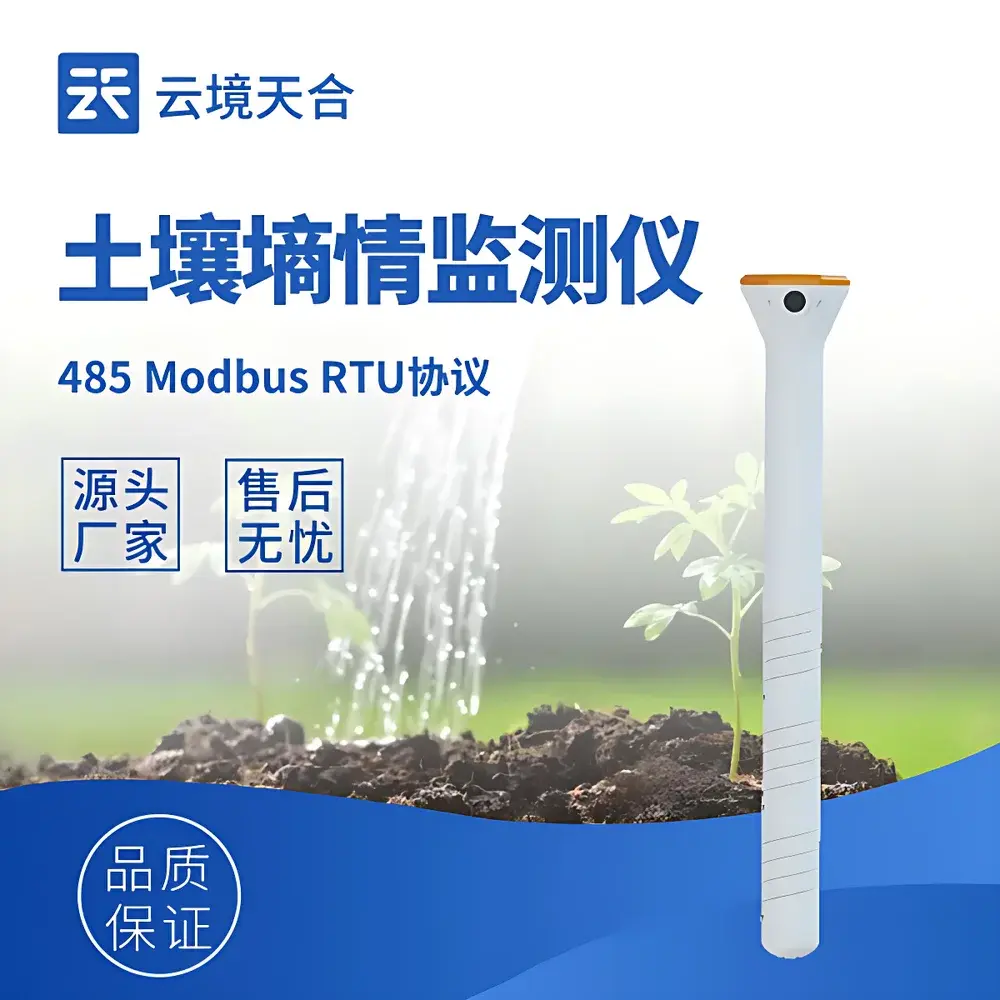
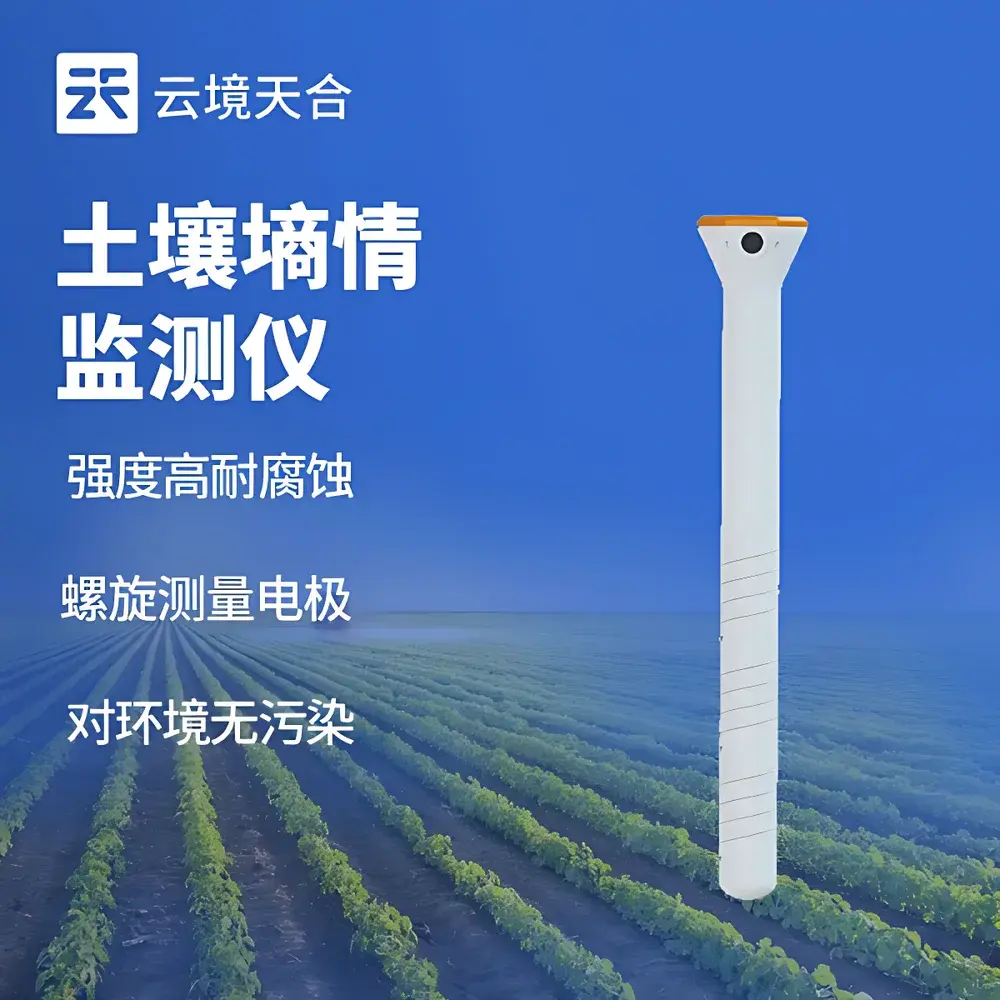
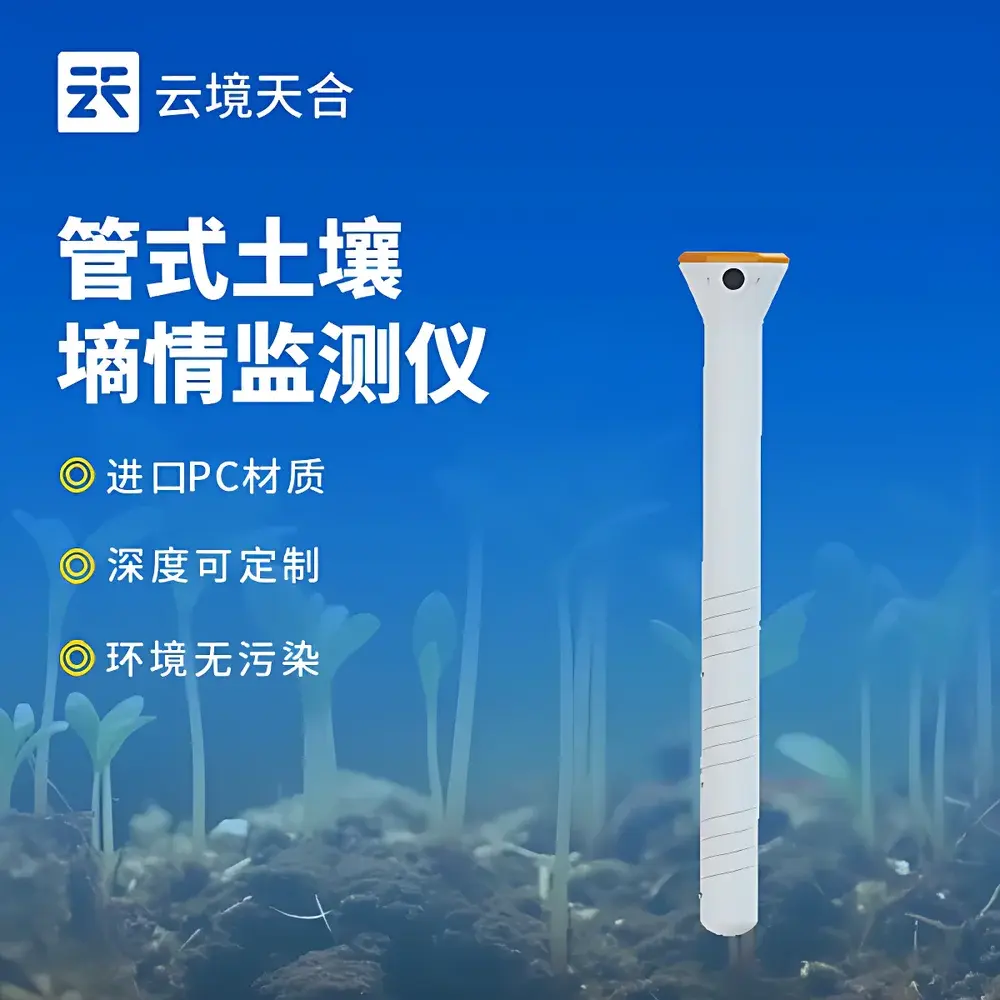
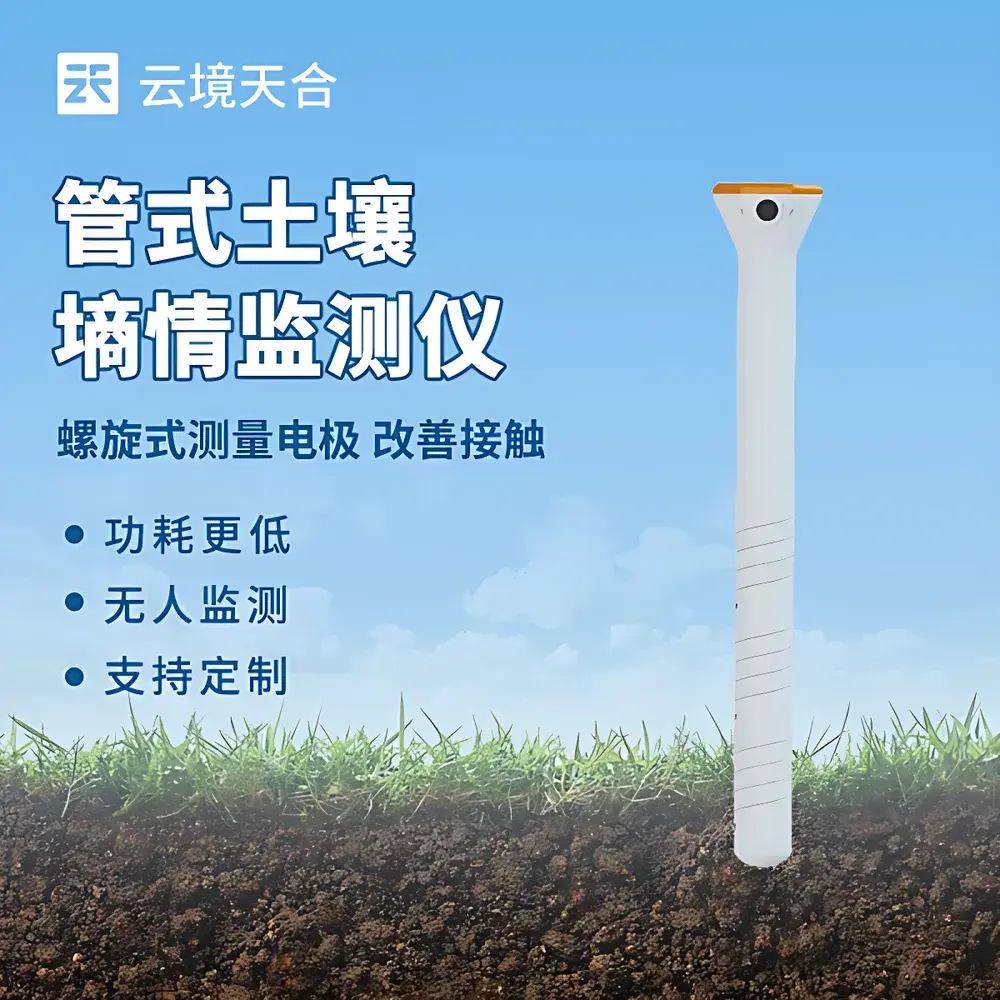
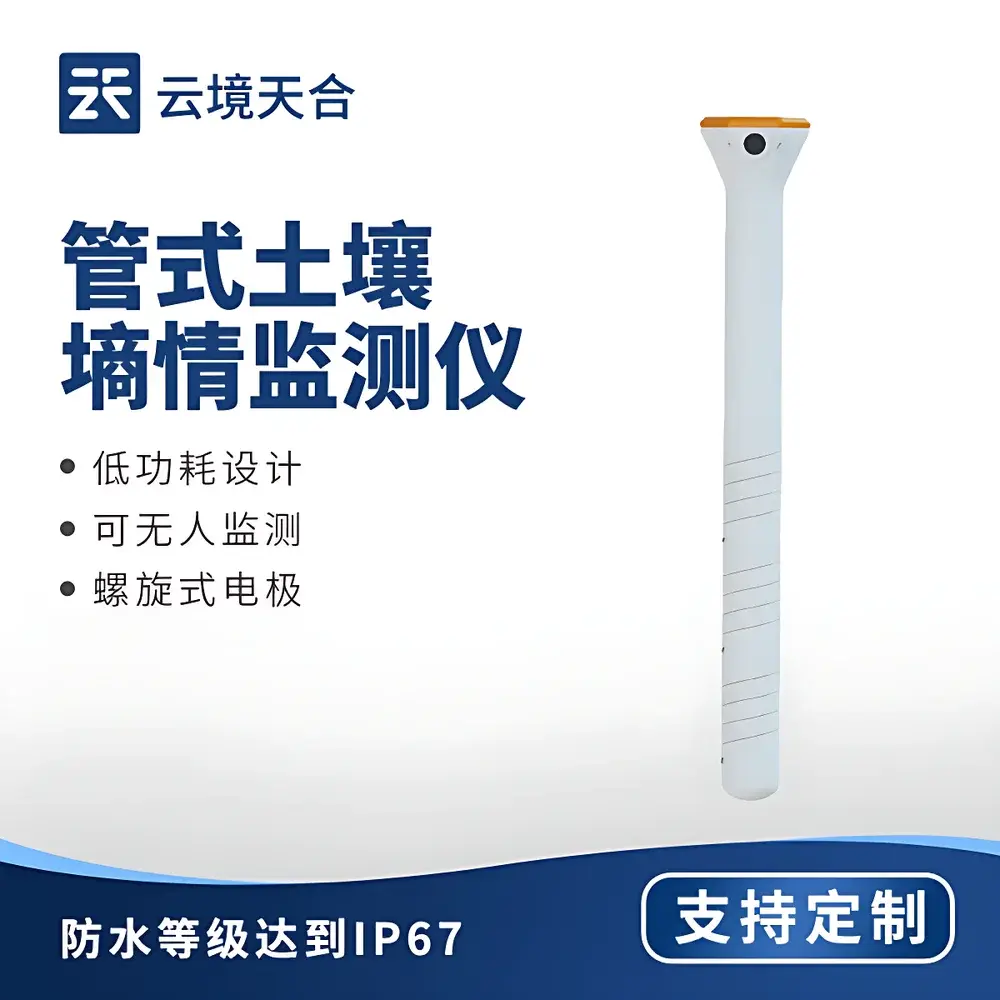
TH-GS3 Tubular Soil Moisture Profiling Sensor | Tianhe Instruments
| Brand | Tianhe Instruments |
|---|---|
| Model | TH-GS3 |
| Origin | Shandong, China |
| Manufacturer Type | OEM/ODM Manufacturer |
| Country of Origin | China |
| Power Supply | DC 12 V |
| Operating Current | 22 mA |
| Power Consumption | 0.26 W |
| Communication | RS-485 Modbus RTU |
| Measurement Layers | 3 standard (customizable up to 10) |
| Temperature Range | −30–70 °C |
| Temp. Accuracy | ±0.3 °C (−10–70 °C) |
| Temp. Resolution | 0.01 °C |
| Volumetric Water Content Range | 0–100 % |
| VWC Accuracy | ±3 % (mineral soils, <12 % organic carbon, <45 % clay) |
| VWC Resolution | 0.1 % |
| Electrical Conductivity Range | 0–20,000 µS/cm |
| EC Accuracy | ±3 % (0–10,000 µS/cm), ±5 % (full scale) |
| EC Resolution | 1 µS/cm |
| IP Rating | IP67 |
| Startup Time | 60 s |
| Housing Material | Imported polycarbonate (PC) |
| Electrode Design | Helical capacitive sensing geometry |
| Calibration | Onboard auto-calibration algorithm |
| Wireless Option | Optional LoRaWAN/NB-IoT gateway integration |
Overview
The TH-GS3 Tubular Soil Moisture Profiling Sensor is an engineered solution for high-fidelity, multi-depth soil parameter monitoring in unattended field environments. Based on time-domain reflectometry (TDR)-informed dielectric permittivity measurement principles, the sensor employs a helical electrode array embedded within a sealed, corrosion-resistant tubular housing to quantify volumetric water content (VWC), soil temperature, and bulk electrical conductivity (EC) simultaneously across discrete depth intervals. Unlike point-sensor arrays requiring multiple installations, the TH-GS3 integrates three independent sensing zones along a single vertical profile—enabling stratified analysis of soil hydrological dynamics without spatial interpolation artifacts. Its design complies with ASTM D5084 (in-situ saturated hydraulic conductivity estimation) and ISO 11274 (soil water retention characterization) methodological frameworks, supporting scientific-grade data acquisition for irrigation scheduling, vadose zone modeling, landslide precursor detection, and long-term ecological monitoring.
Key Features
- Multi-layer profiling capability: Standard configuration delivers synchronized VWC, temperature, and EC measurements at three user-defined depths (e.g., 10 cm, 30 cm, 50 cm); optional configurations support up to ten layers within ≤1 m total length.
- Helical capacitive electrode architecture: Optimized contact geometry minimizes air-gap-induced permittivity errors and improves repeatability in heterogeneous or cracked soils.
- Low-power embedded electronics: 0.26 W nominal consumption enables continuous operation on solar-charged battery systems for >12 months without maintenance.
- Ruggedized housing: Imported UV-stabilized polycarbonate tube (IP67 rated) resists chemical degradation, mechanical abrasion, and freeze-thaw cycling in buried deployments.
- Onboard digital signal processing: Real-time temperature compensation, automatic zero-offset correction, and adaptive gain adjustment ensure consistent output across seasonal thermal gradients.
- Standardized industrial interface: RS-485 Modbus RTU protocol ensures seamless integration with SCADA platforms, telemetry gateways, and edge-computing nodes compliant with IEC 61158 and ISA-88 standards.
Sample Compatibility & Compliance
The TH-GS3 is validated for mineral soils with organic carbon content ≤12 % and clay fraction ≤45 %. In high-organic or high-clay matrices, empirical calibration using site-specific soil samples is recommended per ISO 11276 guidelines. The sensor meets CE electromagnetic compatibility (EMC) Directive 2014/30/EU requirements and conforms to RoHS 2011/65/EU restrictions on hazardous substances. Its passive dielectric measurement principle avoids electrolytic polarization effects common in DC-based EC sensors, enabling stable readings under variable redox conditions. All firmware and calibration coefficients are traceable to NIST-traceable reference standards via manufacturer’s internal metrology lab (ISO/IEC 17025 accredited).
Software & Data Management
Raw sensor outputs are delivered as calibrated digital values via Modbus register mapping (holding registers 40001–40099). Data logging intervals are configurable from 1 minute to 24 hours. When paired with Tianhe’s optional cloud platform (Tianhe Cloud v3.2), users access time-series visualization, anomaly detection alerts, and automated report generation aligned with FAO-56 crop water requirement models. Audit trails, user role permissions, and encrypted TLS 1.2 transmission satisfy GLP/GMP data integrity expectations. The system supports FDA 21 CFR Part 11-compliant electronic signatures when deployed in regulated agricultural research trials.
Applications
- Precision irrigation management in orchards, vineyards, and greenhouse production systems
- Vadose zone flux modeling for groundwater recharge assessment and nitrate leaching studies
- Early-warning monitoring of slope saturation preceding shallow landslides
- Soil health monitoring in long-term agroecological experiments (e.g., USDA LTER networks)
- Validation of satellite-derived soil moisture products (e.g., SMAP, Sentinel-1 SAR)
- Calibration and ground-truthing of numerical hydrological models (HYDRUS-1D, SWAP)
FAQ
What is the recommended minimum spacing between adjacent TH-GS3 units?
A minimum horizontal separation of 3 meters is required to prevent electromagnetic crosstalk and ensure measurement independence.
Can the TH-GS3 be installed in saline or acidic soils?
Avoid installation in soils with pH <4.0 or EC >20,000 µS/cm; prolonged exposure may accelerate housing degradation and reduce long-term calibration stability.
Is factory calibration sufficient for all soil types?
Factory calibration covers typical loam and sandy loam profiles; for peat, vertisol, or anthropogenic fill, site-specific calibration using gravimetric sampling is strongly advised.
Does the sensor require periodic recalibration in the field?
No scheduled recalibration is needed under normal operating conditions; however, annual verification against laboratory-determined reference samples is recommended for regulatory compliance.
What installation method yields highest measurement fidelity?
The auger-and-grout method—using homogenized native soil slurry—is preferred over direct insertion to eliminate interfacial air voids and ensure uniform dielectric coupling.







