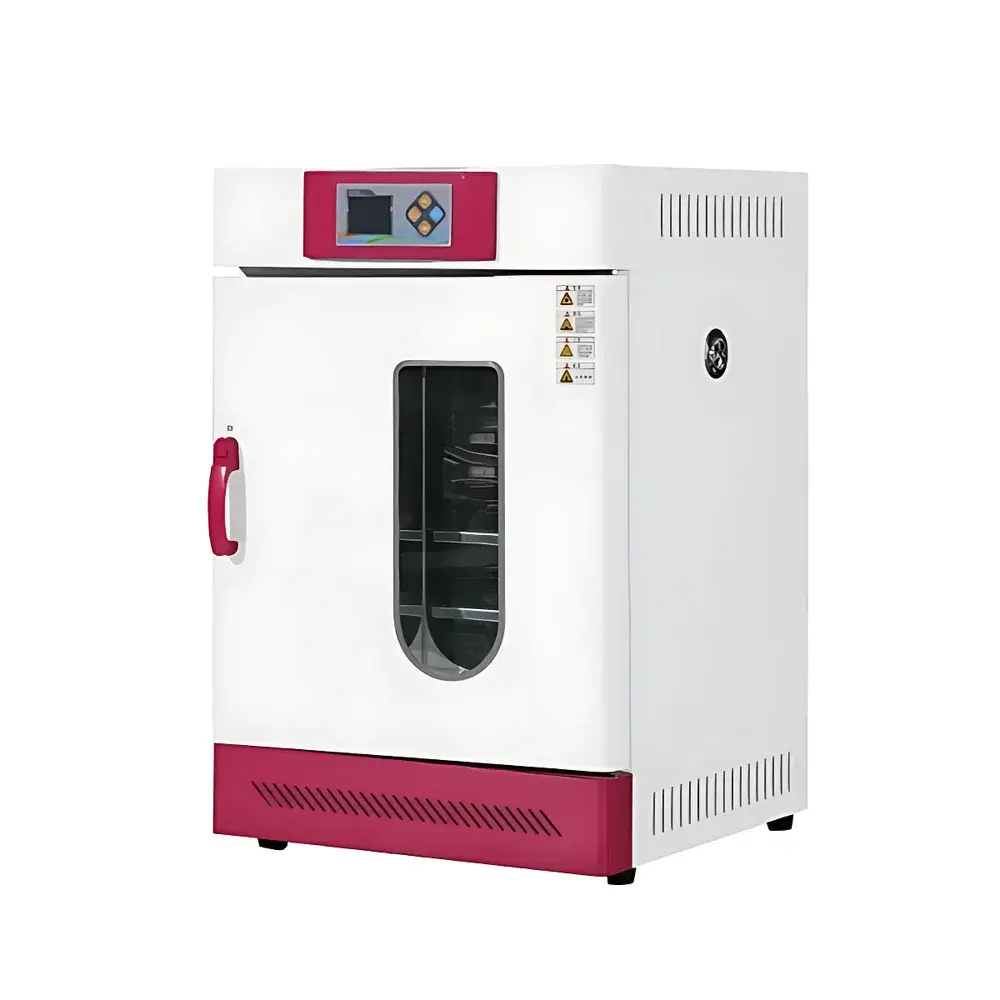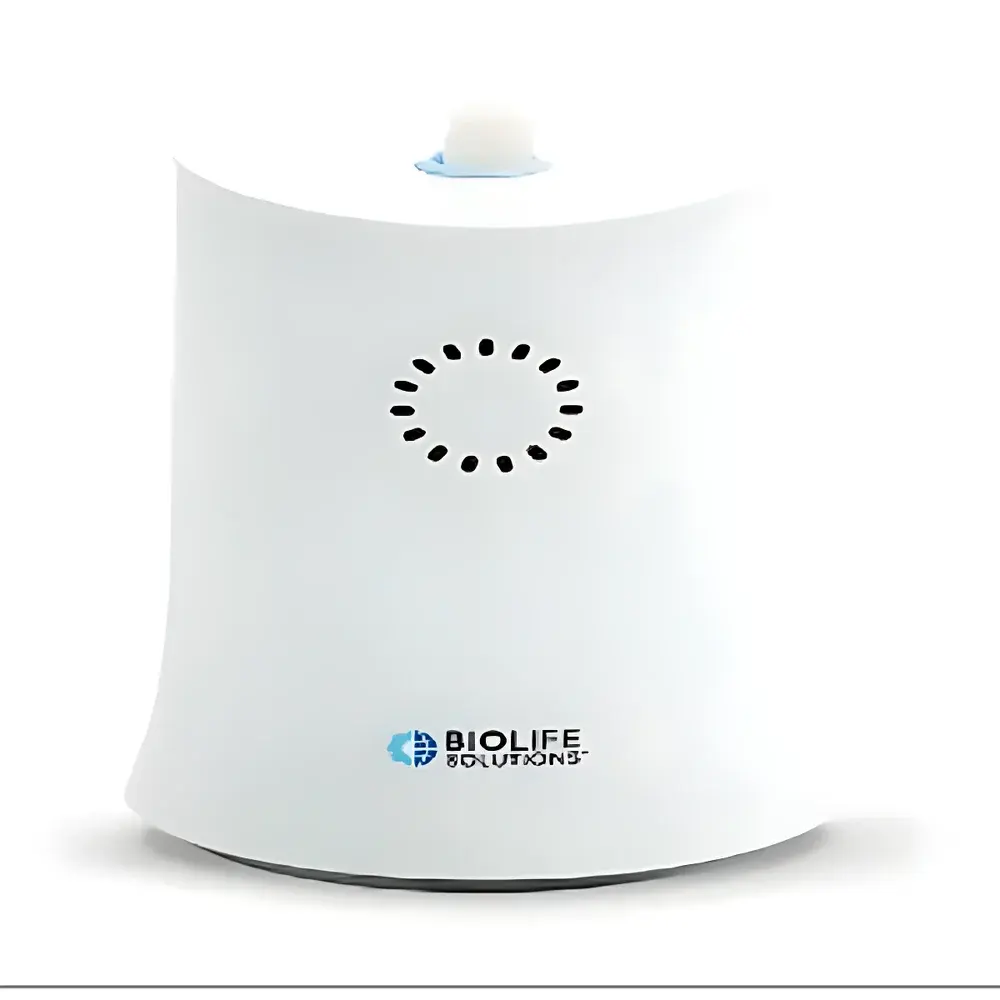
ThawSTAR® CFT2 Automated Cell Thawing System
| Brand | BioLife Solutions |
|---|---|
| Origin | USA |
| Model | CFT2 |
| Type | Fully Automated |
| Compliance | CE (EMC & Safety), EN 61010-1, RoHS, WEEE |
| Transport Compatibility | Compatible with ThawSTAR® AST-602 Cryo-Transport Box (-70 °C stable) |
| Operation | Dry, water-free thawing |
| Control | STAR™ Intelligent Temperature Sensing Technology |
| Sample Ejection | Motorized auto-eject with audible and visual completion alert |
Overview
The ThawSTAR® CFT2 Automated Cell Thawing System is an engineered solution for standardized, traceable, and contamination-minimized cryopreserved cell recovery. Unlike conventional water bath or metal block thawing methods—which introduce variability, cross-contamination risk, and operator-dependent endpoints—the CFT2 implements a dry, sensor-driven thermal profile based on real-time conductive temperature monitoring at the sample interface. Utilizing BioLife Solutions’ proprietary STAR™ (Sensing, Timing, Activation, Regulation) technology, the system continuously measures thermal resistance across the cryovial wall to detect the precise moment of phase transition from solid to liquid state—effectively identifying the thaw endpoint without user interpretation. This physics-based endpoint detection ensures reproducible thermal exposure, critical for maintaining membrane integrity, metabolic viability, and functional phenotype in sensitive primary cells—including hematopoietic stem cells, T cells, B cells, and induced pluripotent stem cell (iPSC)-derived populations.
Key Features
- Fully automated, single-button operation with no manual timing or visual assessment required
- Dry, water-free thawing architecture eliminates microbial contamination risk associated with shared water baths and avoids condensation-related handling errors
- Motorized sample ejection mechanism delivers thawed vials directly into sterile field upon completion
- Integrated dual-mode alert system: audible tone + status LED illumination confirms process termination
- Compact footprint (20.3 × 15.2 × 17.8 cm) enables direct placement inside Class II biological safety cabinets (BSCs), supporting aseptic workflow integration
- Pre-validated thaw profiles optimized for standard 1–2 mL cryovials and cryobags (up to 25 mL); compatible with major brands including Nunc, Corning, Greiner, and Thermo Fisher
- Passive thermal stabilization design requires no external cooling or heating utilities—operates solely on standard 100–240 VAC input
Sample Compatibility & Compliance
The CFT2 accommodates 1–2 mL externally threaded cryovials (e.g., Nunc CryoTube®, Corning Cryogenic Vials) and flat-bottom cryobags (e.g., CryoStore®, BioLife Solutions CryoBag®). Its mechanical and thermal architecture has been verified per IEC/EN 61010-1 for laboratory equipment safety, and certified to CE marking requirements covering electromagnetic compatibility (EMC) and low-voltage directive compliance. While not classified as a medical device under FDA 21 CFR Part 820, the system supports Good Manufacturing Practice (GMP) and Good Laboratory Practice (GLP) environments through built-in operational consistency, audit-ready process repeatability, and compatibility with electronic lab notebook (ELN) and LIMS integration via optional timestamped log export. When paired with the validated AST-602 Cryo-Transport Box, the end-to-end cold chain maintains ≤ –70 °C stability for ≥72 hours—enabling compliant off-site cell shipment and receipt protocols aligned with ISCT and FACT-JACIE standards.
Software & Data Management
The CFT2 operates without embedded firmware or network connectivity, relying instead on deterministic analog circuitry and calibrated thermistor arrays for endpoint detection—ensuring regulatory simplicity and eliminating cybersecurity vulnerabilities. All operational parameters are fixed at manufacture; no user-adjustable settings exist, thereby enforcing procedural standardization. Each unit ships with a Certificate of Conformance and factory calibration record traceable to NIST standards. For quality documentation, users may manually record batch ID, operator ID, start time, and completion time in controlled logs—a practice consistent with ISO 9001:2015 clause 8.5.2 (Identification and traceability) and USP guidelines for cell therapy product handling. Optional accessories include printable thaw log templates and SOP templates aligned with ASTM E2577-20 (Standard Guide for Validation of Analytical Methods Used in Biopharmaceutical Manufacturing).
Applications
- Standardized thawing of clinical-grade CAR-T, NK, and dendritic cell products in GMP-compliant manufacturing suites
- High-throughput thawing of banked primary human hepatocytes, PBMCs, and mesenchymal stromal cells (MSCs) in translational research labs
- Reproducible recovery of freeze-sensitive B lymphocytes and antigen-presenting cells where >90% post-thaw viability and functional antigen uptake are required
- Integration into QC release testing workflows where thaw consistency directly impacts assay sensitivity (e.g., flow cytometry, ELISpot, metabolic flux analysis)
- Support of decentralized cell therapy models by enabling identical thaw conditions across satellite processing sites
FAQ
Does the CFT2 require routine recalibration?
No. The system uses factory-calibrated, drift-compensated thermistors with no user-serviceable components. Calibration verification is performed during annual preventive maintenance using NIST-traceable reference standards.
Can the CFT2 be used for thawing cryopreserved tissues or organoids?
It is validated exclusively for suspension-based cellular products in standard cryovials and flat cryobags. Thawing of solid-tissue constructs or hydrogel-embedded organoids is not supported due to heterogeneous thermal conductivity and undefined phase-transition signatures.
Is the CFT2 compatible with liquid nitrogen vapor-phase storage retrieval?
Yes—vials may be transferred directly from vapor-phase LN2 dewars to the CFT2 chamber without intermediate warming steps, provided gloves remain dry and frost-free to ensure proper thermal contact.
How does the CFT2 support regulatory submissions?
By replacing subjective, non-recorded thaw methods with a deterministic, repeatable process, it strengthens process validation packages for IND/IMPD filings and facilitates inspection readiness for FDA pre-approval inspections and EMA GMP audits.