
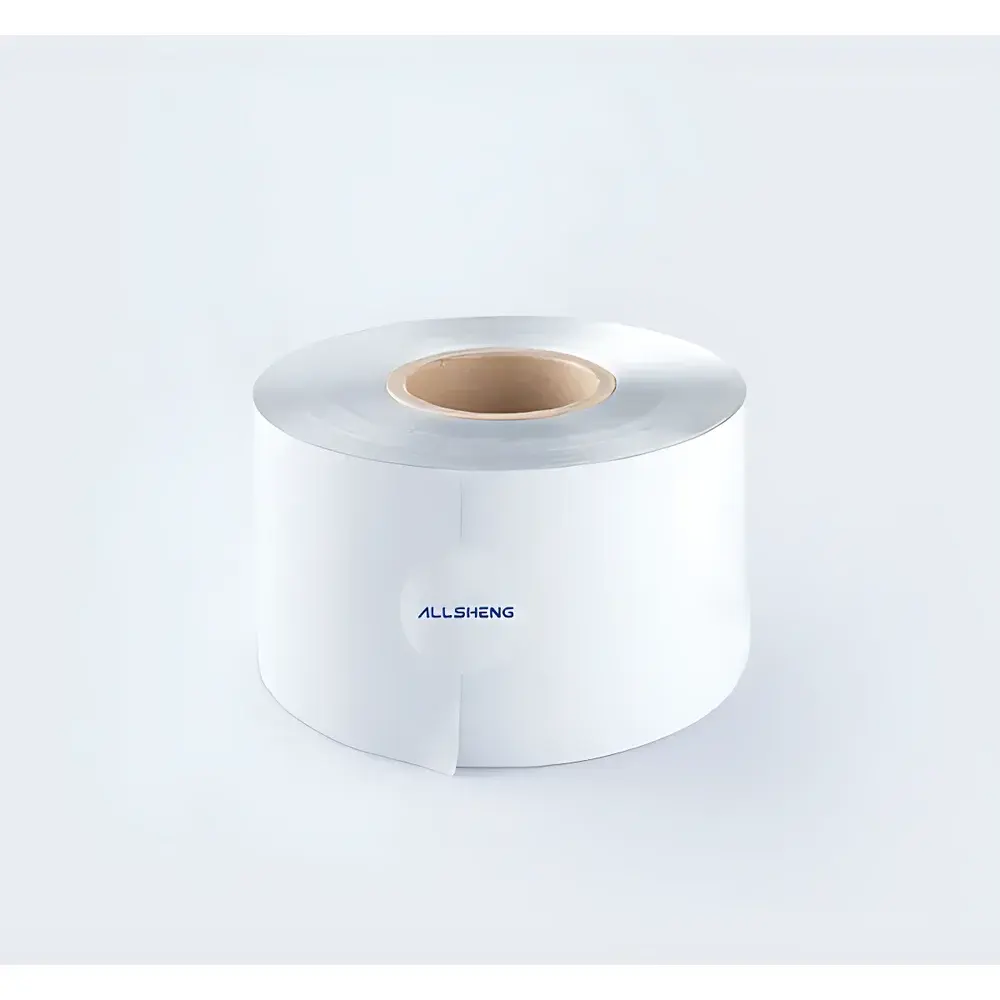
Thermal Sealable Piercable Membrane – ALLSHENG AS-F19B
| Brand | ALLSHENG (Hangzhou) |
|---|---|
| Origin | Zhejiang, China |
| Manufacturer Type | Authorized Distributor |
| Country of Origin | China |
| Model | AS-F19B |
| Material | Aluminum foil laminated with heat-activatable polymer layer |
| Thickness | 30 µm |
| Width | 80 mm |
| Roll Length | 200 m |
| Piercability | Compatible with standard 96-well and 384-well plate formats |
| Sealing Temperature Range | 120–160 °C (dependent on sealing time and pressure) |
| Seal Integrity | Validated for storage at –80 °C, –20 °C, and ambient conditions |
| Compliance | Manufactured under ISO 9001-certified quality management system |
| Packaging | Individually sealed in aluminum-laminated pouches to prevent moisture uptake and oxidation |
Overview
The ALLSHENG AS-F19B Thermal Sealable Piercable Membrane is a precision-engineered aluminum-based sealing film designed specifically for high-integrity sample containment and repeated access in microplate-based workflows. Unlike conventional non-piercable heat seals or adhesive films, the AS-F19B integrates a proprietary thin-layer polymer coating on a 30 µm aluminum substrate—enabling reliable thermal bonding to polypropylene and polystyrene microplates while maintaining consistent, low-resistance piercability across thousands of pipetting cycles. Its performance is grounded in controlled interfacial adhesion thermodynamics: during thermal sealing, the polymer layer undergoes transient softening and flow, forming a hermetic bond with the plate rim without delamination or channel formation. Post-sealing, the membrane retains structural memory—allowing standard 200 µL or 1000 µL pipette tips (including filtered and low-retention variants) to penetrate cleanly without burring, tearing, or residual particulate generation. This dual functionality supports both long-term cryogenic storage and high-throughput re-access in genomics, compound screening, and biobanking applications.
Key Features
- Uniform 30 µm aluminum core with solvent-free, heat-activated polymer lamination—ensuring batch-to-batch consistency in seal strength and puncture force
- Optimized width (80 mm) and roll length (200 m) for compatibility with benchtop thermal sealers (e.g., Thermo Scientific PlateMax, PerkinElmer Janus) and integrated robotic sealing modules
- Validated performance across temperature extremes: maintains integrity from –80 °C to +60 °C after sealing, with no observable delamination or pinhole formation under accelerated aging (40 °C / 75% RH for 30 days)
- Chemical resistance profile includes full compatibility with common assay solvents—DMSO (up to 100%), methanol, ethanol, acetonitrile, and phosphate-buffered saline—without swelling or extractables leaching
- Low-particulate manufacturing environment: produced in ISO Class 7 cleanroom conditions; certified free of detectable endotoxins (<0.03 EU/mL) and human DNA contamination (qPCR-negative at 1 pg/µL sensitivity)
Sample Compatibility & Compliance
The AS-F19B membrane is validated for use with ANSI/SLAS-standard 96-well and 384-well plates made from polypropylene (PP), cyclo-olefin copolymer (COC), and crystal-grade polystyrene (PS). It demonstrates >99.9% seal success rate (n=1,200 plates per lot) when applied using calibrated dwell-time protocols (e.g., 1.5 sec @ 140 °C, 1.2 bar pressure). All production lots undergo 100% visual inspection for pinholes and edge defects, followed by helium leak testing (detection limit: 1 × 10⁻⁸ mbar·L/s). Documentation includes Certificate of Analysis (CoA) with traceable thickness measurement (micrometer, ±0.5 µm tolerance), peel strength data (ASTM F904), and extractables profiling per USP <661.1>. The product is supplied in double-barrier aluminum-laminated packaging compliant with ICH Q5C stability requirements.
Software & Data Management
While the AS-F19B is a consumable—not an instrument—it integrates seamlessly into LIMS- and ELN-linked workflows via standardized barcode labeling (GS1-128 format printed on each roll label). Each lot number is cross-referenced in ALLSHENG’s Quality Management System (QMS) to full traceability records—including raw material COAs, in-process QC logs, and environmental monitoring data from the production cleanroom. For GxP environments, the CoA includes audit-ready metadata (operator ID, equipment calibration status, timestamped test results), supporting FDA 21 CFR Part 11 compliance when paired with validated electronic record systems.
Applications
- Cryopreserved biobank storage: Maintains vapor-phase integrity during liquid nitrogen transfer and long-term –80 °C archive storage
- High-throughput screening (HTS): Enables repeat dosing and retesting without plate resealing or sample transfer
- mRNA and oligonucleotide handling: Prevents RNase adsorption and minimizes surface-induced degradation due to inert aluminum interface
- Automated NGS library prep: Compatible with deck-mounted piercing tools on Agilent Bravo and Biomek i7 platforms
- Regulatory submission support: Used in GLP-compliant toxicology studies where plate re-opening must be documented and auditable
FAQ
What is the recommended sealing temperature range for optimal bond integrity without over-compression?
Seal at 120–160 °C for 1–2 seconds under controlled pressure (1.0–1.5 bar); exact parameters depend on plate material and sealer model—validation required per instrument.
Can AS-F19B be used with PCR plates requiring optical clarity?
No—this is an opaque aluminum-based film intended for storage and liquid handling, not optical detection. For qPCR, use transparent polyester or polyolefin alternatives.
Is the membrane compatible with automated tip-piercing mechanisms on liquid handlers?
Yes—validated with Hamilton STAR, Tecan Fluent, and Beckman Biomek platforms using standard P200/P1000 tips at default penetration speed and force settings.
Does the film require pre-conditioning before use?
No conditioning is required; however, store unopened rolls at 15–25 °C and 30–60% RH. Avoid exposure to direct sunlight or high humidity prior to sealing.
How is lot-to-lot consistency ensured during manufacturing?
Each production lot undergoes thickness mapping (10-point grid), peel strength verification (n=10 samples), and helium leak testing. Full QC data is archived for 10 years per ISO 9001 requirements.



