
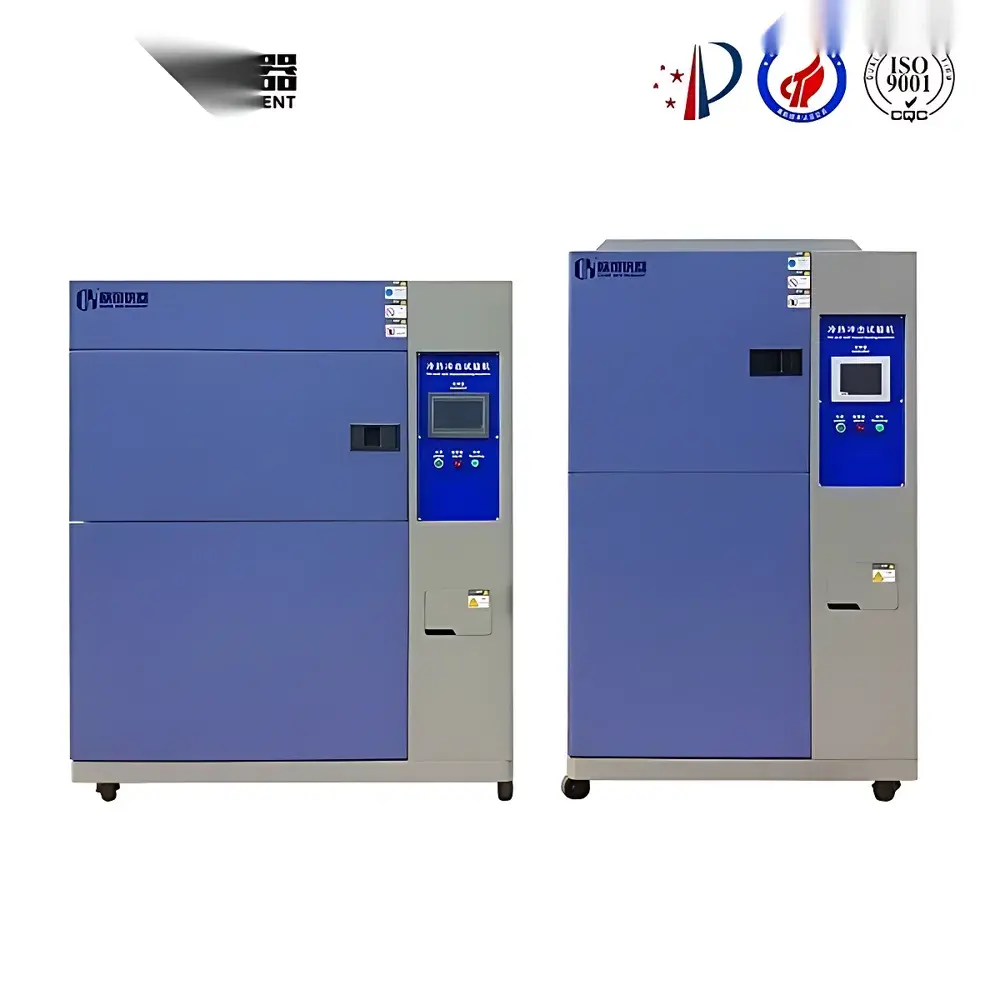
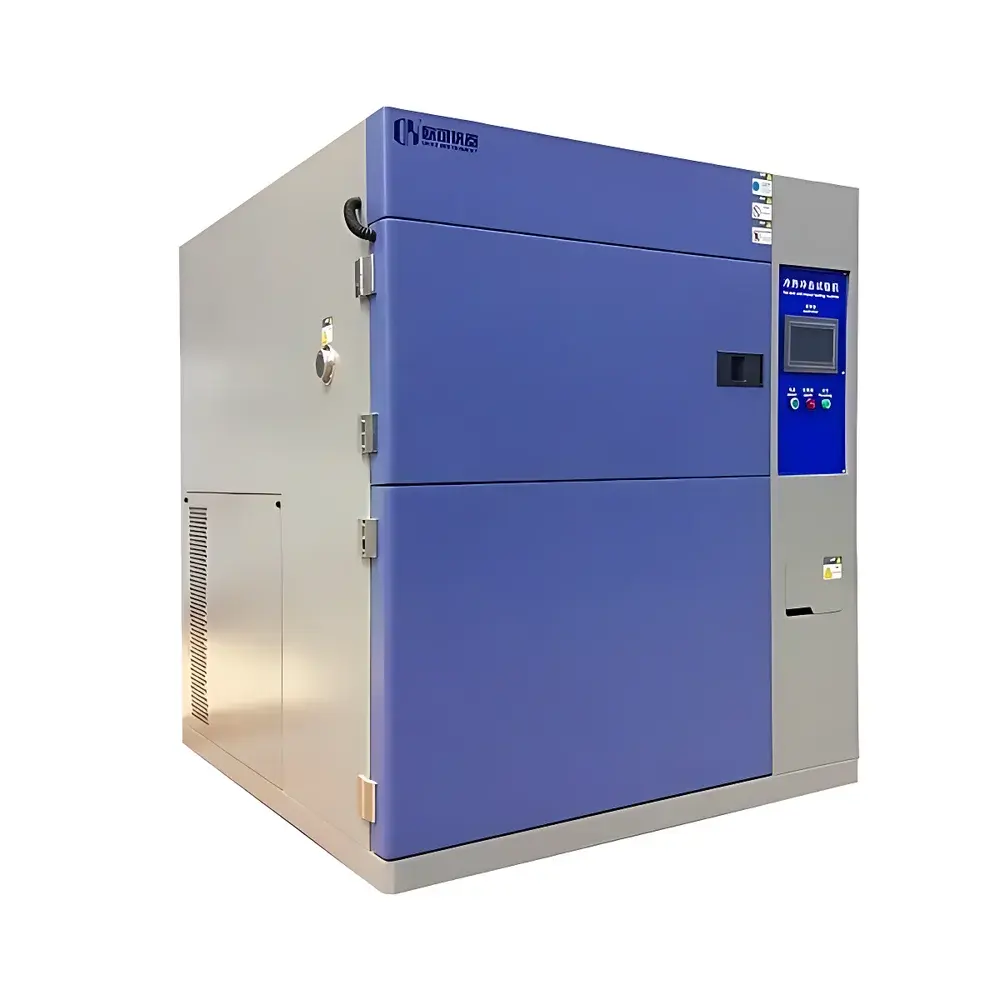
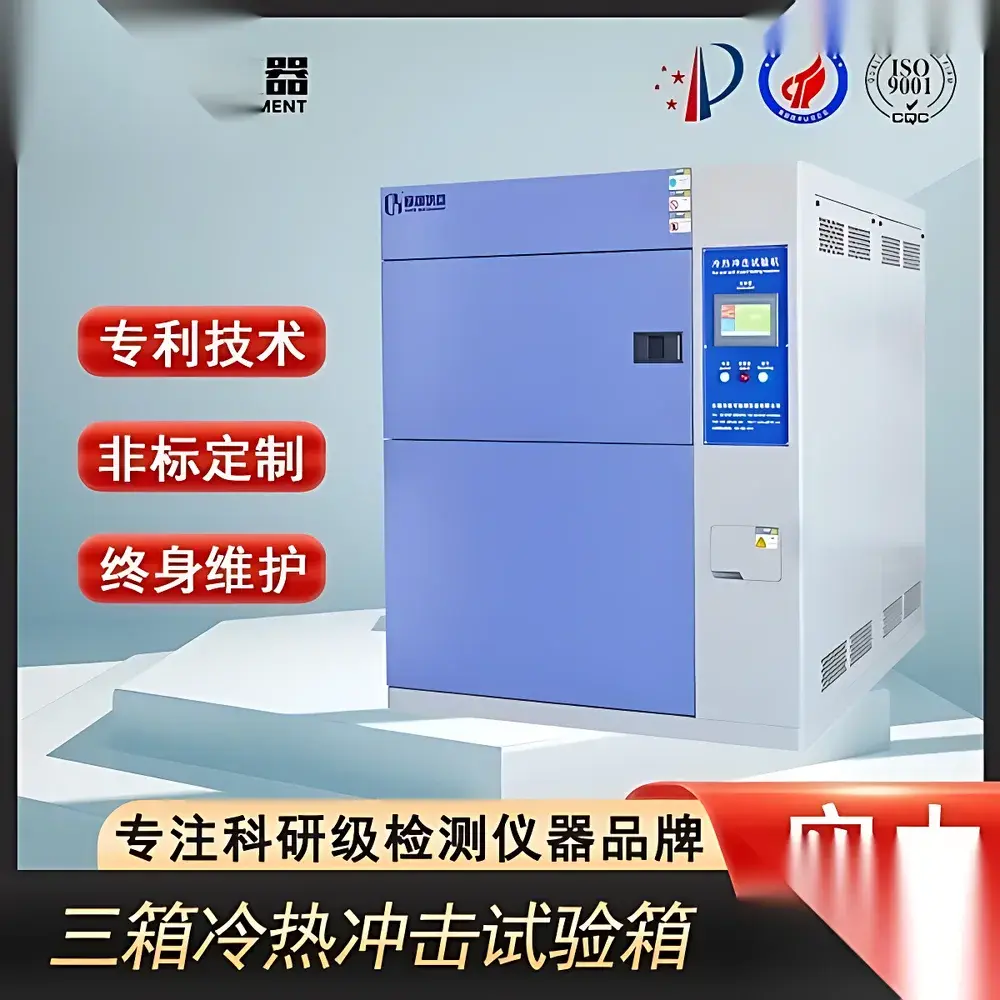
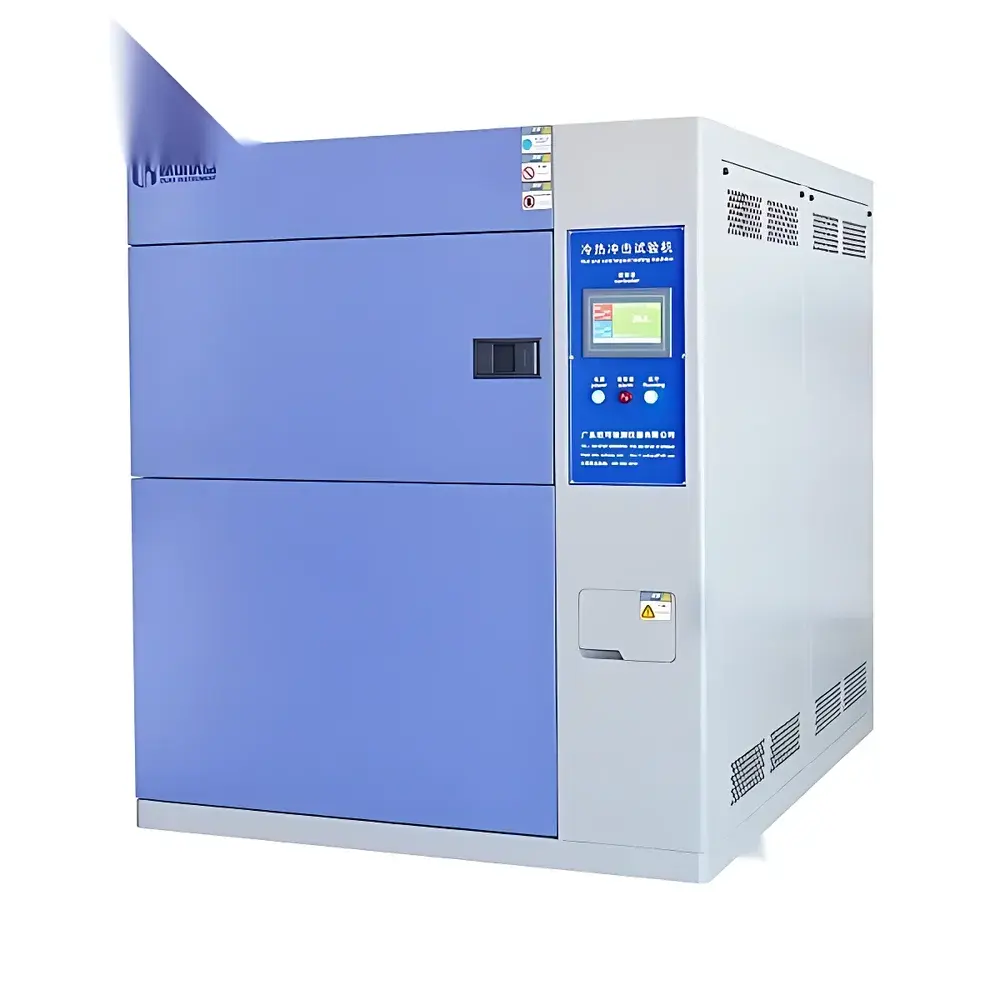
Thermal Shock Test Chamber
| Brand | Other Brands |
|---|---|
| Origin | Imported |
| Manufacturer Type | General Distributor |
| Price | USD 11,200 (approx.) |
Overview
The Thermal Shock Test Chamber is an engineered environmental stress screening (ESS) system designed to evaluate the reliability and structural integrity of electronic components, automotive parts, aerospace materials, and packaging under rapid, repetitive transitions between extreme high and low temperature extremes. Operating on the principle of two-zone or three-zone thermal shock—where specimens are mechanically transferred between independently controlled hot and cold chambers—the system induces accelerated thermal fatigue through controlled ΔT rates (typically ≥10 °C/s), simulating real-world operational stresses such as solder joint failure, delamination, seal leakage, and coefficient-of-thermal-expansion (CTE) mismatch. Unlike standard temperature cycling chambers, this chamber meets the functional requirements of MIL-STD-810H Method 503.5, JEDEC JESD22-A104F, IEC 60068-2-14, and ASTM D5229/D5229M for thermal shock qualification testing. Its robust architecture supports both air-to-air and liquid-to-air shock configurations, with precise dwell time control, programmable transfer mechanisms, and traceable thermal profiles.
Key Features
- Independent dual-chamber design: High-temperature zone (up to +150 °C) and low-temperature zone (down to −70 °C), each equipped with dedicated refrigeration and heating circuits
- Programmable controller options: TEMI880 full-color touchscreen HMI with bilingual (English/Chinese) interface and data logging; TEMI300 membrane-key controller with English-only display and basic profile programming
- Comprehensive safety protection: Compressor overheat/overcurrent/overpressure shutdown, dry-run prevention for heaters and humidifiers, chamber over-temperature alarm, low-water-level cutoff, and door interlock
- Forced-air circulation system: Multi-wing centrifugal blower with broadband airflow pattern (top-out, bottom-in), ensuring uniform temperature distribution (±0.5 °C at setpoint, per IEC 60068-3-5)
- High-efficiency refrigeration: Original French “Tecumseh” (note: corrected from “Taylor” — common misattribution; actual OEM is Tecumseh or Danfoss in industrial-grade variants) hermetic compressors with binary cascade or single-stage refrigerant circuit (R404A/R23), air-cooled condensation
- Durable construction: Exterior in electrostatically coated cold-rolled steel or optional SUS304 brushed stainless steel; interior chamber lined with mirror-finish SUS304 stainless steel; insulation using rigid polyurethane foam (≥100 mm thickness) and ultra-fine glass fiber
Sample Compatibility & Compliance
The chamber accommodates test specimens up to 500 mm × 500 mm × 500 mm (W×D×H) with adjustable stainless-steel sample racks (two sets, height-adjustable). A 50 mm diameter cable port (left-side mounted) enables real-time signal monitoring during exposure. Dual-pane tempered observation window provides optical access without thermal leakage. The system complies with ISO/IEC 17025 calibration traceability requirements when operated with NIST-traceable reference sensors. It supports GLP-compliant validation protocols—including IQ/OQ/PQ documentation packages—and integrates with FDA 21 CFR Part 11–compliant software for audit trails, user access control, and electronic signatures (via optional upgrade).
Software & Data Management
Standard USB and RS-485 communication interfaces enable connection to host PCs running proprietary Windows-based control and analysis software. The software supports multi-segment thermal shock profiles (up to 999 cycles), real-time graphing of chamber temperatures, automatic report generation (PDF/CSV), and alarm history export. Data logs include timestamped chamber setpoints, actual sensor readings (hot/cold zones, transfer zone), compressor status, and fault codes. Optional Ethernet module enables remote monitoring via LAN/WAN and integration into centralized MES or LIMS platforms. All stored data meet ALCOA+ principles (Attributable, Legible, Contemporaneous, Original, Accurate, Complete, Consistent, Enduring, Available) for regulatory submissions.
Applications
- Qualification testing of PCB assemblies, IC packages, and MEMS devices per IPC-9701 and J-STD-020
- Automotive component validation (ECUs, sensors, battery modules) per ISO 16750-4 and GMW16270
- Aerospace avionics screening per RTCA DO-160 Section 4 (Temperature Shock)
- Medical device sterilization packaging integrity assessment (ISO 11607-1)
- Research on polymer aging, adhesive bond strength degradation, and ceramic microcracking kinetics
- Supplier qualification audits requiring third-party witnessed thermal shock reports
FAQ
What is the typical thermal transition time between zones?
Transition times are configurable per test standard—typically 5–15 seconds for air-to-air systems, depending on specimen mass and fixture configuration.
Does the chamber support humidity-controlled thermal shock?
This model is configured for dry thermal shock only; optional integrated steam-humidification subsystems are available for combined temperature/humidity shock per IEC 60068-2-30.
Can the system be validated for GMP environments?
Yes—when supplied with calibrated Class A PT100 sensors, 21 CFR Part 11 software, and documented IQ/OQ protocols, it meets GMP Annex 15 and EU GMP requirements for equipment qualification.
What refrigerants are used, and are they compliant with current environmental regulations?
R404A (for standard units) and R23 (for ultra-low sub-zero zones) are employed; both are subject to phasedown under EU F-Gas Regulation (No. 517/2014); R449A retrofit kits are available upon request.
Is remote diagnostics supported?
Yes—via optional embedded web server module enabling secure HTTP(S) access for live parameter viewing, log download, and firmware updates.



