
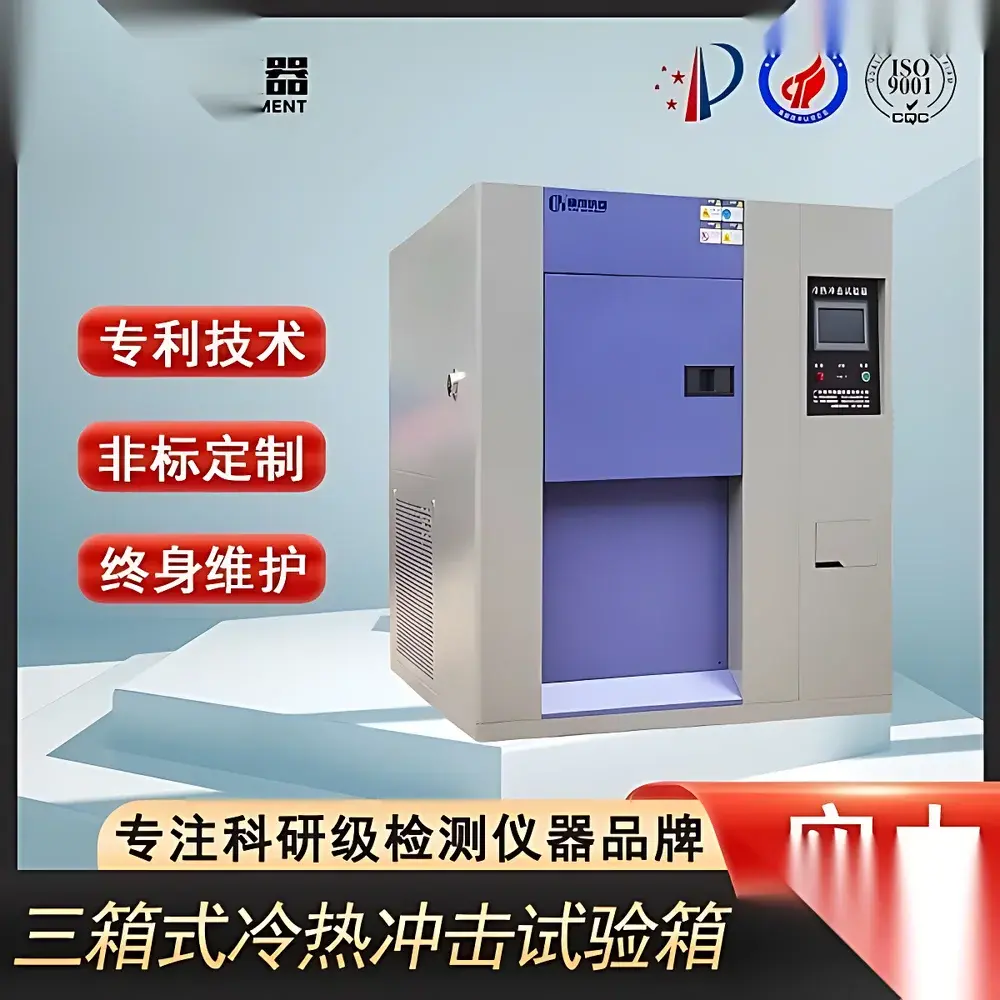
Thermal Shock Test Chamber
| Brand | Other Brands |
|---|---|
| Origin | Imported |
| Manufacturer Type | General Distributor |
| Price | USD 11,200 (FOB) |
Overview
The Thermal Shock Test Chamber is an engineered environmental simulation system designed to evaluate the structural integrity, material stability, and functional reliability of electronic components, automotive assemblies, aerospace hardware, and industrial finished goods under rapid, repetitive transitions between extreme temperature extremes. Operating on the principle of two-zone (hot/cold) or three-zone (hot/cold/test) forced-air thermal separation, the chamber subjects test specimens to controlled, high-rate temperature transitions—typically defined as ≥10 °C/min average ramp rates per phase—enabling accelerated assessment of thermal fatigue, solder joint failure, seal degradation, and coefficient-of-thermal-expansion (CTE) mismatch effects. Unlike standard temperature cycling chambers, this system complies with rigorous thermal shock protocols requiring discrete dwell times at stabilized extremes (e.g., –65 °C to +150 °C), minimizing thermal lag through optimized airflow distribution, low-thermal-mass chamber walls, and independent refrigeration/heating subsystems.
Key Features
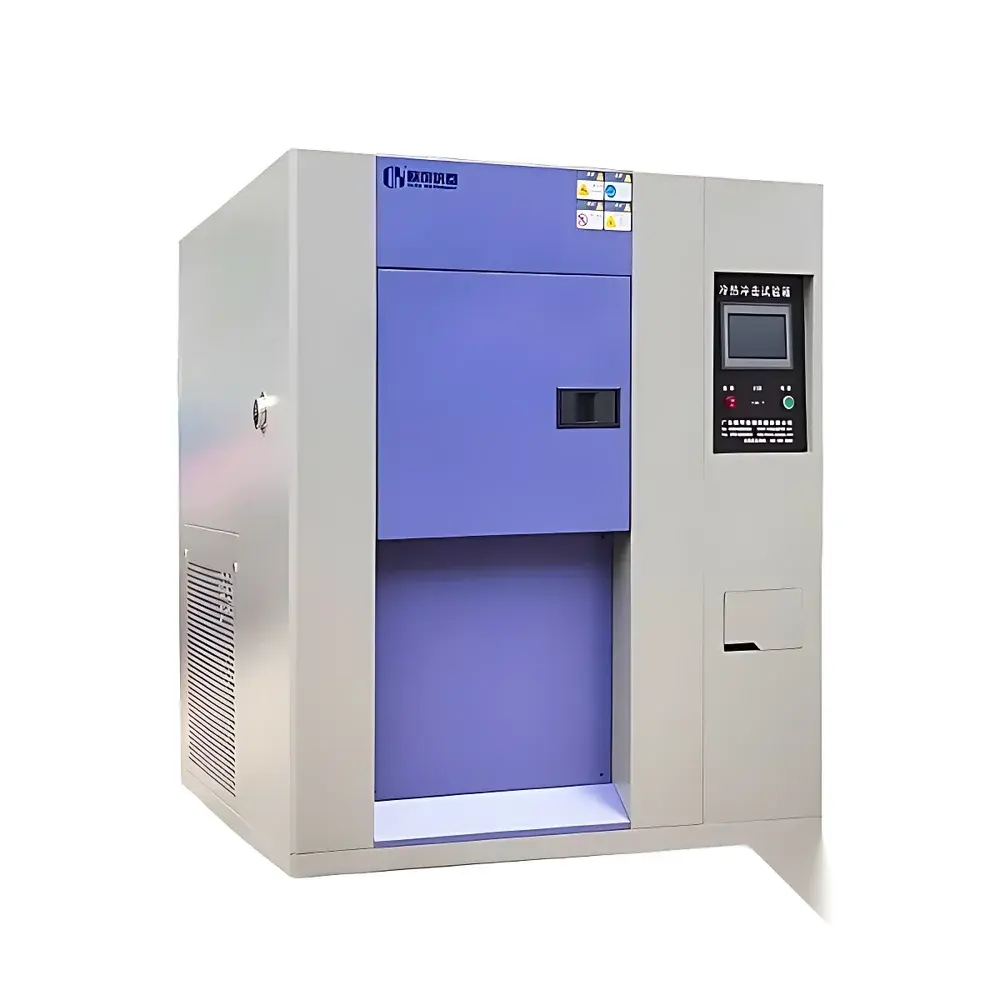
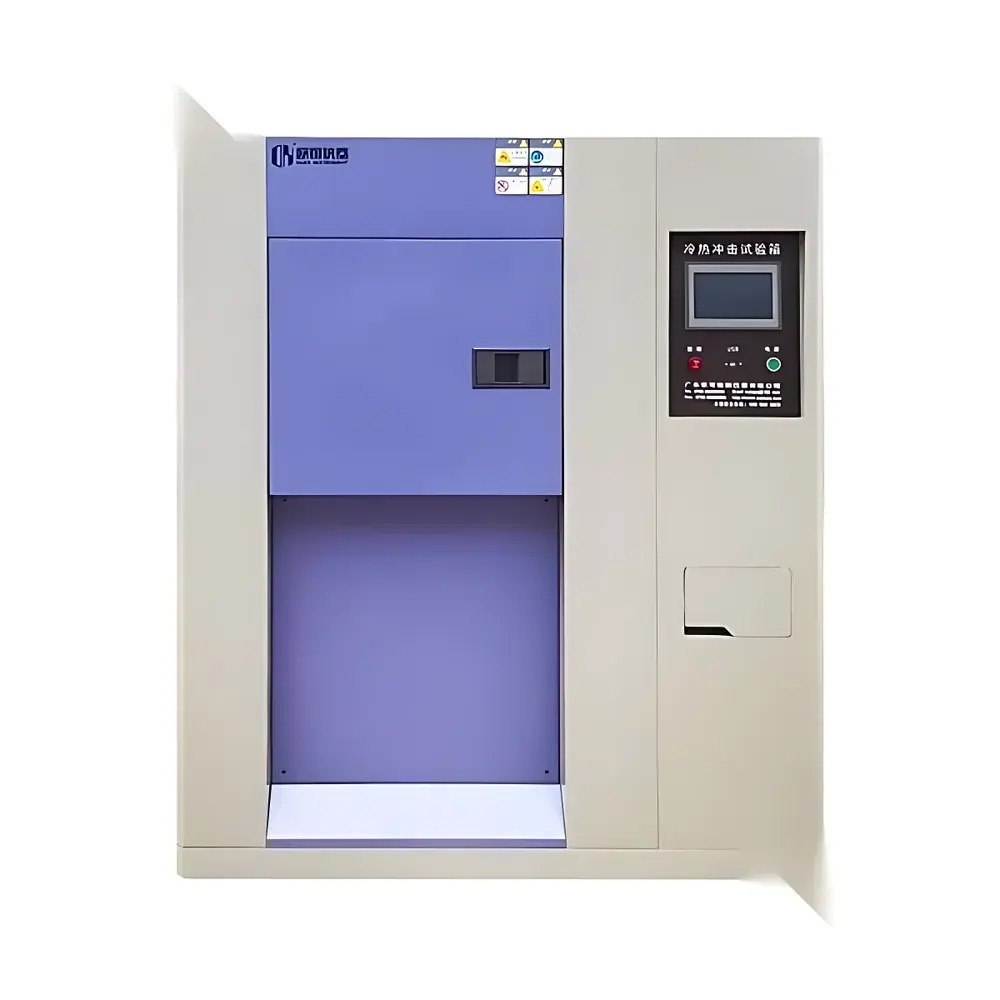
- Triple-chamber architecture: independently conditioned high-temperature zone, low-temperature zone, and central test chamber—enabling zero-load transfer and eliminating thermal cross-contamination during shock cycles
- Inner chamber constructed from SUS304B stainless steel; outer shell fabricated from imported SUS304# stainless steel for long-term corrosion resistance and dimensional stability
- High-efficiency insulation: dual-layer composite thermal barrier comprising ultra-fine glass wool and rigid polyurethane foam (density ≥40 kg/m³), achieving thermal conductivity ≤0.022 W/(m·K)
- Heating system: stainless-steel finned tubular heaters with PID-controlled power modulation, ensuring uniform temperature distribution (±1.0 °C tolerance across working volume)
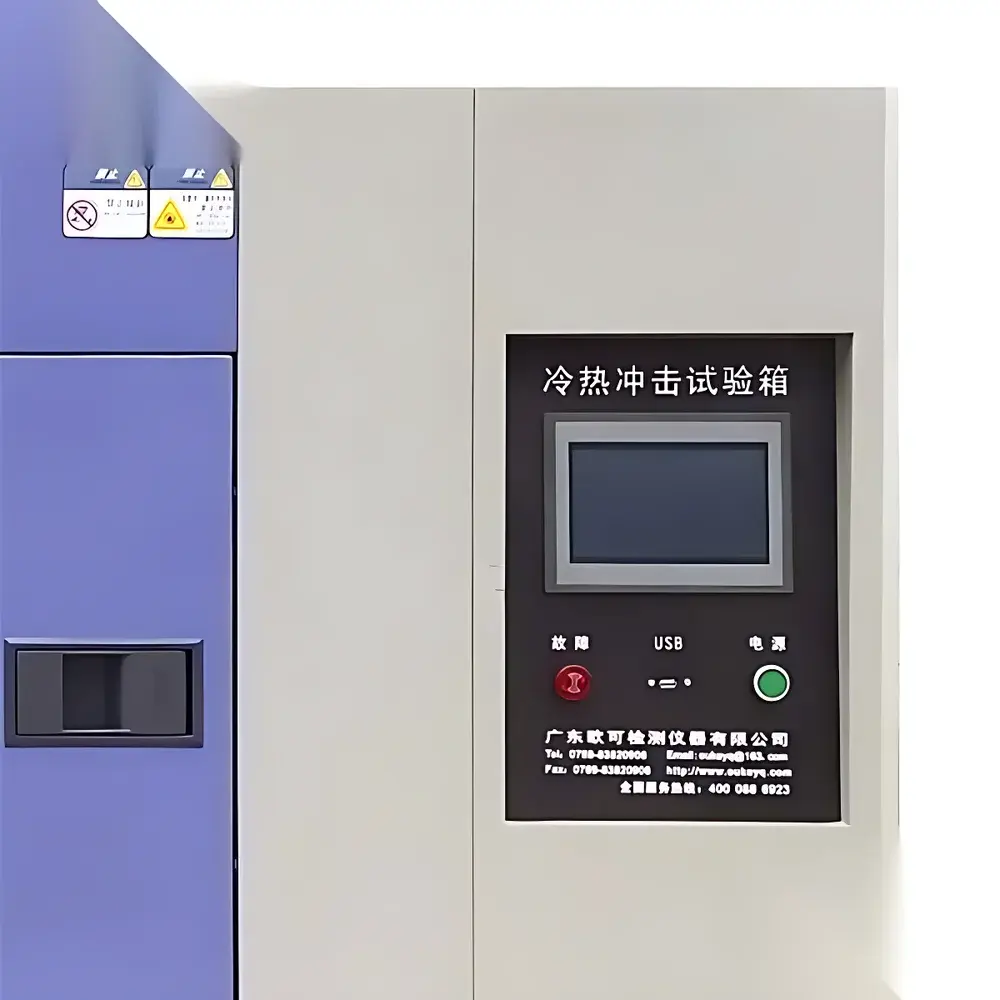
- Control interface: 10.4-inch true-color TFT touchscreen HMI with bilingual (English/Chinese) menu navigation, real-time trend logging, and programmable cycle sequencing (up to 999 segments per profile)
- Compliance-ready architecture: supports audit trails, user-level access control, and data export in CSV/Excel format—facilitating GLP/GMP-aligned validation documentation
Sample Compatibility & Compliance
This chamber accommodates large-format test articles—including printed circuit board assemblies (PCBAs), engine control units (ECUs), battery modules, optical sensors, and satellite subsystems—within standardized internal volumes (customizable from 150 L to 1000 L). It fully satisfies the mechanical and procedural requirements of multiple international and industry-specific standards, including: IEC 60068-2-14 (Test N: Change of Temperature), MIL-STD-810H Method 503.5 (Temperature Shock), GJB 150.5A-2012 (Military Equipment Environmental Testing), GB/T 2423.22–2012 (Environmental Testing – Part 2: Tests – Test N: Change of Temperature), and EIA-364-32 (Thermal Shock Testing of Electrical Connectors). All thermal profiles are traceable to NIST-calibrated reference sensors installed per ASTM E74 and ISO/IEC 17025 calibration guidelines.
Software & Data Management
The embedded control firmware supports full-cycle programming—including dwell time, transition rate, number of cycles, and recovery stabilization periods—with automatic safety interlocks for over-temperature, over-pressure, and refrigerant fault conditions. Data acquisition records chamber setpoints, actual temperatures (at up to four user-defined sensor locations), cycle count, and alarm history at configurable intervals (1–60 seconds). Exported datasets include timestamped metadata compliant with FDA 21 CFR Part 11 requirements when paired with optional electronic signature modules. Optional PC-based software provides advanced analysis tools: Weibull life estimation, ΔT vs. cycle count trending, and deviation mapping against nominal profiles.
Applications
- Qualification testing of avionics and spacecraft subsystems per ECSS-Q-ST-70-02C
- Reliability screening of automotive ADAS sensors under ISO 16750-4 thermal stress conditions
- Accelerated aging studies of lithium-ion battery enclosures and thermal interface materials
- Validation of hermetic seals in medical diagnostic devices (ISO 13485 environments)
- Process development support for reflow soldering and underfill curing in semiconductor packaging
- Material compatibility assessment for food-grade polymer packaging under FDA 21 CFR 177.1520 conditions
FAQ
What is the typical temperature range for thermal shock testing using this chamber?
Standard operational range spans –70 °C to +180 °C, with model-specific configurations supporting extended ranges (e.g., –80 °C or +200 °C) upon request.
Does the chamber support automated transfer mechanisms for unattended operation?
Yes—optional robotic basket transfer systems (ISO Class 5 cleanroom compatible) are available for high-throughput qualification labs.
How is temperature uniformity verified and documented?
Uniformity is validated per IEC 60068-3-5 using a 9-point sensor array during IQ/OQ protocols; reports include spatial deviation maps and statistical confidence intervals (k=2).
Can the system be integrated into a centralized laboratory monitoring network?
The chamber features Ethernet (TCP/IP) and RS485 Modbus RTU interfaces for seamless integration with LabVantage, Siemens Desigo, or custom SCADA platforms.
Is third-party calibration certification included with delivery?
Factory calibration certificates (traceable to national metrology institutes) are provided; ISO/IEC 17025-accredited field calibration services are available as an add-on option.



