
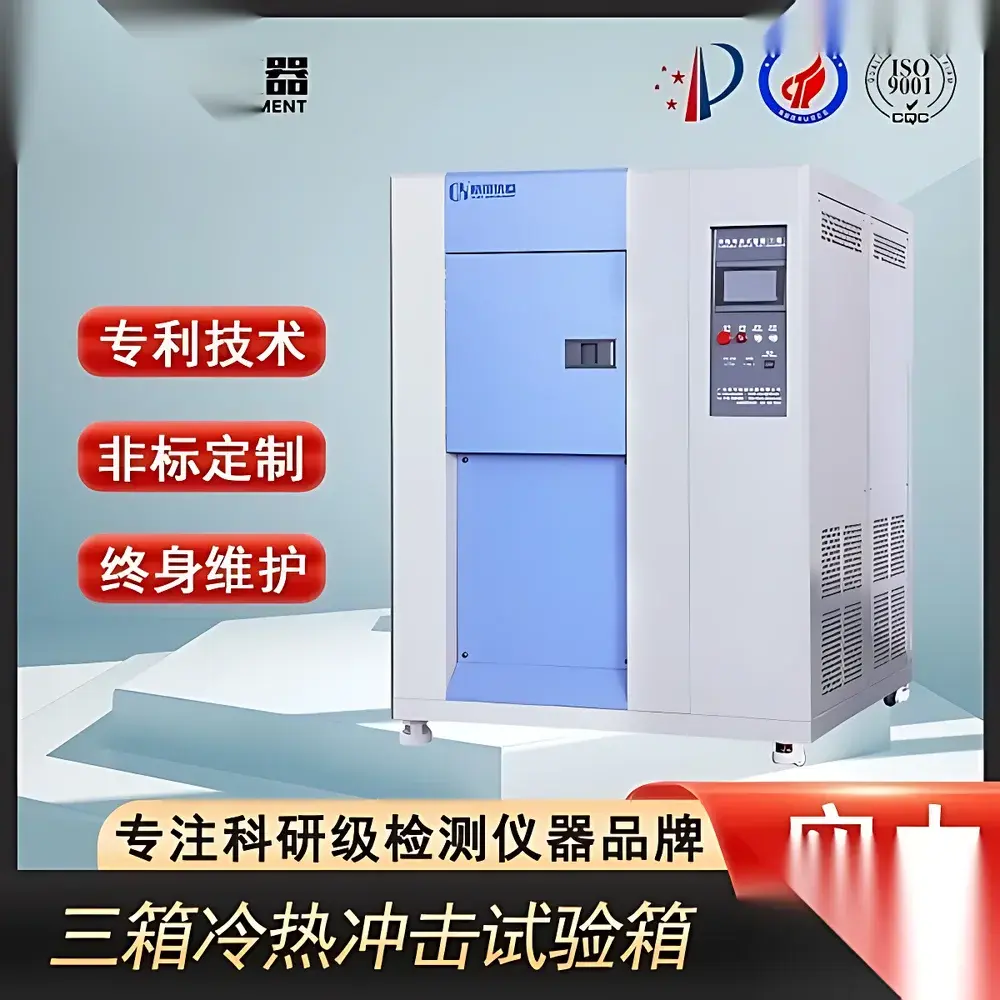
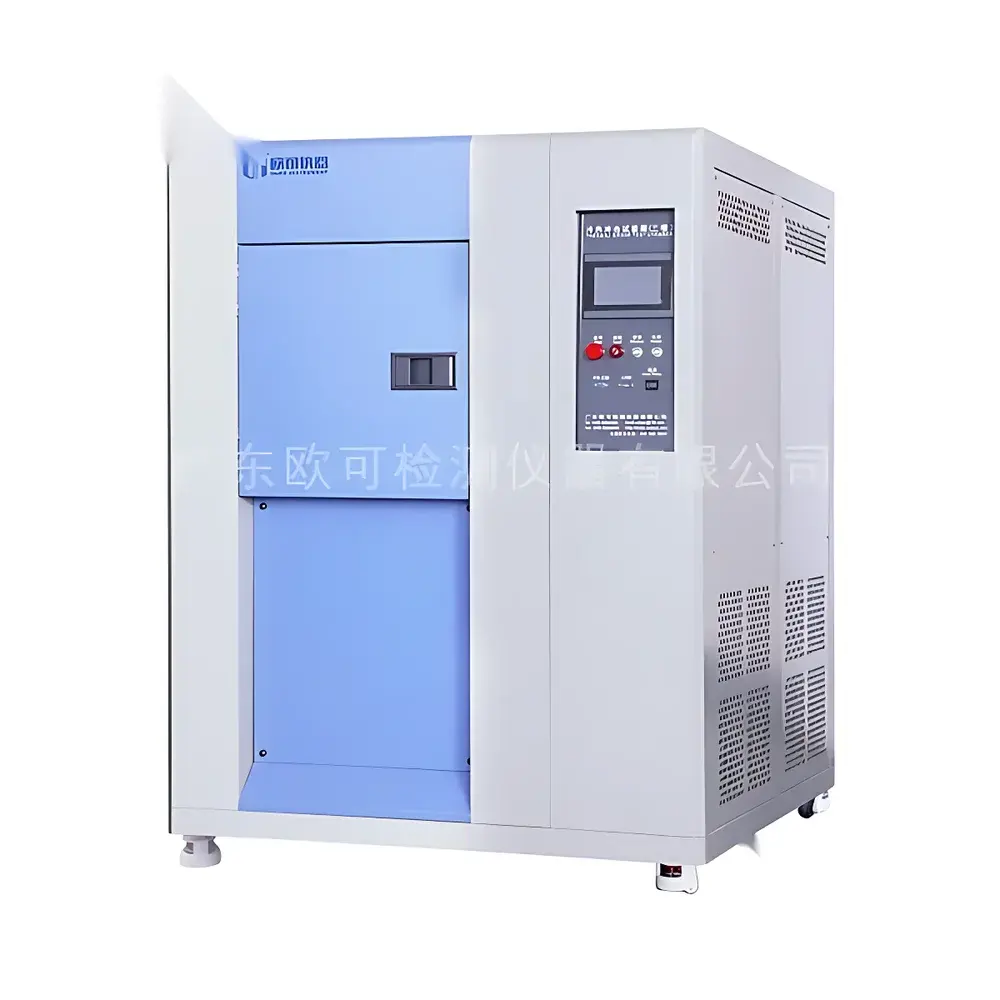
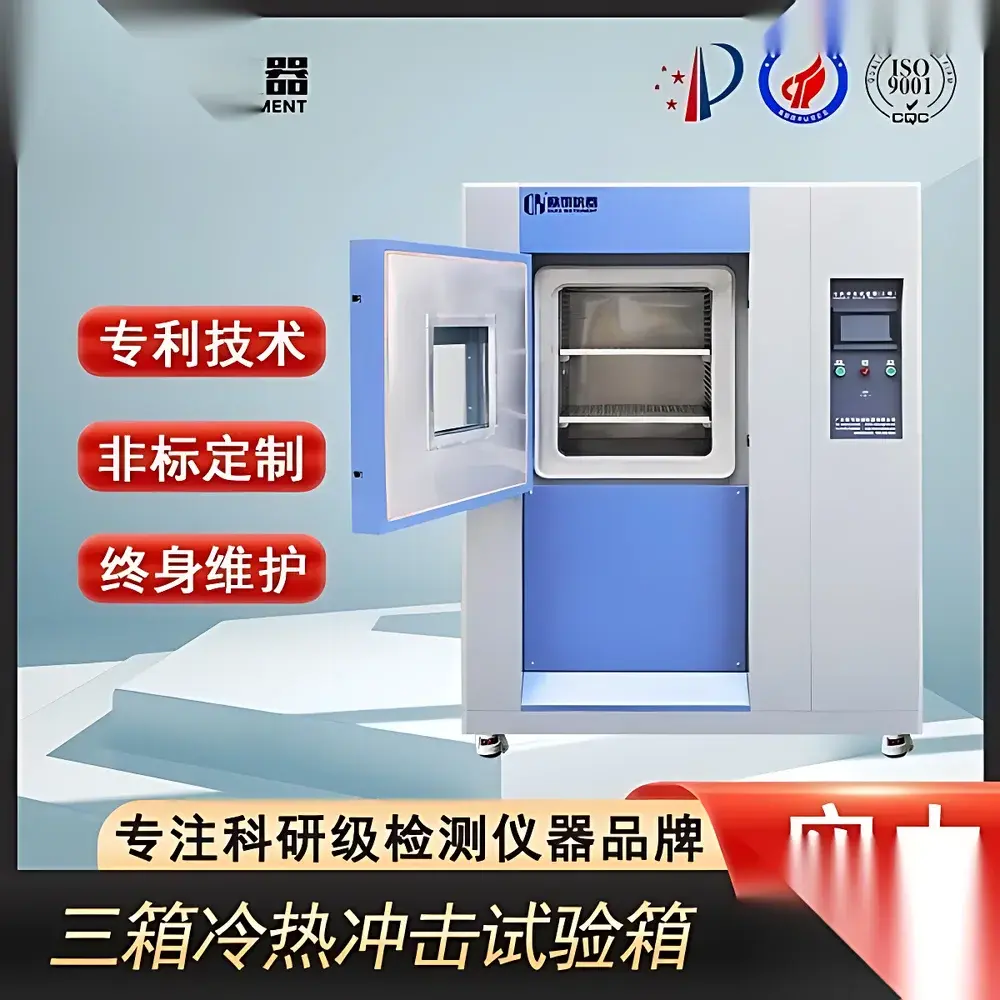
Thermal Shock Test Chamber
| Brand | Other Brands |
|---|---|
| Origin | Imported |
| Manufacturer Type | General Distributor |
| Price | USD 11,200 (FOB) |
Overview
The Thermal Shock Test Chamber is an engineered environmental simulation system designed to evaluate the reliability and structural integrity of materials and components under rapid, extreme temperature transitions. Operating on the principle of controlled thermal cycling—where specimens are subjected to abrupt shifts between high-temperature and low-temperature zones—the chamber replicates real-world thermal stress conditions encountered during operational life cycles, transportation, or storage. This method induces thermally driven mechanical strain due to differential expansion coefficients across material interfaces, enabling detection of latent defects such as microcracking, delamination, solder joint fatigue, seal failure, or interfacial debonding. Unlike steady-state temperature chambers, thermal shock testing accelerates failure mechanisms governed by transient thermal gradients, making it indispensable for qualification testing in aerospace, automotive electronics, semiconductor packaging, and military-grade electronics per MIL-STD-810 and DO-160 protocols.
Key Features
- Two-zone (hot/cold) or three-zone (hot/cold/test) configurations available—optimized for test cycle repeatability and minimized thermal inertia
- High-speed transfer mechanism (motor-driven basket or shuttle) with transfer time ≤ 15 seconds between zones (two-box design)
- Independent dual-refrigeration and heating systems ensuring precise zone temperature control and minimal cross-contamination
- Stainless steel 304 inner chamber construction with insulated double-wall design and non-condensing door seals
- Programmable controller supporting up to 999 segments, 99 cycles, and user-defined ramp rates (°C/min), dwell times, and transition modes
- Compliance-ready architecture with optional audit trail logging, electronic signature support, and password-protected parameter locking
Sample Compatibility & Compliance
The chamber accommodates a broad range of sample types—including PCB assemblies, molded plastic housings, metal alloy coupons, elastomeric gaskets, and hybrid modules—within standard internal dimensions (e.g., 400 × 400 × 400 mm). Fixturing options include static racks, universal trays, and custom mounting fixtures compatible with DIN/ISO 22870 mounting standards. The system meets and exceeds requirements of multiple international and industry-specific standards: IEC 60068-2-14 (Test N: Change of Temperature), MIL-STD-810H Method 503.5 (Temperature Shock), GJB 150.5A-2009 (Military Standard for Temperature Shock Testing), GB/T 2423.22–2012 (Environmental Testing – Part 2: Tests – Test N: Change of Temperature), and SJ/T 10186–1991 (Two-Chamber Temperature Change Test Equipment Specification). Optional validation packages support IQ/OQ documentation per ISO/IEC 17025 and GLP-compliant test record retention.
Software & Data Management
Equipped with embedded Windows-based HMI and optional PC software (LabVIEW-compatible API and Modbus TCP interface), the chamber enables full-cycle monitoring, real-time graphing of chamber and specimen temperatures (via optional external thermocouple inputs), and automated report generation in PDF or CSV format. All test data—including setpoints, actual chamber temperatures, alarm logs, and cycle timestamps—are stored with date/time stamping and user ID attribution. For regulated environments, the system supports 21 CFR Part 11 compliance via optional electronic signature modules, role-based access control, and immutable audit trails with configurable retention policies (≥18 months).
Applications
- Qualification of avionics hardware per DO-160 Section 4.5 (Temperature Shock)
- Reliability screening of automotive ECUs and sensor modules prior to AEC-Q200 certification
- Process validation of conformal coating adhesion and reflow solder joint integrity
- Material compatibility assessment for multi-layer ceramic capacitors (MLCCs) and power modules
- Accelerated life testing of optical enclosures, fiber optic connectors, and MEMS devices
- Failure analysis root cause identification in post-test metallurgical cross-sectioning workflows
FAQ
What is the typical temperature range for this thermal shock chamber?
Standard configurations operate from −65 °C to +150 °C; extended ranges (e.g., −70 °C to +180 °C) are available upon request.
How is thermal shock severity defined in test standards?
Severity is determined by the magnitude of temperature transition (ΔT), dwell duration at extremes, number of cycles, and transfer time—each specified explicitly in standards such as IEC 60068-2-14 and GJB 150.5A.
Can the chamber be integrated into an automated test lab environment?
Yes—RS-485, Ethernet (Modbus TCP), and analog I/O interfaces enable seamless integration with MES, SCADA, or test management platforms.
Is calibration traceability provided with the system?
Factory calibration certificates traceable to NIST or national metrology institutes are included; annual recalibration services are available under service contract.
Does the system support unattended operation over weekends or holidays?
Fully supported—equipped with battery-backed real-time clock, non-volatile memory, and email/SMS alerting for critical alarms (e.g., door open, compressor fault, temperature deviation).



