
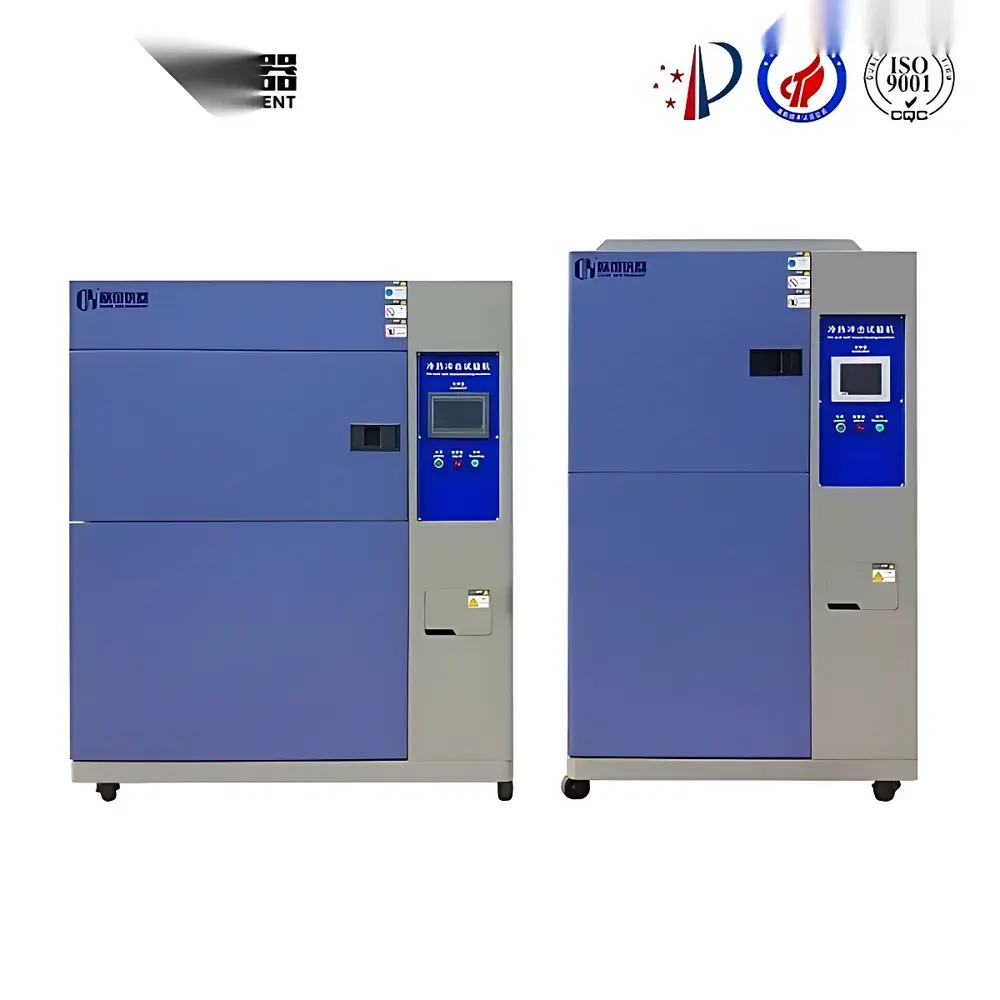
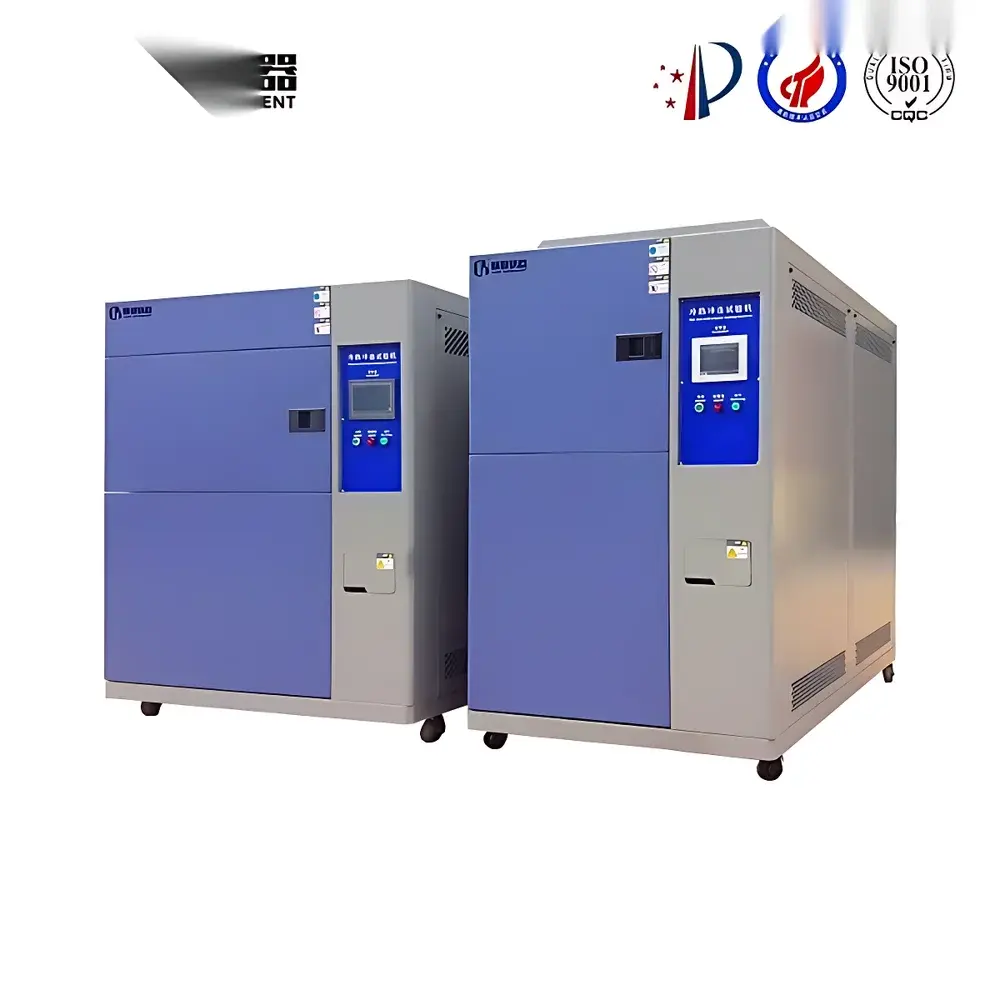
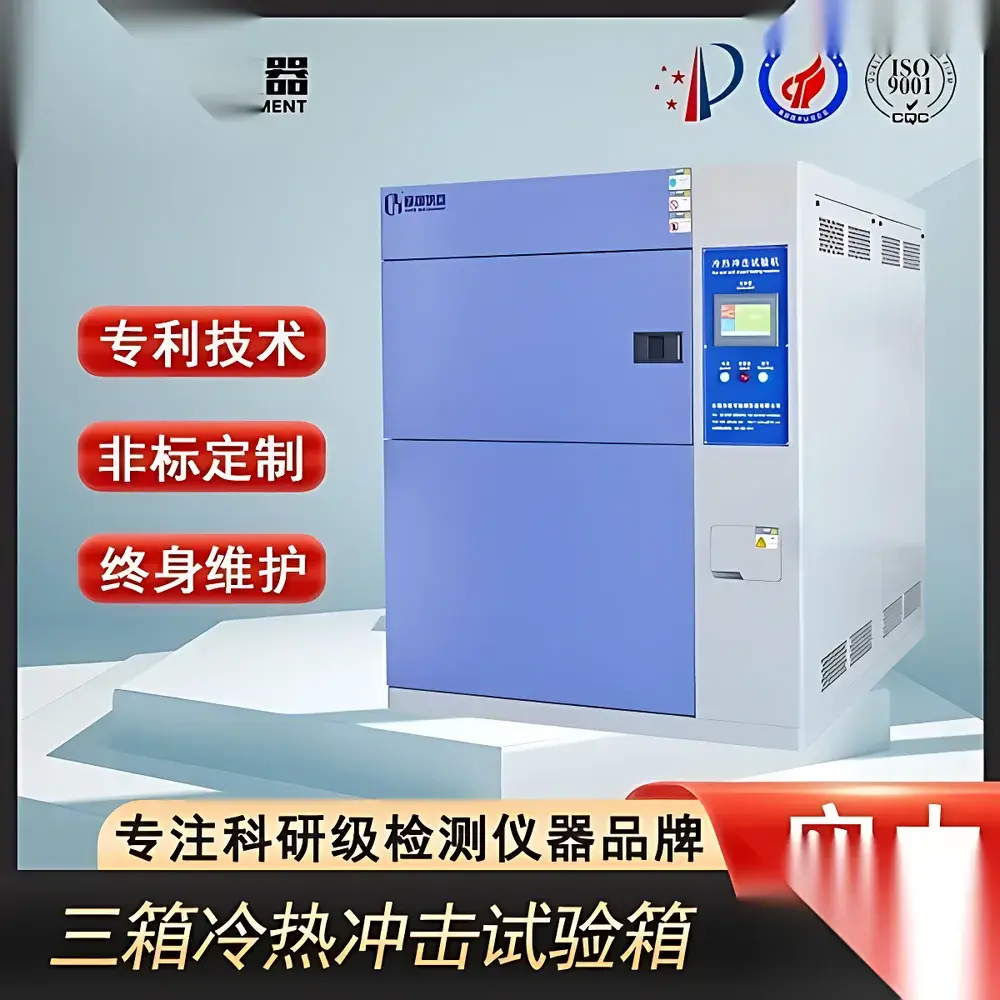
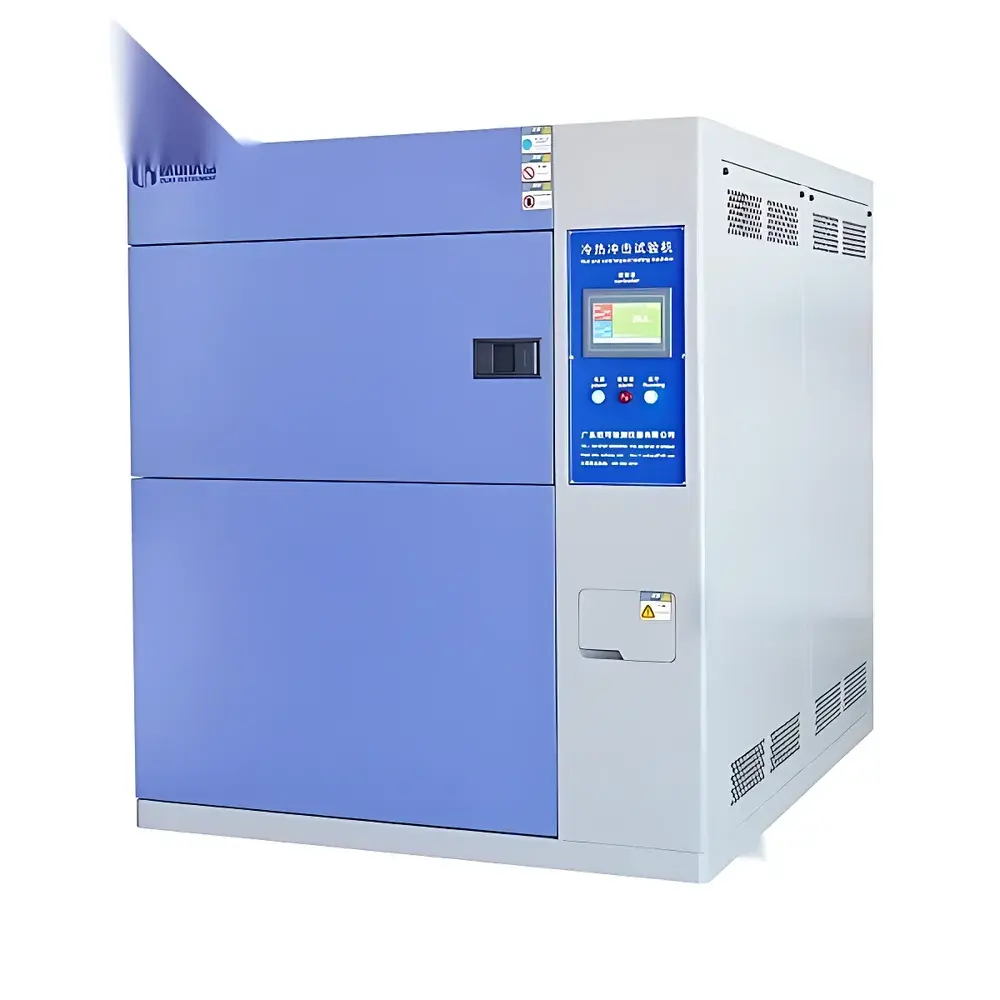
Thermal Shock Test Chamber – Dual-Compartment or Triple-Compartment Configuration
| Price | USD 11,200 (FOB) |
|---|
Overview
The Thermal Shock Test Chamber is an environmental stress screening (ESS) instrument engineered for rapid, controlled transitions between extreme high and low temperature extremes. It operates on the principle of thermal shock—inducing mechanical stress in materials and assemblies through abrupt temperature changes—to evaluate structural integrity, material compatibility, solder joint reliability, and interfacial adhesion under accelerated aging conditions. Two primary configurations are available: dual-compartment (hot/cold chambers with a motorized transfer basket) and triple-compartment (separate hot soak, cold soak, and test chambers with static sample placement). Both designs comply with fundamental thermodynamic constraints of transient heat transfer and are calibrated to deliver reproducible thermal ramp rates, dwell stability, and recovery performance essential for qualification testing in aerospace, automotive electronics, semiconductor packaging, and defense applications.
Key Features
- Dual- or triple-compartment architecture optimized for ISO/IEC 17025 traceable thermal shock profiling
- Imported semi-hermetic German compressors integrated into a two-stage cascade refrigeration system for stable sub–40 °C operation and rapid cooling response
- Evaporative condenser coupling enabling efficient energy transfer between high- and low-temperature circuits
- Water-cooled condensing system requiring external cooling tower (10 m³/h flow capacity) — designed for continuous-duty industrial environments
- Energy modulation control logic that dynamically adjusts refrigerant mass flow and compressor loading to maintain setpoint accuracy while minimizing power consumption and mechanical wear
- Compliance-ready construction with insulated stainless-steel inner chamber, reinforced door seals, and non-condensing air purge options for moisture-sensitive DUTs
Sample Compatibility & Compliance
This chamber accommodates samples up to 500 mm × 500 mm × 500 mm (W×D×H) in standard configurations, with custom internal volume options available. It supports both powered and unpowered device-under-test (DUT) configurations, including PCB assemblies, molded plastic housings, MEMS sensors, and hermetically sealed optoelectronic modules. The system meets requirements for thermal shock validation per multiple international and military standards, including:
- IEC 60068-2-14 (Test N: Change of Temperature)
- GB/T 2423.22–2002 (Environmental Testing – Part 2: Tests – Test N: Temperature Change)
- GJB 150.5A–2009 (Military Standard: Environmental Test Methods – Temperature Shock)
- GJB 360B–2009 (Electronic Component Environmental Test Methods – Method 211: Temperature Shock)
- SJ/T 10186–1991 & SJ/T 10187–1991 (Y73-series Temperature Change Test Chambers)
All configurations support GLP/GMP-aligned documentation packages, including calibration certificates (NIST-traceable Pt100 sensors), temperature uniformity mapping reports (per IEC 60068-3-5), and deviation log templates compatible with FDA 21 CFR Part 11 audit trails when paired with validated data acquisition software.
Software & Data Management
The chamber integrates with optional PC-based control software supporting real-time monitoring of chamber temperature, basket position (dual-compartment), compressor discharge pressure, and coolant flow rate. Data logging is performed at user-selectable intervals (1 s to 60 min resolution) and exported in CSV or XML format for post-processing in MATLAB, JMP, or Minitab. Software features include programmable multi-step profiles (up to 99 segments), automatic fault detection with event timestamping, and password-protected parameter locking to ensure procedural consistency across shifts. Optional firmware upgrades enable remote diagnostics via Ethernet/IP and integration with MES systems using Modbus TCP or OPC UA protocols.
Applications
- Qualification testing of avionics components per DO-160 Section 4.5 (Temperature Shock)
- Reliability assessment of lead-free solder joints in automotive ECUs exposed to under-hood thermal cycling
- Screening of encapsulant delamination in power semiconductor modules (IGBTs, SiC MOSFETs)
- Validation of thermal interface material (TIM) bond strength in battery module assemblies
- Accelerated life testing of optical lens mounts subject to diurnal ambient swings
- Failure mode analysis of MEMS accelerometers during rapid ambient transition events
FAQ
What is the typical temperature range for this thermal shock chamber?
Standard operating range spans –65 °C to +150 °C; extended ranges (–75 °C or +180 °C) available upon configuration.
Is the system suitable for testing powered electronic assemblies?
Yes — optional electrical feedthroughs (up to 10 A, 250 VAC) and EMI-shielded cable ports support live-burn-in testing.
Does the chamber include built-in data logging capability?
Basic internal logging (2000-point buffer) is standard; full-featured PC-based logging requires optional software license.
What maintenance intervals are recommended for the cascade refrigeration system?
Compressor oil analysis and filter replacement every 2,000 operational hours; annual refrigerant purity verification per AHRI Standard 700.
Can the unit be validated for ISO/IEC 17025 accredited laboratories?
Yes — factory-provided uncertainty budgets, sensor calibration certificates, and IQ/OQ documentation templates are included.
Related Products



