
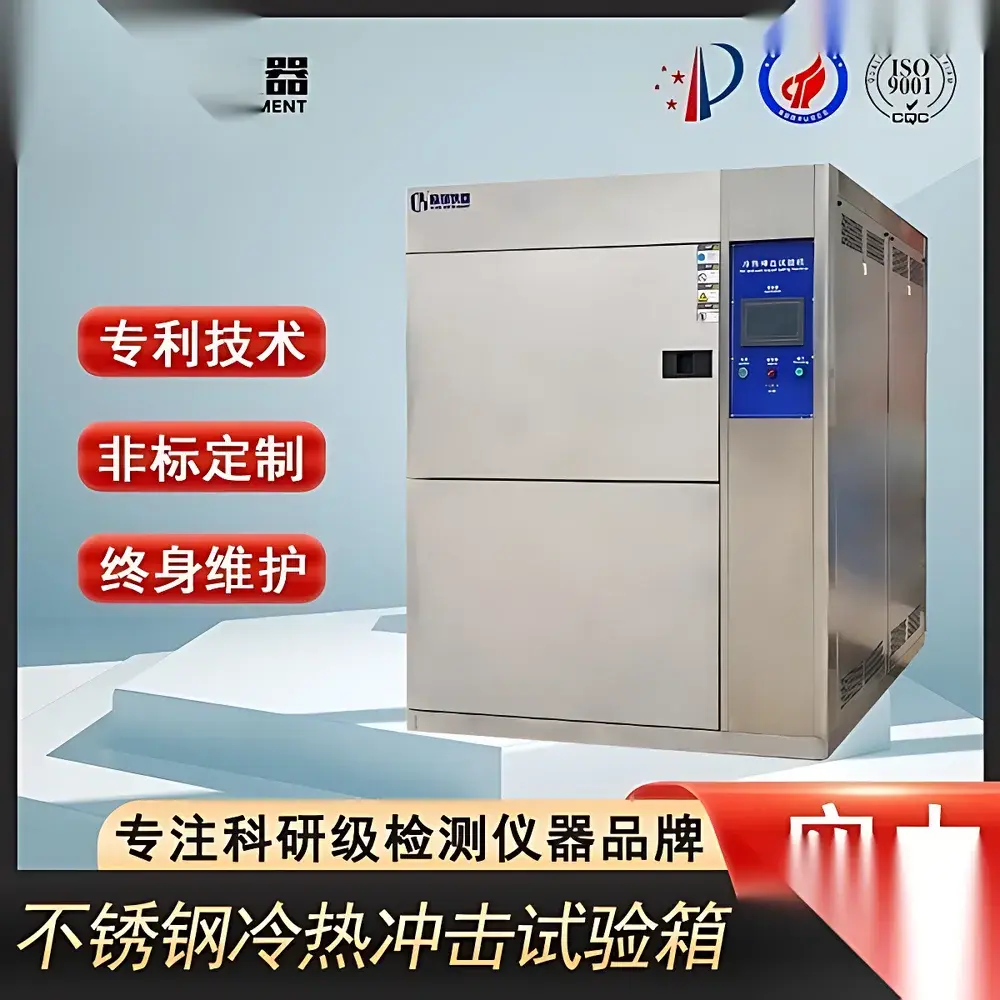
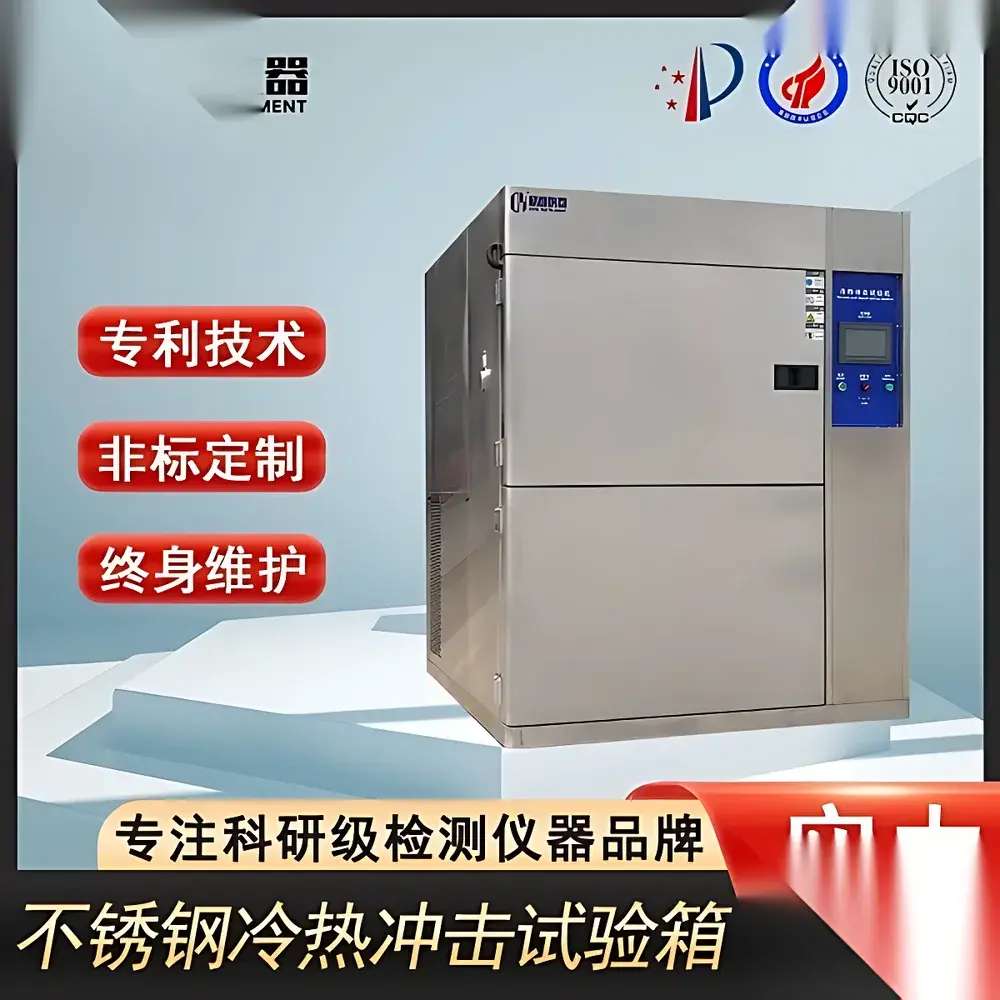
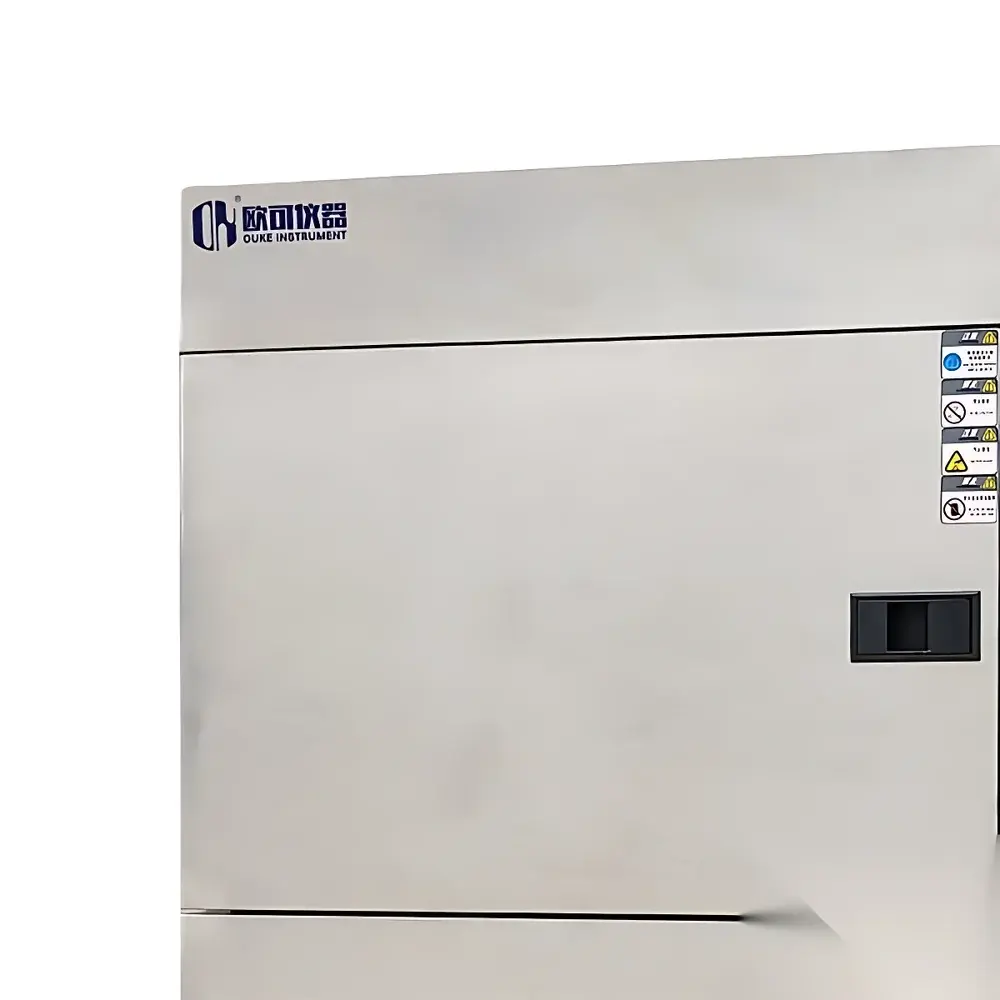
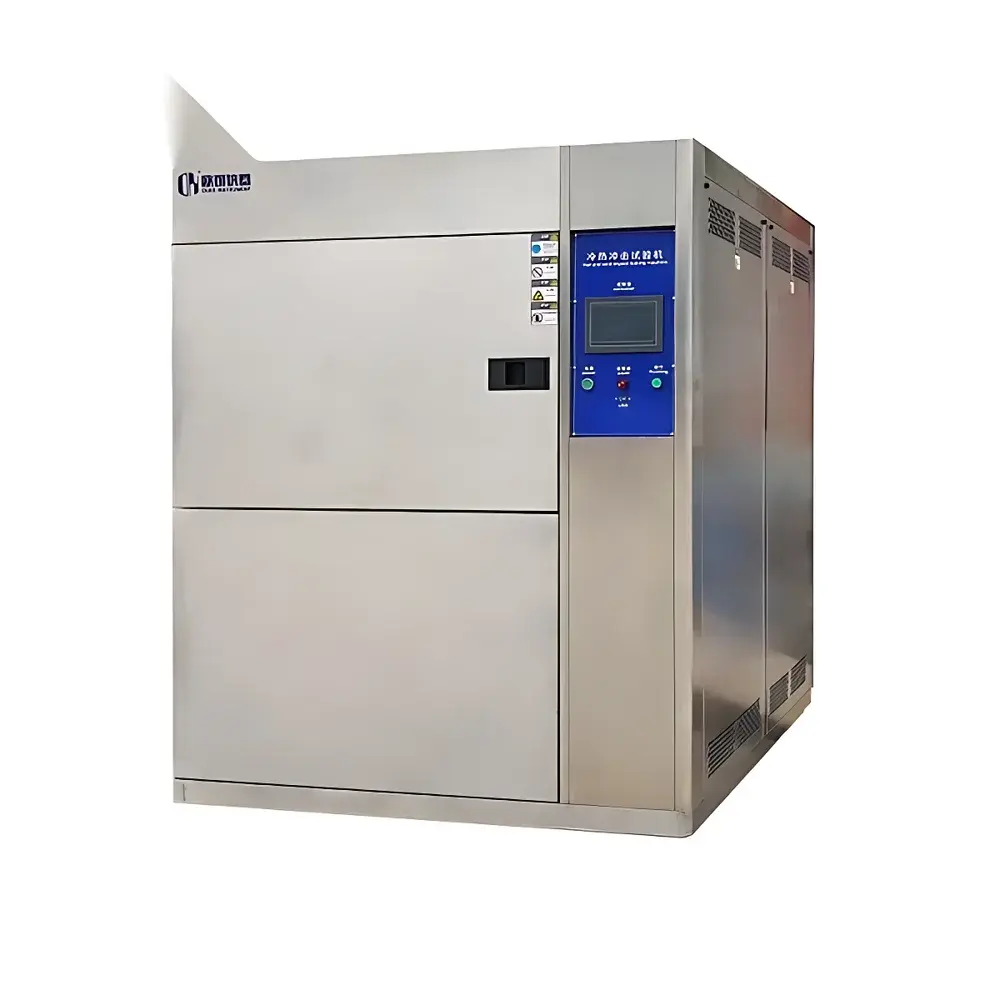
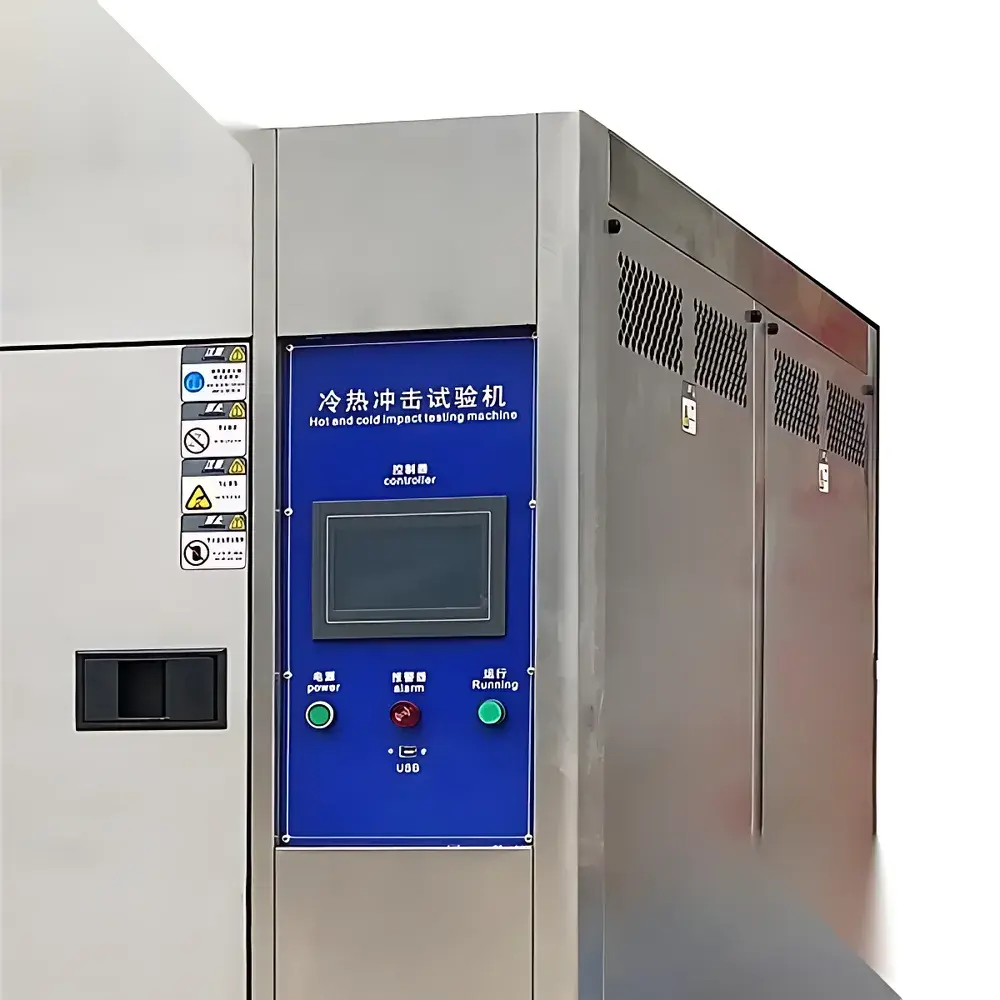
Thermal Shock Test Chamber – Dual- or Tri-Zone Cryogenic Impact Testing System
| Brand | OEM |
|---|---|
| Origin | Imported |
| Manufacturer Type | Authorized Distributor |
| Price | USD 11,200 (FOB) |
| Temperature Range | –70°C to +180°C |
| Shock Transition Time (5%–95%) | ≤15 s (between zones) |
| Cycle Count Range | 1–9999 cycles |
| Dwell Time per Zone | 0.1–999.9 h |
| Control System | PID-based LED Touch HMI with Real-Time Curve Display |
| Compliance | ASTM D573, ISO 16750-4, IEC 60068-2-14, MIL-STD-810H Method 503.5 |
| Cooling System | Twin-stage cascade refrigeration (R404A/R23), equipped with French Tecumseh compressors |
| Defrost Mode | Automatic or Manual, programmable frequency |
| Structural Design | Explosion-proof ergonomic handles, insulated stainless-steel chamber walls, dual- or tri-zone configuration (selectable) |
Overview
The Thermal Shock Test Chamber – Dual- or Tri-Zone Cryogenic Impact Testing System is an engineered environmental simulation platform designed for accelerated thermal stress evaluation of electronic components, automotive modules, aerospace materials, and polymer-based assemblies. It operates on the principle of rapid thermal transition between extreme temperature zones—typically low-temperature (–70°C), ambient, and high-temperature (+180°C) chambers—to induce mechanical strain at material interfaces, revealing latent defects such as solder joint fatigue, delamination, seal integrity failure, and coefficient-of-thermal-expansion (CTE) mismatch. Unlike single-chamber thermal cycling systems, this unit employs a true multi-zone architecture with physically isolated compartments and pneumatic or motorized transfer mechanisms, enabling precise dwell-time control, repeatable shock transitions (<15 s between 5% and 95% of target temperature), and strict adherence to standardized thermal shock profiles defined in ASTM D573, ISO 16750-4, and IEC 60068-2-14.
Key Features
- Tri-mode operational flexibility: functions as a standalone high-temperature chamber, low-temperature chamber, or full thermal shock system—enabling lab-space optimization and cross-functional validation.
- Twin-stage cascade refrigeration system using R404A (high-stage) and R23 (low-stage) refrigerants, driven by industrial-grade Tecumseh compressors for stable sub-zero performance down to –70°C with minimized oil carryover and long-term reliability.
- PID-controlled LED touch HMI interface with real-time temperature curve visualization, alarm logging, and step-by-step fault diagnosis—supporting GLP-compliant test documentation without external software dependency.
- Programmable shock parameters: dwell time per zone (0.1–999.9 h), total cycle count (1–9999), and automatic defrost scheduling based on cumulative runtime or user-defined intervals.
- Structural integrity features: explosion-resistant ergonomic door handles, 100 mm thick polyurethane insulation with vacuum-sealed joints, and stainless-steel interior chamber walls resistant to thermal oxidation and condensation corrosion.
- Noise-optimized mechanical design: vibration-dampened compressor mounting, acoustic insulation layers, and airflow-balanced ductwork ensure sound pressure levels <65 dB(A) during continuous operation.
Sample Compatibility & Compliance
This chamber accommodates test specimens up to 500 mm × 500 mm × 500 mm (W×D×H) with standardized mounting fixtures compatible with JEDEC trays, PCB carriers, and MIL-STD-810H-compliant test racks. It supports both static (stationary sample) and dynamic (automated transfer) thermal shock methodologies. All thermal profiles comply with internationally recognized qualification standards—including ASTM D573 (rubber degradation), ISO 16750-4 (road vehicles), IEC 60068-2-14 (environmental testing), and MIL-STD-810H Method 503.5 (temperature shock)—and is routinely validated using NIST-traceable PT100 sensors calibrated per ISO/IEC 17025 requirements. The system meets CE marking directives for electromagnetic compatibility (2014/30/EU) and low-voltage safety (2014/35/EU).
Software & Data Management
While the embedded controller provides autonomous test execution and local data storage (≥10,000 cycles of timestamped temperature logs), optional Ethernet/IP or RS-485 connectivity enables integration into centralized LIMS or MES platforms. Data export is supported in CSV format with configurable sampling intervals (1 s to 60 s). Audit trails include operator ID, parameter changes, alarm events, and calibration history—fully compliant with FDA 21 CFR Part 11 requirements when paired with validated user access controls and electronic signature modules. Firmware updates are performed via secure USB protocol with version rollback capability and SHA-256 checksum verification.
Applications
- Qualification testing of automotive ECUs, battery management systems (BMS), and ADAS sensors under thermal shock conditions per ISO 16750-4.
- Reliability screening of semiconductor packages (QFN, BGA, CSP) and printed circuit board assemblies prior to field deployment.
- Material science research on polymer composites, adhesives, and encapsulants subjected to repeated cryogenic-to-thermal expansion cycles.
- GMP-aligned stability studies for medical device housings and implantable electronics requiring IEC 60601-1 environmental validation.
- Defense and aerospace component certification per MIL-STD-810H Method 503.5, including avionics cooling system interfaces and radar housing seals.
FAQ
What is the minimum achievable temperature in the cold zone?
The system achieves and maintains –70°C under full-load conditions with ≤±0.5°C uniformity across the working volume.
Can the chamber operate without automatic transfer between zones?
Yes—manual mode allows independent operation of each zone as a standalone thermal chamber, supporting extended dwell tests or sequential single-direction ramping.
Is calibration documentation included with shipment?
Each unit ships with a factory calibration certificate traceable to NIST standards, covering all critical temperature sensors and control loop verification points.
What maintenance intervals are recommended for the cascade refrigeration system?
Compressor oil analysis and filter replacement are advised every 3,000 operating hours; annual leak detection and refrigerant purity verification are required for ISO 17025-compliant labs.
Does the system support remote monitoring via SCADA or LabVIEW?
Yes—Modbus TCP and OPC UA protocols are available via optional communication modules, enabling bidirectional control and real-time telemetry integration.



