
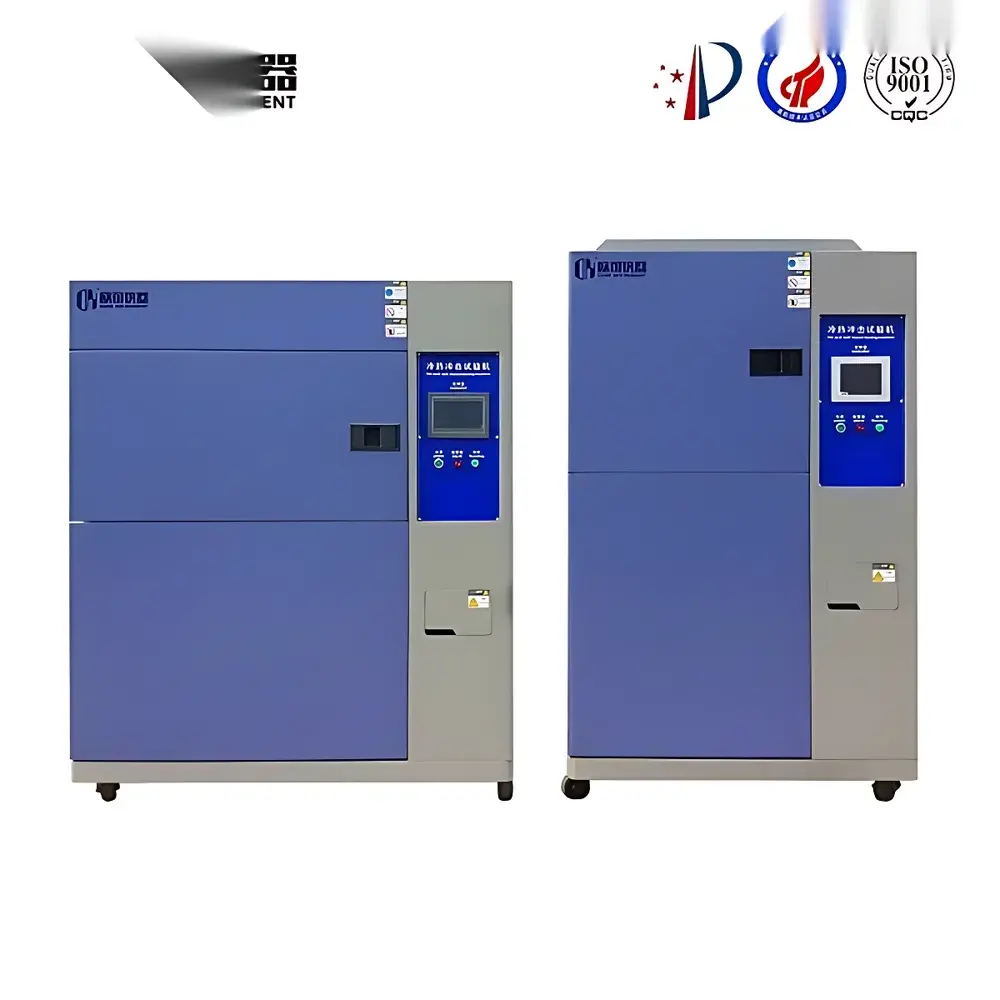
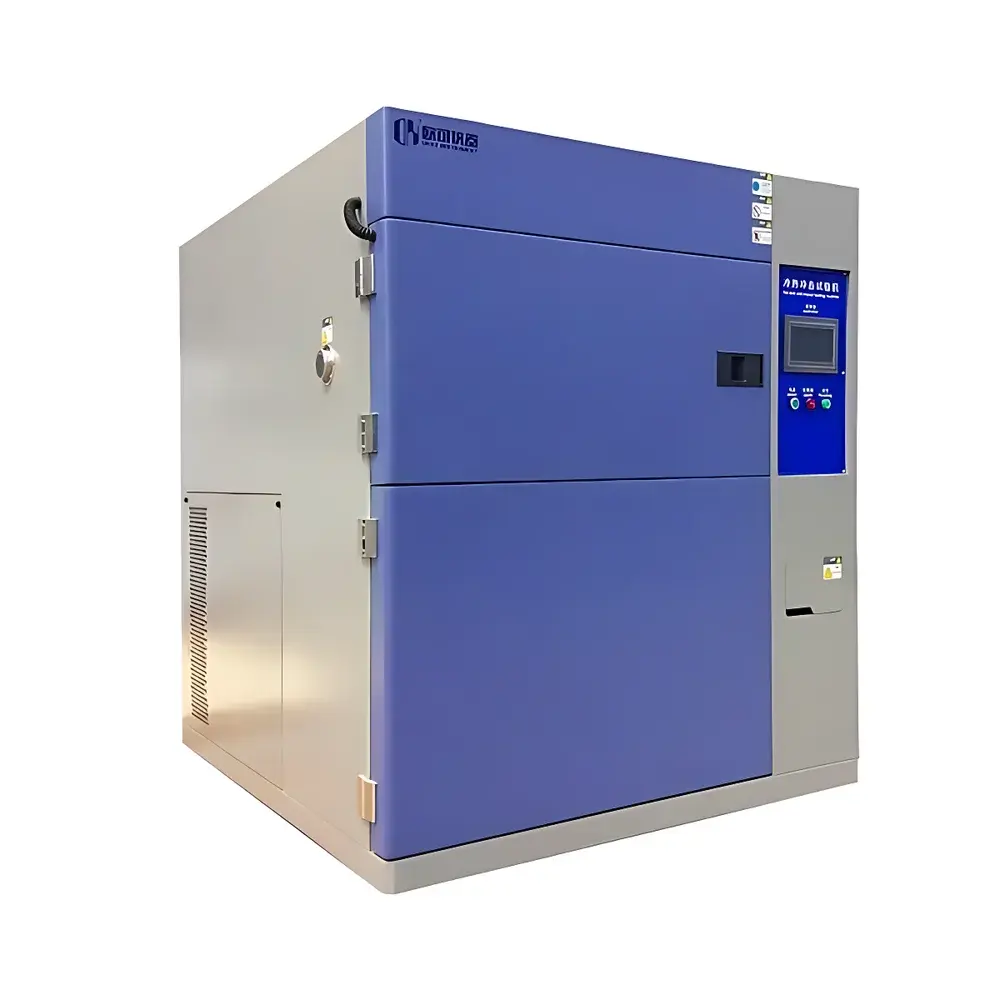
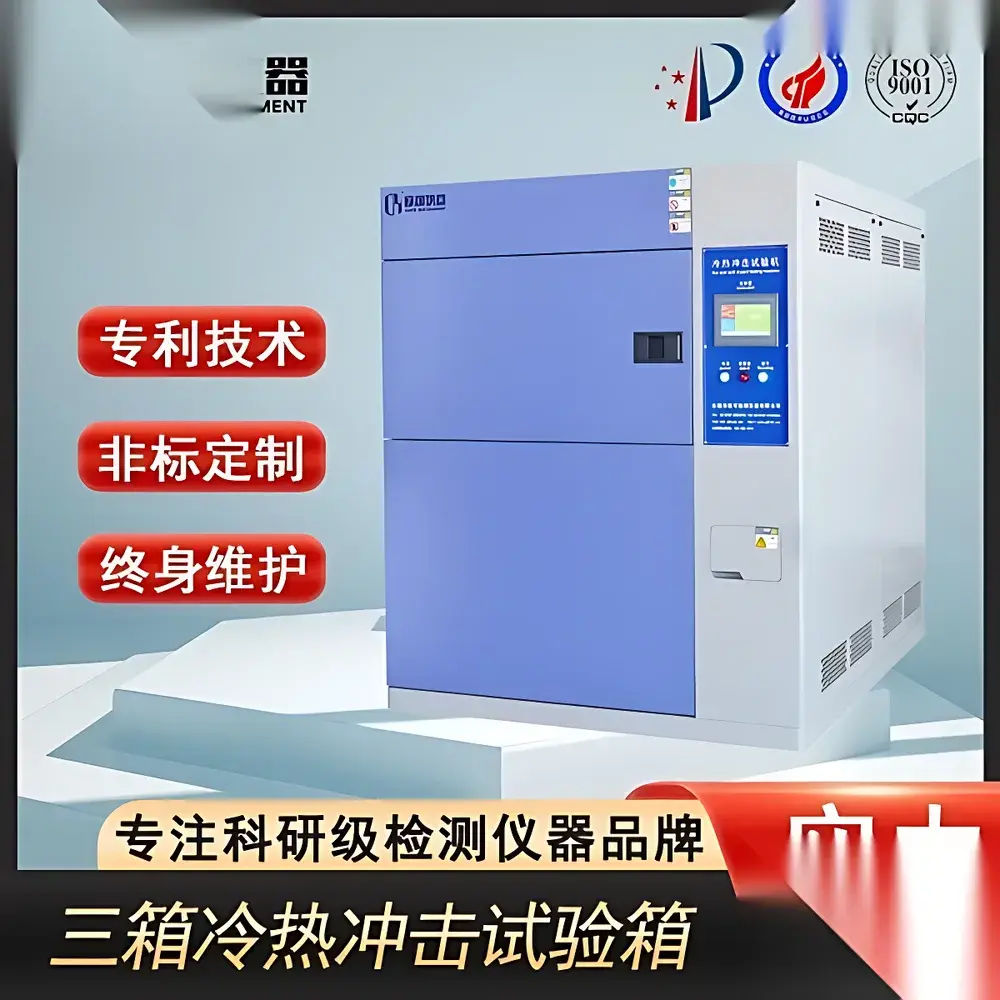
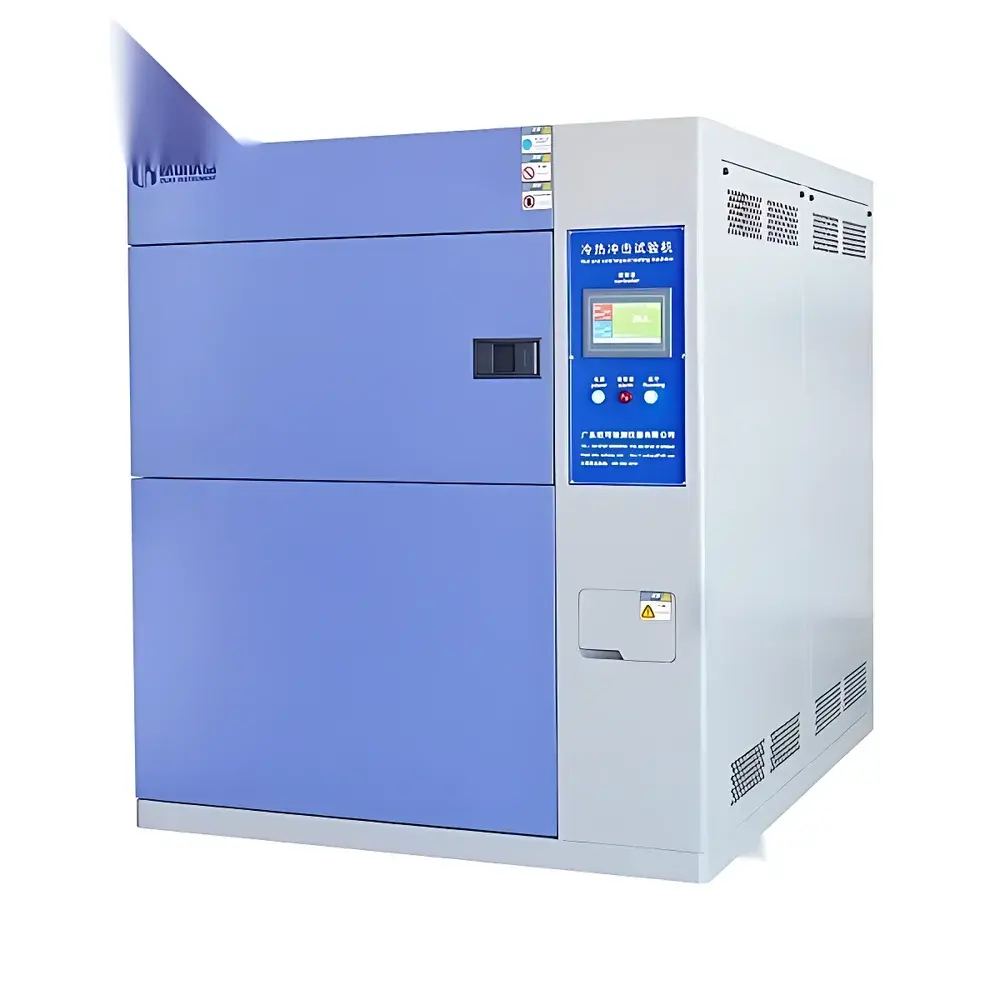
Thermal Shock Test Chamber – Generic Industrial-Grade Two-Zone Rapid Temperature Transition Chamber
| Brand | Other Brands |
|---|---|
| Origin | Imported |
| Manufacturer Type | Authorized Distributor |
| Compliance | GB/T 2423.1–2001, GB/T 2423.2–2001, GB/T 2423.22–1989, GJB 150.3–1986, GJB 150.4–1986, GJB 150.5–1986, GJB 360.7–1987, GJB 367.2–1987, SJ/T 10186–1991, SJ/T 10187–1991, IEC 60068-2-14 (Test N: Change of Temperature) |
| Refrigeration Cycle | Dual-stage vapor-compression refrigeration based on reverse Carnot cycle |
| Temperature Range | Typically −65 °C to +150 °C (configurable per model) |
| Transition Time | ≤ 15 s between chambers (typical for two-zone design) |
| Internal Volume | Standard options from 50 L to 500 L |
| Control System | PID-controlled digital temperature controller with programmable ramp/soak profiles |
Overview
The Thermal Shock Test Chamber is an industrial-grade environmental simulation system engineered to evaluate material and component reliability under rapid, repetitive thermal transitions. It operates on a dual-zone (hot/cold) or single-chamber forced-air thermal cycling architecture—depending on configuration—to subject test specimens to abrupt temperature shifts between predefined extremes. This methodology replicates real-world thermal stress conditions encountered during operational deployment, transportation, or storage—particularly critical for aerospace, automotive electronics, semiconductor packaging, and military-grade hardware. The chamber employs a reverse Carnot refrigeration cycle: refrigerant undergoes adiabatic compression in the compressor, isothermal heat rejection in the condenser, adiabatic expansion via an expansion valve, and isothermal heat absorption in the evaporator. This thermodynamically robust architecture ensures stable low-temperature performance down to −65 °C and high-temperature stability up to +150 °C, with precise control over transition rates, dwell times, and cycle repeatability.
Key Features
- Dual-zone configuration with independent hot and cold chambers, enabling sub-15-second transfer times via pneumatic or servo-driven specimen carrier—minimizing thermal inertia effects and maximizing shock fidelity.
- High-efficiency vapor-compression refrigeration system utilizing environmentally compliant R404A/R23 cascade or R507A refrigerants, compliant with current EU F-Gas Regulation Annex I thresholds.
- Digital PID temperature controller with 0.1 °C resolution, ±0.5 °C uniformity across working volume (per IEC 60068-3-5), and programmable multi-step profiles supporting up to 999 cycles with automatic logging.
- Stainless steel 304 interior chamber with reinforced insulation (≥150 mm polyurethane foam, λ ≤ 0.022 W/m·K) and double-glazed observation window with electric defrosting.
- Integrated safety interlocks including over-temperature cut-off, refrigerant pressure monitoring, door-open alarm, and emergency stop circuit meeting IEC 61000-6-2/6-4 EMC requirements.
- Optional Ethernet/RS485 interface supporting Modbus TCP or ASCII protocol for integration into centralized MES or LabVantage environments.
Sample Compatibility & Compliance
This chamber accommodates rigid and semi-rigid specimens up to 300 mm × 300 mm × 300 mm (standard internal dimensions), including printed circuit boards (PCBs), molded plastic housings, soldered assemblies, elastomeric seals, and metallic fasteners. Specimen mounting fixtures are supplied with non-reactive aluminum or ceramic support trays to prevent thermal bridging. All operational parameters adhere strictly to internationally recognized environmental testing standards—including IEC 60068-2-14 (Test N), MIL-STD-810H Method 503.5, and the full suite of Chinese national and military specifications cited in the technical documentation (GB/T 2423.x, GJB 150.x, GJB 360.x). Calibration traceability follows ISO/IEC 17025 requirements via third-party accredited laboratories; routine verification includes temperature mapping per IEC 60068-3-5 and thermal transition rate validation per IEC 60068-2-14 Annex B.
Software & Data Management
Standard firmware supports local data recording at user-defined intervals (1–60 s) with onboard storage for ≥30 days of continuous operation. Optional PC-based software provides real-time graphical monitoring, automated report generation (PDF/CSV), and audit trail functionality aligned with FDA 21 CFR Part 11 requirements—including electronic signatures, user access levels, and immutable event logs. Data export conforms to ASTM E2500-13 guidelines for equipment qualification documentation, and raw time-series datasets are structured in IEEE 1516-2020 HLA-compliant format for interoperability with digital twin platforms.
Applications
- Qualification testing of avionics modules per DO-160 Section 4 (Temperature Variation) and MIL-STD-810H Method 503.5.
- Failure mode analysis of wire bond integrity in power semiconductors subjected to repeated ΔT > 100 K cycles.
- Validation of conformal coating adhesion on flexible PCBs under thermal cycling-induced interfacial strain.
- Accelerated life testing of lithium-ion battery enclosures for EV applications (UN 38.3 thermal shock preconditioning).
- Material screening for coefficient of thermal expansion (CTE) mismatch in multi-layer ceramic capacitors (MLCCs) and chip-scale packages (CSPs).
- GLP-compliant stability studies for medical device housings per ISO 14971 risk management framework.
FAQ
What is the difference between a two-zone and single-chamber thermal shock chamber?
Two-zone systems maintain separate hot and cold zones at steady-state temperatures, enabling faster, more reproducible transitions via mechanical specimen transfer. Single-chamber units rely on rapid air circulation and heater/refrigeration modulation, resulting in longer transition times and greater thermal lag—but lower footprint and maintenance cost.
Does this chamber support automated test sequencing per MIL-STD-810H?
Yes—programmable profiles include dwell time, ramp rate, number of cycles, and conditional branching (e.g., pause on sensor fault), fully compatible with MIL-STD-810H Figure 503.5-1 cycle definitions.
Is calibration certificate included with shipment?
A factory-as-built temperature uniformity and transition rate verification report is provided. Full ISO/IEC 17025-accredited calibration is available as an optional add-on service with NIST-traceable reference sensors.
Can the chamber be integrated into a SCADA or LIMS environment?
Yes—via standard RS485 Modbus RTU or optional Ethernet/IP interface, supporting read/write access to setpoints, real-time sensor values, alarm status, and cycle completion signals.



