
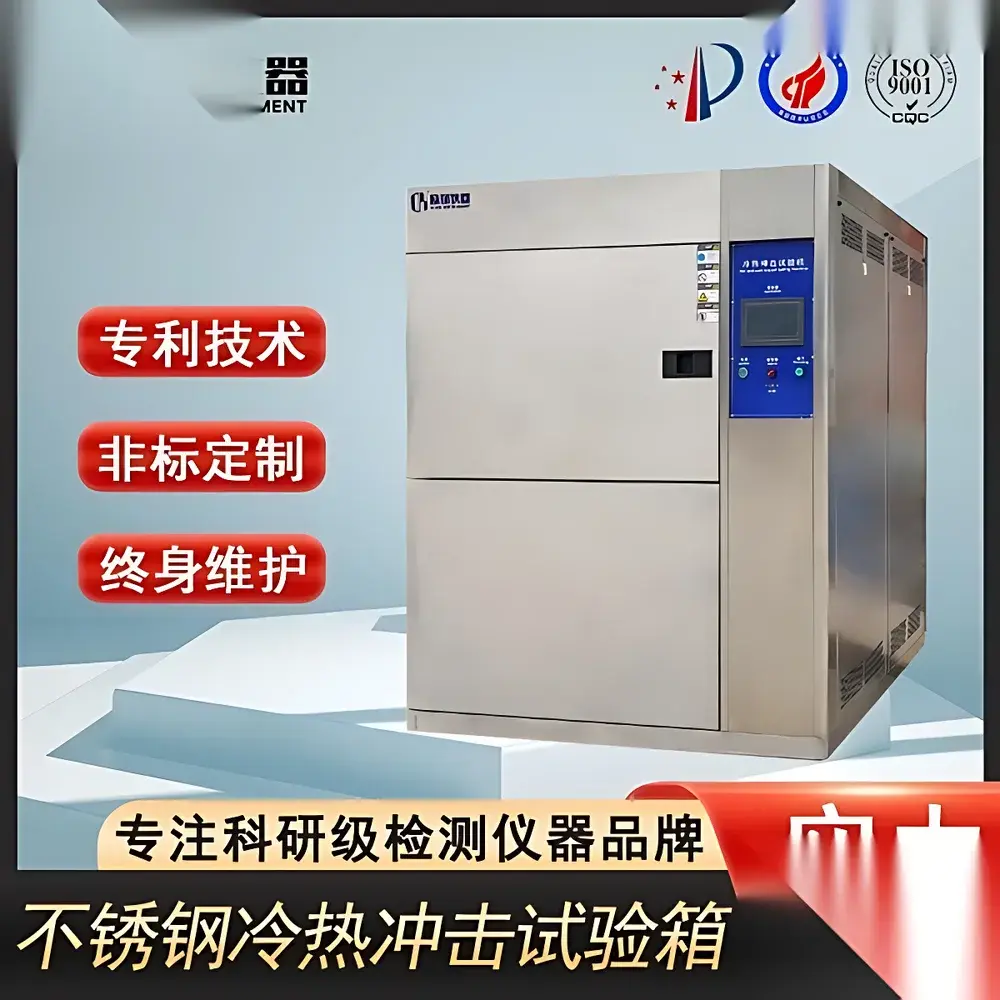
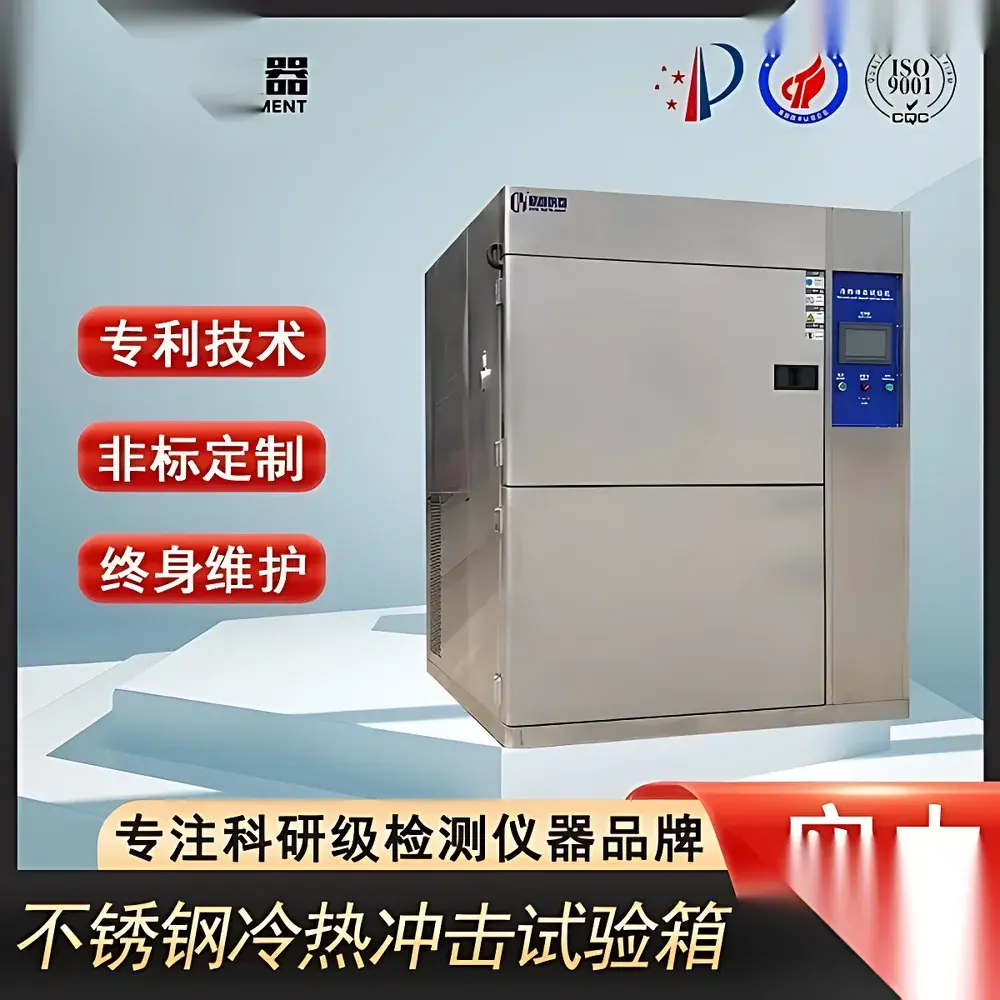
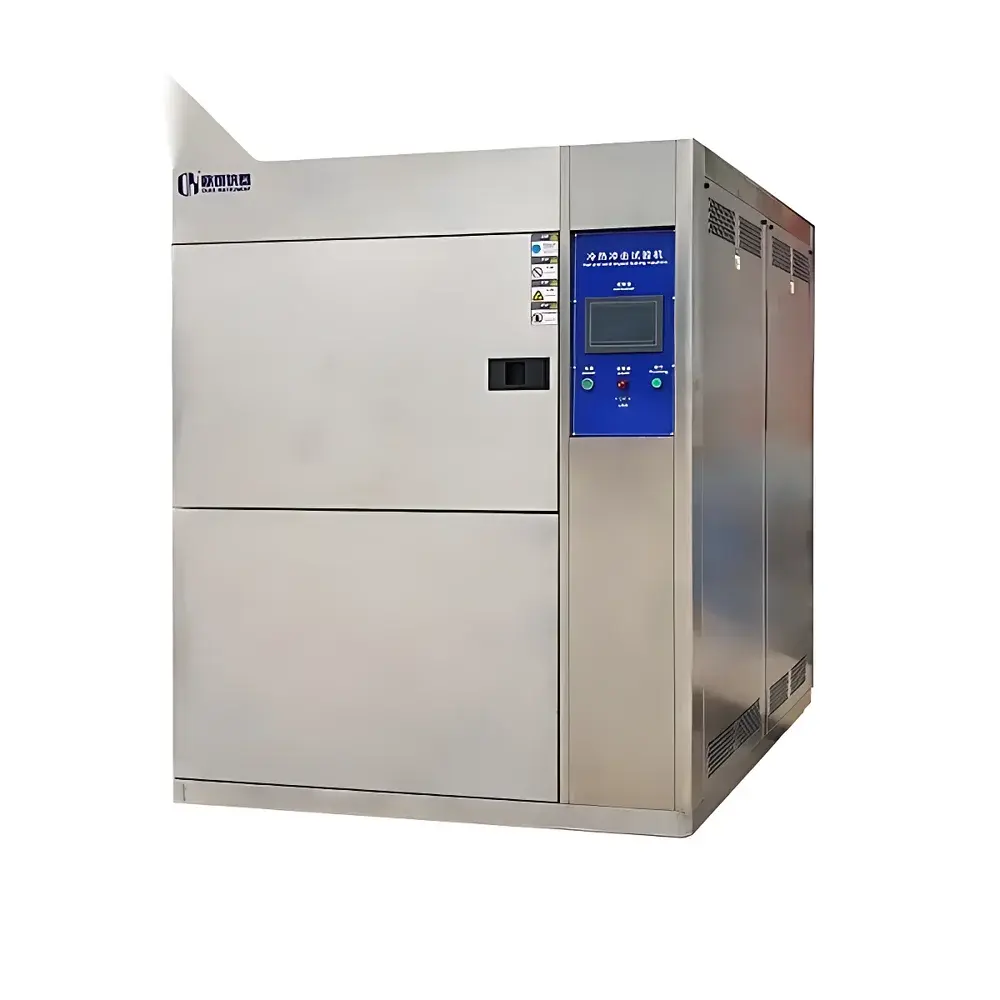
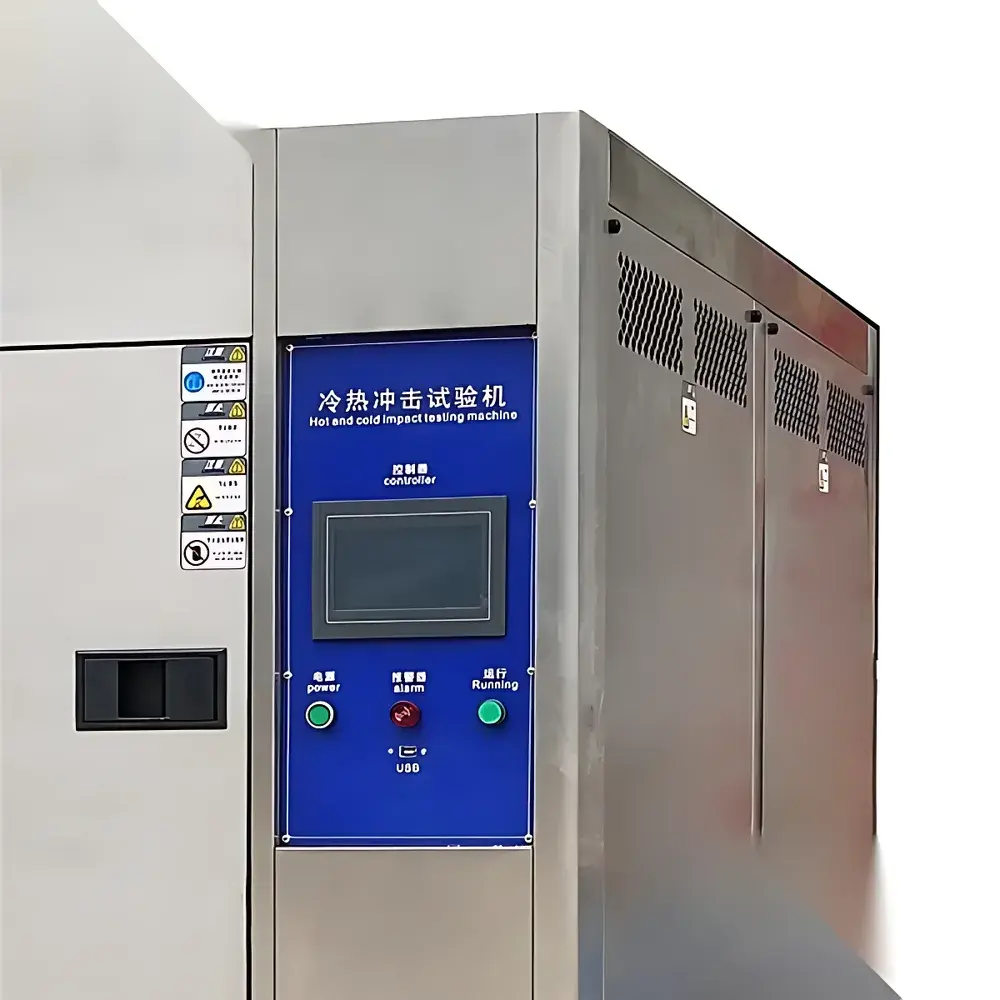
Thermal Shock Test Chamber OK-HH Series – Three-Zone Advanced Environmental Test System
| Key | Brand: OEM |
|---|---|
| Origin | Imported |
| Manufacturer Type | Authorized Distributor |
| Price | USD 12,500 (FOB) |
| Temperature Range (Hot Zone) | RT to +200 °C |
| Temperature Range (Cold Zone) | RT to −70 °C |
| Test Zone Range | +60 °C to +150 °C (hot shock) |
| Temperature Uniformity | ±2.0 °C |
| Control Accuracy | ±0.5 °C |
| Refrigeration | Dual-stage cascade system with R404A/R23 refrigerants |
| Construction | Interior – SUS#304 mirror-finish stainless steel |
| Insulation | High-density fire-retardant PU foam |
| Power Supply | AC 380 V ±5%, 50 Hz ±0.5 Hz, 3-phase 5-wire |
Overview
The OK-HH Series Thermal Shock Test Chamber is an engineered environmental test system designed for accelerated evaluation of material and component reliability under rapid, extreme temperature transitions. Based on the principle of three-zone thermal separation, it employs independent hot and cold reservoirs—each thermally isolated from the test chamber—to deliver high-fidelity thermal shock profiles without cross-contamination of thermal mass. Unlike two-zone systems relying on mechanical basket transfer, this architecture ensures true static-sample testing: the specimen remains stationary while high-speed pneumatic dampers switch airflow between pre-conditioned zones. This eliminates mechanical vibration artifacts and enables precise correlation between thermal transients and resulting microstructural or interfacial failures—critical for qualification of aerospace composites, automotive ECUs, power semiconductor modules, and hermetically sealed optoelectronic packages.
Key Features
- Three-Zone Architecture: Dedicated hot zone (RT to +200 °C), cold zone (RT to −70 °C), and test zone—enabling simultaneous conditioning and near-instantaneous thermal transition (≤5 min recovery time).
- Dual-Stage Cascade Refrigeration: German-sourced semi-hermetic compressors operating in a two-circuit configuration (R404A high-stage / R23 low-stage), coupled with an evaporative condenser for stable sub-zero performance and energy-efficient load modulation.
- High-Fidelity Thermal Control: PID-controlled SSR-driven heating and proportional expansion valve-regulated cooling yield ±0.5 °C setpoint accuracy and ±2.0 °C uniformity across the working volume.
- Static-Sample Testing Protocol: Pneumatically actuated insulated dampers route conditioned air directly into the test chamber—eliminating motion-induced stress and ensuring repeatability per ASTM E1457 and IEC 60068-2-14.
- Modular Structural Integrity: Interior constructed from electropolished SUS#304 stainless steel; exterior options include brushed stainless or industrial-grade epoxy-powder coating; insulation comprises imported flame-retardant polyurethane foam (UL94 V-0 rated).
- Configurable Test Volume: Four standard models (OK-HH-49 to OK-HH-225) support internal volumes from 42 L to 252 L, with custom dimensions available to accommodate large-format battery packs or avionics enclosures.
Sample Compatibility & Compliance
The OK-HH Series accommodates rigid and semi-rigid specimens up to 60 kg (depending on model), including PCB assemblies, molded plastic housings, metal weldments, elastomeric gaskets, and multi-layer ceramic substrates. Its static-test design preserves solder joint integrity during cycling and avoids false failure modes associated with mechanical handling. The system fully complies with internationally recognized thermal shock and temperature change standards—including IEC 60068-2-14 (Test N), MIL-STD-810H Method 503.5, GJB 150.5A–2009, GB/T 2423.22–2012, and QC/T 17–1992 for automotive components. All thermal profiles are traceable to NIST-calibrated Pt100 sensors, and data logging meets GLP/GMP requirements for audit-ready test records.
Software & Data Management
Equipped with embedded Windows-based controller firmware (v3.2+), the chamber supports real-time monitoring of zone temperatures, damper position status, compressor discharge pressure, and refrigerant saturation points. Exportable CSV logs include timestamped thermocouple readings (T1–T6), setpoint deviations, and alarm history with ISO 8601 timestamps. Optional Ethernet/IP interface enables integration into centralized MES platforms and supports OPC UA communication for automated test sequencing. For regulated environments, optional 21 CFR Part 11-compliant software adds electronic signatures, role-based access control, and immutable audit trails—validated per IQ/OQ protocols upon installation.
Applications
- Qualification of printed circuit board assemblies subjected to reflow soldering residual stress and field thermal cycling.
- Evaluation of adhesive bond strength degradation at polymer–metal interfaces in EV battery modules.
- Validation of hermetic seal integrity in MEMS sensors exposed to −65 °C to +150 °C transitions.
- Accelerated life testing of optical fiber connectors per EIA-364-32 thermal shock protocol.
- Material compatibility screening for cryogenic fuel system components used in liquid hydrogen propulsion.
- Reliability assessment of conformal-coated military-grade electronics per MIL-STD-810H, Method 503.5.
FAQ
What distinguishes the three-zone design from two-zone thermal shock chambers?
The three-zone architecture isolates thermal energy storage from the test space, enabling faster transitions, superior temperature stability, and elimination of mechanical wear from moving baskets—resulting in higher reproducibility and longer mean time between failures (MTBF) for the test system itself.
Is external cooling water required for operation?
Yes. The dual-stage cascade refrigeration system requires a dedicated closed-loop cooling water supply (10 m³/h capacity) with inlet temperature ≤32 °C. A remote dry cooler or cooling tower must be installed externally per ASHRAE Guideline 15.
Can the chamber be validated for GxP compliance?
Yes. With optional 21 CFR Part 11 software, IQ/OQ documentation packages, and NIST-traceable sensor calibration certificates, the system supports full validation for pharmaceutical, medical device, and aerospace quality systems.
What is the maximum sample weight supported in the OK-HH-225 model?
The standard test chamber supports static loads up to 60 kg; structural reinforcement kits are available for payloads up to 100 kg upon engineering review.
Does the system support programmable ramp-and-soak profiles beyond standard shock cycles?
Yes. The controller supports user-defined multi-step temperature programs—including dwell times, linear ramps, and conditional triggers—enabling simulation of real-world thermal histories per ISO 16750-4 and SAE J2223.



