
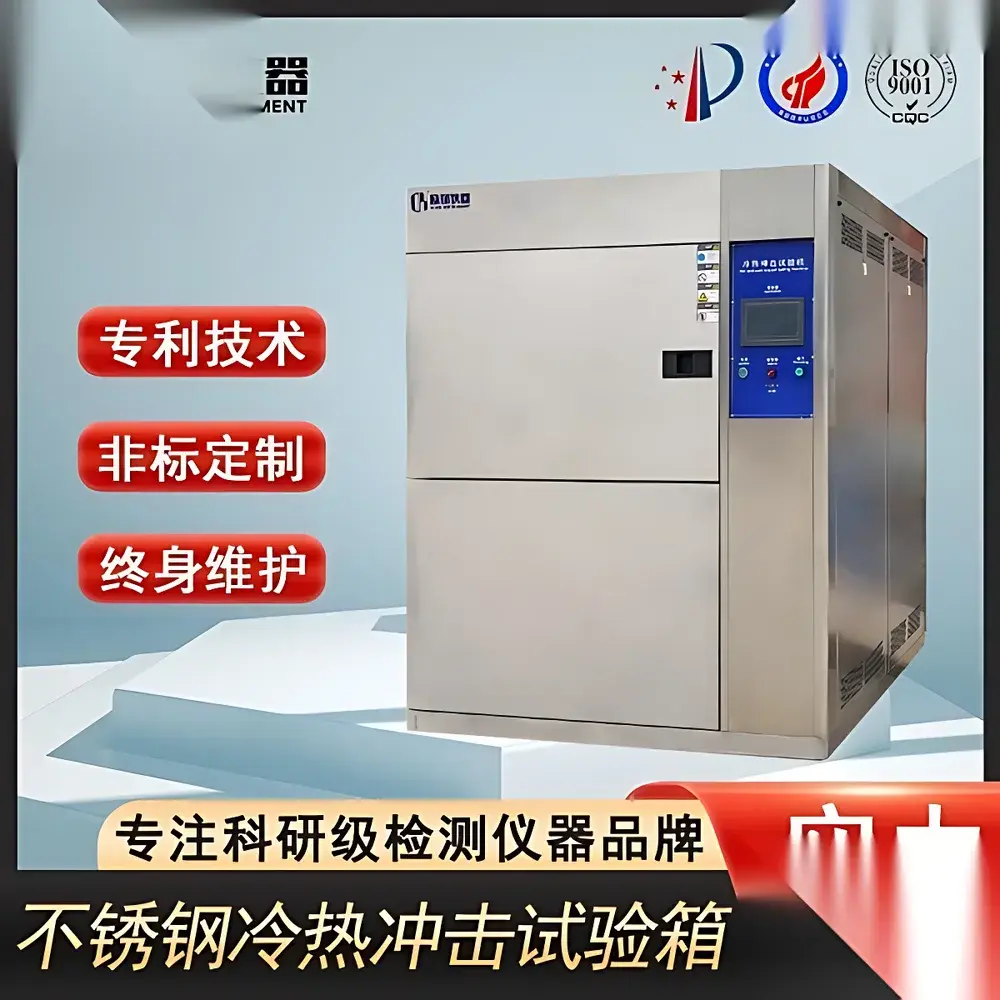
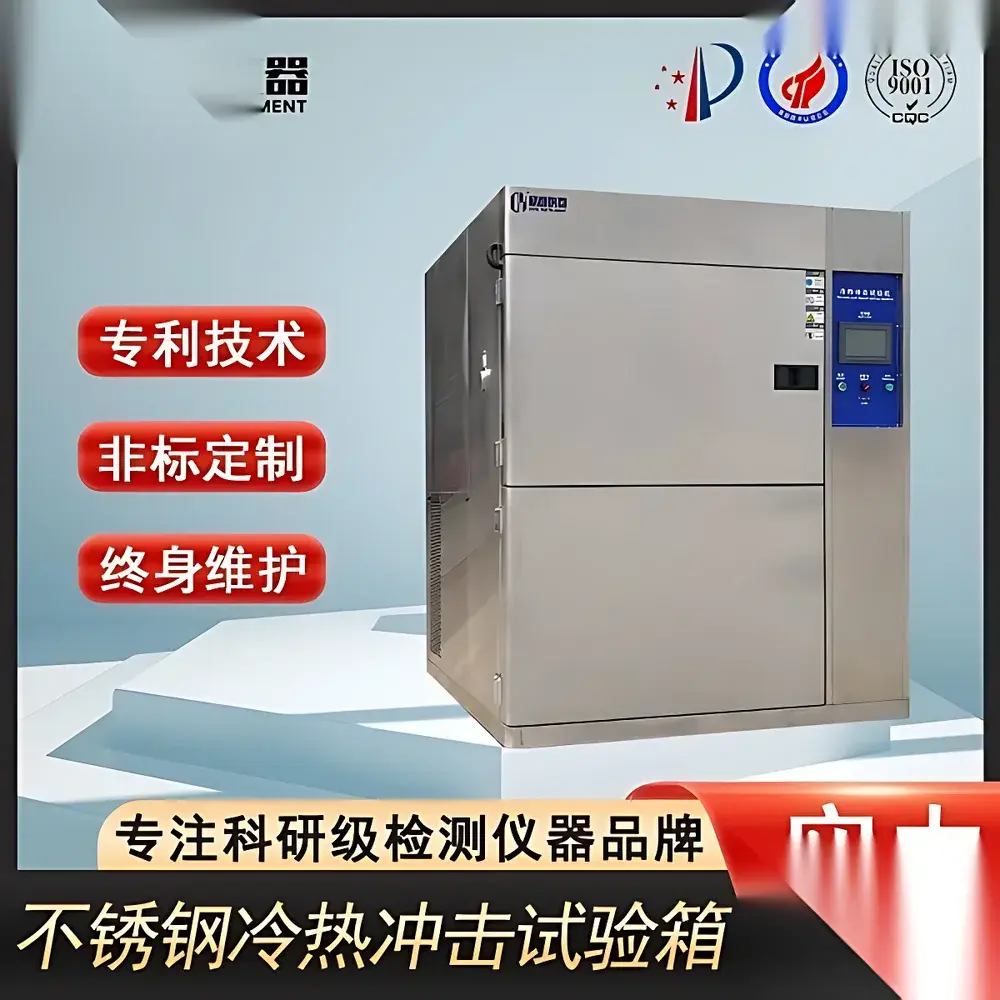
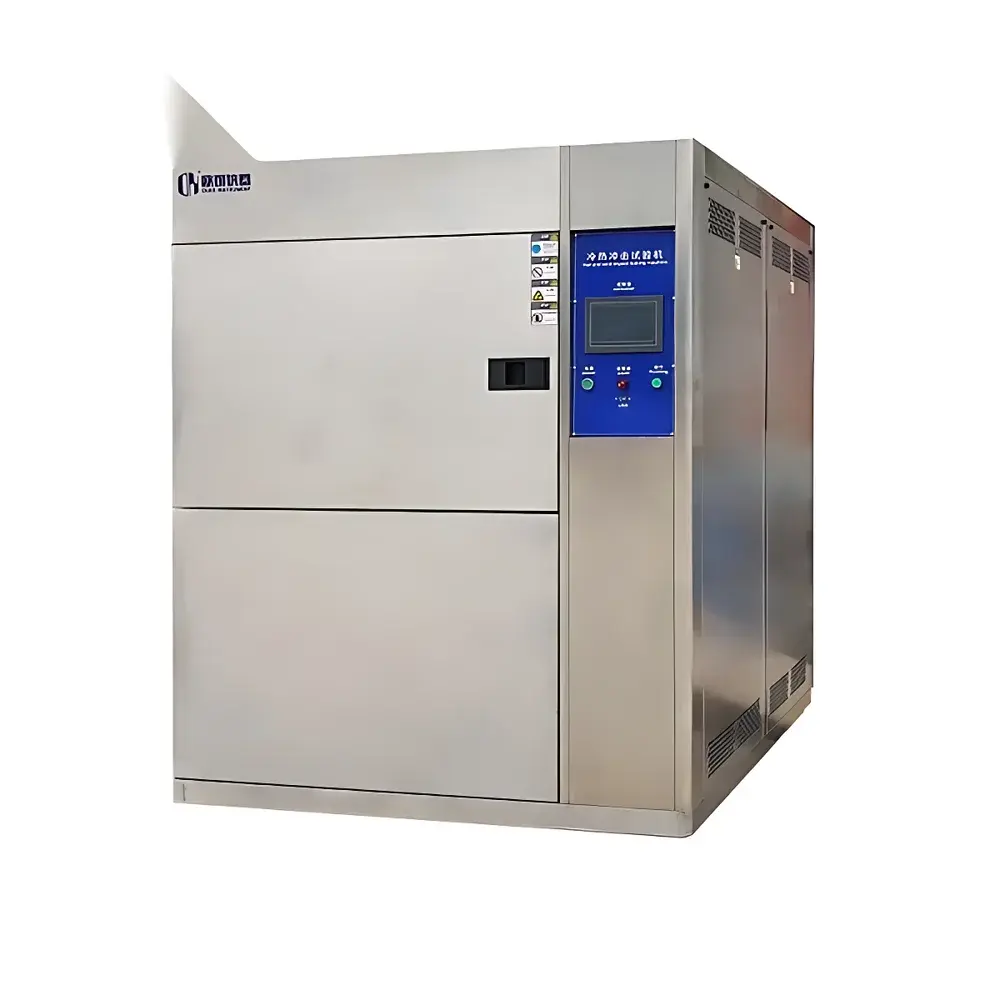
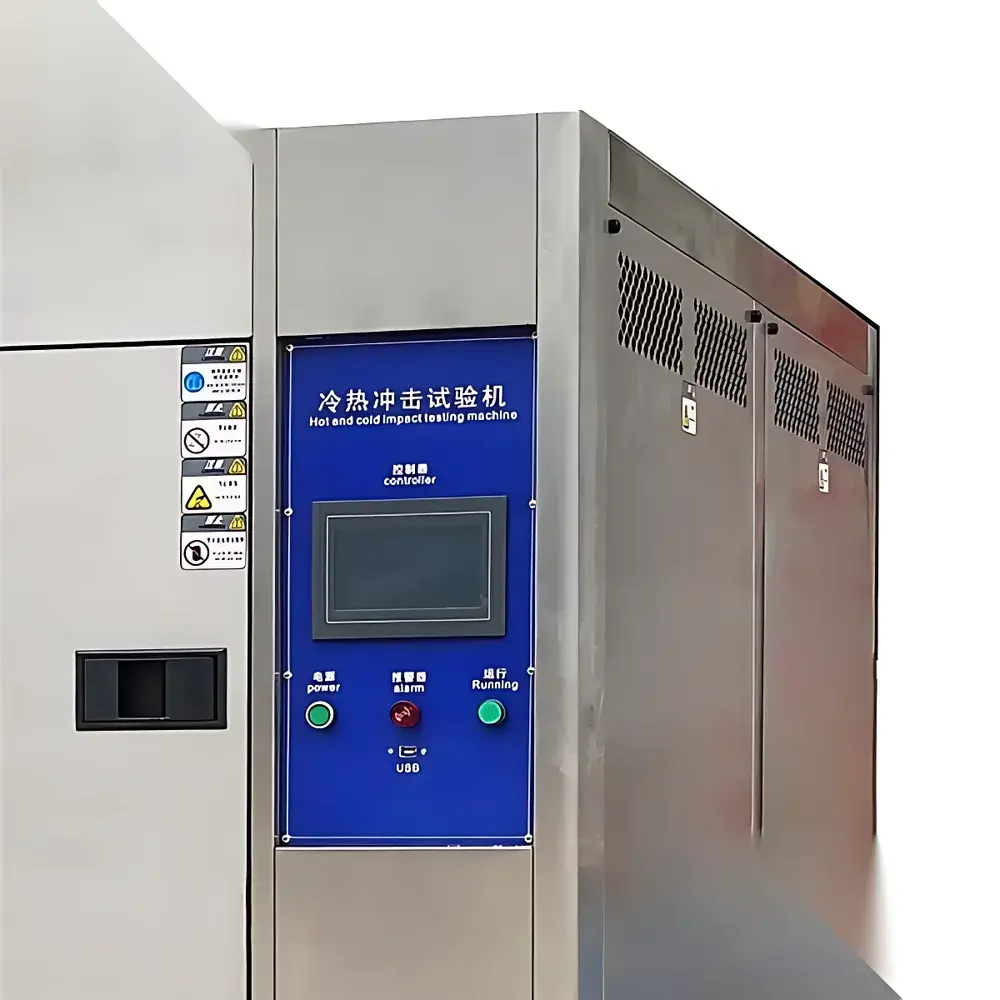
Thermal Shock Test Chamber – High-Low Temperature Cycling Environmental Test Chamber
| Brand | OEM / Private Label |
|---|---|
| Origin | Imported |
| Manufacturer Type | Authorized Distributor |
| Price | USD 11,200 (FOB) |
| Internal Dimensions (W×H×D) | 40 × 35 × 30 cm |
| External Dimensions | 140 × 180 × 145 cm |
| Low-Temperature Zone Range | −70 °C to −10 °C |
| High-Temperature Zone Range | +60 °C to +120 °C |
| Thermal Shock Range | −40 °C to +150 °C |
| Cooling Rate (70 °C drop) | ≈85 min |
| Refrigeration System | Dual-stage cascade refrigeration with water-cooled hermetic or semi-hermetic compressors (EU/US-sourced) |
| Control Interface | 7-inch full-color TFT touchscreen (English/Chinese switchable) |
| Communication Ports | RS232 / RS485 / USB (configurable) |
| Compliance | Meets IEC 60068-2-14, MIL-STD-810H Method 503.5, JIS Z 8701-4 |
Overview
The Thermal Shock Test Chamber is an engineered environmental test system designed to evaluate material and component reliability under rapid, repeated transitions between extreme high and low temperatures. Operating on the principle of dual-chamber thermal shock—where specimens are mechanically transferred between isolated hot and cold zones—the chamber delivers precise, reproducible thermal stress profiles without ambient air interference. This methodology ensures compliance with internationally recognized accelerated aging and qualification protocols, including IEC 60068-2-14 (Change of temperature — Method N: Change of temperature by transfer between chambers) and MIL-STD-810H Method 503.5 (Temperature Shock). The unit is widely deployed in electronics manufacturing, automotive component validation, aerospace hardware qualification, and polymer stability testing where thermal expansion mismatch, solder joint fatigue, seal integrity, and coating adhesion must be rigorously assessed prior to field deployment.
Key Features
- Stainless steel (SUS304) inner chamber construction with powder-coated carbon steel outer housing and high-density polyurethane (PU) foam insulation (≥100 mm thickness) for thermal stability and energy efficiency.
- Dual-zone independent temperature control: high-temperature zone (60–120 °C), low-temperature zone (−70 to −10 °C), enabling programmable shock cycles with transition times <15 seconds (mechanical basket transfer).
- Water-cooled cascade refrigeration system using EU- or US-sourced hermetic or semi-hermetic compressors—designed for continuous operation and long-term reliability under industrial laboratory conditions.
- 7-inch full-color TFT LCD touchscreen controller with intuitive icon-based navigation, real-time trend graphing, multi-segment ramp-soak programming, and user-accessible calibration offset adjustment.
- Integrated safety architecture: over-temperature cutoff, compressor high-pressure/overheat protection, heater dry-run prevention, phase failure detection, and non-fuse overcurrent breakers on all critical circuits.
- Modular wiring harness with numbered terminal coding for simplified maintenance, fault tracing, and regulatory-compliant service documentation.
Sample Compatibility & Compliance
The chamber accommodates standard electronic assemblies (PCBs, connectors, sensors), automotive ECUs, medical device housings, and polymer-based packaging up to 40 × 35 × 30 cm internal volume. All wetted surfaces—including steam generator tanks and humidification piping—are constructed from electropolished 304 stainless steel to prevent scale formation, microbial growth, or ion leaching—critical for ISO 13485-certified medical device testing environments. The system conforms to electromagnetic compatibility (EMC) requirements per EN 61326-1 and meets mechanical safety standards per EN 61010-1. Optional audit-ready configuration supports 21 CFR Part 11-compliant electronic signatures and GLP/GMP traceability when paired with validated data logging software.
Software & Data Management
The embedded controller supports local data storage (≥10,000 cycle logs) with timestamped temperature readings at user-defined intervals (1–60 sec). Standard RS232/RS485/USB interfaces enable integration into centralized lab management systems (LIMS) or MES platforms. Optional PC-based software provides remote monitoring, automated report generation (PDF/CSV), deviation alerting via email/SNMP, and raw data export compatible with MATLAB, Python Pandas, and JMP for statistical process analysis. All firmware updates are digitally signed and version-locked to ensure integrity during FDA or ISO 17025 audits.
Applications
- Qualification of printed circuit board assemblies (PCBAs) per IPC-9701A for thermal cycling endurance.
- Solder joint reliability assessment of BGA and QFN packages under JEDEC JESD22-A104E conditions.
- Validation of adhesive bond strength in composite aerospace structures subjected to −55/+125 °C excursions.
- Accelerated life testing of lithium-ion battery modules under thermal shock-induced electrolyte migration stress.
- Material compatibility screening for pharmaceutical primary packaging exposed to seasonal logistics temperature extremes.
FAQ
What is the typical thermal shock transition time between chambers?
Mechanical basket transfer achieves ≤12 seconds for specimens ≤5 kg, meeting IEC 60068-2-14 Category II timing requirements.
Can this chamber perform humidity-controlled thermal shock?
No—this is a dry thermal shock system. Humidity control is not integrated; for combined temperature/humidity shock, a separate ESS (Environmental Stress Screening) chamber with steam humidification is recommended.
Is the controller compliant with FDA 21 CFR Part 11 for electronic records?
The base controller supports audit trail logging; full Part 11 compliance requires optional software license with role-based access control, electronic signature workflow, and secure database encryption.
What maintenance intervals are recommended for the refrigeration system?
Compressor oil and filter replacement every 12 months or 4,000 operating hours; annual calibration verification of PT100 sensors and thermocouple inputs per ISO/IEC 17025 guidelines.
Does the chamber include test port sealing gaskets and cable feedthroughs?
Yes—a single Φ50 mm test port with silicone O-ring seal and removable brass compression fitting is supplied as standard; additional ports or custom feedthroughs are available upon request.



