
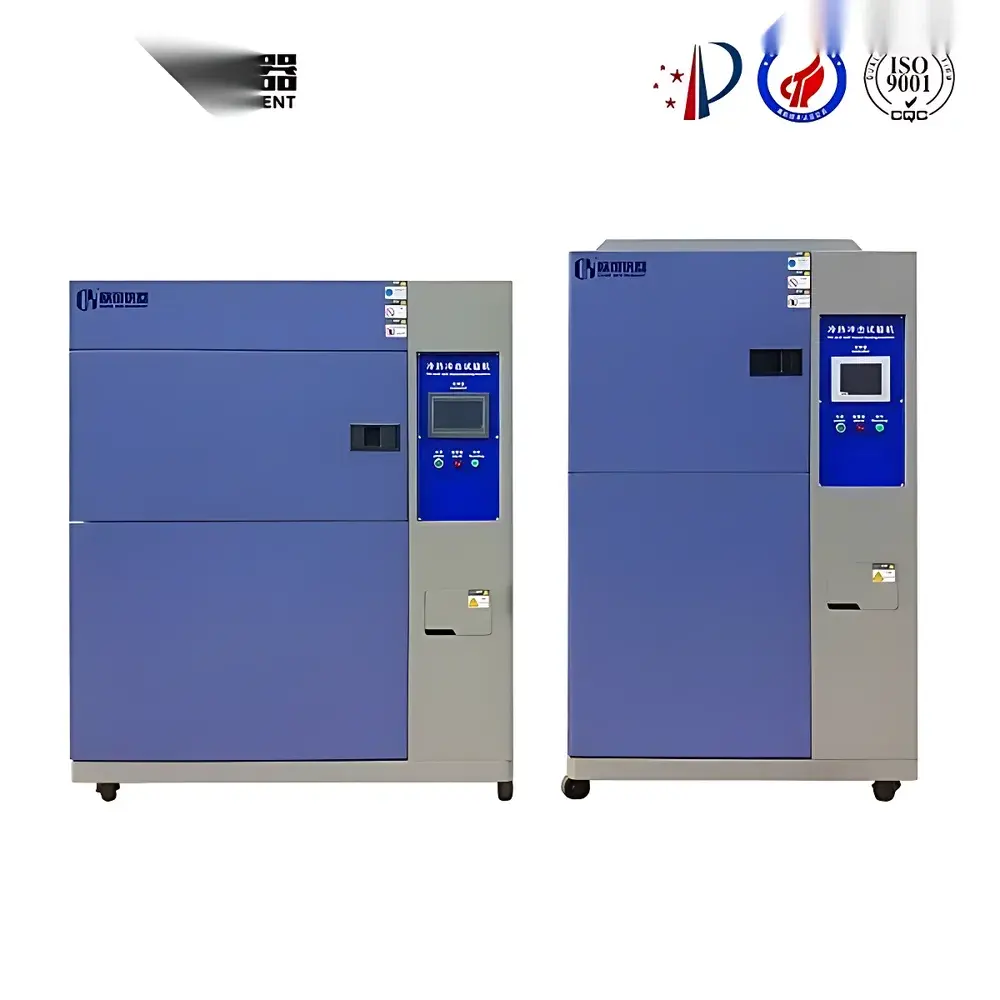
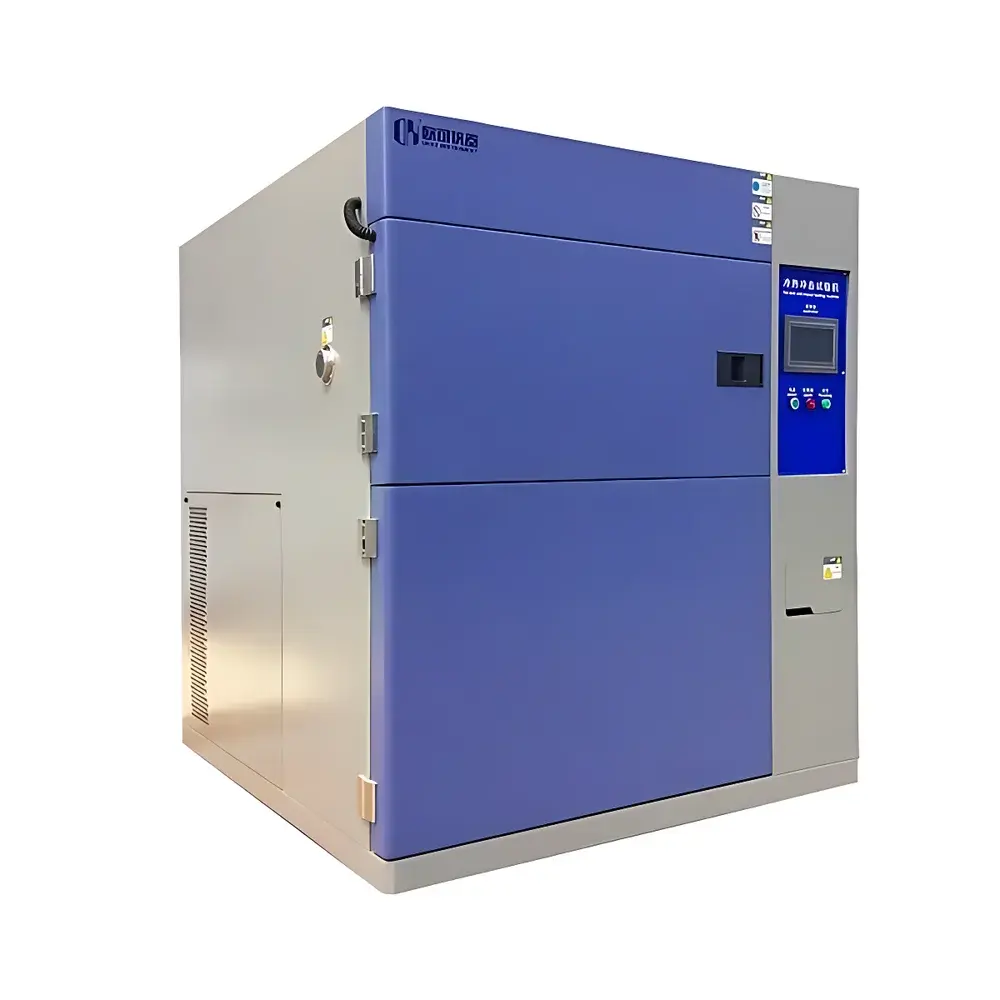
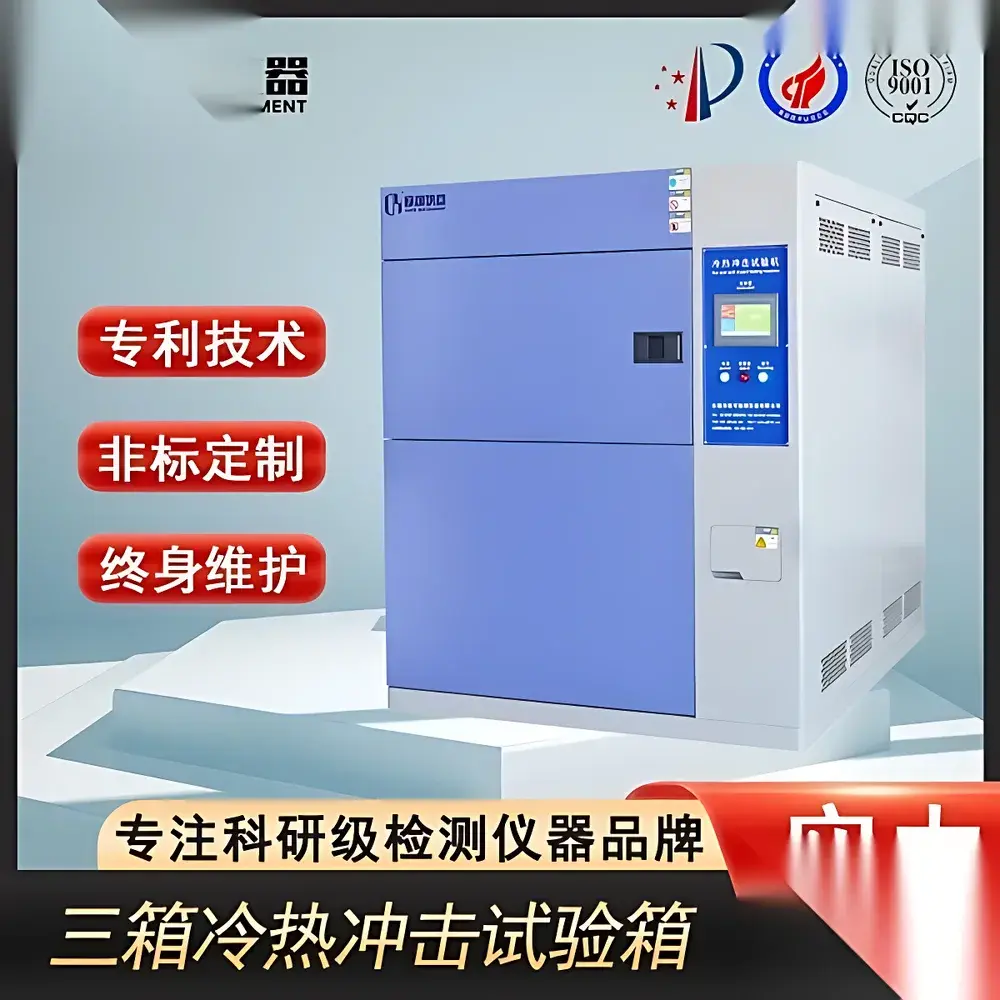
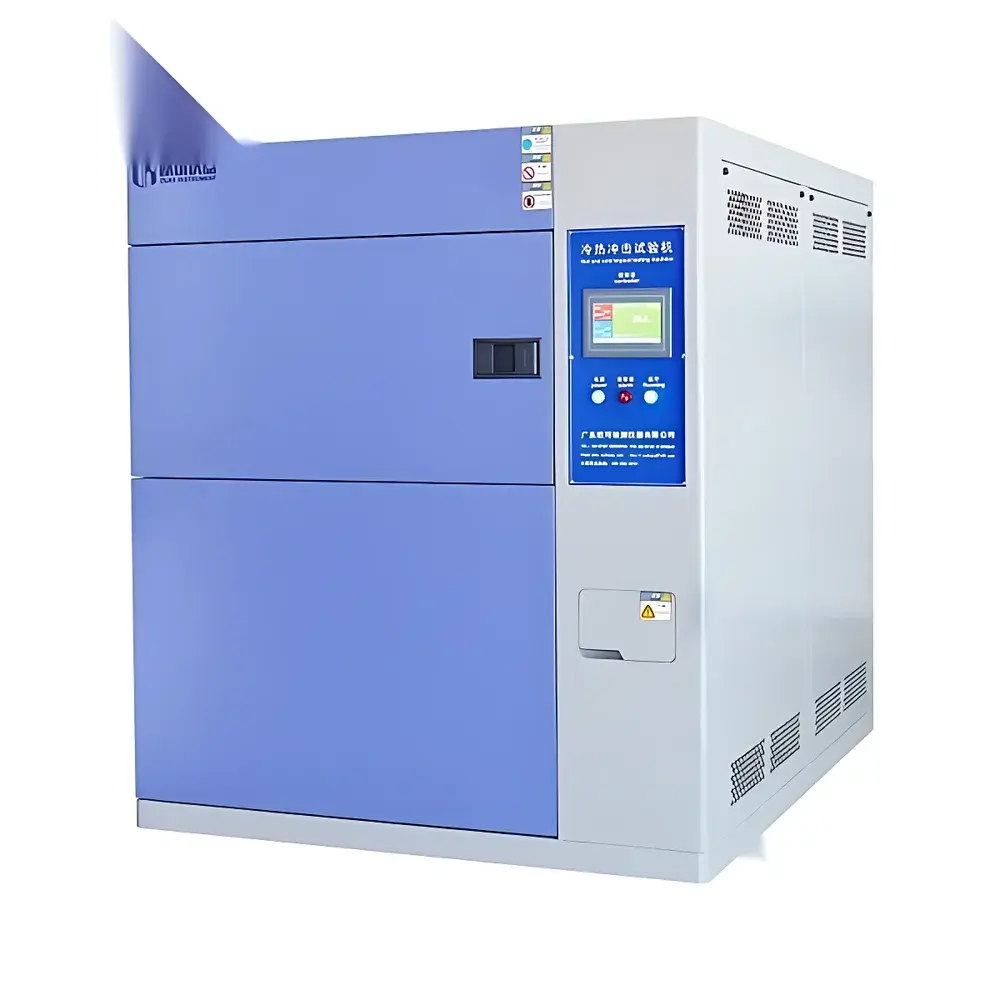
Thermal Shock Test Chamber – High-Temperature Cycling Environmental Chamber
| Brand | OEM / Generic Industrial Grade |
|---|---|
| Origin | Imported |
| Manufacturer Type | Authorized Distributor |
| Price | USD 11,200 (FOB) |
| Temperature Range | −70°C to +180°C |
| Thermal Transition Time (Typ.) | ≤15 s (−40°C ↔ +150°C) |
| Internal Volume | 100 L–1000 L (Customizable) |
| Control System | TEMI880 Color Touchscreen PLC Controller (EN/CN Switchable) or TEMI300 Membrane Keypad Controller (English Only) |
| Compliance | IEC 60068-2-14, MIL-STD-810H Method 503.5, GB/T 2423.22 |
Overview
The Thermal Shock Test Chamber is an industrial-grade environmental test system engineered for rapid, repeatable thermal cycling between extreme high and low temperature zones. It operates on the principle of two-chamber (hot/cold) or single-chamber (air-blast) thermal shock methodology—enabling precise simulation of real-world thermal stress conditions encountered during product launch, qualification, and reliability screening. Designed for aerospace components, automotive ECUs, semiconductor packaging, PCB assemblies, and medical device housings, this chamber delivers controlled, programmable transitions with minimal overshoot and high thermal stability. Its architecture supports both storage-type (dual-zone) and air-transfer (single-zone) configurations, with optional humidity control for combined thermal-hygrothermal shock testing per IEC 60068-2-30.
Key Features
- High-reliability refrigeration system featuring original French Tecumseh (or equivalent) hermetic compressors, optimized for long-term operation under cyclic load conditions.
- Dual-circuit or cascade low-temperature refrigeration design ensures stable sub-zero performance down to −70°C while maintaining rapid recovery after door opening.
- Balanced Temperature & Humidity Control (BTSC) system with PID-based regulation achieves ±0.5°C temperature uniformity (±2°C at extremes) and ±2.5% RH accuracy (when humidified).
- Forced-air circulation via multi-wing centrifugal blower provides broadband airflow distribution—validated to meet IEC 60068-3-3 requirements for velocity and homogeneity across test volume.
- Robust mechanical construction: outer shell in electrostatically painted cold-rolled steel or brushed SUS304 stainless steel; inner chamber in mirror-finished SUS304; insulation using rigid polyurethane foam (≥100 mm thick) and/or ultra-fine glass fiber.
- Integrated safety architecture includes compressor overheat/overcurrent/overpressure protection, dry-run prevention for heaters and humidifiers, chamber over-temperature cutoff, and automatic water-level monitoring for steam generation systems.
Sample Compatibility & Compliance
The chamber accommodates standard test specimens up to 300 mm × 300 mm × 300 mm (custom racks available), with dual adjustable sample trays and a 50 mm diameter cable/port access on the left side. Viewing window employs double-layer tempered safety glass with anti-condensation heating to maintain optical clarity during thermal transitions. All models comply with essential environmental testing standards including IEC 60068-2-14 (change of temperature), IEC 60068-2-1 (cold), IEC 60068-2-2 (dry heat), and MIL-STD-810H Method 503.5. Optional calibration certification (traceable to NIST or national metrology institutes) and IQ/OQ documentation packages are available for GLP/GMP-regulated laboratories.
Software & Data Management
Equipped with RS485/RS232 or Ethernet communication interfaces, the chamber integrates seamlessly with LabVIEW, MATLAB, or custom SCADA platforms. The included PC-based software enables full remote operation—including profile programming, real-time data logging (timestamped temperature/humidity/alarms), trend analysis, and PDF report generation. Audit trails, user-level access control (admin/operator), and electronic signature support align with FDA 21 CFR Part 11 requirements when configured with validated software modules. Data export formats include CSV, Excel, and XML for traceability and quality management system (QMS) integration.
Applications
This thermal shock chamber serves critical roles in accelerated life testing (ALT), failure mode analysis (FMA), solder joint reliability validation, encapsulant delamination studies, and qualification of conformal coatings. It is routinely deployed in R&D labs for evaluating material coefficient of thermal expansion (CTE) mismatch, in manufacturing QA for incoming inspection of castings and molded parts, and in third-party certification labs supporting ISO/IEC 17025 accreditation. Common test sequences include 100–1000 cycles between −40°C and +125°C, dwell times configurable from 10 minutes to 24 hours, and transition rates exceeding 10°C/s—fully programmable per JEDEC JESD22-A104 or AEC-Q200 protocols.
FAQ
What is the typical thermal transition time between extreme temperatures?
Standard dual-zone configurations achieve ≤15 seconds for −40°C ↔ +150°C transitions; single-zone air-blast variants typically require 20–30 seconds depending on volume and setpoint delta.
Is humidity control available as an option?
Yes—optional surface-evaporation humidification system extends functionality to thermal-hygrothermal shock per IEC 60068-2-30, with RH range 20–98% at 25–85°C.
Can the chamber be integrated into an automated test line?
Absolutely—the RS485 Modbus RTU or Ethernet TCP/IP interface supports PLC-level integration and synchronized triggering with external equipment such as power supplies or data acquisition units.
What maintenance intervals are recommended?
Compressor oil and refrigerant checks every 24 months; condenser coil cleaning every 6 months; calibration verification annually or per internal quality schedule.
Do you provide installation and commissioning support?
Yes—on-site mechanical/electrical commissioning, operational training, and factory acceptance testing (FAT) are available globally through certified service partners.



