
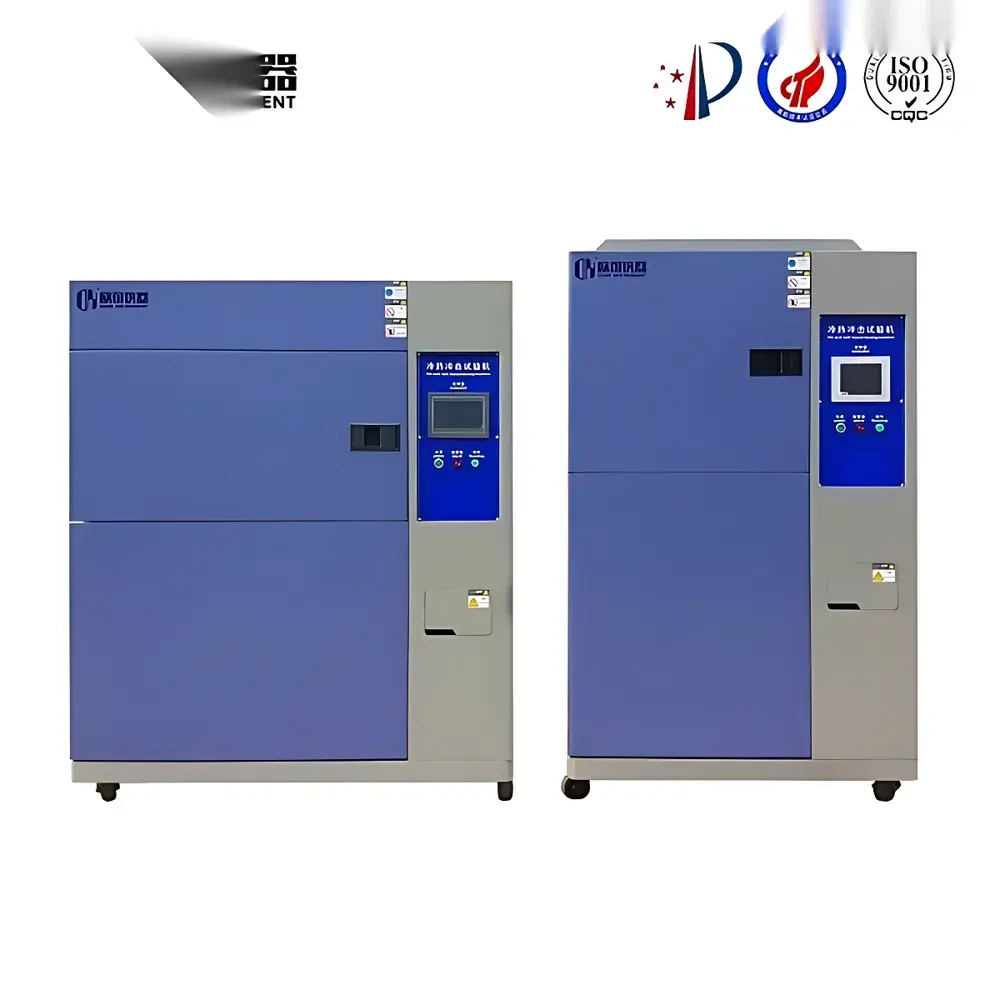
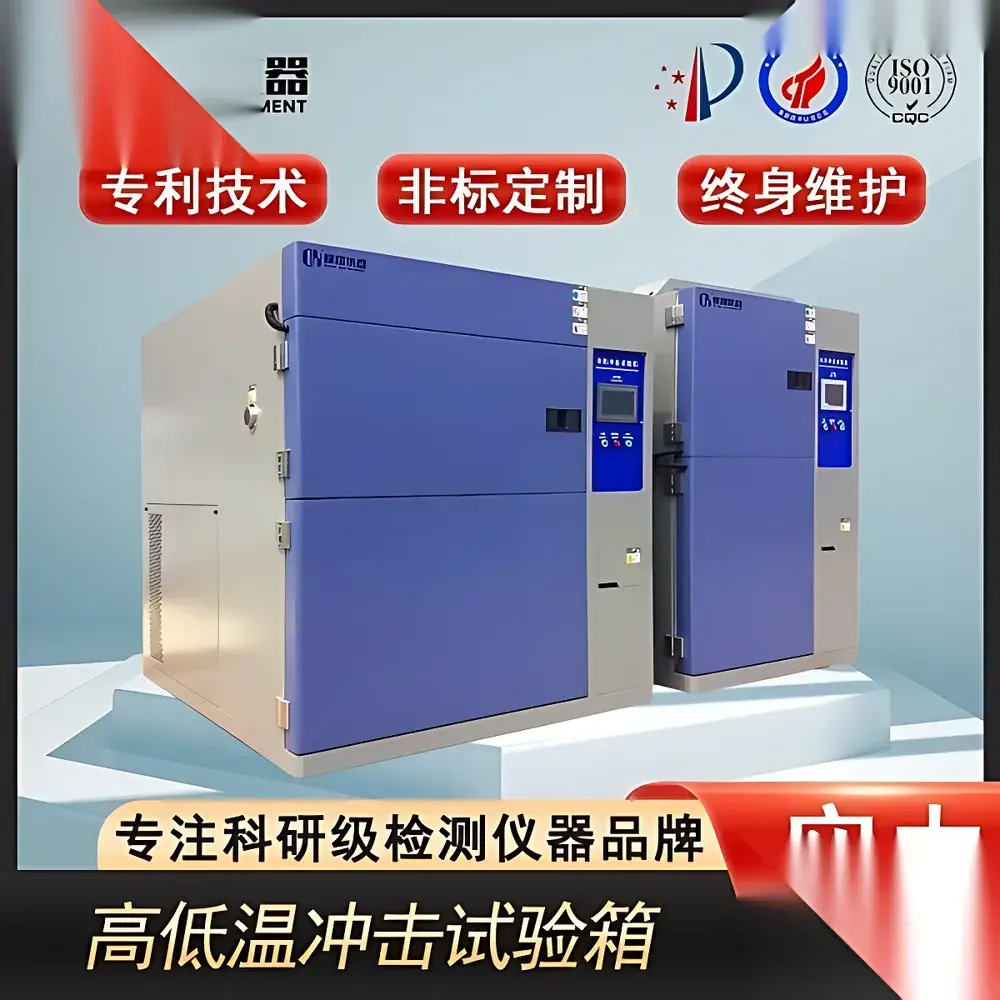
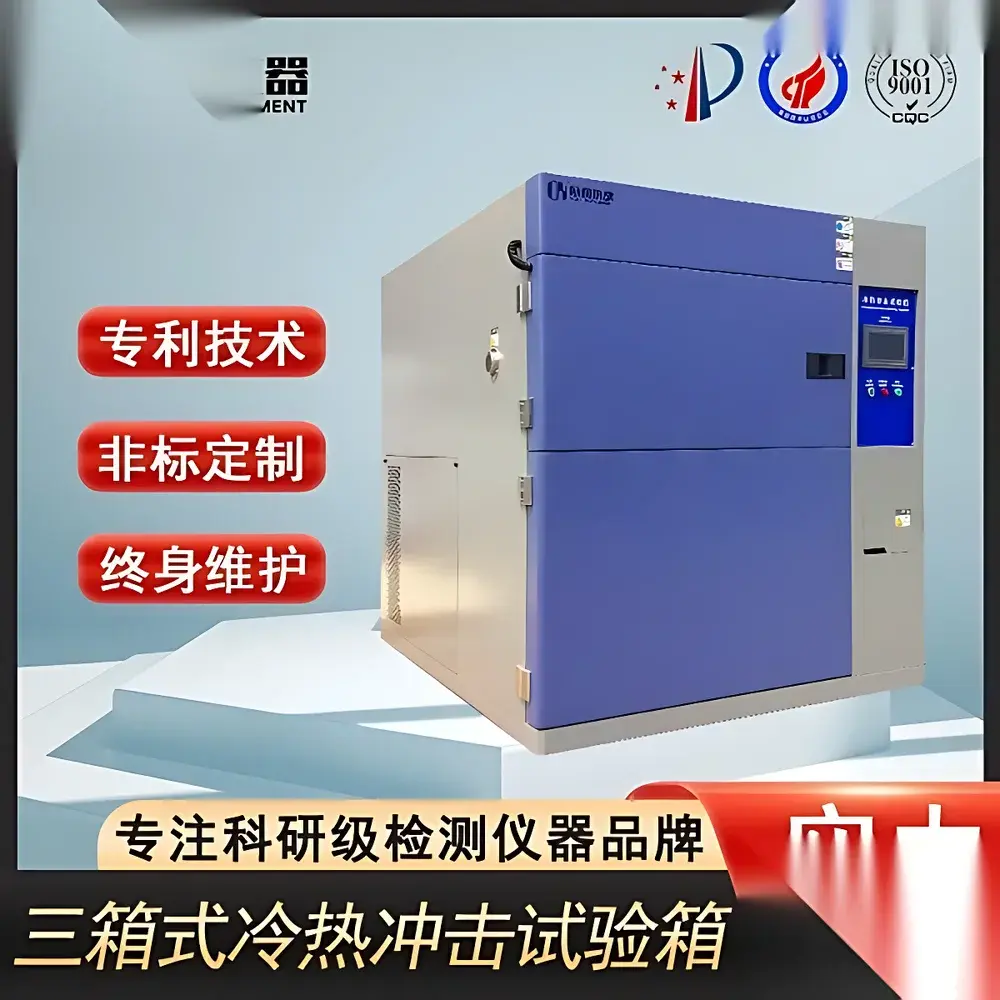
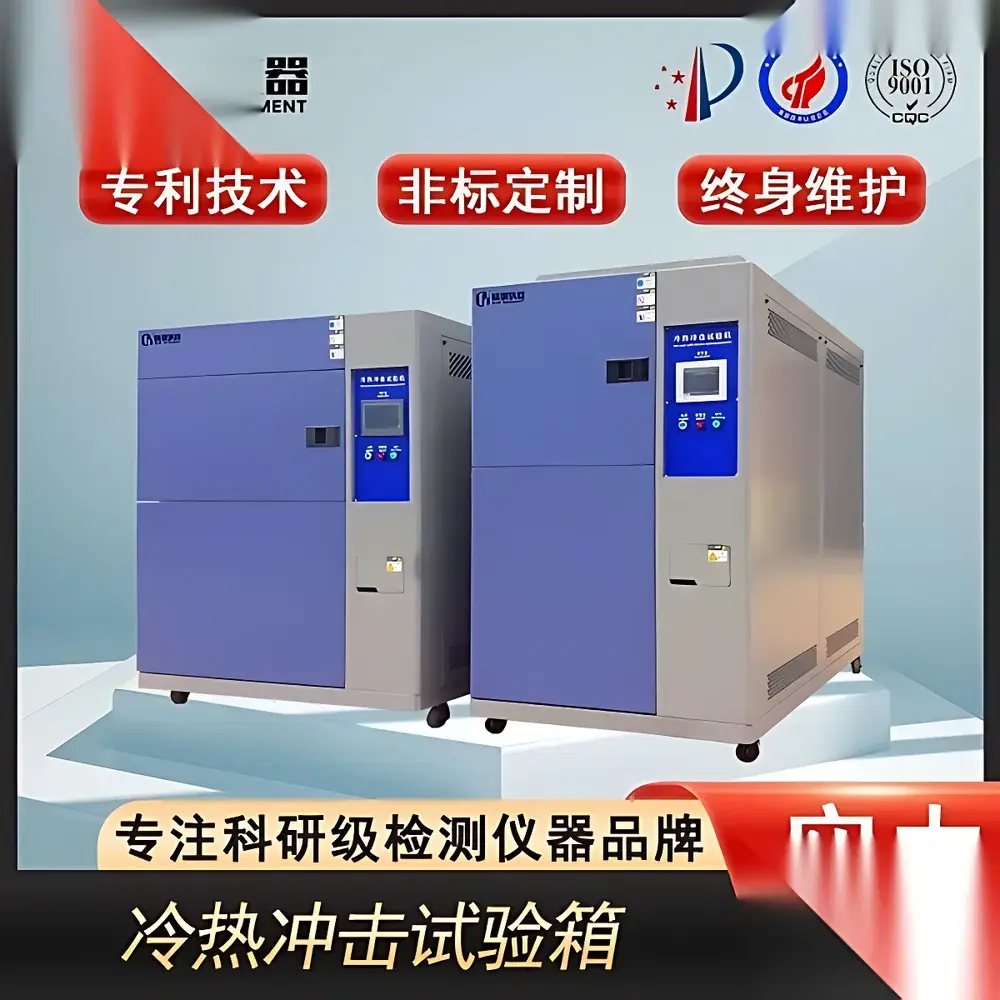
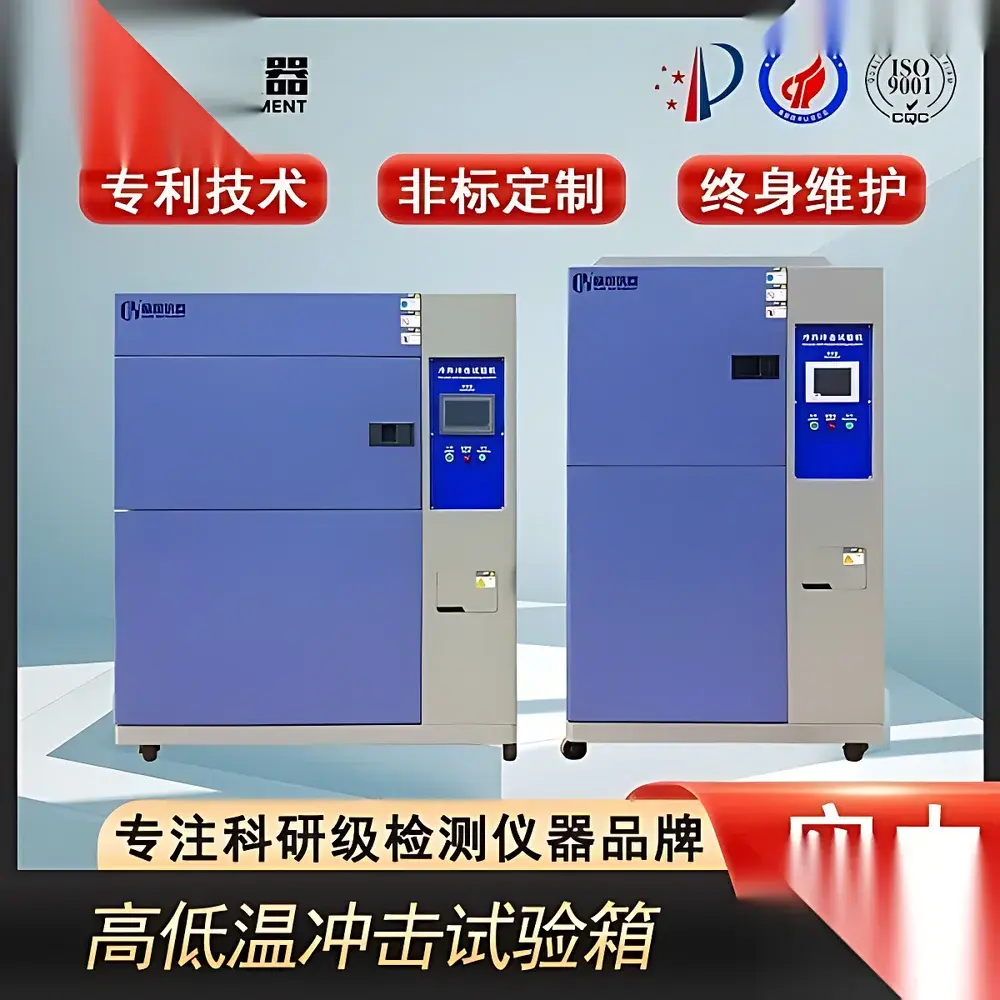
Thermal Shock Test Chamber – Industrial-Grade Dual-Stage Cryogenic System
| Brand | OEM |
|---|---|
| Origin | Imported |
| Manufacturer Type | Authorized Distributor |
| Power Supply | 3φ 5 kW / 380 VAC ±10% or 2φ 3 kW / 220 VAC ±10% |
| Inner Chamber Material | Mirror-Finish Stainless Steel (SUS304) |
| Outer Chamber Material | Powder-Coated Steel or Stainless Steel |
| Insulation | Rigid Polyurethane Foam + Glass Wool |
| Refrigeration | Twin-Circuit Cascade System with French Tecumseh Hermetic Compressors |
| Refrigerant | Environmentally Compliant HFC Blend |
| Controller | Touchscreen HMI with PID Algorithm |
| Safety Protections | Compressor Overheat/Overcurrent/High-Pressure, Dry Heater Burnout Prevention, Chamber Overtemperature, Low-Water-Level Alarm |
| Standard Accessories | Viewing Window with Interior LED Lighting, φ50 mm Cable Port (Left Side), Two Adjustable Sample Racks, Castor Wheels, Integrated Humidification Tank |
| Optional | RS-485/RS-232 Interface, External Data Logger, Internal Glass Observation Door, Glove Port |
| Compliance | Designed to Support ASTM D5229, ISO 11357-5, MIL-STD-810H Method 503.6, IEC 60068-2-14 Test Nb |
Overview
The Thermal Shock Test Chamber is an industrial-grade environmental simulation system engineered for rapid and repeatable thermal cycling between extreme high- and low-temperature zones. It operates on a dual-stage cascade refrigeration principle—comprising independent high-temperature and low-temperature refrigeration circuits interconnected via an evaporative condenser. This architecture enables precise control over thermal transition rates (typically ≤15 s transfer time between chambers) and stable dwell conditions at extremes ranging from −70 °C to +180 °C (configurable per model). The system is designed for evaluating material integrity, solder joint reliability, coating adhesion, and packaging performance under accelerated thermal stress—critical for aerospace component qualification, automotive electronics validation, and semiconductor packaging testing.
Key Features
- Dual-Zone Architecture: Physically segregated hot and cold chambers with pneumatically actuated transfer mechanism ensure minimal thermal cross-contamination and high repeatability across thousands of cycles.
- Cascade Refrigeration System: Utilizes two independent refrigeration loops—each powered by sealed Tecumseh compressors—optimized for energy efficiency and long-term stability under continuous operation.
- PID-Controlled Touchscreen HMI: Intuitive 7-inch color interface supports programmable multi-step profiles, real-time graphing, alarm logging, and user-level access control (operator/engineer/admin).
- Robust Thermal Insulation: 150 mm thick composite insulation—comprising rigid polyurethane foam (λ ≈ 0.022 W/m·K) and layered glass wool—minimizes heat leakage and improves chamber temperature uniformity (±1.5 °C within working volume).
- Comprehensive Safety Monitoring: Embedded sensors continuously monitor compressor discharge temperature, refrigerant pressure, heater surface temperature, water level in humidifier tank, and chamber ambient temperature—triggering automatic shutdown and event logging upon deviation.
- Modular Mechanical Design: Structural frame fabricated from heavy-gauge steel; interior chamber surfaces finished with electropolished SUS304 stainless steel for corrosion resistance and cleanability.
Sample Compatibility & Compliance
The chamber accommodates test specimens up to 500 mm × 500 mm × 500 mm (W×D×H) on height-adjustable sample racks. Its mechanical design and control architecture support compliance with internationally recognized environmental stress screening standards—including ASTM D5229 (low-temperature impact resistance), ISO 11357-5 (thermal shock in DSC calibration), MIL-STD-810H Method 503.6 (temperature shock), and IEC 60068-2-14 (test Nb). While the base configuration does not include built-in data audit trail functionality, optional RS-485/RS-232 interfaces enable integration with external LIMS or SCADA systems supporting 21 CFR Part 11–compliant electronic records when paired with validated third-party software.
Software & Data Management
The embedded controller stores up to 100 programmable test profiles and retains ≥30 days of timestamped operational data (setpoint, actual chamber temperature, alarm events, cycle count). Data export is supported via USB flash drive in CSV format for post-processing in MATLAB, Excel, or statistical analysis platforms. Optional communication modules allow remote monitoring and command execution via Modbus RTU or TCP/IP protocols. For regulated environments requiring full traceability, integration with validated laboratory information management systems (LIMS) or electronic batch record (EBR) platforms is feasible through custom API development—subject to site-specific IQ/OQ validation protocols.
Applications
- Qualification testing of printed circuit board assemblies (PCBAs) per IPC-9701A requirements for thermal cycling reliability.
- Evaluation of polymer-based encapsulants and underfill materials used in MEMS and optoelectronic packaging.
- Validation of adhesive bond strength in battery module housings subjected to repeated thermal expansion mismatch.
- Accelerated aging studies of lithium-ion cell separators and electrolyte formulations under alternating thermal stress.
- Pre-compliance screening for automotive ECUs targeting AEC-Q200 Grade 1 or Grade 2 qualification.
FAQ
What is the typical temperature transition time between hot and cold zones?
Standard models achieve ≤15 seconds for specimen transfer between chambers—verified per IEC 60068-2-14 Annex B requirements.
Can the chamber operate in single-zone mode (e.g., only high-temperature dwell)?
Yes—controller firmware supports standalone high-temp, low-temp, or combined shock modes without hardware modification.
Is humidity control integrated into this thermal shock system?
A basic humidification tank is included as standard; however, full RH control (e.g., 10–95% RH at elevated temperatures) requires optional steam generator and dedicated humidity sensor—configured separately from thermal cycling logic.
What maintenance intervals are recommended for the cascade refrigeration system?
Compressor oil analysis and refrigerant purity verification every 2,000 operating hours; filter-drier replacement every 12 months or after any refrigerant service event.
Does the unit comply with CE or UKCA marking requirements?
The base configuration meets EN 61000-6-2 (immunity) and EN 61000-6-4 (emission) standards; full CE/UKCA certification documentation is available upon request for configured units meeting local electrical safety directives (EN 61010-1).



