
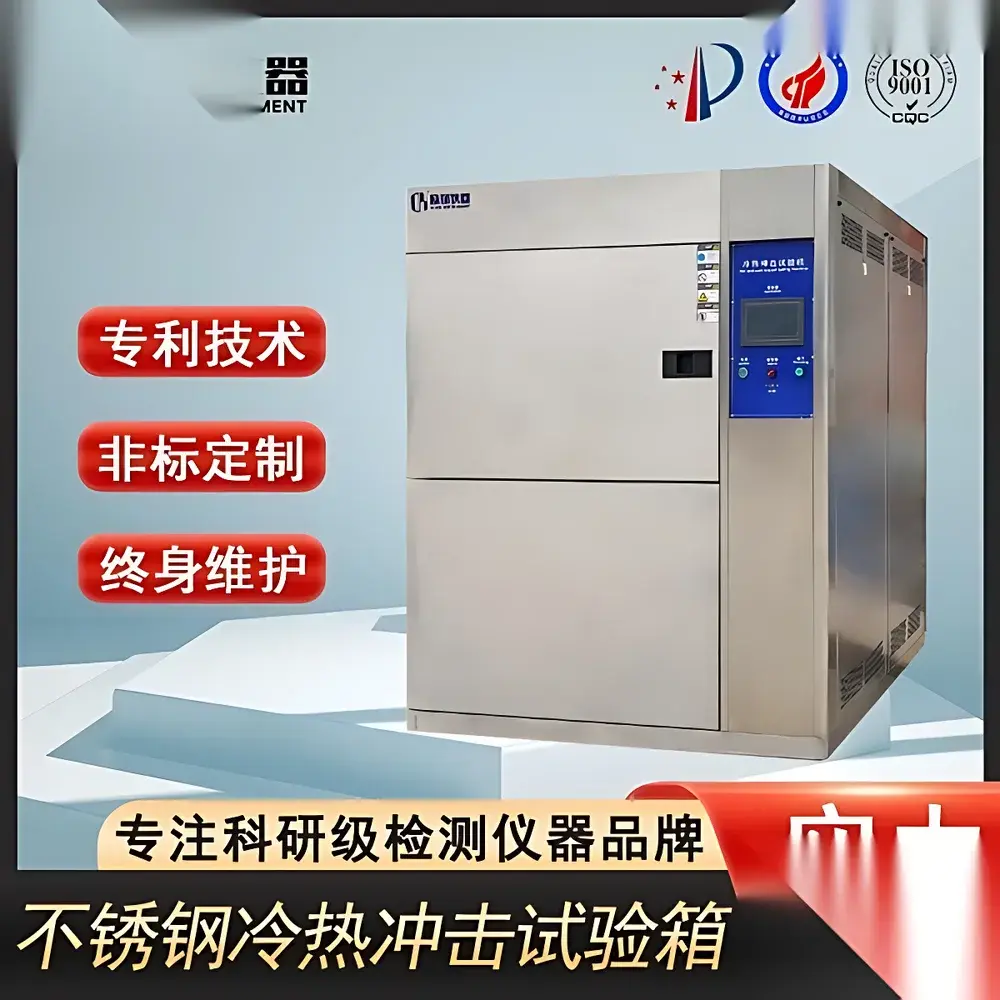
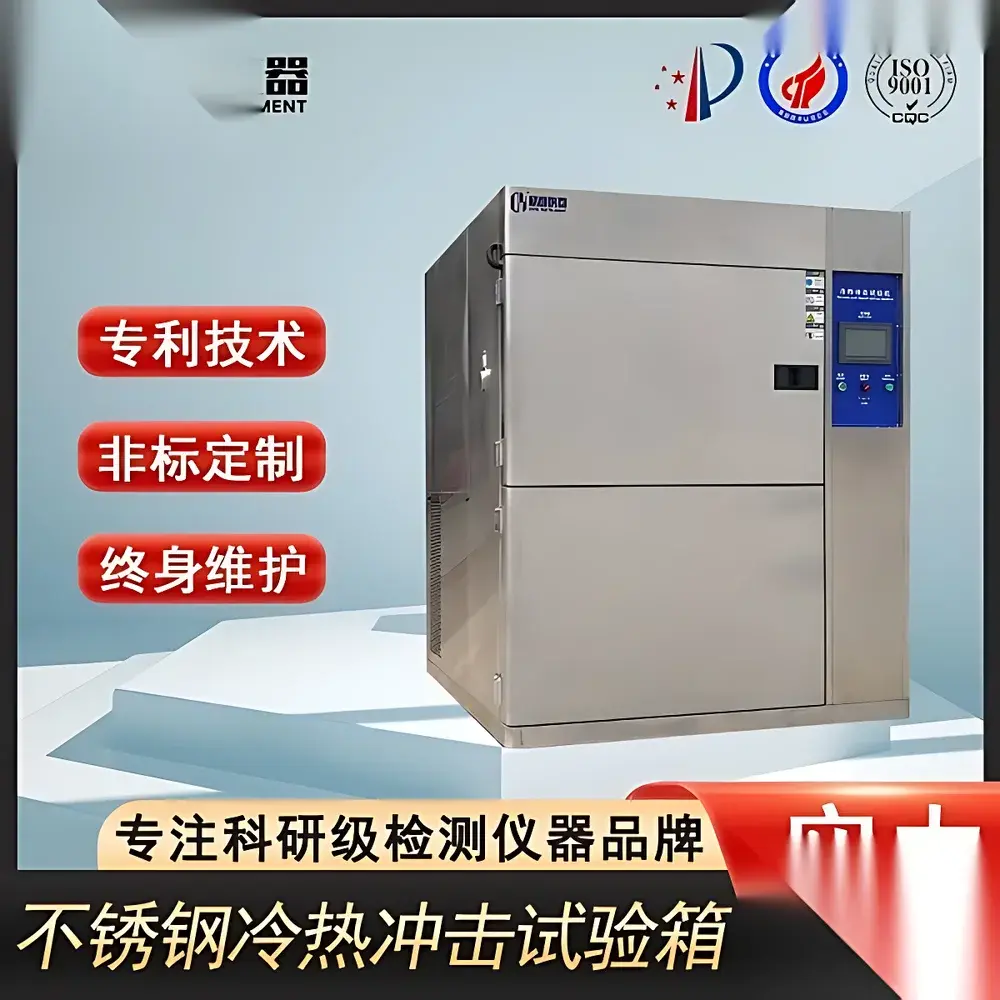
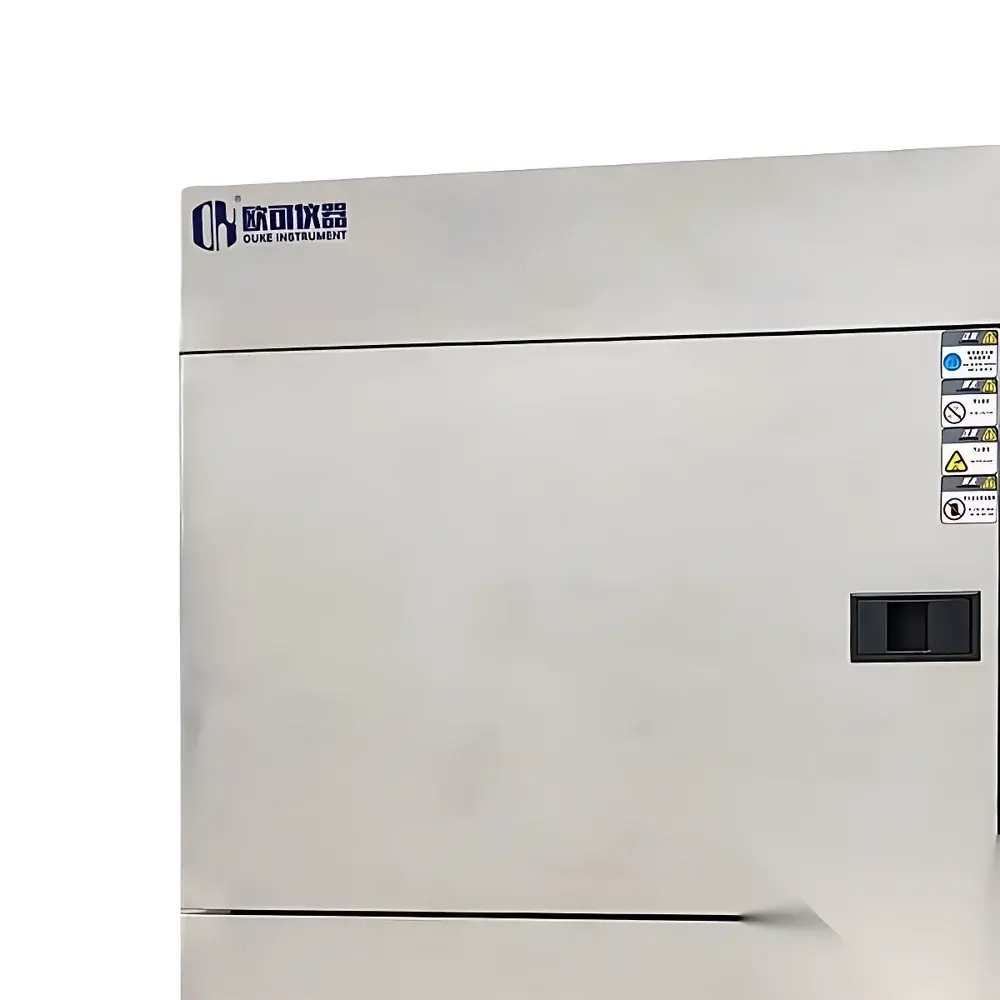
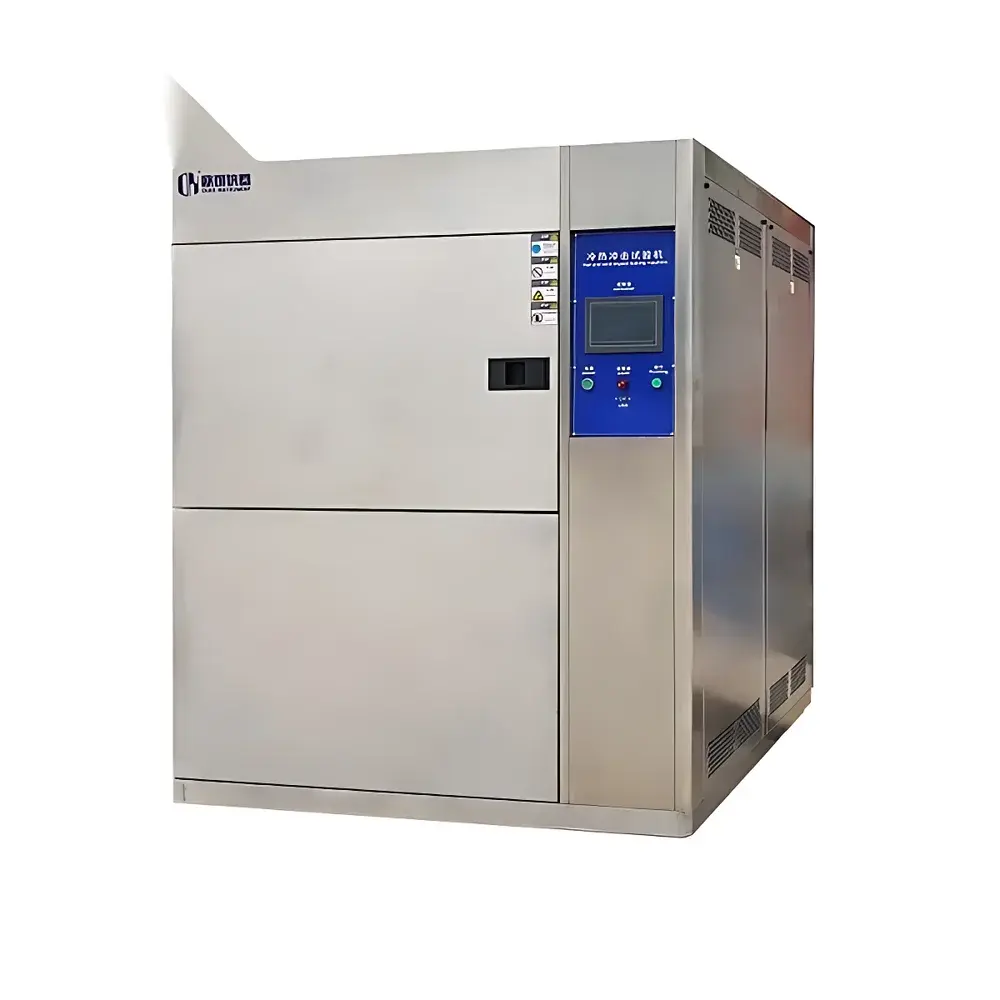
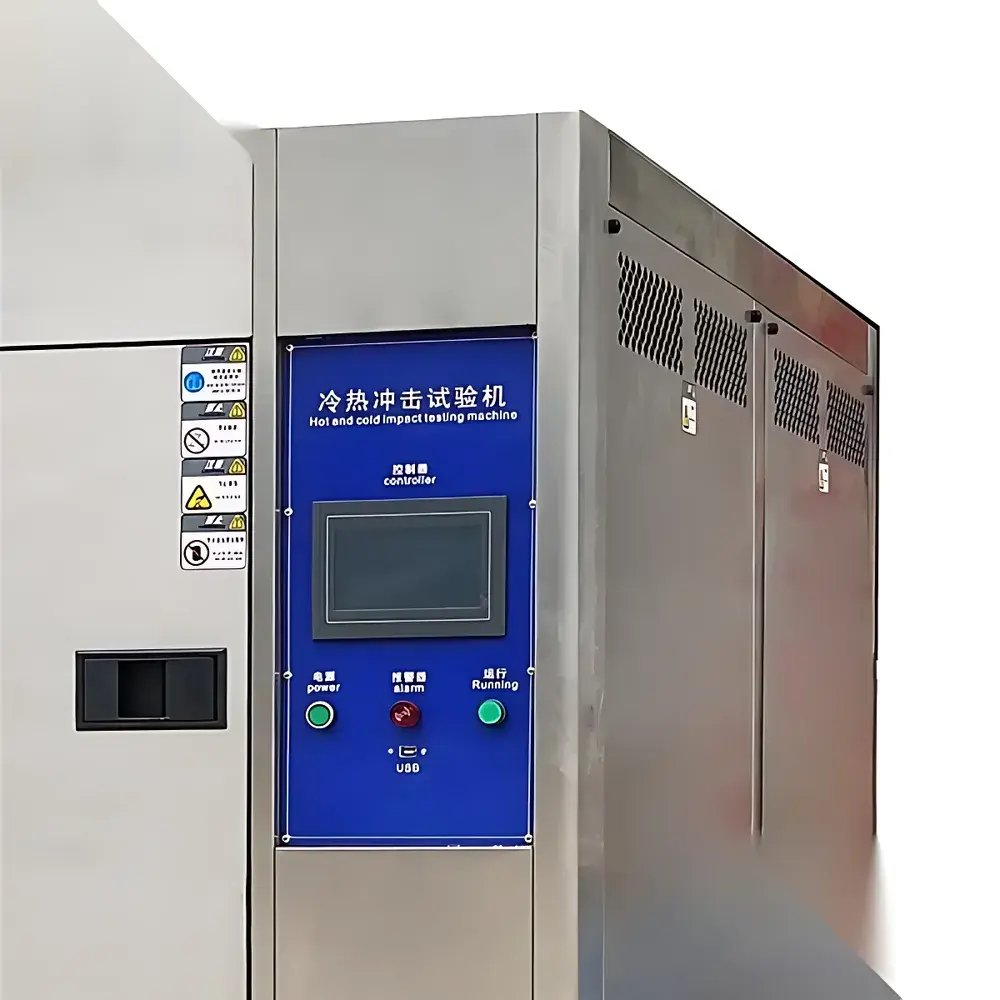
Thermal Shock Test Chamber – Industrial-Grade Environmental Test System
| Brand | OEM / Custom-Built |
|---|---|
| Origin | Imported |
| Manufacturer Type | Authorized Distributor |
| Price | USD 11,200 (FOB) |
Overview
The Thermal Shock Test Chamber is an engineered environmental simulation system designed to evaluate material and component reliability under rapid, extreme temperature transitions. It operates on the principle of two- or three-zone thermal shock methodology, where test specimens are mechanically transferred between independently controlled high-temperature and low-temperature chambers—or subjected to rapid air-blast thermal cycling—enabling precise replication of real-world thermal stress conditions encountered during storage, transportation, and operational life cycles. This chamber meets the fundamental thermodynamic requirements for accelerated stress testing per IEC 60068-2-14 (Test N: Change of temperature) and supports qualification protocols aligned with automotive AEC-Q200, aerospace AS9100, and electronics JEDEC JESD22-A104 standards. Its architecture prioritizes thermal inertia minimization, spatial uniformity, and repeatability—critical for failure mode analysis in solder joint integrity, encapsulant delamination, PCB warpage, and hermetic seal validation.
Key Features
- Triple-Zone Configuration Option: Available in two-basket (hot/cold) or three-basket (hot/ambient/cold) configurations for enhanced test flexibility and reduced dwell time variability.
- Precision Temperature Control: Equipped with PID-based microprocessor controllers (imported from Japan or South Korea) featuring auto-tuning algorithms, real-time temperature deviation compensation, and dual-display interface showing setpoint and actual chamber temperature simultaneously.
- High-Efficiency Refrigeration System: Uses hermetically sealed, industrial-grade Tecumseh (France) compressors with eco-friendly R-404A or R-507 refrigerant; incorporates air-cooled condensers and dynamically modulated evaporators for optimal load matching across operating ranges.
- Uniform Air Circulation: Stainless steel centrifugal blower with multi-wing impeller ensures forced convection airflow ≥3 m/s at specimen level, achieving ≤±1.0°C temperature uniformity (per IEC 60068-3-5) and ≤±0.5°C stability (per ISO 16750-4 Annex B).
- Durable Construction: Exterior housing fabricated from powder-coated galvanized steel or brushed stainless steel (SUS304); interior chamber lined with electropolished mirror-finish stainless steel (SUS316L optional) for corrosion resistance and easy decontamination.
- Human-Centric Interface: Dual-pane, anti-fog, insulated observation window with integrated LED lighting; door interlock safety circuitry; programmable lockout function to prevent unauthorized parameter modification.
Sample Compatibility & Compliance
This thermal shock chamber accommodates test specimens ranging from small SMT components (0201–2512 packages) to full automotive ECUs and photovoltaic modules. Internal volume options span 50 L to 8,000 L, with standard internal dimensions configurable per customer requirement (e.g., 400 × 500 × 400 mm). The system complies with multiple international environmental test standards including:
• GB/T 2423.22–2012 (IEC 60068-2-14) – Environmental testing – Part 2-14: Tests – Test N: Change of temperature
• MIL-STD-810H Method 503.5 – Temperature Shock
• JIS C 60068-2-14:2016
• ASTM D6277–2020 – Standard Practice for Thermal Shock Testing of Coatings
All units undergo factory calibration traceable to NIST-certified reference standards and support GLP/GMP-compliant audit trails when integrated with optional 21 CFR Part 11–enabled software.
Software & Data Management
The embedded controller supports up to 99 programmable test profiles, each with ≥999 segments (ramp/soak/step), unlimited cycle repeats, and user-defined trigger logic. Optional PC-based data acquisition software provides real-time graphing, CSV export, alarm logging, and electronic signature functionality compliant with FDA 21 CFR Part 11 Annex 11 requirements. Data integrity safeguards include encrypted database storage, time-stamped event logs, and role-based access control (RBAC). Remote monitoring via Ethernet or RS-485 Modbus RTU is supported for integration into centralized MES or SCADA environments.
Applications
- Qualification testing of semiconductor devices, MEMS sensors, and optoelectronic assemblies per JEDEC J-STD-020 and JESD22-A106.
- Validation of battery cell and pack thermal resilience under EV drivetrain thermal cycling conditions (UN ECE R100, ISO 12405-3).
- Reliability assessment of aerospace composite structures and adhesive bonds exposed to stratospheric thermal gradients.
- Accelerated aging of medical device housings, sterilizable enclosures, and implantable electronics per ISO 10993-12 and IEC 60601-1.
- Material compatibility screening for conformal coatings, potting compounds, and thermal interface materials (TIMs).
- Process development support for reflow soldering, die attach, and wafer-level packaging processes.
FAQ
What temperature ranges are available for this thermal shock chamber?
Standard configurations support -20°C to +150°C, -40°C to +150°C, and -70°C to +150°C. Custom low-temperature extensions down to -85°C are available upon request.
Is the chamber suitable for humidity-controlled thermal shock testing?
No—this is a dry thermal shock system. For combined temperature/humidity shock, refer to our TH-CH series Combined Environmental Test Chambers.
How is temperature uniformity validated and maintained?
Uniformity is verified using a 9-point sensor mapping procedure per IEC 60068-3-5, with periodic recalibration performed using traceable platinum resistance thermometers (PRTs).
Can the system be integrated into an automated test line?
Yes—standard digital I/O, Modbus TCP, and optional OPC UA interfaces enable seamless integration with robotic handlers and factory automation systems.
What maintenance intervals are recommended for the refrigeration system?
Compressor oil analysis and refrigerant charge verification are recommended every 12 months; filter-drier replacement every 24 months under continuous operation.



