
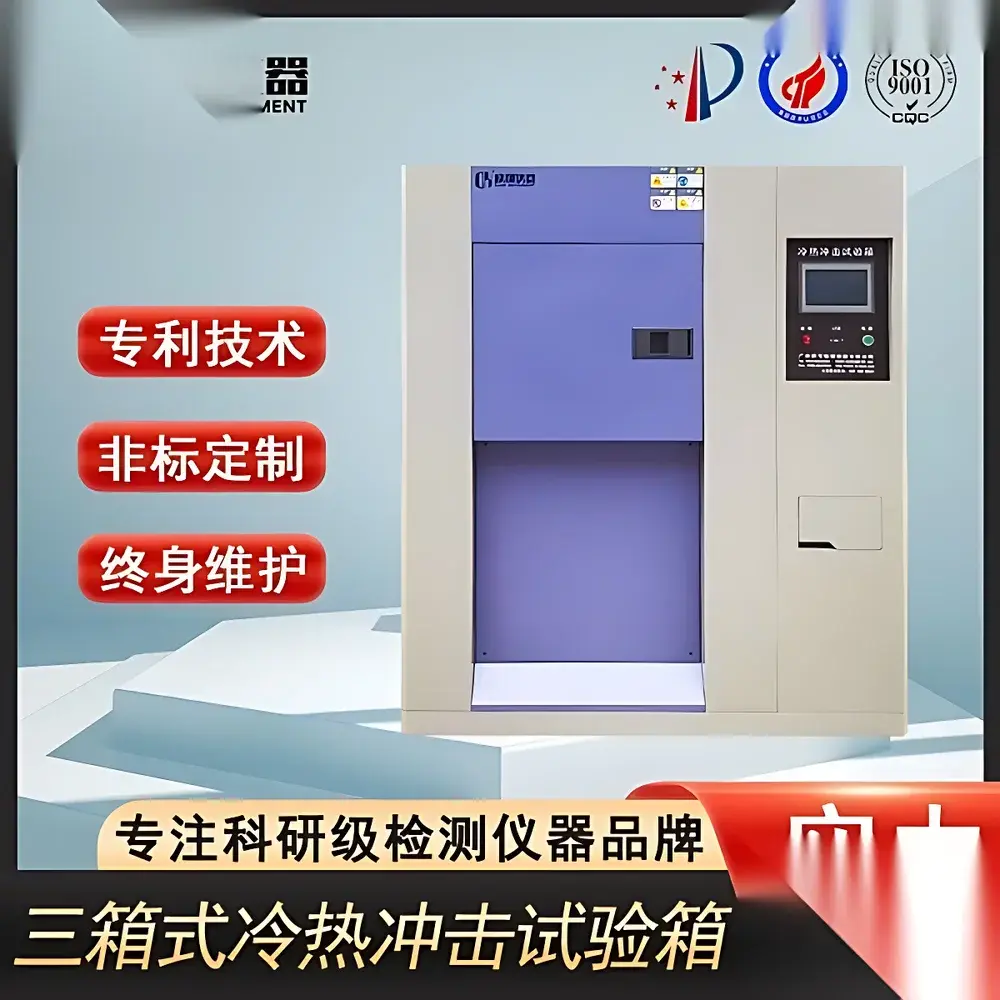
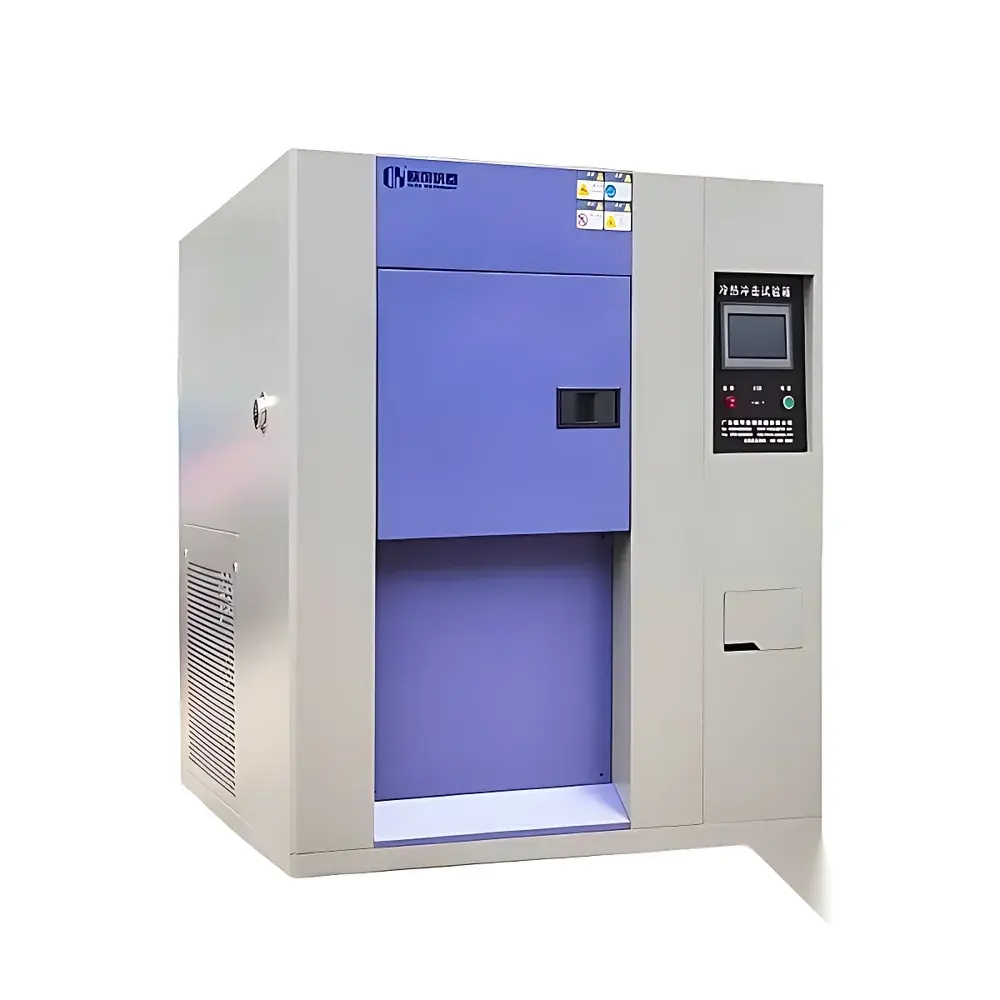
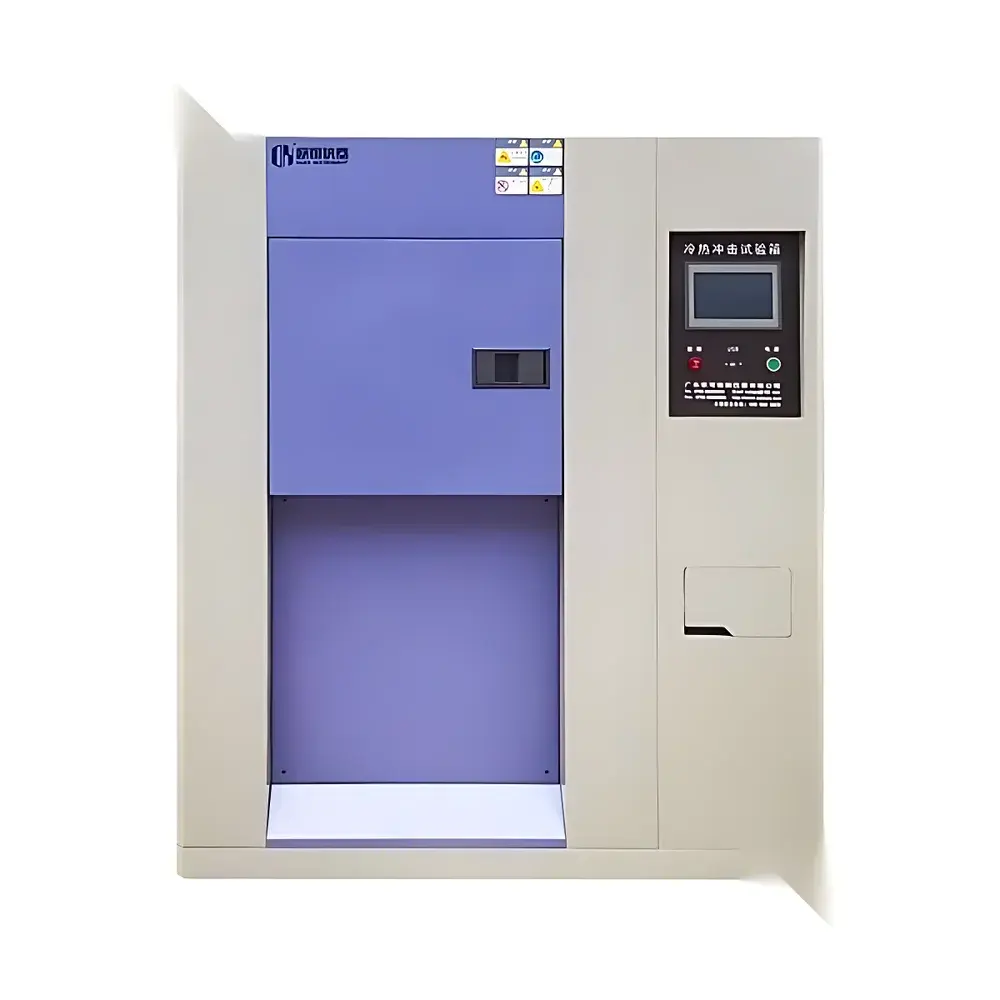
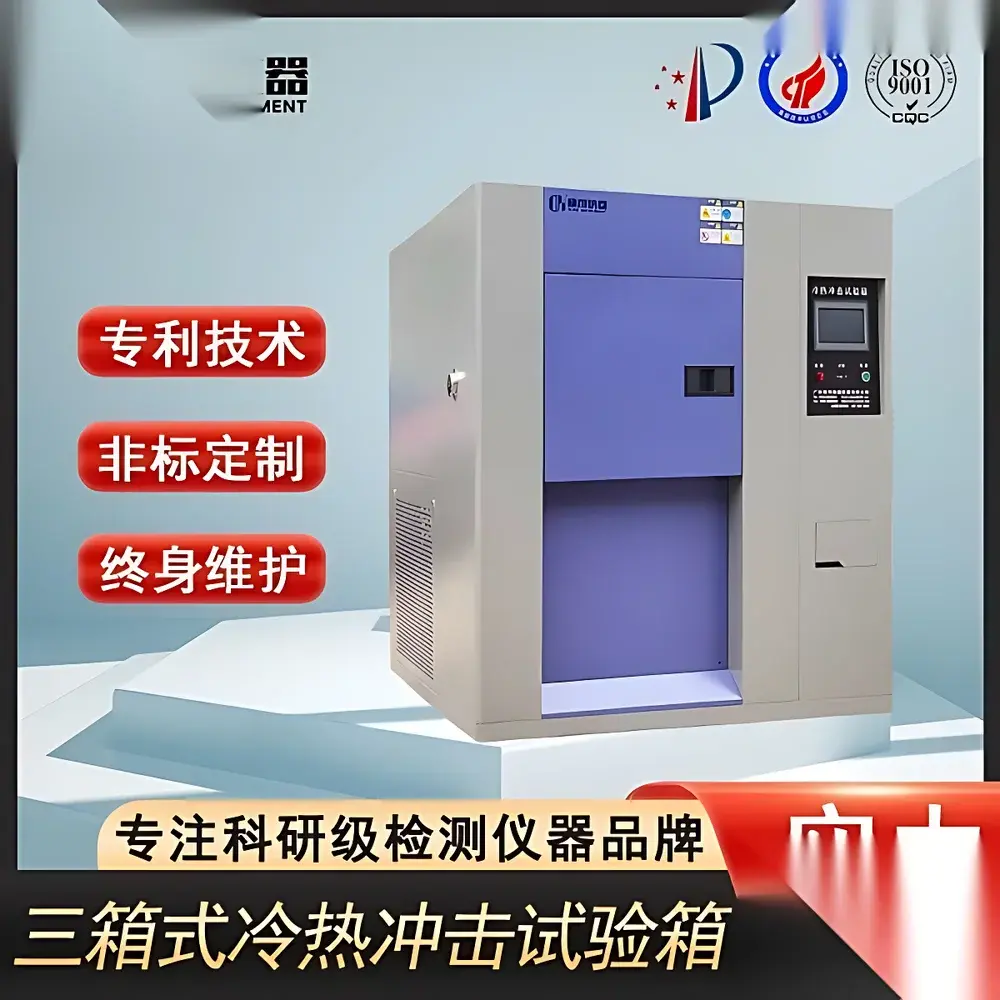
Thermal Shock Test Chamber – Industrial-Grade Environmental Test System
| Brand | OEM / Custom Brand |
|---|---|
| Origin | Imported |
| Manufacturer Type | Authorized Distributor |
| Price | USD 11,200 (FOB) |
| Temperature Range | −70°C to +180°C |
| Thermal Transition Time | ≤5 min (typical, 150°C ↔ −40°C) |
| Internal Volume | 150 L (standard configuration) |
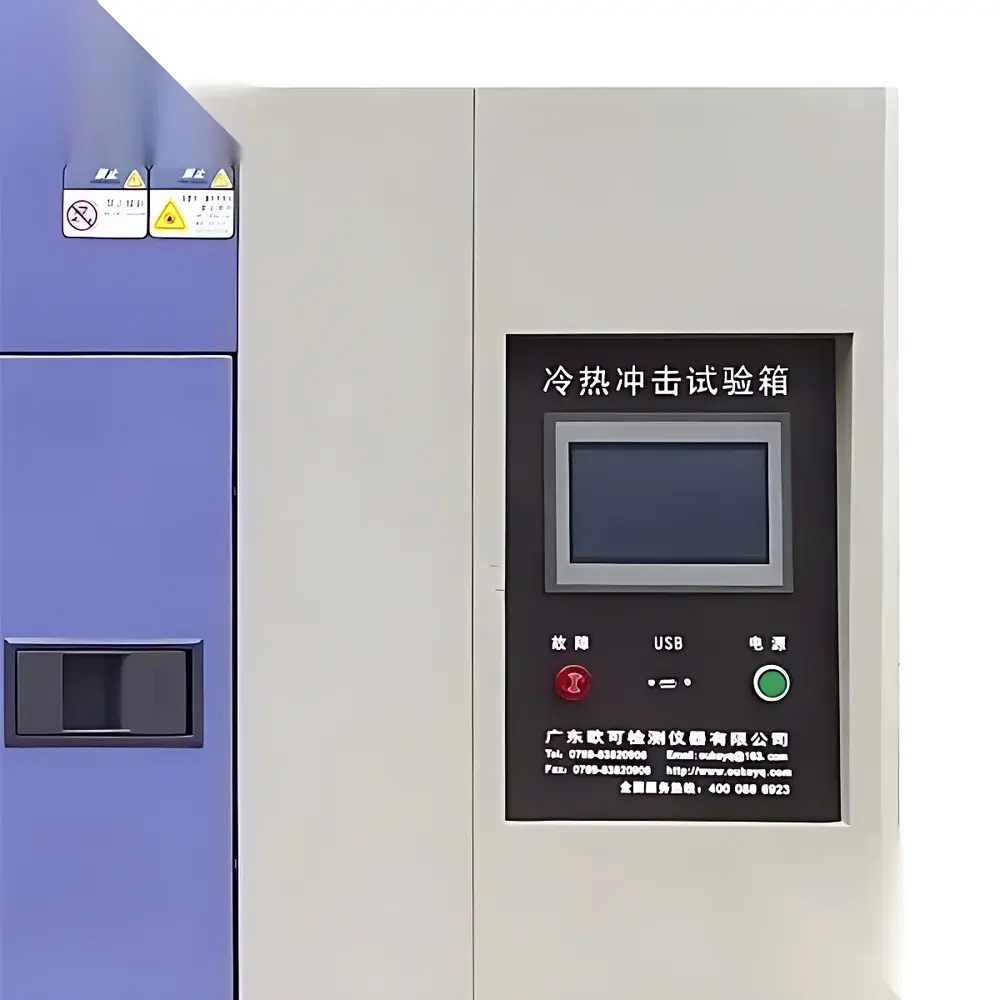
| Control System | TEMI880 Color Touchscreen Programmable Controller (EN/CN Switchable) or TEMI300 Membrane Keypad Controller (English Only) |
| Compliance | IEC 60068-2-14, MIL-STD-810H Method 503.5, GB/T 2423.22 |
Overview
The Thermal Shock Test Chamber is an industrial-grade environmental test system engineered for rapid, repeatable, and highly controlled thermal cycling between extreme temperature extremes. Based on the principle of two-zone (hot/cold) or three-zone (hot/cold/transfer) forced-air thermal shock methodology, it subjects electronic components, aerospace materials, automotive ECUs, PCBs, and polymer-based assemblies to abrupt thermal transitions—simulating real-world operational stresses such as cold-start ignition, high-altitude re-entry, or rapid power-on/off cycles. Unlike conventional temperature-humidity chambers, this system achieves accelerated thermal transients through independent, dynamically balanced hot and cold reservoirs with pneumatic or mechanical transfer mechanisms, minimizing dwell time and maximizing thermal stress fidelity. Its architecture supports both static (stationary sample) and dynamic (automated transfer) shock protocols per IEC 60068-2-14 Clause 6 (Method A: Two-Chamber; Method B: Three-Chamber).
Key Features
- High-reliability dual- or triple-zone thermal shock architecture with independent refrigeration and heating circuits
- TEMI880 7-inch full-color TFT touchscreen controller with multi-language interface (English/Chinese), real-time trend graphing, and up to 999 programmable segments per test profile
- Backup TEMI300 membrane keypad controller (English-only) for redundancy and simplified operation in regulated environments
- Optimized airflow design: wide-band forced convection using centrifugal blowers, top-outlet/bottom-inlet circulation path, and aerodynamic ducting to ensure ±1.5°C uniformity (at 100 mm from chamber walls)
- Robust protection suite: compressor overheat/overcurrent/high-pressure cut-off, dry-run prevention for humidifier, chamber overtemperature lockout, low-water level alarm, and door-open interlock
- Dual-layer tempered safety glass observation window with anti-fog coating and integrated LED illumination
- Standard 50 mm diameter test port (left-side mounted) with silicone gasket and brass flange for sensor feedthrough or external cabling
- Four heavy-duty swivel casters with locking brakes for facility mobility and alignment
- Surface-evaporation type stainless steel humidifier with auto-refill capability and scale-resistant water tank (capacity: 12 L)
Sample Compatibility & Compliance
This chamber accommodates standard test specimens up to 450 × 450 × 450 mm (W × D × H) on two adjustable stainless-steel sample trays (height-adjustable in 25 mm increments). It complies with international environmental testing standards including IEC 60068-2-14 (Environmental testing – Part 2-14: Tests – Test N: Change of temperature), MIL-STD-810H Method 503.5 (Temperature Shock), and GB/T 2423.22–2012 (Environmental testing for electric and electronic products – Test N: Temperature shock). Optional validation packages support IQ/OQ documentation per ISO/IEC 17025 and GMP Annex 15 requirements. The chamber’s control system supports audit trail logging and user access levels aligned with FDA 21 CFR Part 11 principles when paired with validated PC software.
Software & Data Management
Bundled Windows-compatible software enables remote monitoring, test sequencing, real-time data acquisition (up to 10 Hz sampling), and automated report generation (PDF/CSV). All test logs—including setpoints, actual chamber values, alarm events, and controller status—are timestamped and stored with SHA-256 checksum integrity verification. Data export supports integration into LIMS platforms via Modbus TCP or RS-485 (optional). Firmware updates are performed via USB or Ethernet, with rollback capability and version-controlled firmware archives.
Applications
- Qualification testing of solder joints, conformal coatings, and underfill materials in semiconductor packaging
- Reliability screening of avionics modules subjected to rapid stratospheric descent profiles
- Evaluation of thermal expansion mismatch in multi-material assemblies (e.g., ceramic substrates bonded to aluminum housings)
- Accelerated aging studies of battery electrolytes and separator membranes under cyclic thermal stress
- Validation of hermetic seal integrity in MEMS devices and medical implant housings
- Process development support for reflow soldering, die attach, and encapsulation curing cycles
FAQ
What is the typical thermal transition time between −40°C and +150°C?
Standard two-zone configurations achieve ≤5 minutes (measured at center point, 150°C ↔ −40°C, 100 mm load); three-zone variants reduce this to ≤3 minutes.
Is the chamber compatible with GLP/GMP-compliant laboratories?
Yes—when equipped with optional validation kits and configured with audit-trail-enabled software, it meets core requirements for traceability, user authentication, and electronic record retention per FDA 21 CFR Part 11.
Can the system operate continuously for extended qualification tests?
Designed for 24/7 operation with dual-circuit refrigeration, redundant safety controls, and predictive maintenance alerts—mean time between failures (MTBF) exceeds 12,000 hours under nominal load conditions.
Does the controller support custom alarm logic and email/SMS notifications?
The TEMI880 supports configurable alarm thresholds, multi-level escalation paths, and optional Ethernet-based notification modules (SMTP/HTTP API) for integration into facility-wide alert systems.
What maintenance intervals are recommended for the refrigeration system?
Compressor oil and filter replacement every 18 months; refrigerant circuit leak inspection annually; evaporator coil cleaning every 6 months—detailed service schedule included in operator manual.



