
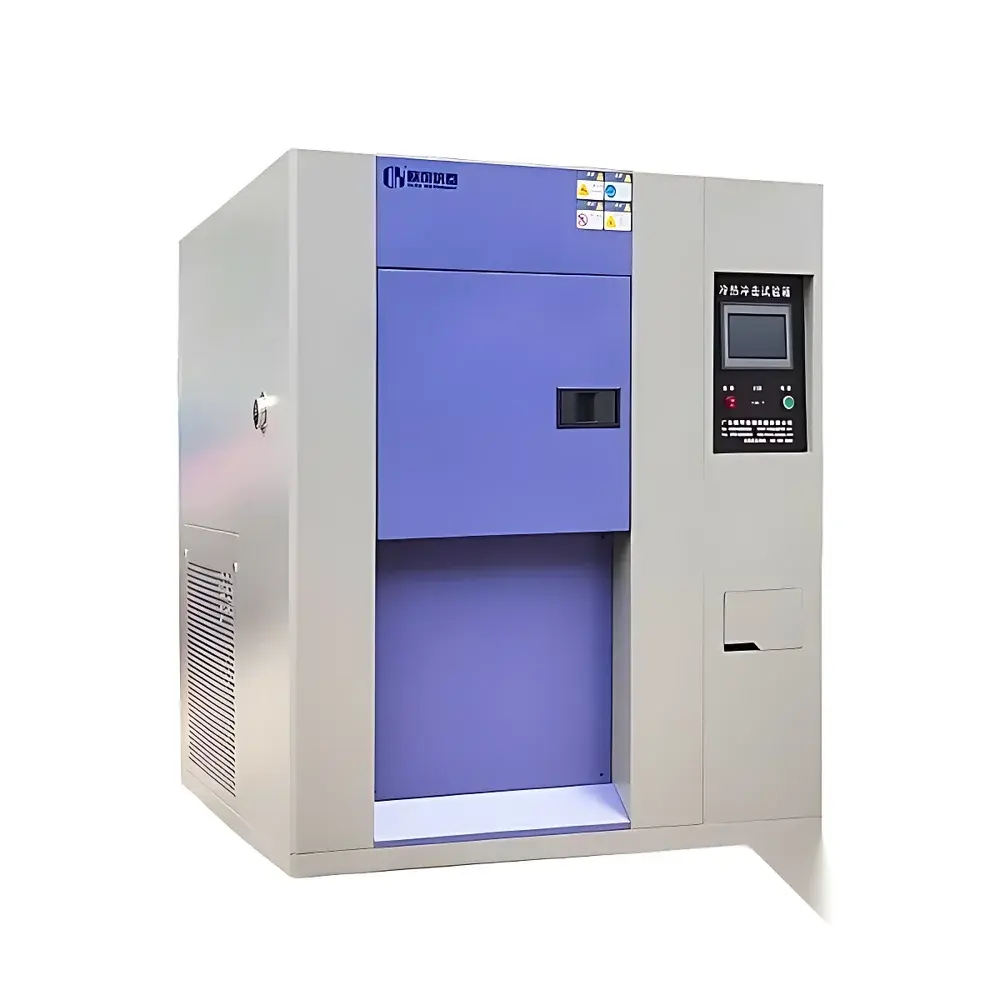
Thermal Shock Test Chamber – Low-Temperature Impact Testing System
| Brand | OEM / Custom Brand |
|---|---|
| Origin | Imported |
| Manufacturer Type | Authorized Distributor |
| Temperature Range | −99.9 °C to +200 °C |
| Humidity Control | Steam Humidification, 0–100 % RH |
| Resolution | 0.1 °C / 0.1 % RH |
| Programmable Memory | 120 programs × 1200 segments |
| Cycle Repetition | Up to 999 cycles |
| Control Interface | Touchscreen HMI with BTHC (Balanced Temperature & Humidity Control) |
| Safety Features | SSR-based PID control, PT-100 dual-sensor monitoring, real-time fault diagnostics, power cutoff on critical anomaly |
| Compliance | Designed for ASTM D573, ISO 188, IEC 60068-2-14, MIL-STD-810G thermal shock protocols |
Overview
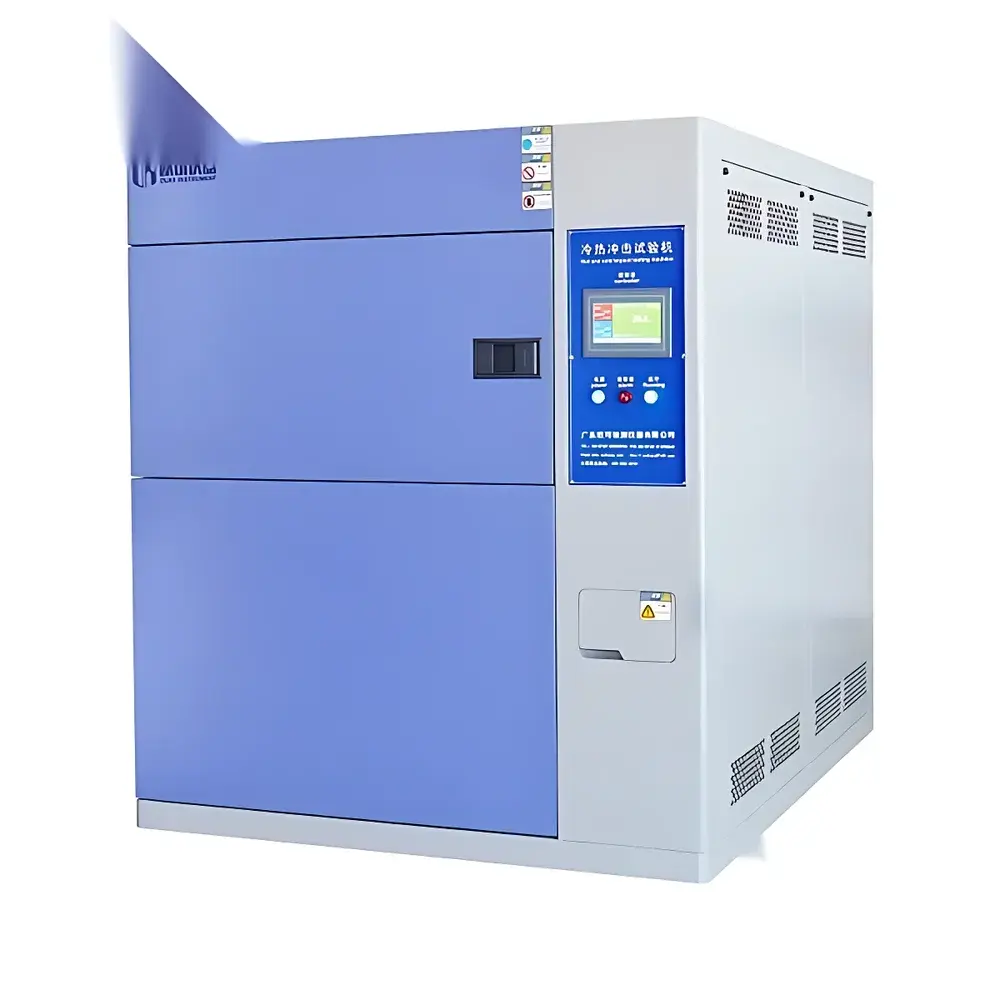
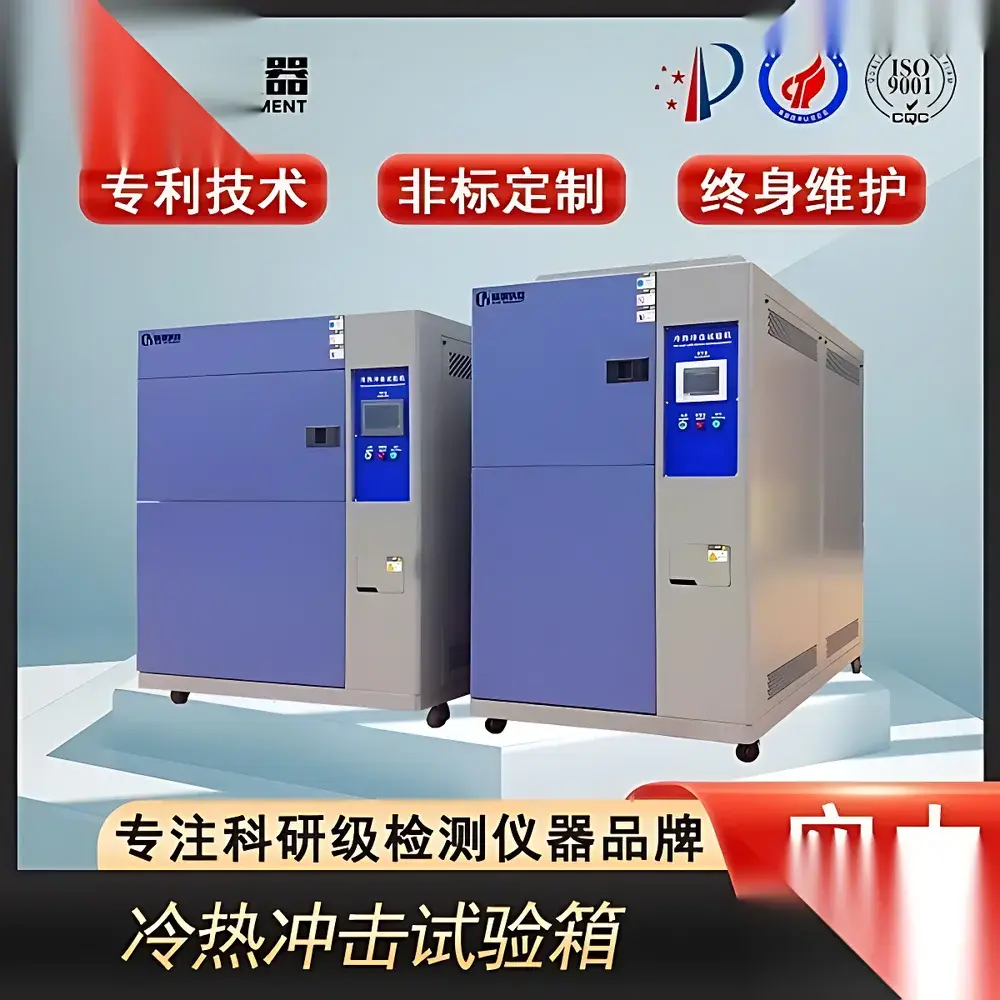
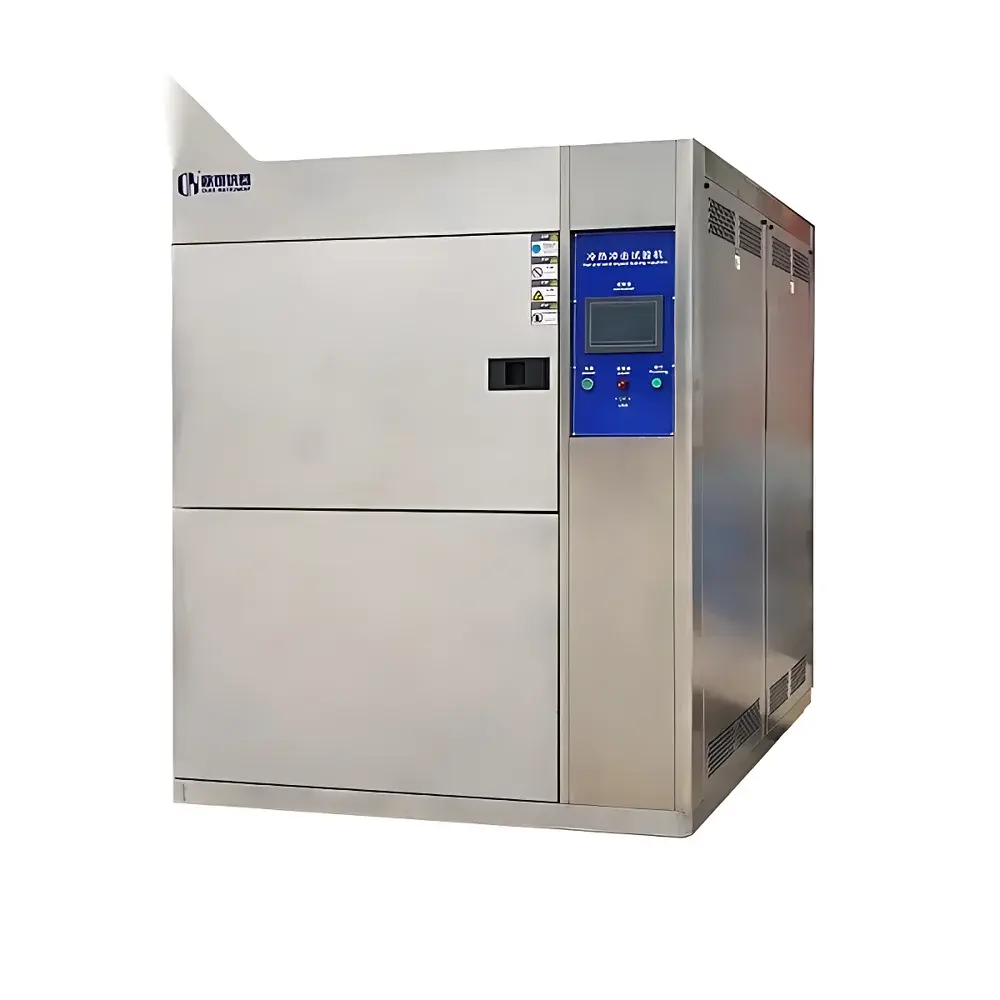
The Thermal Shock Test Chamber – Low-Temperature Impact Testing System is an engineered environmental test platform designed to evaluate material and component resilience under rapid, repetitive transitions between extreme low-temperature and high-temperature conditions. Based on the principle of accelerated thermal cycling, it subjects specimens to controlled, high-rate temperature shifts—typically defined as ≥10 °C/min transition rates between predefined cold and hot zones—to simulate real-world thermal stress exposure in aerospace, automotive, electronics, and polymer manufacturing applications. Unlike standard environmental chambers, this system implements a true two-zone or three-zone thermal shock architecture (depending on configuration), enabling precise dwell time control at both extremes and minimizing transitional thermal inertia. Its core functionality supports qualification testing per internationally recognized standards including IEC 60068-2-14 (Method N: Change of Temperature), ASTM D573 (Rubber—Effect of Heat and Oxygen), and ISO 188 (Vulcanized Rubber and Thermoplastic Elastomers—Accelerated Ageing). The chamber’s structural integrity, thermal uniformity (±1.5 °C at 1/3 volume load), and long-term stability are validated through factory calibration traceable to NIST-equivalent metrology.
Key Features
- Independent dual-loop refrigeration system utilizing hermetically sealed, imported compressors—configured either as single-stage (for −40 °C to +150 °C range) or cascade-type (extending to −99.9 °C)
- Stainless steel finned electric heating elements with overheat protection and redundant thermal cutouts
- Steam-based humidification using stainless steel immersion heaters with auto water-level regulation and deionized water compatibility
- Balanced Temperature & Humidity Control (BTHC) architecture: dynamically modulates heating, cooling, humidifying, and dehumidifying outputs via PID-driven SSRs to match real-time thermal/hygric load—enabling stable setpoint maintenance without overshoot
- 10.4-inch color touchscreen HMI supporting bilingual (English/Chinese) operation, programmable curve visualization, and real-time SV (Set Value) trajectory display
- Comprehensive safety infrastructure: dual PT-100 sensors per zone, hardware interlocks, alarm-triggered power disconnection, and event-logged fault diagnostics accessible via USB export
- Programmable runtime accumulation counter for preventive maintenance scheduling and GLP-compliant usage tracking
Sample Compatibility & Compliance
The chamber accommodates standard test specimens up to 500 mm × 500 mm × 500 mm (W×D×H), with optional internal fixtures for PCBs, battery cells, molded elastomers, and encapsulated optoelectronic modules. Internal chamber walls and shelves are electropolished stainless steel (AISI 304) to resist corrosion and facilitate cleaning under GMP-relevant environments. All control firmware and data logging comply with ALCOA+ principles (Attributable, Legible, Contemporaneous, Original, Accurate, Complete, Consistent, Enduring, Available) and support audit-ready configurations for FDA 21 CFR Part 11 compliance when integrated with validated software packages. Test reports generated via optional Ethernet-enabled data export meet ISO/IEC 17025 documentation requirements for accredited laboratories.
Software & Data Management
The embedded controller provides native support for stand-alone test execution, but also interfaces via RS-485, Ethernet (TCP/IP), or optional USB-to-PC connectivity for integration with third-party LIMS or MES platforms. Raw temperature/humidity logs—including timestamps, setpoints, actual values, and alarm events—are stored internally (≥12 months at 1-second sampling) and exportable in CSV or XML format. Optional PC-based software enables remote monitoring, multi-chamber fleet management, statistical process control (SPC) charting, and automated report generation aligned with ISO 9001 clause 8.2.4 (Monitoring and Measurement of Processes).
Applications
This system is routinely deployed in QC/QA labs for evaluating solder joint integrity in printed circuit assemblies (per JEDEC J-STD-020), assessing sealant adhesion loss in medical device housings, validating low-temperature brittleness of polymeric gaskets (ASTM D746), verifying thermal fatigue resistance of power semiconductor modules, and qualifying battery pack thermal runaway propagation behavior under cryogenic shock. It serves as a critical tool in design verification (DV) and production validation (PV) phases across Tier-1 automotive suppliers and aerospace component manufacturers requiring AS9100-certified environmental testing capability.
FAQ
What is the minimum achievable temperature, and how is it sustained during extended dwell periods?
The system achieves and maintains −99.9 °C using a cascade refrigeration cycle with dual-stage compressors and optimized heat exchanger geometry; sustained stability is ensured by BTHC feedback control and insulated chamber construction meeting ASTM C177 thermal resistance specifications.
Can humidity be controlled independently during thermal shock cycles?
Yes—humidity is decoupled from temperature control and can be programmed separately per segment, though condensation risk at sub-zero temperatures limits active humidification below 0 °C; dehumidification remains fully operational throughout the full range.
Is the controller compliant with 21 CFR Part 11 for electronic records and signatures?
The base controller supports audit trail logging and user access levels; full Part 11 compliance requires installation of validated third-party software with electronic signature modules and role-based permissions—available as an optional upgrade package.
How is thermal uniformity verified and documented?
Uniformity mapping is performed per IEC 60068-3-5 using nine calibrated PT-100 probes across the working volume; certification reports include deviation matrices and uncertainty budgets traceable to national metrology institutes.
What maintenance intervals are recommended for compressor and humidifier subsystems?
Compressor oil and filter replacement every 12 months or 4,000 operating hours; humidifier scale removal and water reservoir sanitization every 3 months; annual calibration of all temperature/humidity sensors against certified reference standards.



